
It's been a while since my last post.
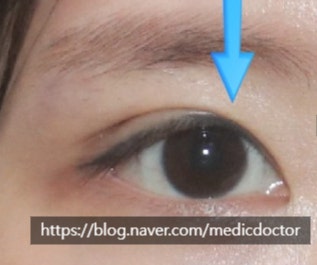
Today's topic:
Here's the case.
She came to us after incisional ptosis correction at another clinic, with significant asymmetry and pulling tightness.
We elected to proceed with an early revision.
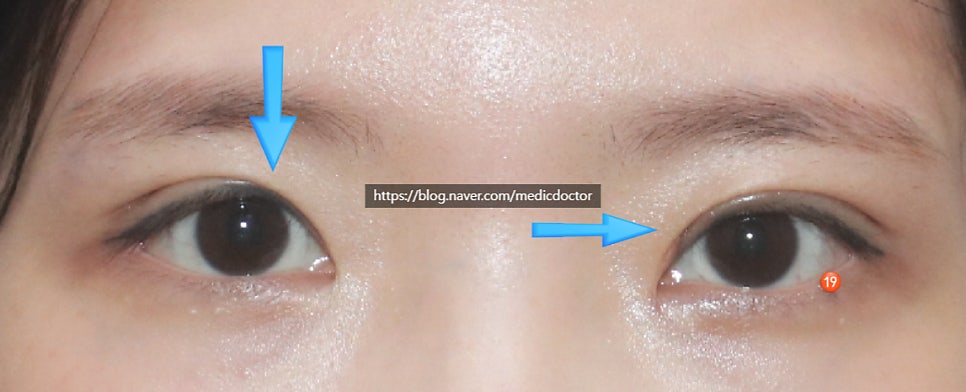
On her right eye (left on photo), the medial portion peaks upward like a small mountain.
On her left eye (right on photo), the medial line bends visibly.
When she consulted with us before her revision elsewhere, I had recommended a crease-only procedure without ptosis correction. The other clinic added ptosis correction anyway — an unfortunate outcome. Aesthetic judgment is subjective, so different surgeons can land on different plans.
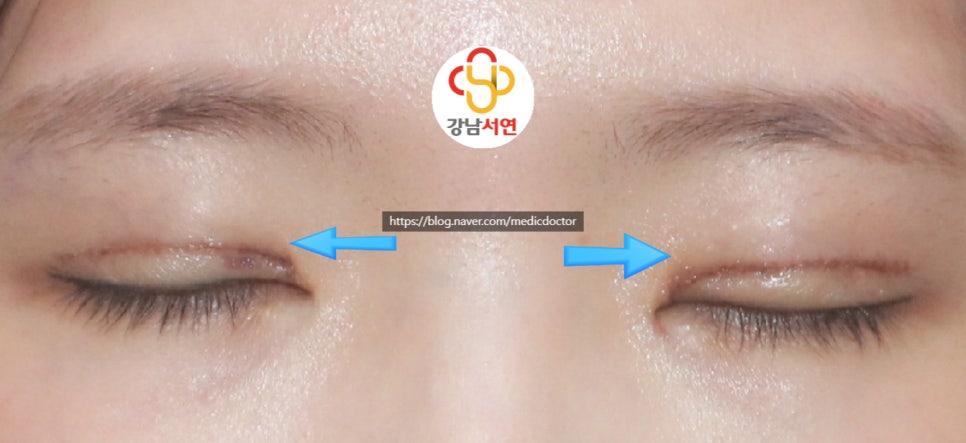
Closed-eye view. The medial portion (toward the nose) shows significant depressed scarring, suggesting that a substantial amount of tissue had been removed.
Early revision is typically done between weeks one and three.
There was both asymmetric pulling and line asymmetry; since the original designs differed between the two sides, line asymmetry will remain after early revision.
Correcting the line asymmetry requires a separate later revision.
The focus of early revision is bringing the iris exposure into balance.
Waiting six months is an option, but at that point a full retraction repair becomes necessary — a much larger procedure.
Early revision of ptosis correction is aimed at releasing what was done in the original surgery.
One week after early revision. Iris exposure is well balanced. The medial design difference, however, is still visible.
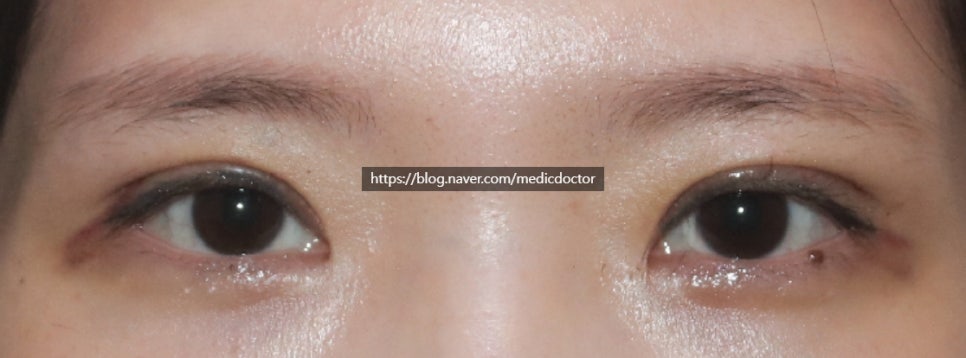
Three months post-op.
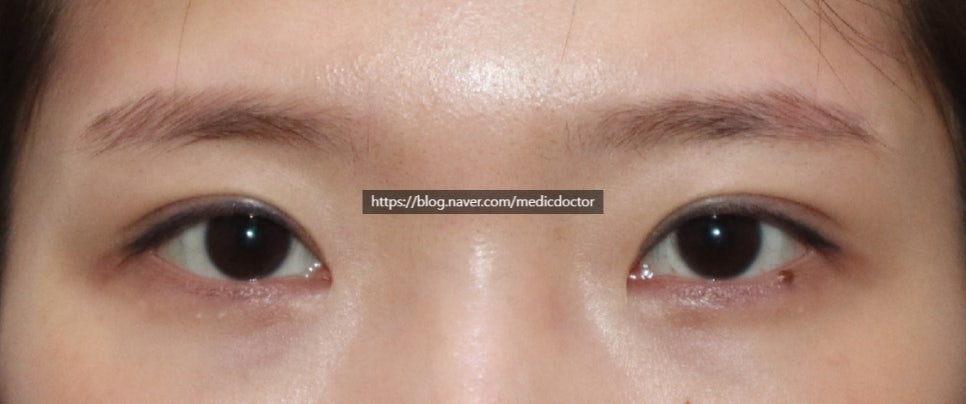
At three months, the pulling from the original ptosis correction has eased and the crease asymmetry has improved.
Closed-eye view shows the underlying design difference, but the softer fixation we converted to has made the two sides look closer.
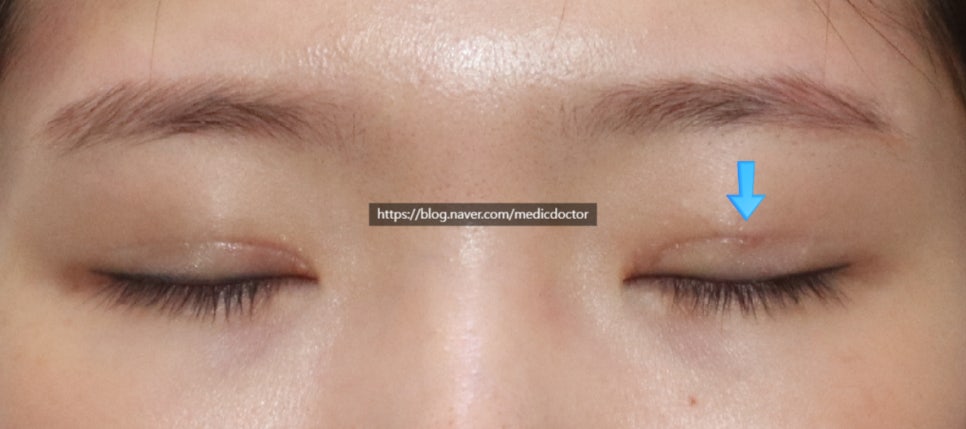
Three-month closed-eye view. Patients usually don't come in at the three-month mark, but she returned because a fixation suture had surfaced and needed removal.
Internal fixation sutures from a crease procedure occasionally surface. Some patients tend to extrude foreign material; removing the suture causes no harm. These are medical-grade sutures and stay in place permanently as long as nothing irritates them. Removing one that has surfaced does not undo the crease. The arrow marks the small surfaced section.
With significant tissue already removed, we couldn't soften the fixation as much as we'd have liked, but we drew in surrounding tissue to flatten the area, and the result continues to fade nicely.
Eyelid scar improvement depends on how much native tissue remains. In revision cases without enough remaining tissue, the scar often cannot be improved. Whether revision improves a scar depends largely on the first surgery and the most recent one.
When pulling tightness develops after ptosis correction, releasing it promptly usually resolves the symptom — though we cannot guarantee it. If something was irritated during the original surgery, the symptom can persist for some time.