
Today's post:
The patient came in for consultation.
When she first consulted with me, I had told her ptosis correction wasn't really needed. She went to another clinic, where they performed ptosis correction anyway. She returned to us on the day her sutures were due to come out.
She presented with asymmetry and a range of post-ptosis-correction symptoms.
Light halos, headaches, a pulling sensation, photophobia, asymmetry, dry and stinging eyes — among other symptoms.
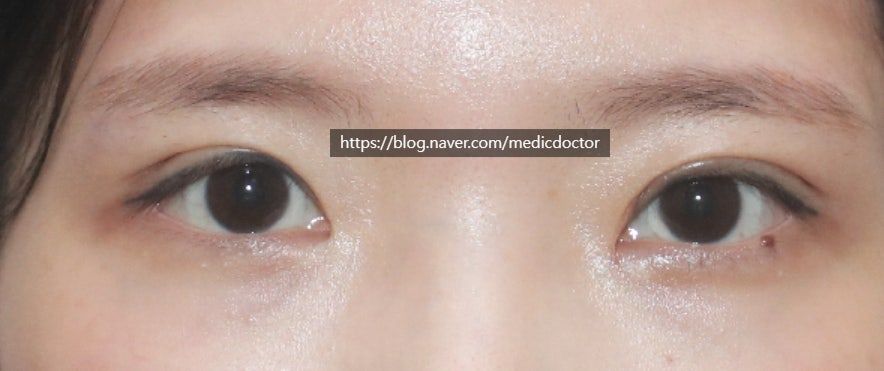
Her right eye (left on photo) was particularly problematic.
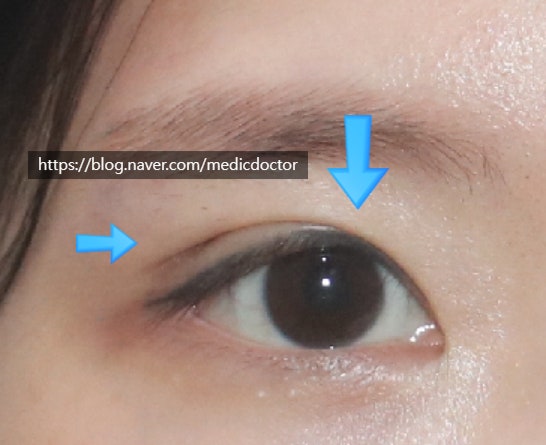
The left arrow points to a small lateral fold; the right arrow points to over-correction that's left the lid in a triangular shape.
Her left eye also still showed multiple upper eyelid creases.
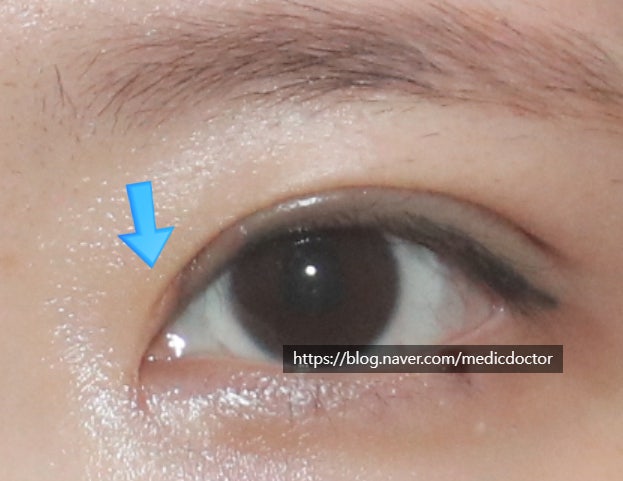
There were medial multiple upper eyelid creases as well.
The video below shows what we were dealing with.
Early revision must work through the existing incision line — placing a new line at this stage is technically impossible.
We explained in advance that the original incision differed between the two sides, so some crease asymmetry would remain. The first priority was resolving the post-ptosis-correction symptoms as much as possible.
In my experience, post-ptosis-correction symptoms tend to improve quickly when an early revision is done promptly. The longer you wait, the harder they become to resolve.
We enter through the existing incision, remove all the original ptosis-correction sutures, and release the adhesions thoroughly.
We then use several techniques to prevent the adhesions from re-forming — without those, complications from multiple upper eyelid creases can develop.
See the post below for more on complications from multiple upper eyelid creases:
https://blog.naver.com/medicdoctor/223051533802
Immediate post-op view. The eyes already feel more comfortable, and iris exposure is closer to symmetric.
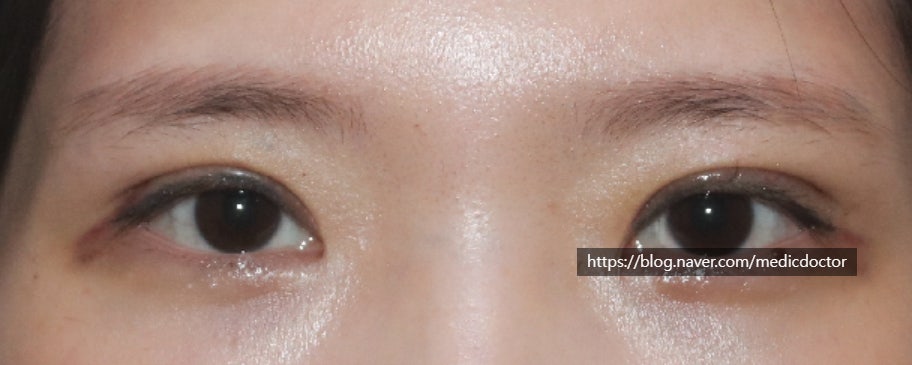
One week post-op, at suture removal. Even with the ptosis correction fully released, eye opening is normal and the patient reports far less discomfort.
Symmetry is, if anything, better than before.
If early revision is on the table, the sooner the better — within two weeks is when results hold up best.
Past three weeks, the procedure becomes considerably more challenging; past four weeks, it's often no longer feasible.
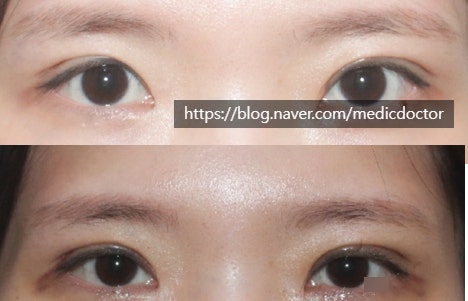
The eyes look noticeably more relaxed and the crease lines have come into a more natural shape.
It's only one week out — the result should refine further as time passes.
That wraps up today's post on early revision for incisional ptosis correction side effects.