
A patient came back for a one-year follow-up today, so I will write up the case.
Let me define what I mean by that term.
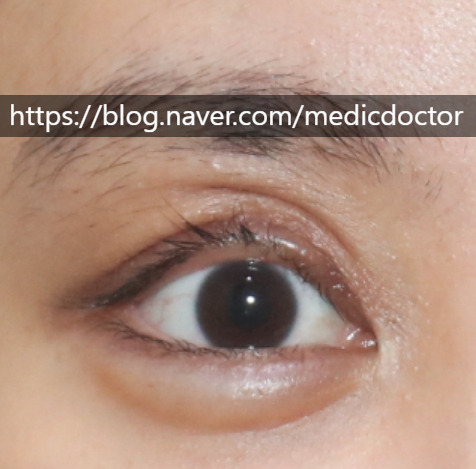
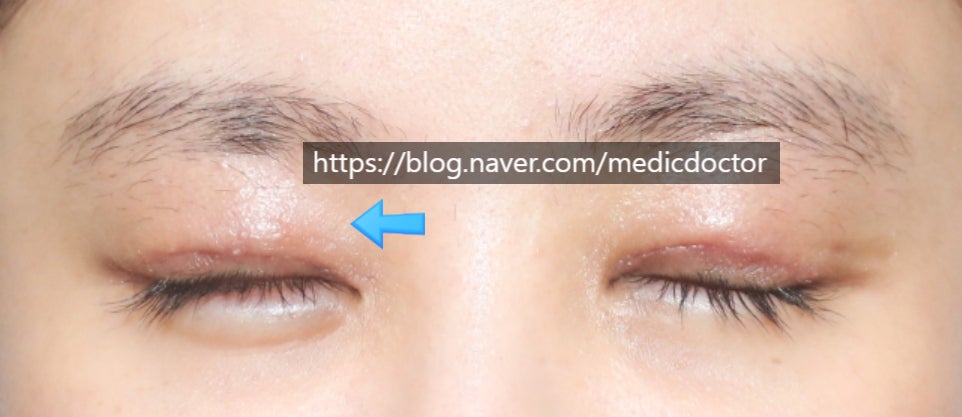
This is one of her eyes. The mucosa is severely retracted, and there are multiple upper eyelid creases, with additional creases sitting above the original double-eyelid line.
And it was not just one side. Both eyes looked like this.
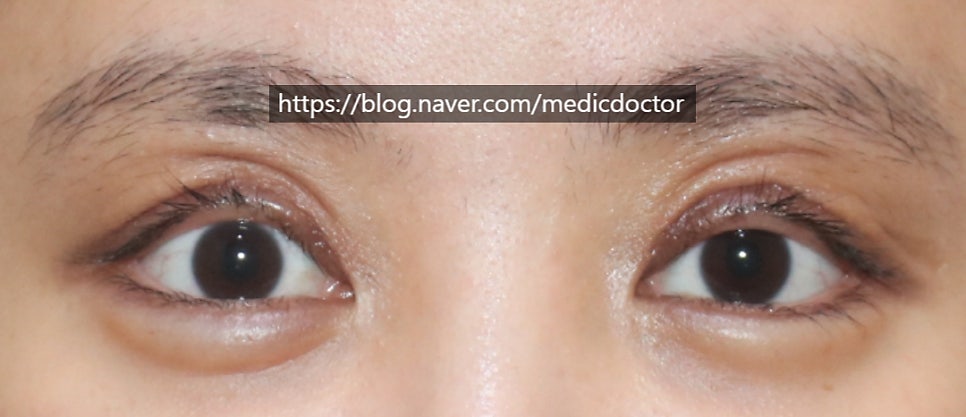
She had her surgery two months before coming to us, and during that two-month window the original clinic had already performed early revisions on her three separate times. She came in asking for another early revision.
The golden window for early revision is generally within two weeks of the original surgery. At two months out, we usually do not perform an early revision — but in this case, with multiple interventions already on top of each other, I had to think very carefully about whether to proceed.
That said, when the patient cannot return to normal social life, when multiple upper eyelid creases have developed, or when the two eyes are clearly different in size, I do recommend early revision actively.
For simple asymmetry of the fold itself, however, I prefer to wait six months.
Here is the pre-op video first. The asymmetry is far more obvious in motion than in still photos.
At surgery, the right side still had a reasonable amount of fat and healthy tissue, but the left eye had very little fat and was largely scar tissue — quite a serious presentation.
This is immediately after surgery. Right after the procedure, the eyes do not fully close because of the local anesthetic.
The key to this surgery is releasing all of the existing adhesions, repositioning the tissue back into its proper place, and then preventing those adhesions from re-forming.
Preventing re-adhesion is critical. If it re-adheres, the revision fails.
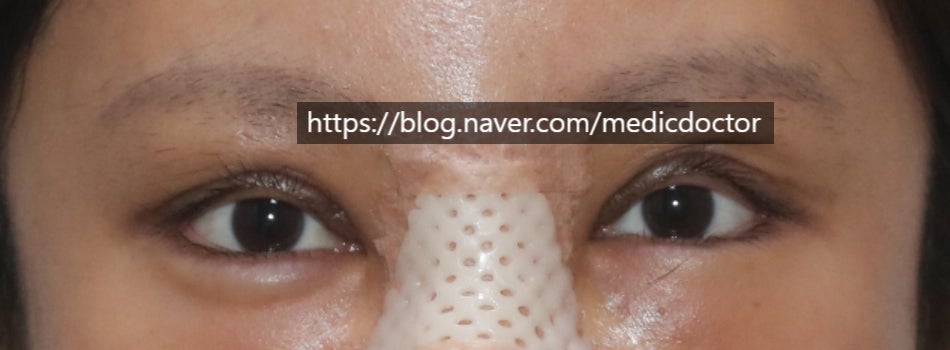
One week post-op.
The right eye (left in the photo) had more healthy tissue remaining and looked good from the start. The left eye (right in the photo) had less normal tissue, and the area below the incision line is firmer than the area above, which makes the upper portion appear folded by comparison.
That apparent fold is not from a new adhesion. It is from a volume deficit above the incision line, and as the swelling below the crease subsides, it usually resolves on its own.
This is one of those cases where you have to trust the process and wait.
This is from her visit today.
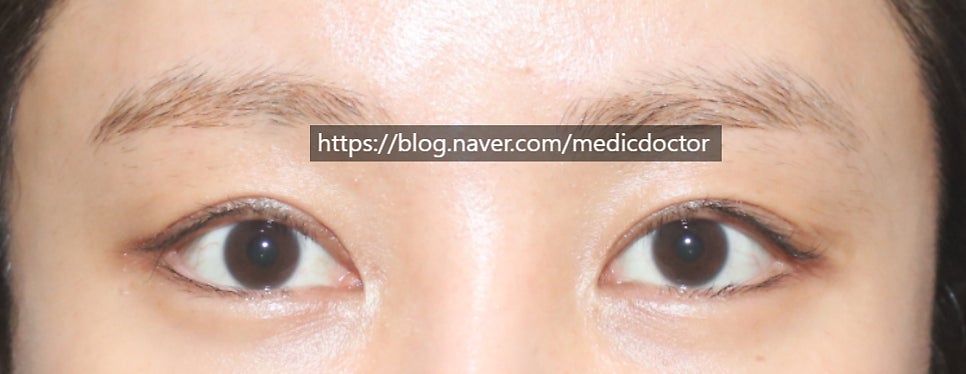
Ten months post-op. She has improved a great deal. The one disappointment is that her original surgery removed too much skin, which limits how much fine-tuning we can do from here.
Scarring at her visit. The two incision lines are asymmetric, but more importantly, the distance from the incision to the brow is much shorter on the right (left in the photo). Significantly more skin had been removed from that side.
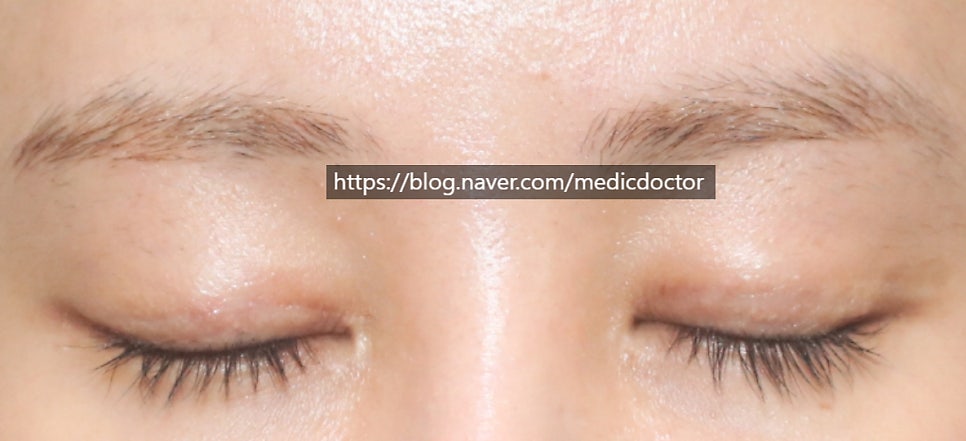
This is today's photo, ten months out. The scars have faded considerably. Some patients worry about a step-off (a visible terrace) after a scar-preserving high fold correction — that risk goes up the more the line is lowered, the more skin remains, and the more severe the original scarring. In this patient, because skin was already in short supply, that did not occur.
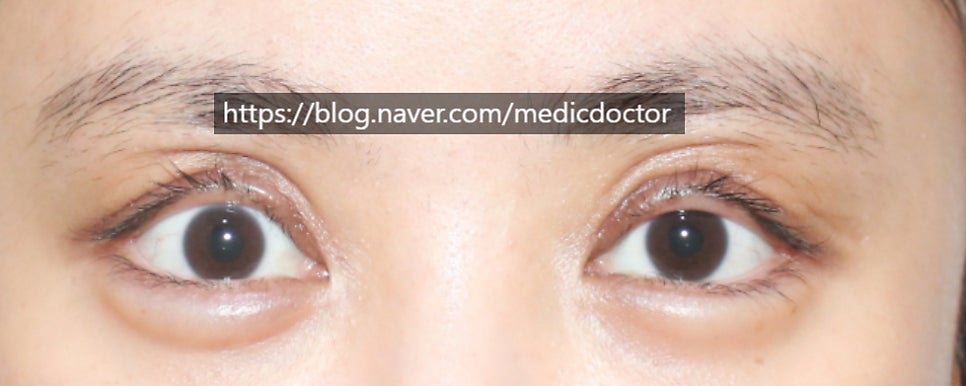
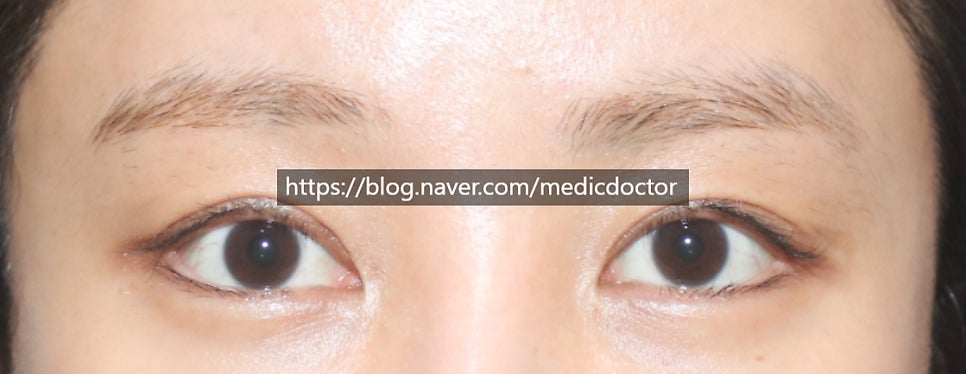
The early revision went well and the surgery overall came out cleanly. A real relief.
My thanks to the patient for trusting us and waiting through the process.