
Eyelid retraction — when the eyes end up too wide open after ptosis correction surgery — from causes and symptoms to the timing and methods of revision surgery: a complete guide by Gangnam Seoyon Plastic Surgery.
▶ Why Does Eyelid Retraction Happen?
Ptosis correction surgery (double-eyelid ptosis surgery) addresses a weak levator muscle — the muscle responsible for opening the eye — by shortening or firmly re-anchoring it so the eye opens more fully and clearly. However, if the muscle is shortened more than necessary during this process, the eyelid can be pulled up beyond its normal position, resulting in a condition called eyelid retraction.
In simple terms, it's a case where ptosis surgery, in solving the problem of "not opening enough," overshoots into the opposite problem of "opening too much." This is closely tied to the surgeon's technical experience and precision in adjusting muscle length during surgery, which is why revision surgery should only be entrusted to specialists — such as the medical team at Gangnam Seoyon Plastic Surgery — with extensive experience correcting eyelid retraction.
Comparison image: normal eyelid position vs. eyelid retraction
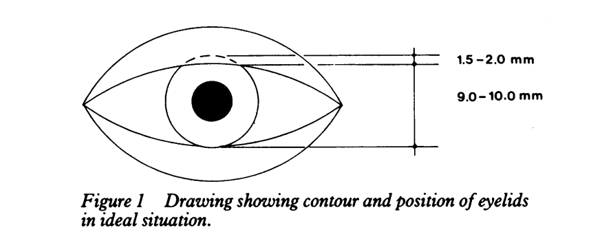
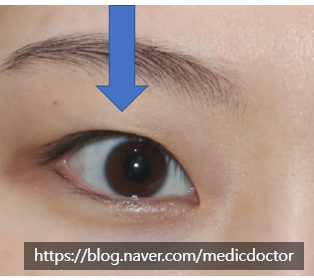
▶ Common Symptoms of Eyelid Retraction
1) Changes in Facial Expression
- A surprised or fierce-looking expression from the eyes appearing too wide open
- Excessive exposure of the white of the eye above the iris, sometimes called "scare eye"
2) Functional Problems
- Dry eye syndrome, eye irritation, a foreign-body sensation, chronic redness
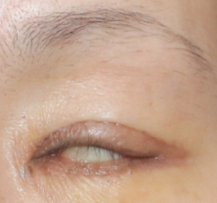
3) Lagophthalmos (Incomplete Eyelid Closure)
- A condition where the upper and lower eyelids fail to fully close even when the eyes are shut
- Risk of the cornea being exposed during sleep, potentially leading to secondary damage such as keratitis or corneal ulcers
If a foreign-body sensation or dryness persists for weeks rather than being simple fatigue, it's worth having Gangnam Seoyon Plastic Surgery check whether eyelid retraction may be the cause.
Example photo of lagophthalmos (eyes not fully closing when shut)
- An actual patient case, shown with consent
A short explanatory video
▶ Don't Confuse Eyelid Retraction with Ptosis
Category / Ptosis / Eyelid Retraction
Condition / Eyelid droops, opens less / Eyelid opens too much
Cause / Reduced levator muscle function / Overcorrection from ptosis surgery
Common symptoms / Obstructed vision, sleepy-looking expression / Lagophthalmos, dry eyes, fierce-looking expression
Although the two conditions are opposite problems, they share a common root cause: a failure to properly adjust the length of the same muscles — the levator muscle and Müller's muscle.
▶ Methods and Process of Eyelid Retraction Surgery (Based on Gangnam Seoyon Plastic Surgery Cases)
1) Surgical Approach
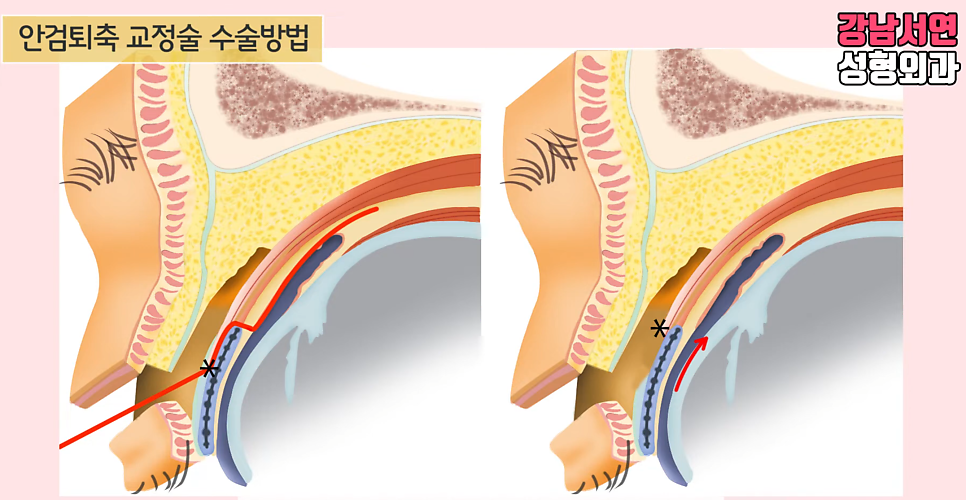
An incision is made from the skin side along the double-eyelid line. The tarsal plate is separated from the levator muscle, and Müller's muscle is separated from the conjunctiva to release all adhesions, after which the tissues are reconnected.
2) Muscle Lengthening
After separating the levator muscle and Müller's muscle from the conjunctiva, the shortened muscle is lengthened so that the eyelid can be brought back down to its normal position. In more severe cases of retraction, autologous dermal fat or a graft may be inserted to reinforce the added length.
3) Timing of Surgery
As a rule, this surgery is performed at least 6 months after the initial ptosis correction. This allows time for early swelling and tissue adhesion to stabilize so that the true degree of retraction can be accurately assessed.
Diagram of the surgical process (conjunctival incision site, concept of muscle lengthening)
Animated explanation of the surgical principle (1-2 minutes)
▶ Be Sure to Check These Points About Eyelid Retraction Surgery
- Risk of overcorrection recurrence: Lengthening the muscle too much can, in turn, make the eye appear droopy and sleepy, so precise, careful adjustment of muscle length is essential.
- Possibility of asymmetry: Since the degree of retraction often differs between the two eyes, the goal should be natural balance rather than perfect symmetry.
- Individual variation in swelling: Recovery speed and how swelling subsides vary from person to person, so it can take several months before the final result can be judged.
- The surgeon's revision experience: Because existing tissue adhesion makes revision surgery for eyelid retraction more challenging than the initial procedure, choosing a specialist experienced in revision cases has a major impact on the outcome.
▶ Post-Operative Care
- Avoid rubbing or applying pressure to the eyes for the first 1-2 weeks
- Manage dry eyes with artificial tears and similar measures (discuss the specific regimen with your surgeon)
- Attend regular follow-up visits to check eyelid position and corneal health
- If a foreign-body sensation or redness persists, don't try to judge it yourself — visit the clinic right away
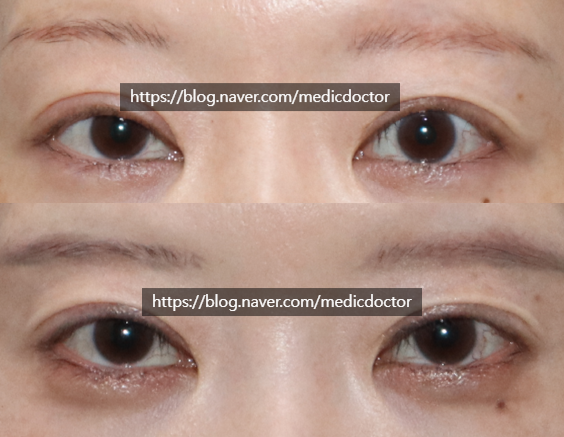
Before-and-after comparison photos (an actual patient case, shown with consent)
▶ Closing Thoughts
Eyelid retraction is one of the most common overcorrection side effects of ptosis surgery, and it affects not only cosmetic satisfaction but also corneal health directly. If your eyes look noticeably wider than before, or if stiffness and a foreign-body sensation persist, don't leave it untreated — we recommend getting an accurate diagnosis and consultation at Gangnam Seoyon Plastic Surgery, where extensive experience in eyelid retraction revision surgery is available.
Gangnam Seoyon Plastic Surgery draws on specialized expertise in eye revision surgery and eyelid retraction correction to help restore a natural eye shape.
Most of this content is drawn from material we published in 2022.
- If any of this sounds like you, we recommend scheduling a consultation