
When the mucosa still shows and the lashes still turn upward after 6 months
"When the skin is severely lacking, trying too hard to correct eyelid margin eversion can lead to functional side effects. Even so, it can still be improved considerably."
— Dr. Choi Dong-il, Chief Surgeon
The before and after photos shown are taken 6 months before and after surgery.
The before-and-after photos and videos shown here are published with the consent of patients who underwent surgery at our clinic, and are genuine, unretouched images. Any unauthorized use by other institutions will be subject to strict legal action.


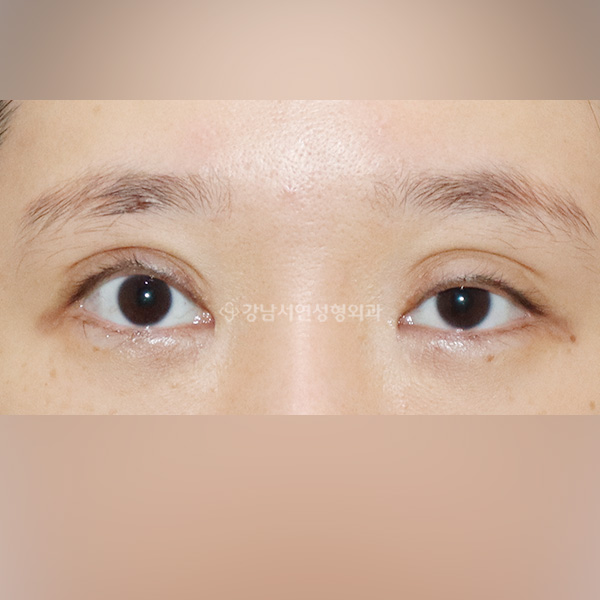
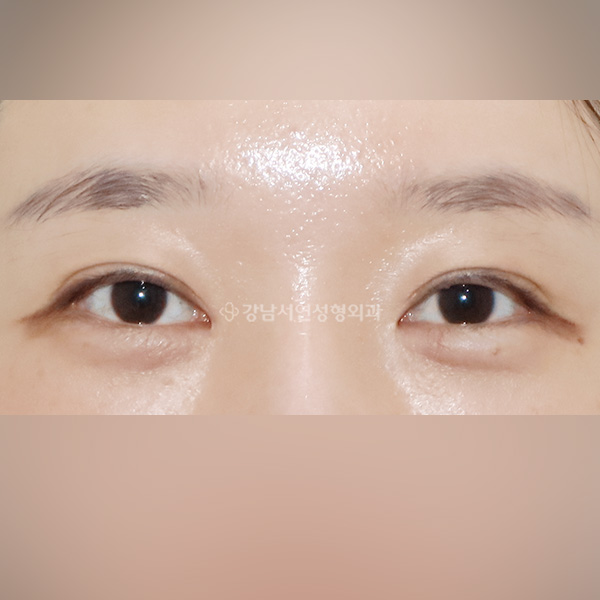


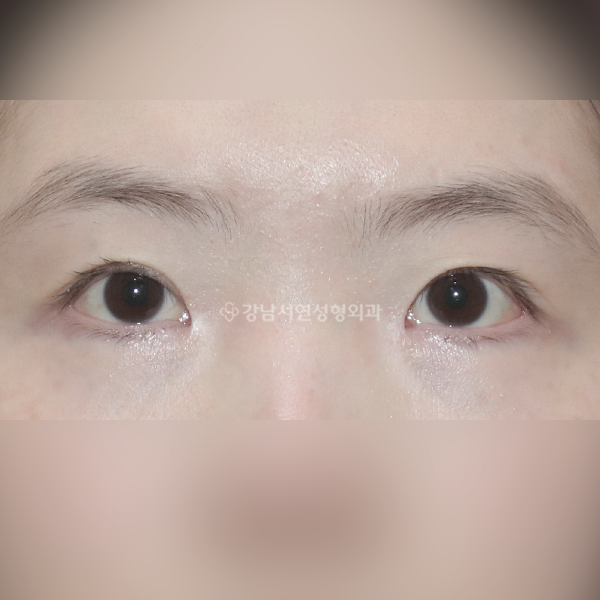
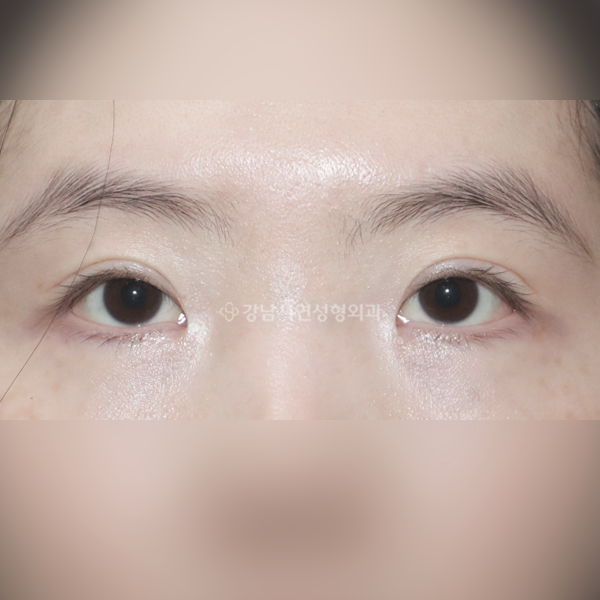


From surgery time to return to daily life at a glance.
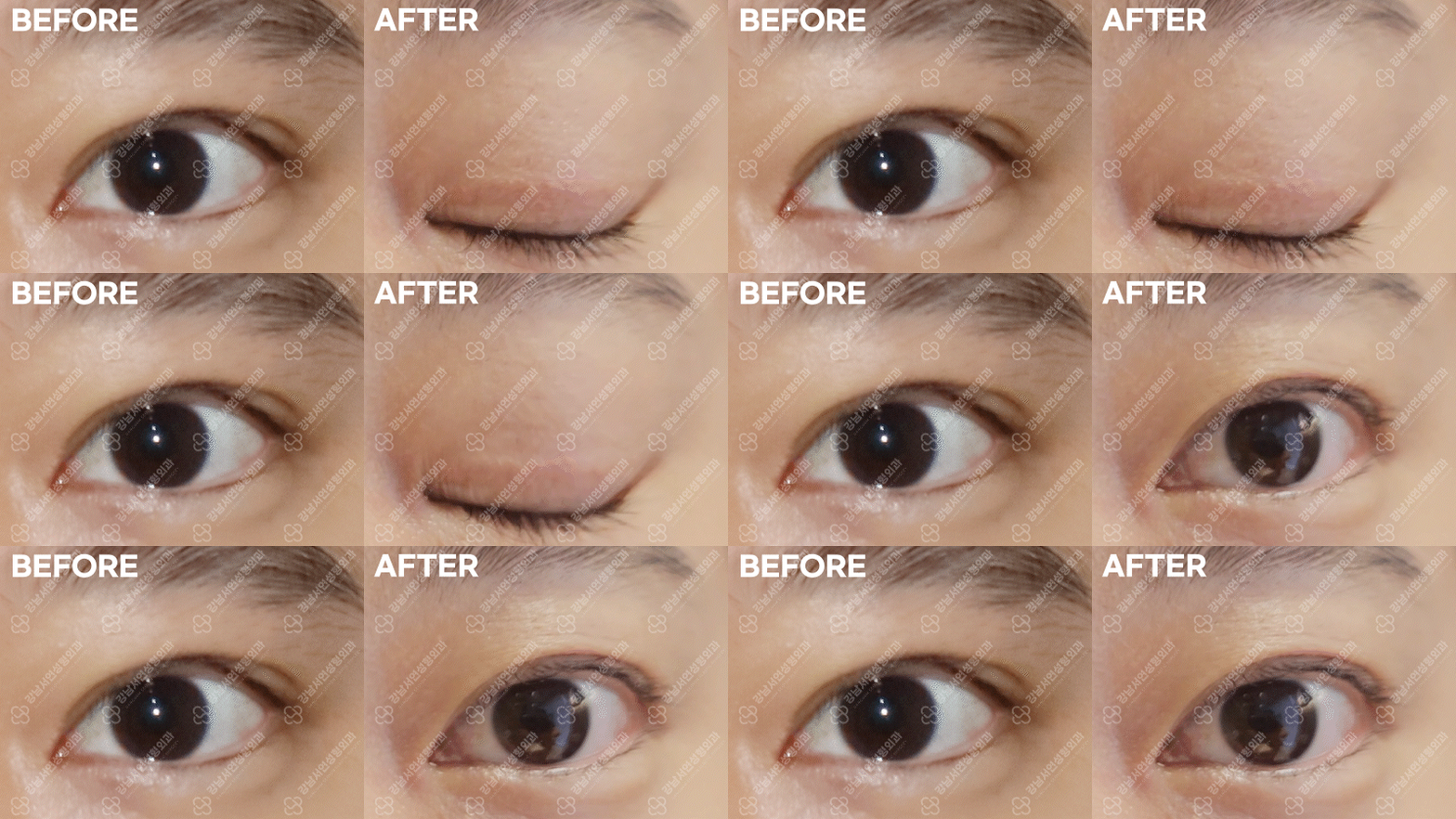
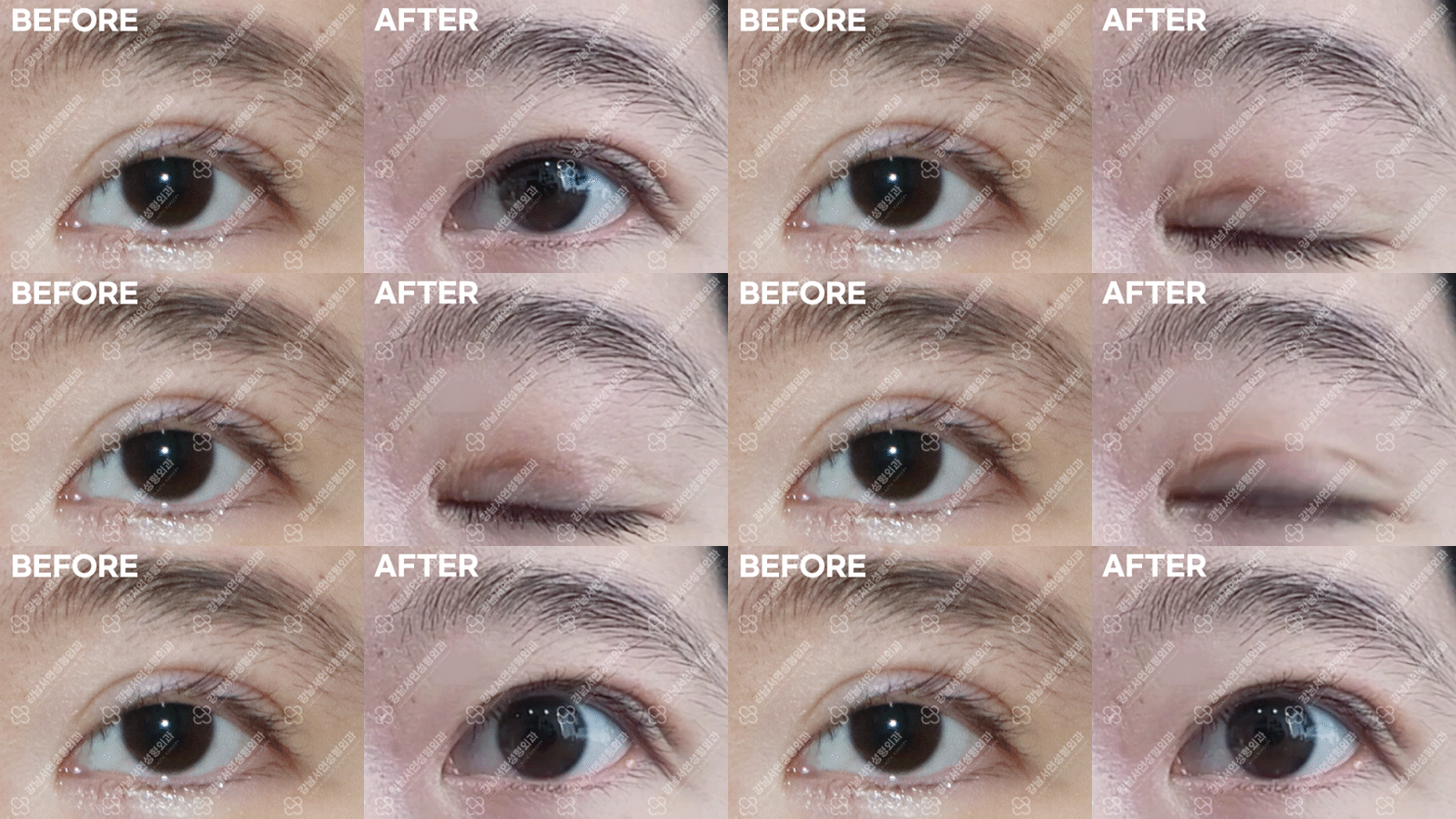
4 suitable cases for Gangnam Seoyon's eyelid margin eversion revision.
Those whose mucosa and eyelashes still look upturned
6 months after double eyelid surgery
Those whose double eyelids look thick
with the skin turned outward
Those whose eyelid skin is pulled up by a skin shortage,
creating a high crease and eyelid margin eversion
Those with eyelid margin eversion
along with a sleepy, heavy-lidded look
After double eyelid surgery, what seems like simple swelling sometimes turns out to be something else. Swelling mostly subsides within 2 weeks, resolves within a month or two at the latest, and should be completely gone after about 6 months. However, if the mucosa and eyelashes still look upturned more than 6 months later, a revision is needed.
When the skin is severely lacking, it gets pulled upward, lifting the mucosa along with it.
In a normal double eyelid fixation, fixation point A should be anchored at A'. However, when the skin is insufficient, it is pulled upward and point A ends up anchored at around B. As a result, the eyelashes below are lifted along with it.
Even when the double eyelid crease looks high, the crease itself is sometimes not actually high. It looks high because there is a significant shortage of skin.
Double eyelid surgery inherently changes the original direction of the eyelashes. The mucosa is not exposed, but the lashes turn upward — which is why patients whose eyelashes poke into the eye are also treated with double eyelid surgery.
With a gentle, low and well-placed fixation, most eyelid margin eversion can be corrected.
Most eyelid margin eversion can be corrected
Eyelid margin eversion is usually corrected as part of the revision, but it is not the main focus. When the fixation is made gently and placed low, most eyelid margin eversion is corrected.
Only as far as it causes no functional side effects
Correcting eyelid margin eversion requires dissection between the orbicularis oculi and the tarsal plate. This can injure the orbicularis oculi and raises the risk of lagophthalmos. Lagophthalmos is a condition in which the eyes do not close completely. The orbicularis oculi is the muscle that closes the eye. For this reason, rather than correcting eyelid margin eversion aggressively, Chief Director Choi Dong-il recommends correcting it only as far as it causes no functional side effects. Even so, eyelid margin eversion improves considerably.
Setting a lower crease and releasing existing adhesions
It often appears together with a high-set crease that gives the eyes a puffy, sausage-like look, so in some cases it is corrected together with crease lowering. Crease lowering is done by setting a lower crease and releasing the existing adhesions.
Learn more about Lowering Thick Double Eyelids (Scar-Preserving High Fold Correction) →
We explain this thoroughly to every patient before surgery, but when the existing condition is poor, some degree of eyelid margin eversion will inevitably remain. Even so, it improves considerably. In Complex Double Eyelid Revision cases, it is difficult to make the eyes look as if they had never been operated on. The goal is improvement. It is important to receive a thorough explanation before surgery and to understand its limitations before proceeding.
Please refer to these real, unretouched videos.
3 principles for safely completing highly difficult surgical techniques.
Precise diagnosis by an experienced board-certified plastic surgeon
Customized design considering eye shape, condition, and overall face
Thorough planning + delicate surgery to minimize tissue damage
We explain key points to know before surgery through a video.
Ask anything about Eyelid Margin Eversion Revision.
The simplest guide is the time since surgery. Swelling usually starts to subside within 2 weeks and is gone by about 6 months. If the mucosa still looks exposed after that, it is a good idea to have it checked for eyelid margin eversion.
If the skin becomes insufficient during surgery, the eyelid is pulled upward, and the mucosa and eyelashes can look upturned along with it.
The greater the skin shortage, the more of it may remain even after correction. To avoid functional side effects such as difficulty closing the eyes, it is important not to push the correction too far.
If the orbicularis oculi, the muscle that closes the eye, is damaged, lagophthalmos (incomplete eye closure) can result. That is why the surgeon's skill in correcting the eversion while preserving the orbicularis oculi is important.


