
Some patients tell us they developed wrinkles they never had before the surgery.
Genuine new wrinkles or multiple upper eyelid creases appearing post-op would, of course, be a real issue.
But in patients past their forties, pre-existing wrinkles in the lid skin often become more visible after eyelid surgery.
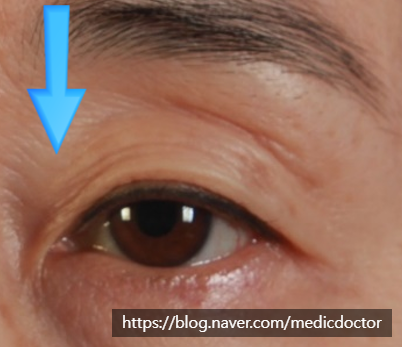
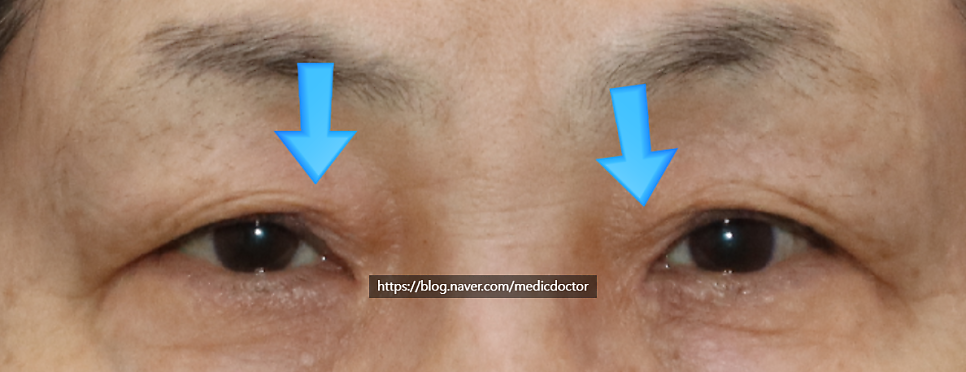
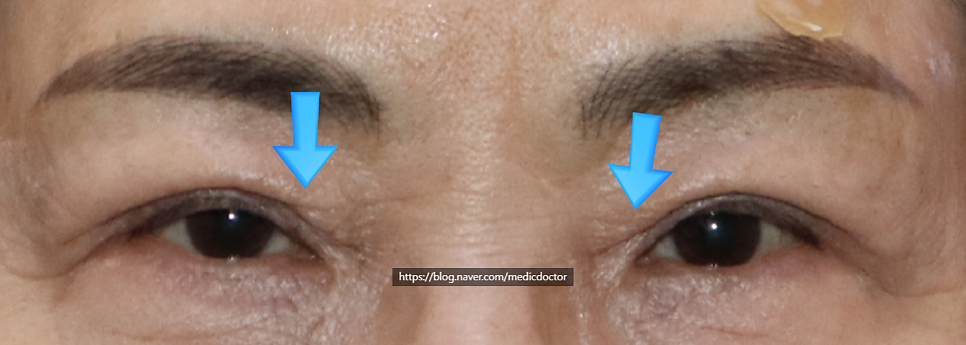
Looking at this patient, the area around her crease was already wrinkled before surgery.
She is in her sixties.
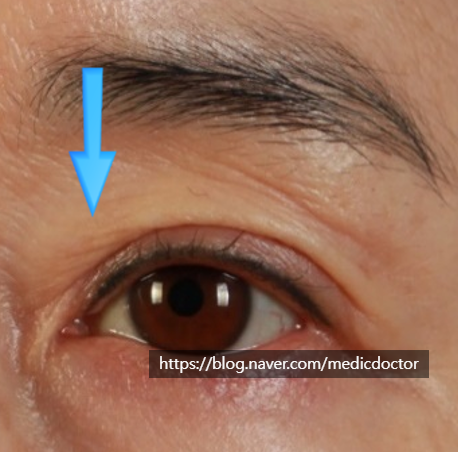
Do you see the horizontal wrinkles that appear post-op?
This is the kind of situation that leads to unnecessary misunderstanding after surgery.
"After my surgery, wrinkles showed up at the front of the lid…"
"They weren't there before — now I have multiple upper eyelid creases and I'm devastated…"
These wrinkles are pre-existing. They were there beforehand, and most of them extend down toward the bridge of the nose.
They show up especially clearly in patients with thin skin.
With age, the skin descends and the brow comes down with it.
As the brow drops, the patient unconsciously starts using the forehead muscles to hold the lids up over years.
When the lid droop is later corrected and the forehead is no longer doing that work, the brow can settle even lower and the look temporarily worsens.
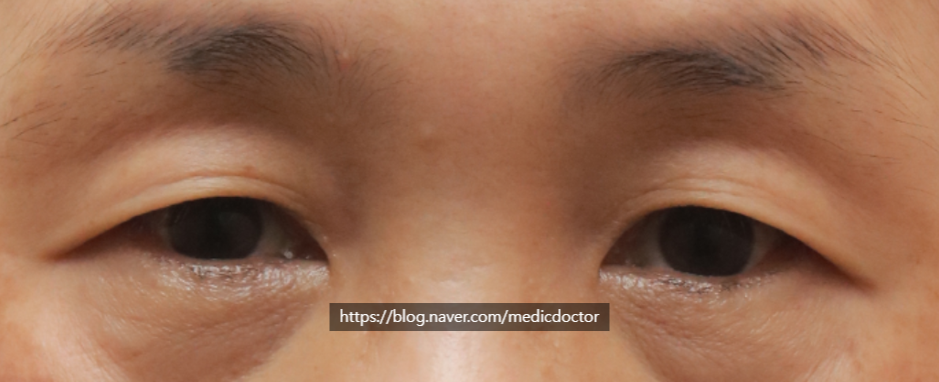
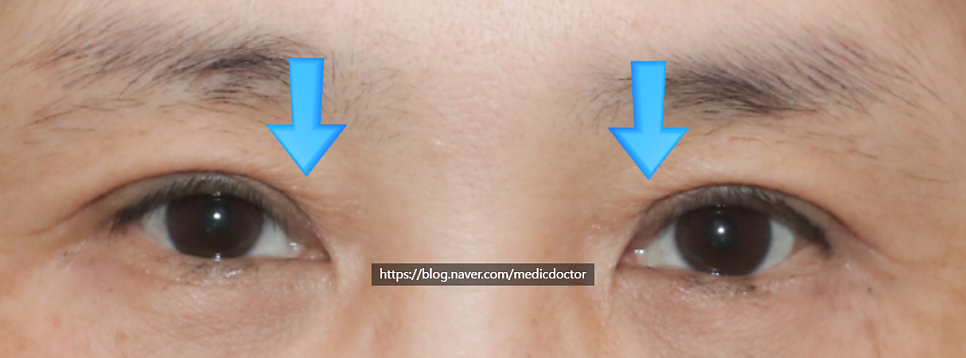
These wrinkles look worse when the patient deliberately opens the eyes wide.
Patients sometimes deliberately squint or open the eyes wide to demonstrate the wrinkles to others as evidence of a botched surgery. Repeating that pattern in daily life only makes the wrinkles worse.
Over time, the eyes adapt to their own creases and the lines start to read as natural — putting too much energy into them is not good for one's peace of mind.
Another reason is simple: the wrinkles were always there, but the patient didn't notice them until they started studying their face in the mirror after surgery.
Wrinkles that pre-existed the surgery generally cannot be improved by it.
That said, in patients with thin skin, nanofat grafting can soften them somewhat.
I'd hope this clears up some of the misunderstanding.
Common features in these patients: (1) over forty years old, (2) brow ptosis, (3) pre-existing wrinkles, (4) the wrinkles deepen when the patient consciously opens the eyes wide.
The wrinkles aren't bad in everyday use, but the more the patient fixates on them and squints to inspect them, the more pronounced they become.
This is unrelated to any specific procedure — it shows up regardless of whether the patient had a scar-preserving high fold correction, retraction repair, or eyelid revision.
https://blog.naver.com/medicdoctor/223051533802
For genuine multiple upper eyelid creases caused by surgical issues, see the post above.
Time is the better medicine here. Living without that constant stress matters more than chasing after every wrinkle.