
Hello!
Always doing our very best for surgery with high patient satisfaction,
this is Gangnam Seoyon Plastic Surgery :)
Today, we'd like to explain the causes and treatment of double eyelid fold loss.
*This post is based mainly on the content Dr. Choi Dong-il presented at the Korean Society of Aesthetic Plastic Surgery in April this year (2022).
The photos below, aside from brightness adjustment,
have not been retouched in any way :)

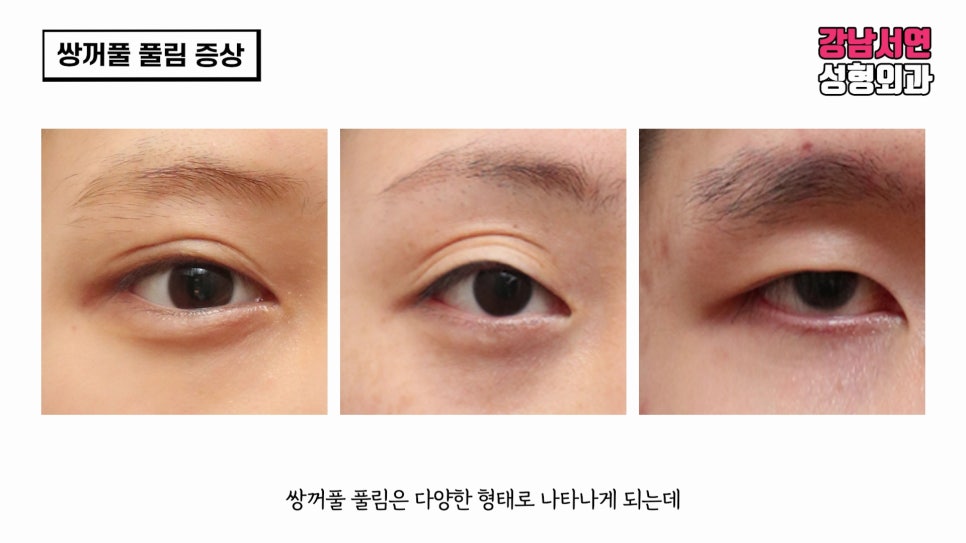
Double eyelid fold loss can appear in various forms:
1) the fold has come undone,
2) multiple upper eyelid creases appear, or
3) the line looks wrinkled and uneven — these are among the various forms it can take.
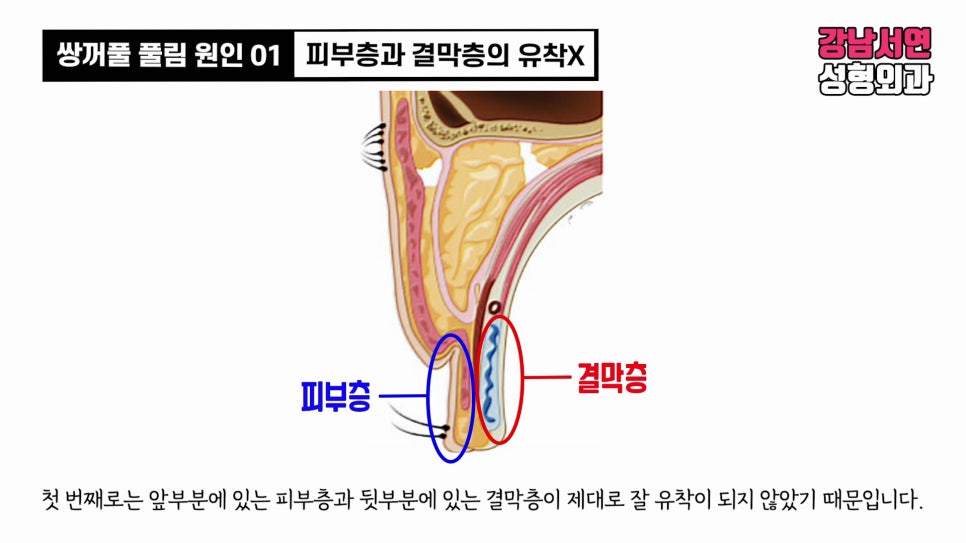
The causes of a double eyelid fold coming undone are as follows.
The first is that the front skin layer and the back conjunctival layer did not adhere to each other properly.
When you open your eye, the tarsal plate tissue is drawn upward and the tissue invaginates,
and the back layer and the front part need to adhere well so they are pulled up together, but if adhesion doesn't occur, only the back part rises.
Then, because the front part doesn't fold, the double eyelid appears to have come undone.
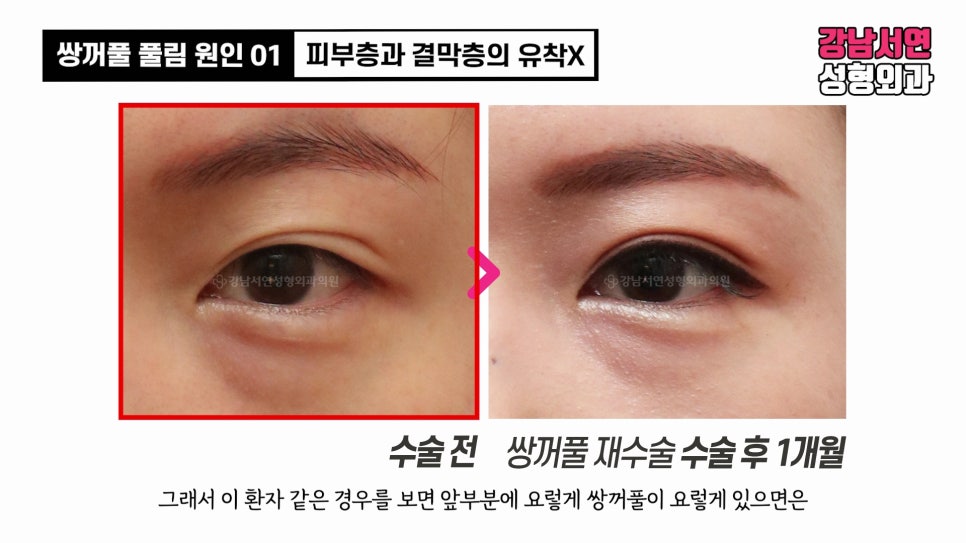
So in this patient's case, at the front
there is only the incision line and the fold isn't folding, which is why it looks undone.
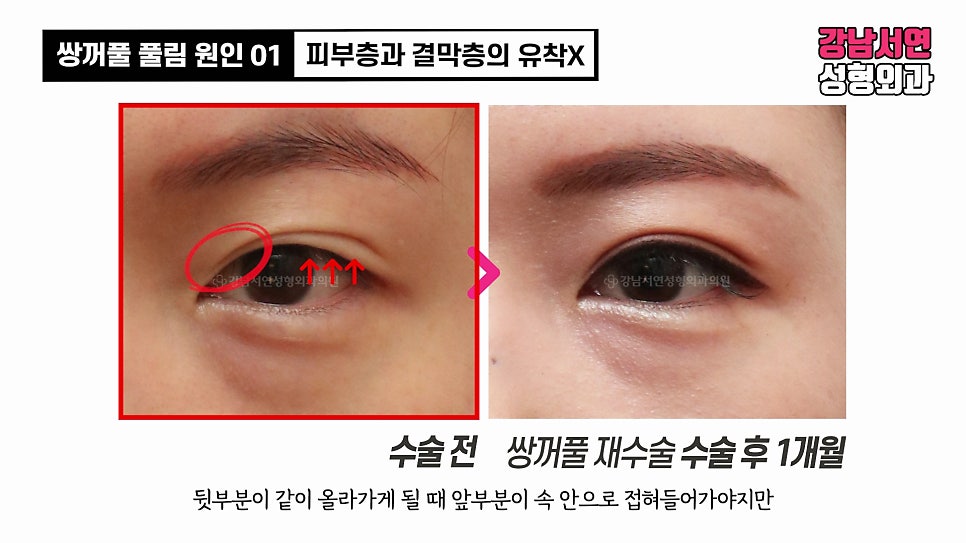
Only when the front part folds inward does the double eyelid stop looking undone.
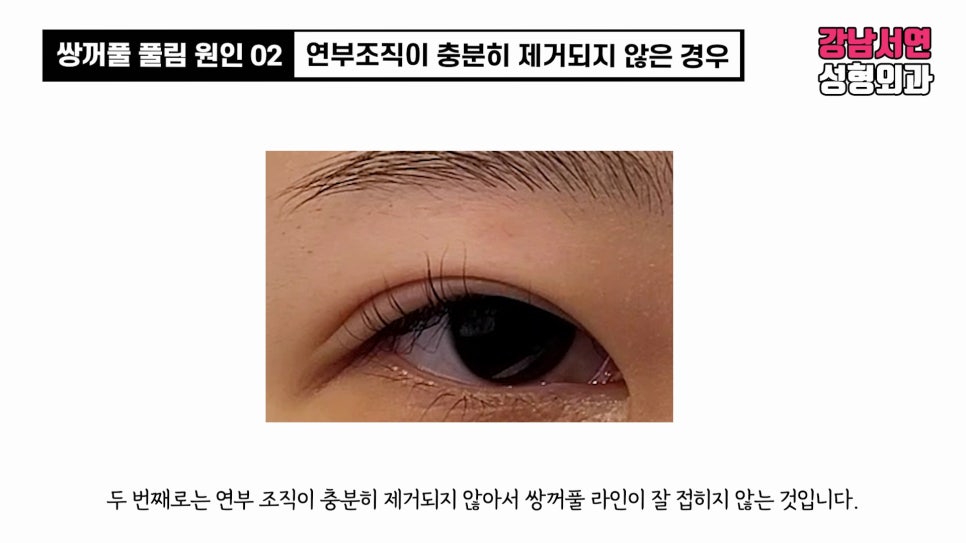
The next cause of fold loss is that the soft tissue was not sufficiently removed, so the double eyelid line doesn't fold well.
In this patient, because the soft tissue wasn't sufficiently removed, a thick appearance still remains and the fold doesn't tuck in well.
So we need to remove enough soft tissue so the fold can tuck in better, allowing the double eyelid to fold well.
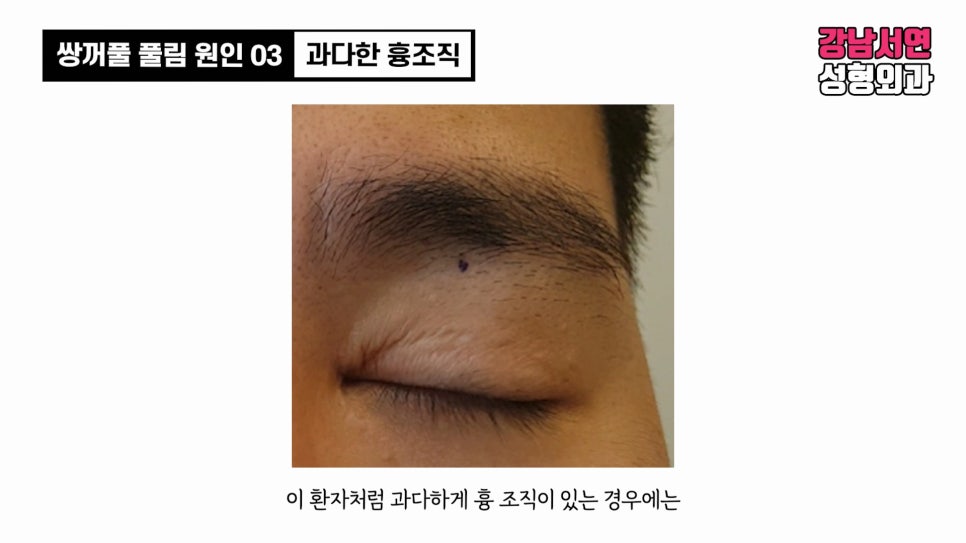
In a case like this patient's, where there is excessive scar tissue,
because the fold has to form out of scar tissue,
it may not fold well.
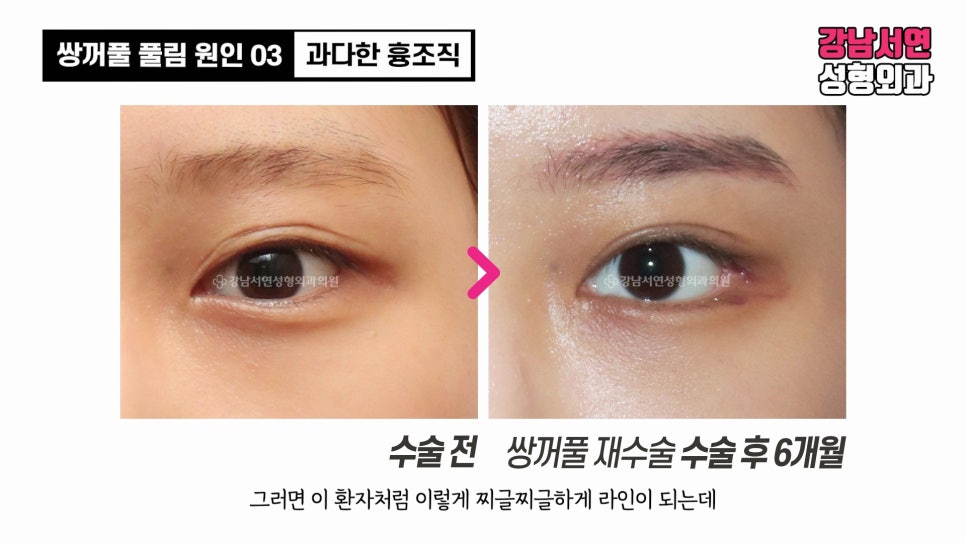
This results in a wrinkled, uneven line like in this patient,
and only by finding healthy tissue on which to form the double eyelid line
can a beautiful, curved double eyelid be created.
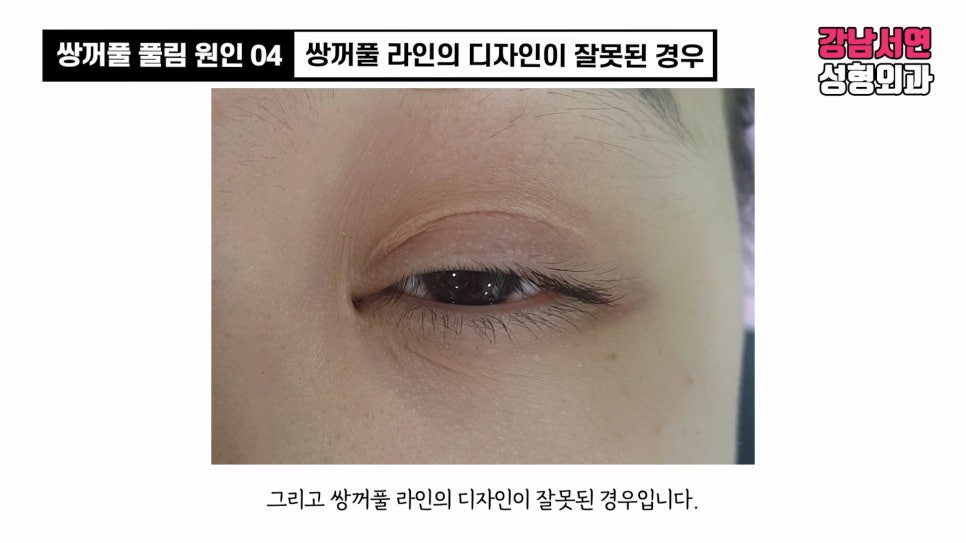
Next is a case where the double eyelid line was poorly designed.
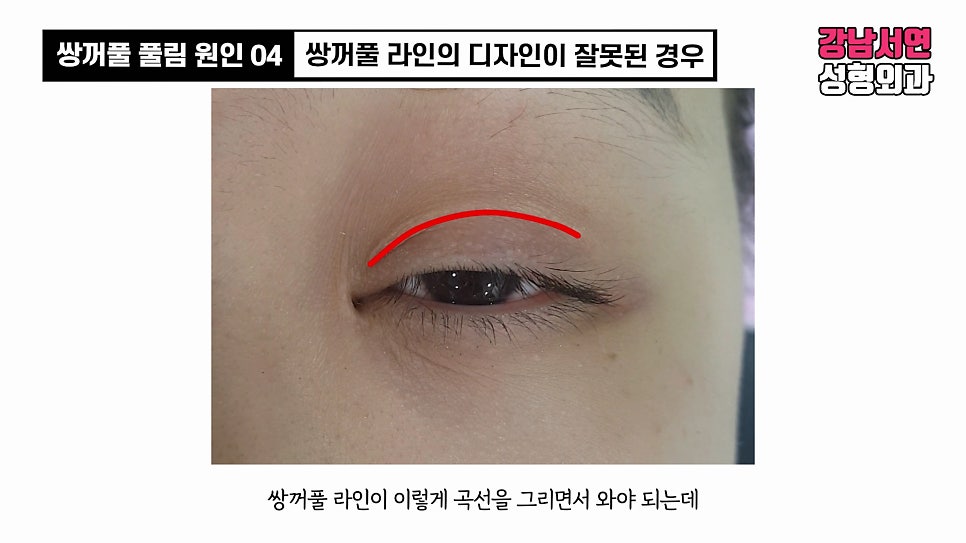
The double eyelid line should follow a smooth curve like this,
but sometimes a slightly distorted line forms at the front,
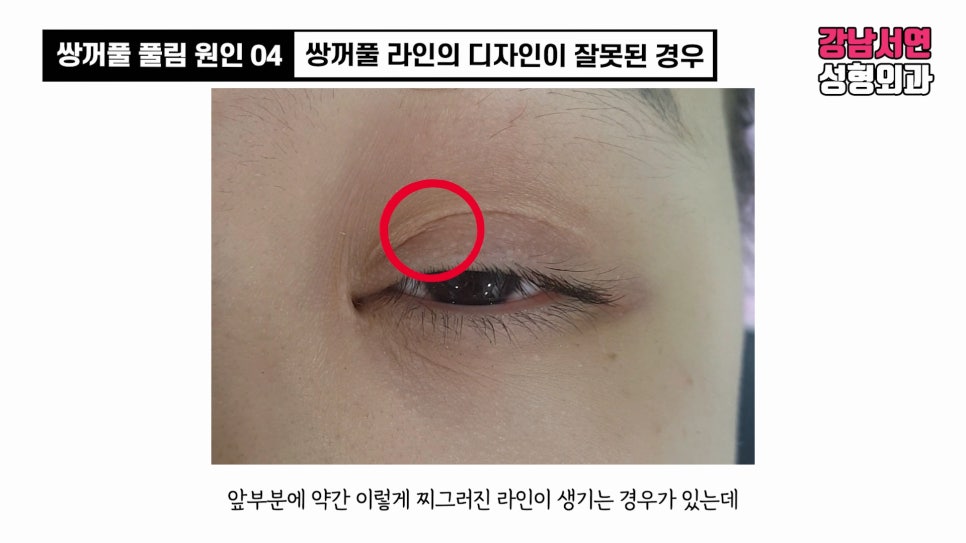
so that as it goes toward the front the curve fails to form
and it bends downward instead, or the fold can look undone.
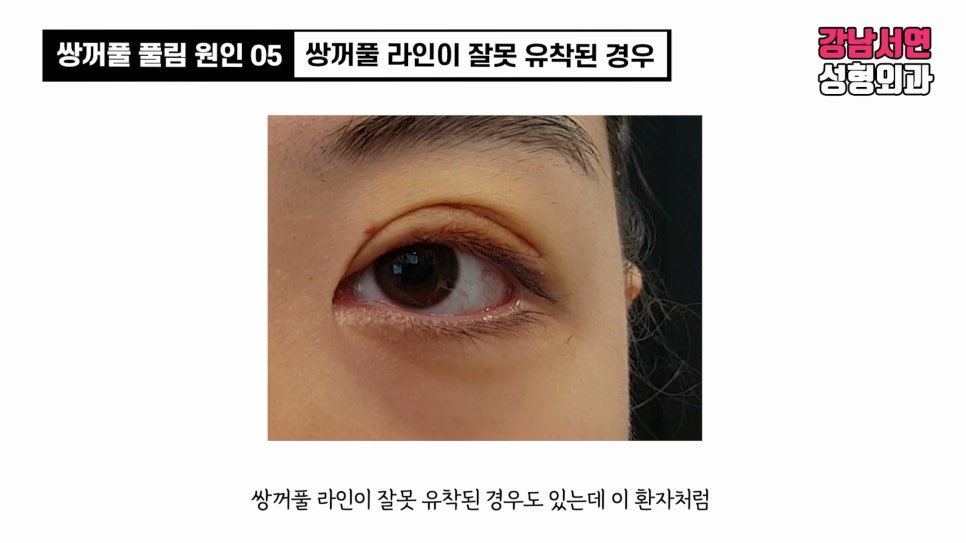
There are also cases where the double eyelid line adhered incorrectly, as in this patient,
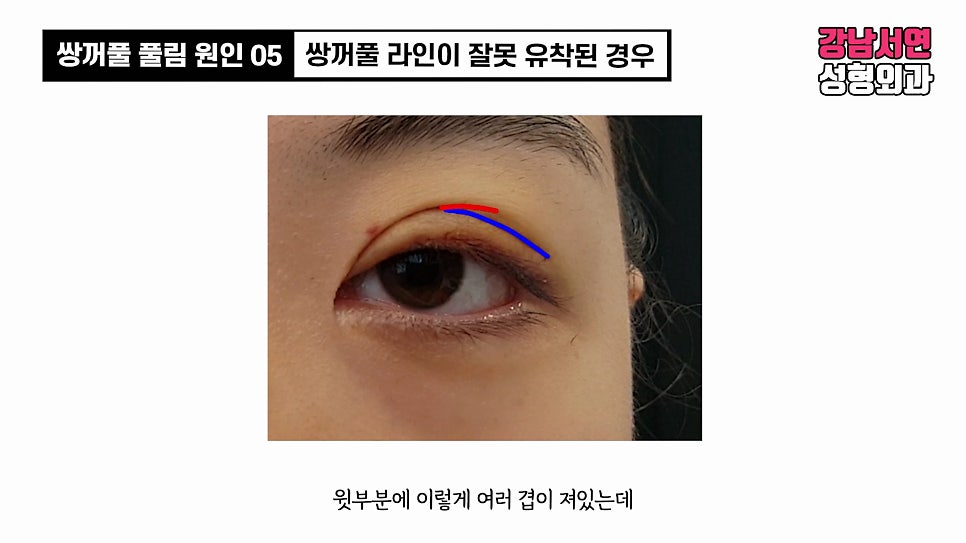
who has a fold at the bottom and also several folds in the upper part.
This person underwent the scar-preserving high fold correction — commonly called the "two-line" technique, a procedure that lowers the double eyelid while preserving the existing scar —
but adhesion formed at the existing double eyelid line in the upper part.
Because the fold forms not at the lower incision line but higher up, these multiple upper eyelid creases appear,
so to release the adhesion, we carefully dissect it and perform several techniques to prevent re-adhesion.
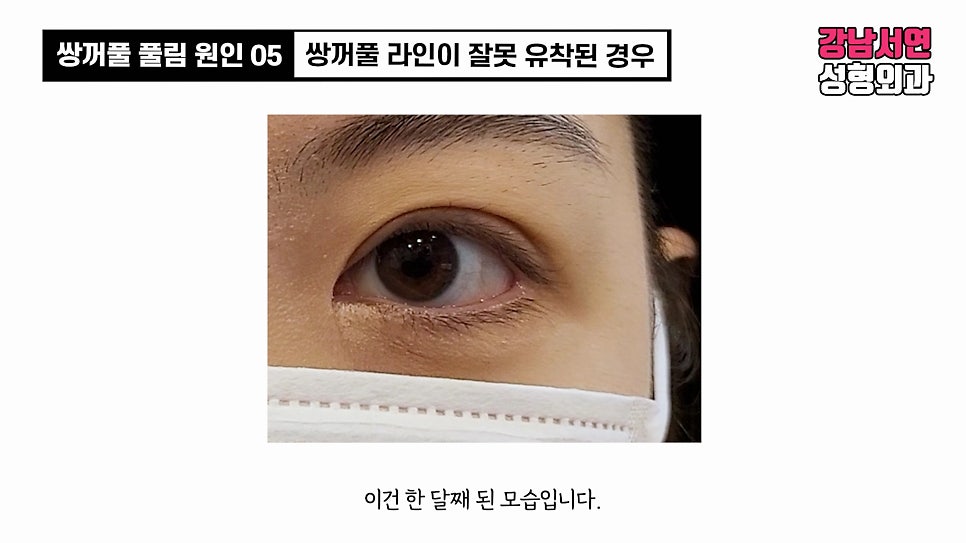
In this way, we make the double eyelid fold properly.
This is how it looks at one month.
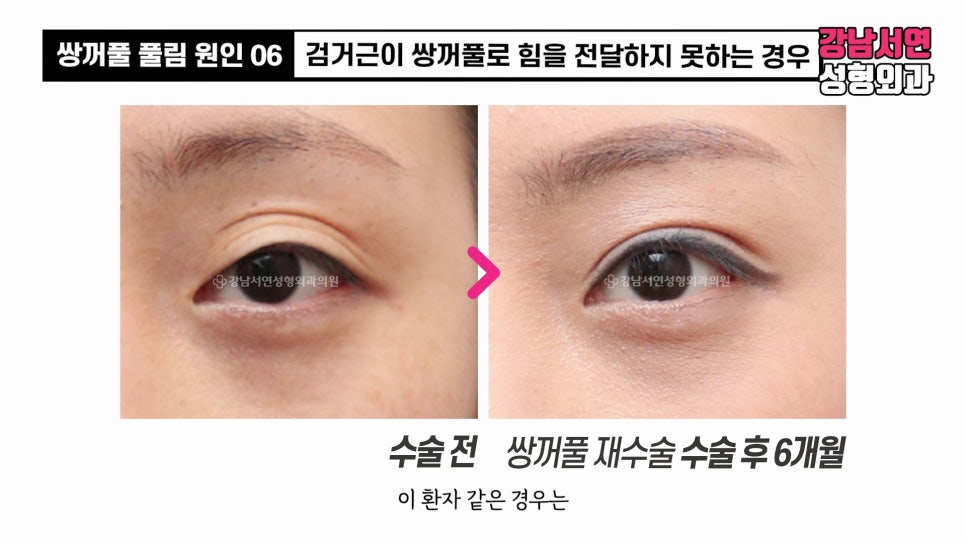
In this patient's case, the eye-opening muscle — that is, the levator muscle — failed to properly transmit force to the double eyelid, which is why these multiple upper eyelid creases formed.
The part below that is the incision line, and the force of the eye-opening muscle should be transmitted here to create a nice line,
but because the muscle's force wasn't transmitted that far, this is the result,
and this can occur because the eye-shape (ptosis) correction has come undone or due to various other surgical issues.
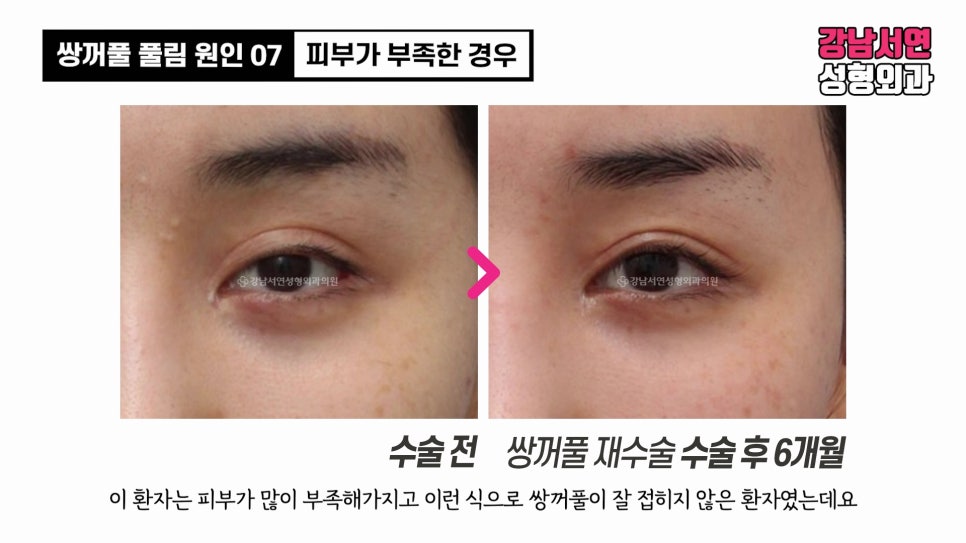
This patient had very little excess skin, so the double eyelid didn't fold well.
In fact, for a patient like this, in order to lower the double eyelid
we used the scar-preserving high fold correction — what we commonly call the "two-line" technique — to lower the line,
and then performed a fat graft to pull the upper skin down a bit more,
which is how we lowered the line in this case.
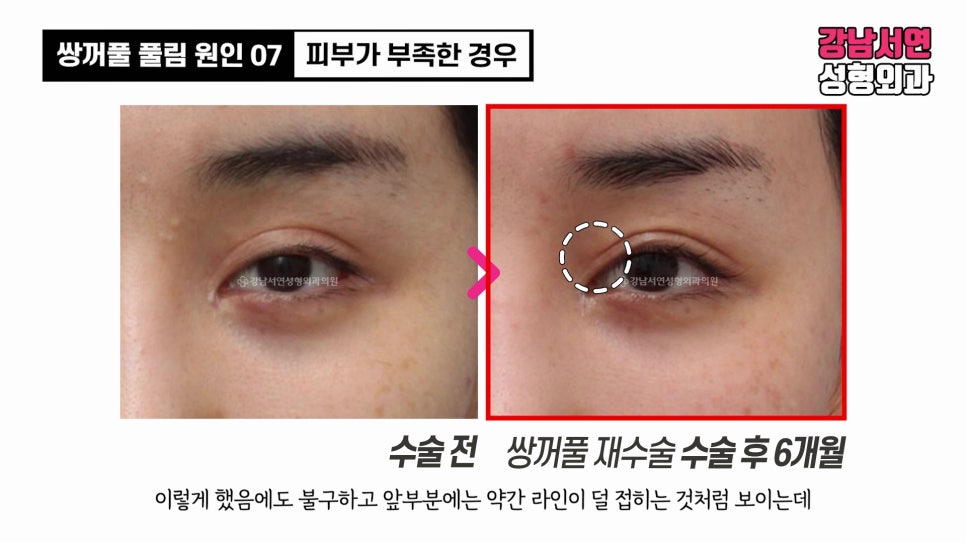
Even so, the line at the front appears to fold slightly less,
and that's because there is very little excess skin.
As the patient gets older and, over time, the skin sags a little more, we expect the line to fold a bit better.
For more on today's post,
you can find more detailed information in the video below.
↓↓↓↓↓↓
The photographs in this post were taken under identical conditions with the patient's prior consent.
In addition, side effects such as bleeding, infection, and inflammation may occur after plastic surgery or procedures depending on the individual, so caution is required.