
Hello!
For surgery with high patient satisfaction,
always giving our very best —
this is Gangnam Seoyon Plastic Surgery :)
Today, we're going to look at eyelid retraction correction surgery, which is performed when over-correction occurs after eye-shape (ptosis) correction.

We'll talk about eyelid retraction based on the presentation on retraction correction surgery that Dr. Choi Dong-il gave at the 15th Academic Symposium of the Eye Plastic Surgery Research Society, held on July 3, 2022.
Looking at the last 10 years, eye-shape correction seems to have become far more common than before.
Of course, there are many cases where the eye-shape correction turned out well, but along with that, the number of cases showing side effects after the surgery seems to have increased just as much.
In particular, after eye-shape correction surgery that makes small, sleepy-looking eyes bigger, the eyes can instead become over-corrected and look startled,
and this often creates functional side effects.
In these cases, a procedure called eyelid retraction correction surgery is performed, but because the term 'eyelid retraction' is unfamiliar, many people are unsure exactly what it means.
Through today's post, we'll explain it clearly and accurately.
The photos below have had nothing adjusted
other than brightness :)

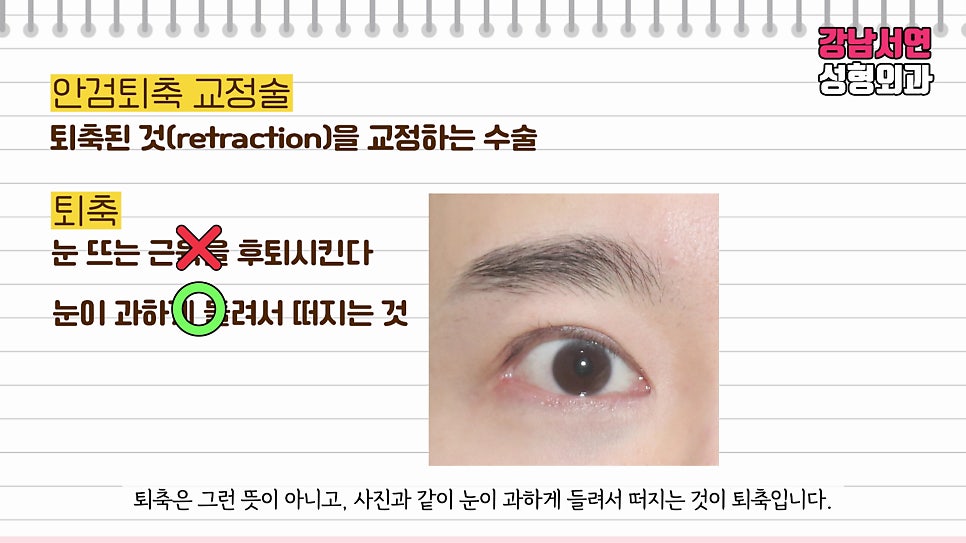
First, to clarify the term 'eyelid retraction correction surgery':
Eyelid retraction correction surgery is a procedure that corrects what has been retracted (retraction).
Some people misunderstand the term 'retraction' to mean pulling back the eye-opening muscle, and end up using the term incorrectly.
But that is not what retraction means; as shown in the photo, retraction is when the eyelid is lifted excessively so the eye opens too wide.
So the surgery that corrects a retracted eye is called eyelid retraction correction surgery.
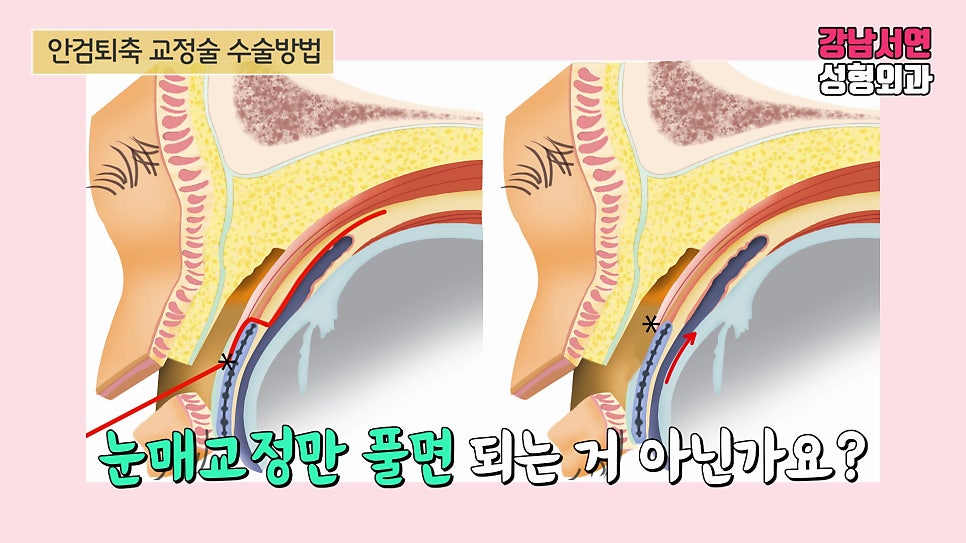
So how is eyelid retraction correction surgery performed?
Since the over-correction side effect occurred after eye-shape correction surgery, you might think it is enough to simply undo the eye-shape correction,
but simply removing the eye-shape correction sutures from the eye-opening muscle will never correct a retracted eye.
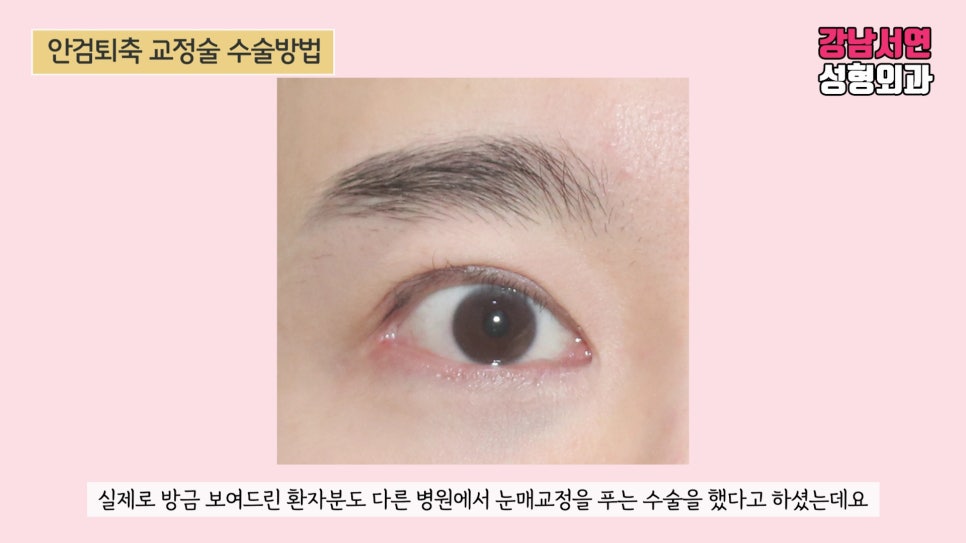
In fact, the patient in the photo above said she had surgery at another clinic to undo the eye-shape correction,
releasing the eye-opening muscle and even separating the Müller's muscle, but she said it was not corrected at all.
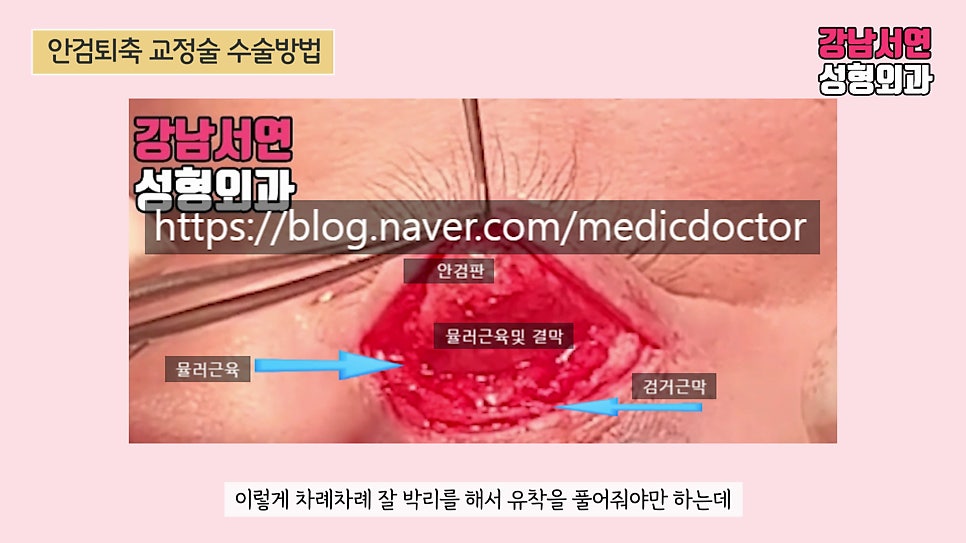
In eyelid retraction correction surgery, first
the levator muscle, which opens the eye, is separated from the tarsal plate to expose the Müller's muscle,
and then the conjunctiva and the Müller's muscle are separated to carry out the retraction correction.
The tissue must be carefully dissected step by step in this way to release the adhesions,
and the surgery itself has many variables, making it a difficult operation for someone without much experience.
Eyelid retraction correction surgery has many variables.
One of them is when, shortly after surgery, the retraction correction appears successful, but later the eye again looks wide open.
If the eye opens wide again within 2–3 weeks after surgery, early correction is essential.
This happens because, under anesthesia during surgery, the eye becomes smaller and the retraction surgery appears successful,
but over time it turns out that the retraction was not corrected sufficiently.
For this reason, it is best to have the surgery performed by an experienced doctor.
Also, between 1 and 2 months after surgery, the wide-open appearance can recur due to various causes such as scarring or contracture,
and in that case, depending on the patient's condition, we decide whether to operate again to add more correction, or to monitor the progress and wait a little longer.
With eyelid retraction correction surgery, the likelihood of needing early correction is relatively high, but it does not happen to everyone, so there is no need to worry too much.
The chance of asymmetry is also relatively high compared with other surgeries.
This too does not happen in every case, so again there is no need to worry too much,
and because asymmetry involves many variables, we do not perform early correction for it but instead re-correct it after 6 months from the surgery.
Finally, we'll close by showing some case examples of eyelid retraction correction surgery.
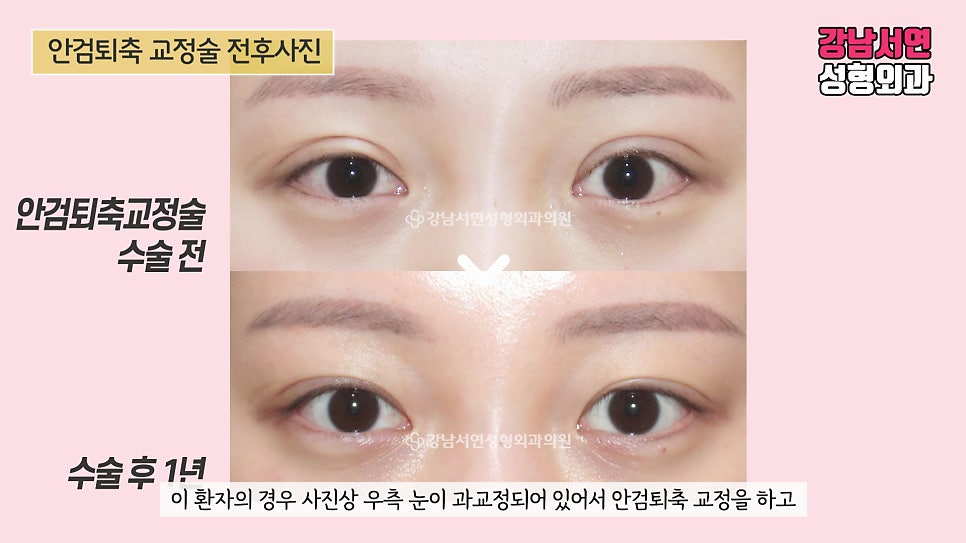
In this patient's case, the eye on the right in the photo was over-corrected, so we performed eyelid retraction correction on it,
and because the line of the eye on the left in the photo was relatively low, we corrected it to be a little higher.
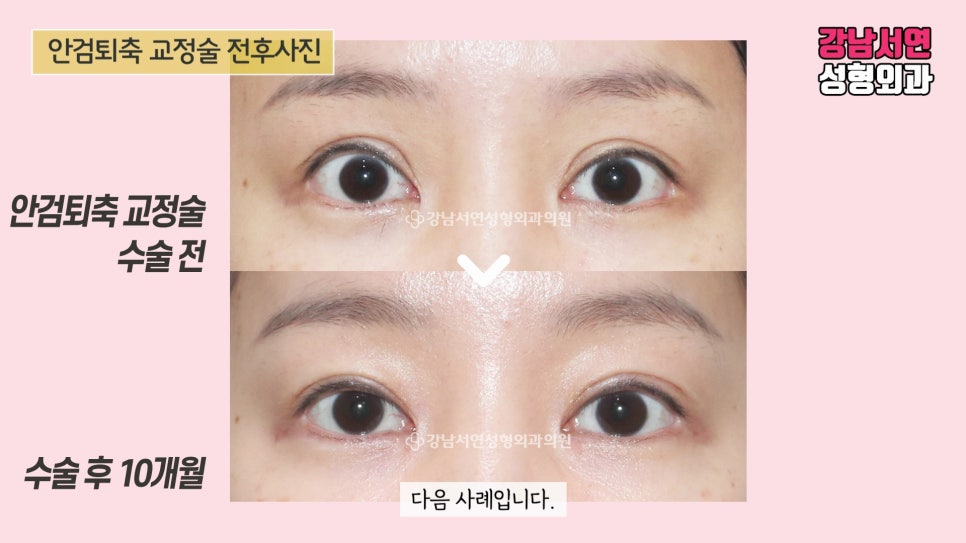
Here is the next case.
Regarding eyelid retraction,
you can find more detailed information in the video below.
↓↓↓↓↓↓
The photographs in this post were taken under identical conditions with the patient's prior consent.
In addition, side effects such as bleeding, infection, and inflammation may occur after plastic surgery or procedures depending on the individual, so caution is required.