
Hello!
Hello!
For surgery with high patient satisfaction,
we always do our very best.
This is Gangnam Seoyon Plastic Surgery :)
Today, following double-eyelid surgery,
why is early correction best performed within three weeks?
That's what we'd like to talk about!
Today's article is based on what Dr. Choi Dong-il presented at the Eye Plastic Surgery Research Society symposium in September 2021,
so please keep that in mind :)
The photos below have had no retouching whatsoever,
aside from brightness adjustment :)

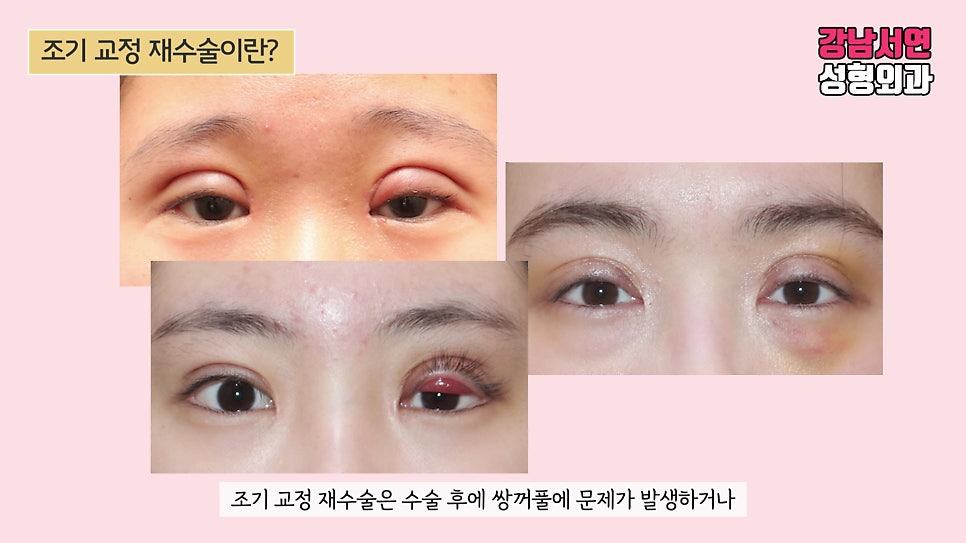
Early-correction revision surgery refers to revision performed as soon as possible when a problem develops in the double eyelid after surgery,
such as when multiple upper eyelid creases form and the original double eyelid no longer folds properly.
Early-correction revision is usually best done within two weeks after surgery, and can be considered up to three weeks,
and while it can very rarely be done between three weeks and one month after surgery, we do not recommend it.
So why do we perform early correction?
The reason we perform early correction is that doing it now is far more advantageous than doing it later.
We don't do it unconditionally just because the patient wants it.
If waiting and performing the revision later is expected to give a better result than early correction, then of course it's better to wait and do the revision.
But if it's expected not to improve with time, then we perform early correction.
The reason we recommend performing early correction within three weeks after surgery
is because of the way the wound heals after surgery.
The wound-healing process can be divided into the inflammatory phase, the proliferative phase, and the maturation phase.
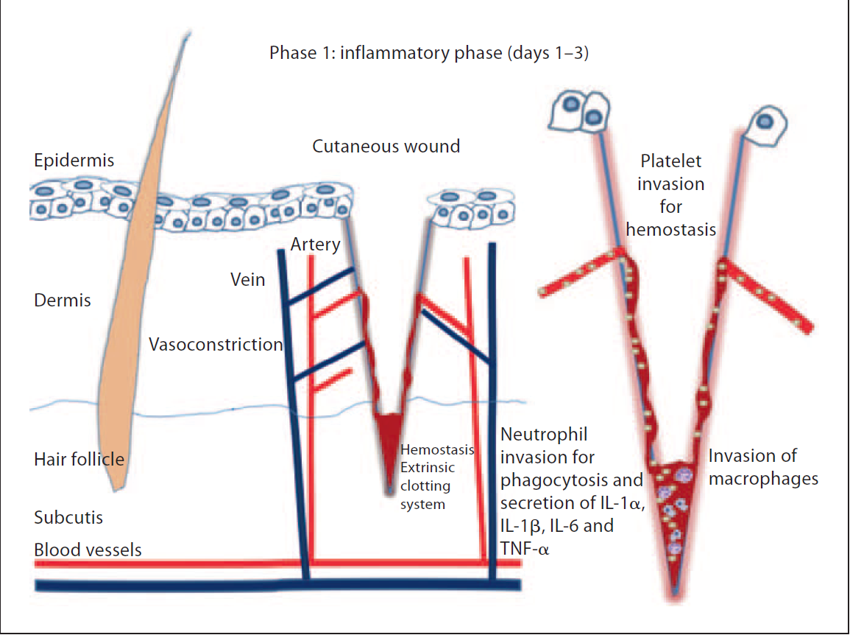
During the inflammatory phase, up to day three after surgery, bleeding stops,
and inflammatory cells gather and begin to heal the wound.
The inflammation referred to here is not the pus-producing infection we commonly think of,
but the medical inflammation that normally occurs when a wound heals.
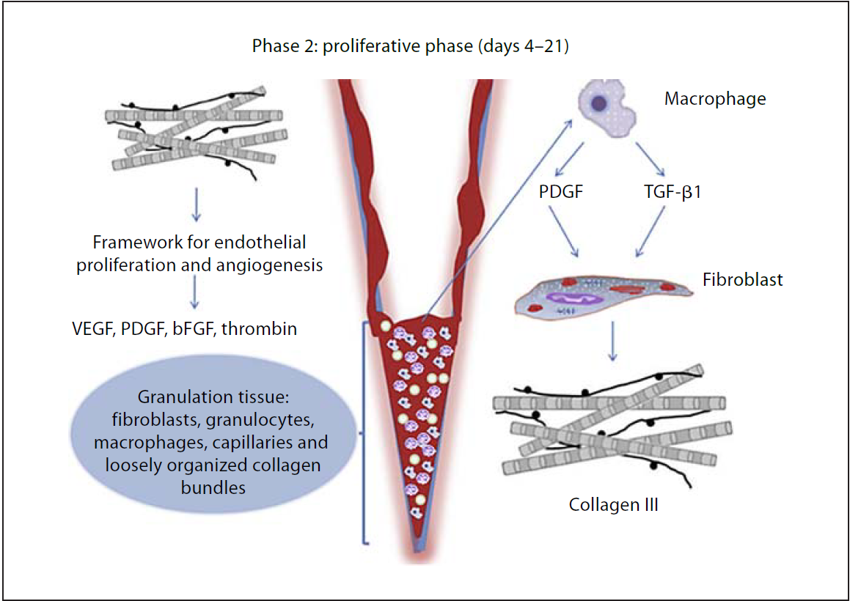
During the proliferative phase, days 4 to 21, blood clots begin to gather and the wound starts to heal.
Up to day 21 mentioned here can be called the golden time for early correction,
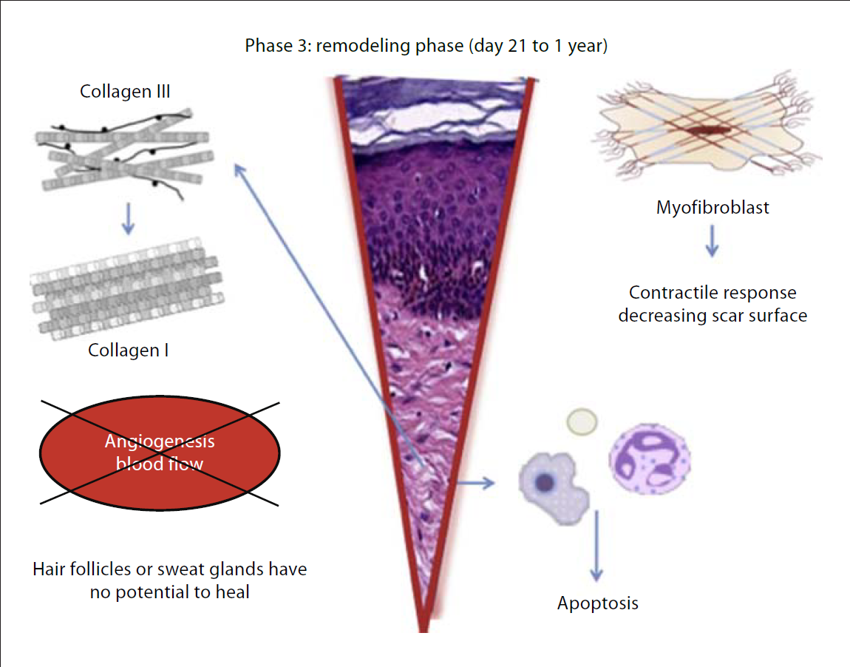
because from the third week the remodeling phase (maturation stage) begins,
and from that point on, the tissues enter a period of contraction.
Next, we'll go over the points to keep in mind when performing early correction.
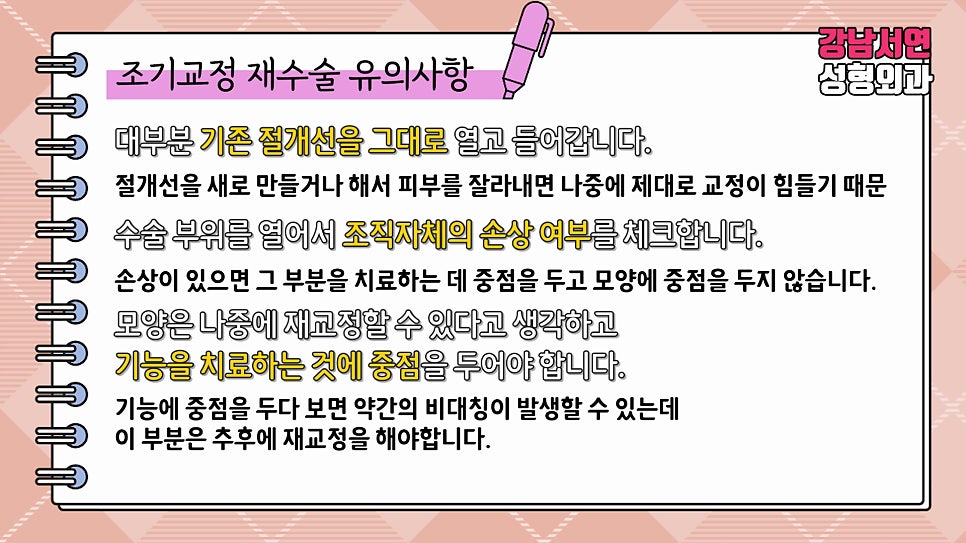
(1) First, in most cases we reopen the existing incision line as it is.
This is because creating a new incision line or cutting away skin makes proper correction difficult later on.
Next, we open the surgical site and check whether the tissue itself is damaged.
If there is damage, we focus on treating that area rather than on the shape.
This is because doing so is advantageous for any future revision surgery.
In patients whose eyes won't open, if you simply wait six months and the eye-opening muscle, once cut, contracts and retracts upward, function is lost and it becomes very difficult to locate the muscle.
(2) Second, you should treat the shape as something that can be re-corrected later, and focus on restoring function.
Focusing on function may lead to slight asymmetry, which will need to be re-corrected later.
During consultations, patients sometimes ask that, if they're going to have revision surgery twice anyway, why not just do it all at once after six months?
But because functional problems are often unsolvable later,
we recommend early correction.
That way, some degree of shape recovery is possible, and we can determine whether there are any functional problems.
Let's go through some early-correction cases.

This patient had surgery at another clinic two weeks before visiting us.
After surgery at the other clinic, they received follow-up care there for repeatedly loosening eyelids and asymmetry,
and came to us with multiple upper eyelid creases and difficulty opening the eyes.

If you look at the photos before early correction,
both eyes have severe multiple upper eyelid creases and do not open well.
There is a high likelihood that some adhesion had already formed.
The saving grace is that the eyes open to some degree, so it's more likely the eye-opening muscle was not injured.
Some people worry that if multiple upper eyelid creases develop, fat must be added, but in this patient we corrected it well without adding any.
Here is the next case.
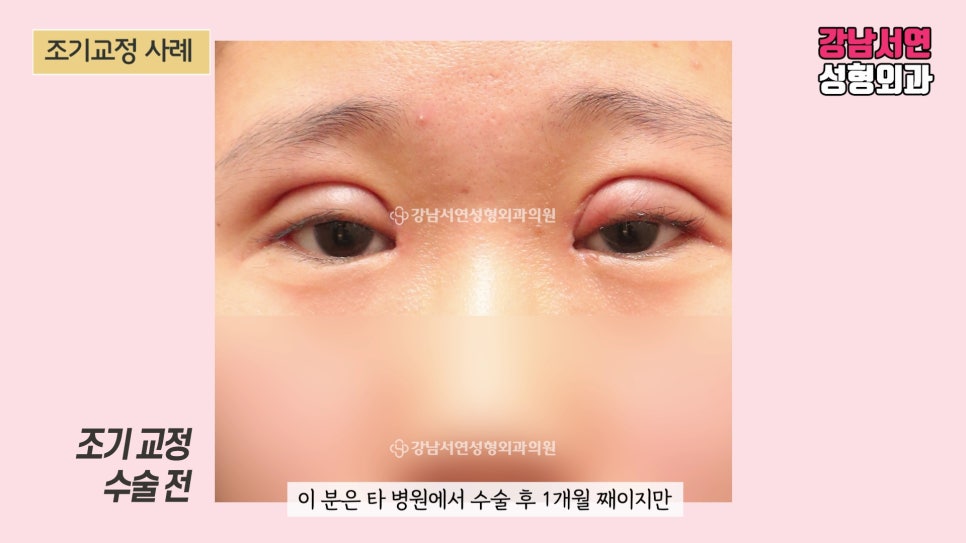
This patient was one month out from surgery at another clinic, but strongly requested early correction, saying that normal social life was impossible,
so after fully explaining the surgery and obtaining consent, we unavoidably performed early correction at the one-month mark.
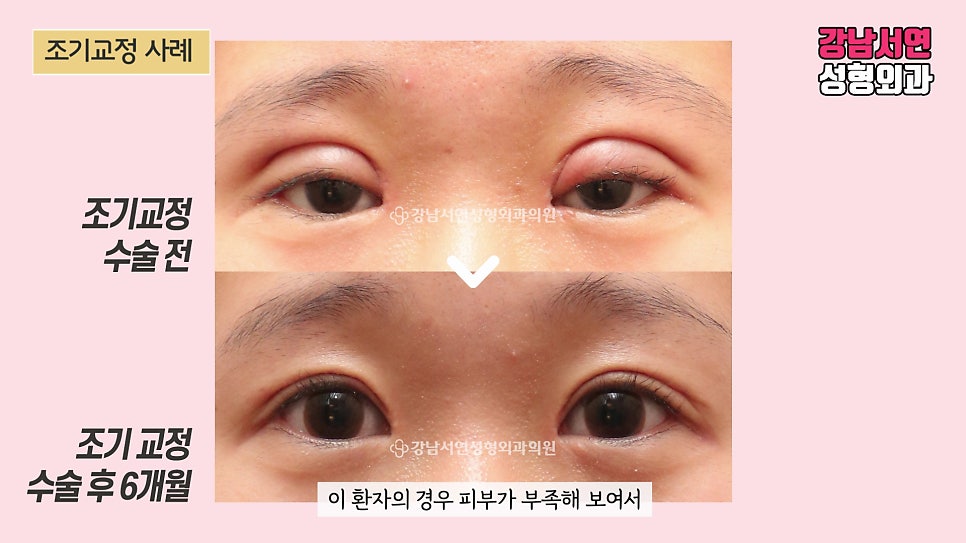
In this patient's case, the skin appeared insufficient,
so we lowered the line using the scar-preserving high fold correction (the "two-line" technique), setting the new line below the existing incision and making maximum use of the existing scar.
Today we've looked at why double-eyelid early correction should be done within three weeks.
Regarding early correction,
you can find more detailed information in the video below.
↓↓↓↓↓↓
The photographs in this post were taken under identical conditions with the patient's prior consent.
In addition, side effects such as bleeding, infection, and inflammation may occur after plastic surgery or procedures depending on the individual, so caution is required.