
This patient was referred to us by the surgeon at another clinic.
He referred her in good faith. Every surgeon has their own area of focus, and I appreciate his confidence in sending her our way. We promised her our best work.
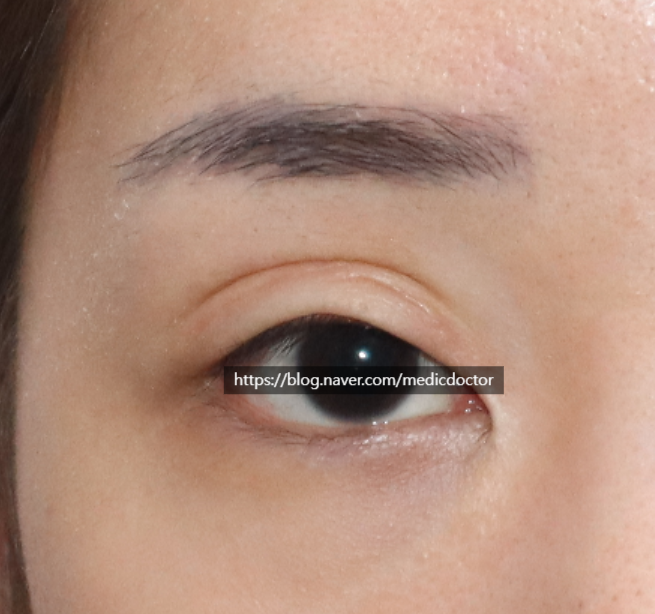
The upper lid has lost volume, and a set of multiple upper eyelid creases has formed.
Several factors can produce this.
First: specific adhesions. When tissue layers are damaged and unwanted adhesions form, those points pull inward and create the secondary folds.
Second: volume deficiency. This can result from excessive tissue removal at the upper lid, congenitally limited fat, or a thin orbicularis oculi.
Either situation can produce multiple upper eyelid creases.
Third: damage to the levator muscle, which can adhere at the injury site and produce a similar pattern.
Treatment is tailored to the underlying cause.
The surgical principle: release the adhesions completely and prevent them from re-forming.
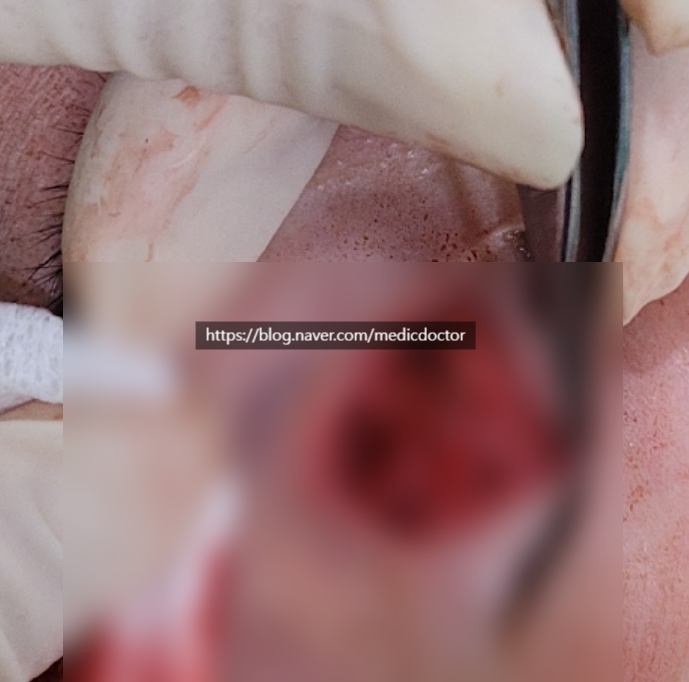
In her case, prior revision had left some adhesion and minor damage along part of the levator.
Eye opening was unaffected, but the lid was prone to re-adhesion and to forming multiple upper eyelid creases.
There was also a real risk of the crease itself coming undone.
The success of this kind of revision is evident immediately after surgery.
First, no multiple upper eyelid creases should be visible. When they are present immediately post-op, two scenarios are possible: incomplete adhesion release,
or — rarely — too little swelling, leaving the upper lid without enough volume to fill the space. The distinction is made through experience.
In the video at suture removal, you can see an additional fold above the crease line.
Naturally, this is unsettling for the patient — "is something wrong again? Did the surgery fail?"
Let me explain why this happens.
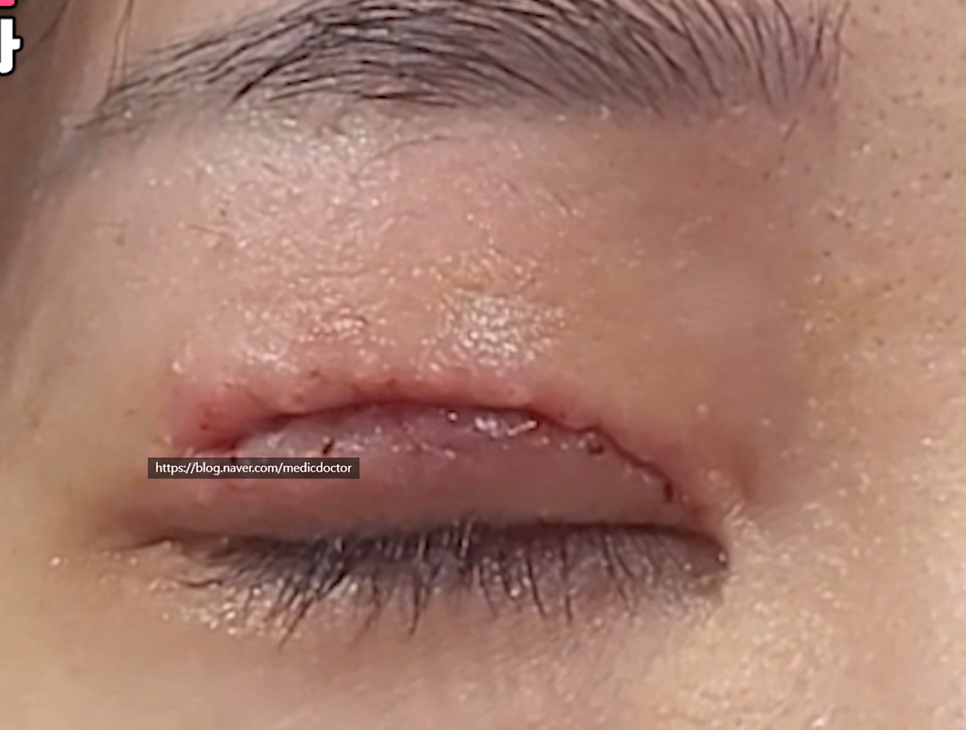
Swelling below the incision lasts longer than swelling above it.
In other words, the upper swelling resolves first, leaving the area below the incision relatively firmer.
When the lid folds, the firmer lower section pushes up against the softer upper section, creating the temporary fold.
These resolve with time, and only the surgeon can tell whether they will. When the intraoperative fat repositioning and grafting were performed correctly, the patient simply needs to wait it out — and there is no cause for alarm.
However, an early revision is warranted when the crease line itself barely folds and the lid only folds higher up. See the post below for reference.
An Early Revision Case After Double Eyelid Surgery
This patient followed my advice to wait. Here's how she looked at her two-month follow-up.
Looking closely, the improvement over the earlier view is significant.
Six months post-op.
The multiple upper eyelid creases have resolved.
Severe cases of multiple upper eyelid creases require a range of techniques to keep the lid stable post-op, and the patient has to be willing to wait. It's understandable to feel overwhelmed when a revision doesn't show its result right away, but trusting your surgeon and following the post-op plan is what gets you to a good outcome.
That said, if an early revision is genuinely warranted, talk to your surgeon and proceed without delay.
Patients cannot make this call on their own, which is why a specialist consultation matters. Without specialist input,
it's nearly impossible to tell whether an early revision is needed or whether the lid will settle on its own — and missing the early window is a real risk.