
A patient came back six months out, so I will walk through her case of asymmetric-eye correction.
When we say "asymmetric eyes," there are usually two underlying causes: the underlying bony skeleton can differ between the two sides, or the levator strength on one side can differ from the other.
This material is excerpted in part from a presentation I gave at the Korean Society of Plastic and Reconstructive Surgeons in November 2021.
First, let us look at cases where the bony skeleton itself differs between the two sides.
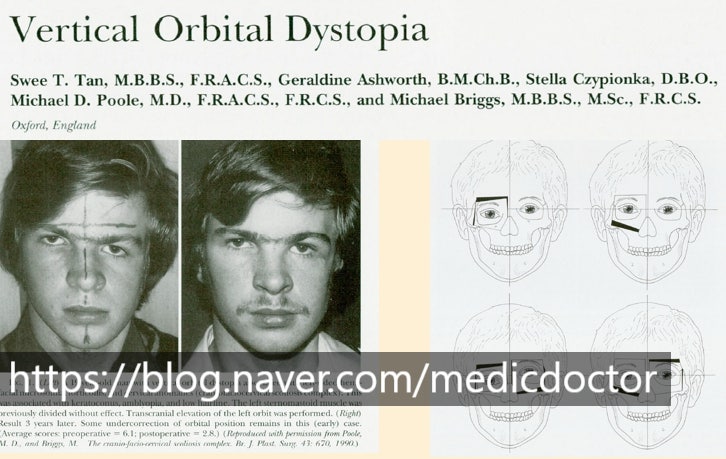
In this patient, the bony skeleton itself is rotated. The left side of the photo (her right eye) sits higher, while the other side sits lower.
In a case like this, you cannot equalize the appearance with double-eyelid surgery alone. The correction has to be made at the skeletal level.
That kind of skeletal procedure is extremely high-risk, with the potential for mortality in the worst case.
Today's patient also had some facial asymmetry, but her main concern was a substantial difference in eye size between the two sides, with a sausage-like appearance on top of that.
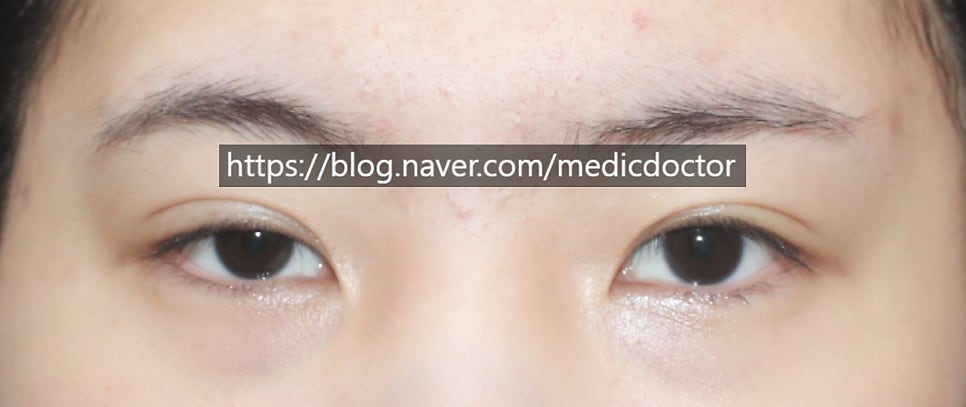
This is her pre-op view. The left eye in the photo (her right) looks sleepier and the crease sits higher.
That is the area in question.
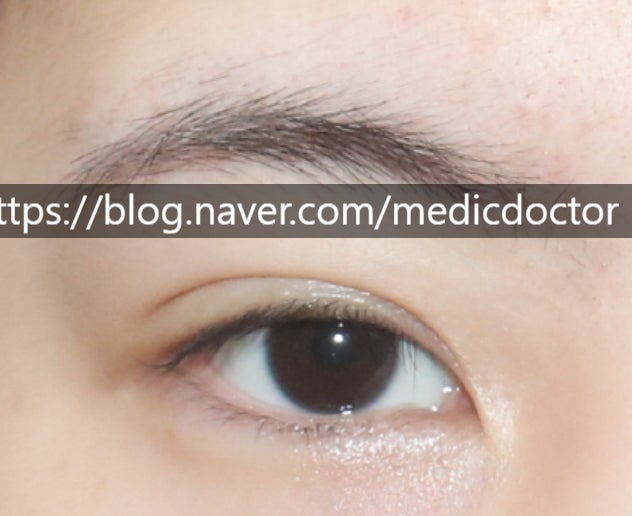
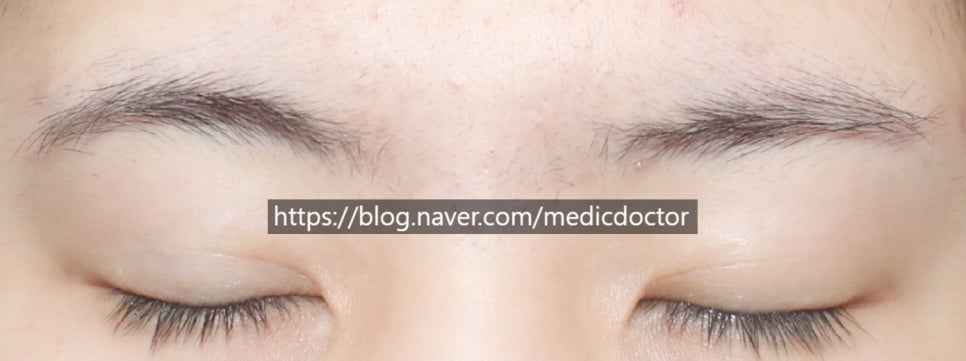
Fortunately, her original procedure had been a buried-suture (non-incisional) method, so the scarring was not severe.
She wanted both sides lowered and the visible eye sizes balanced out.
She had already had non-incisional ptosis correction in the past, but with this degree of asymmetry, the non-incisional approach simply cannot equalize the two sides.
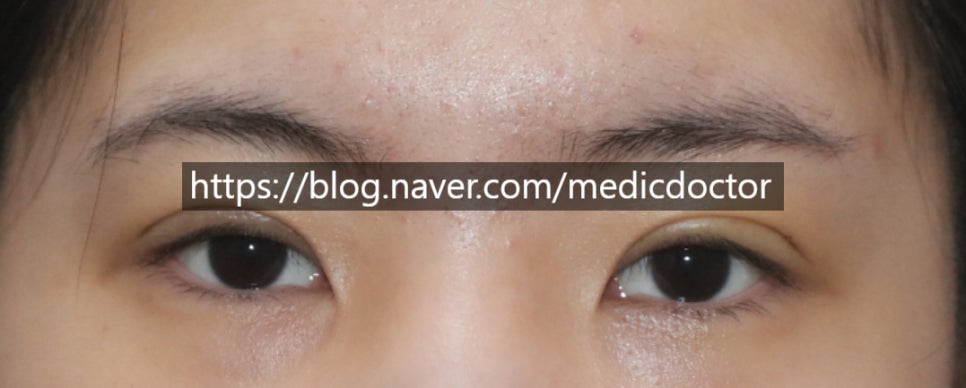
One week post-op. The line is still swollen, but the pupils are now symmetric.
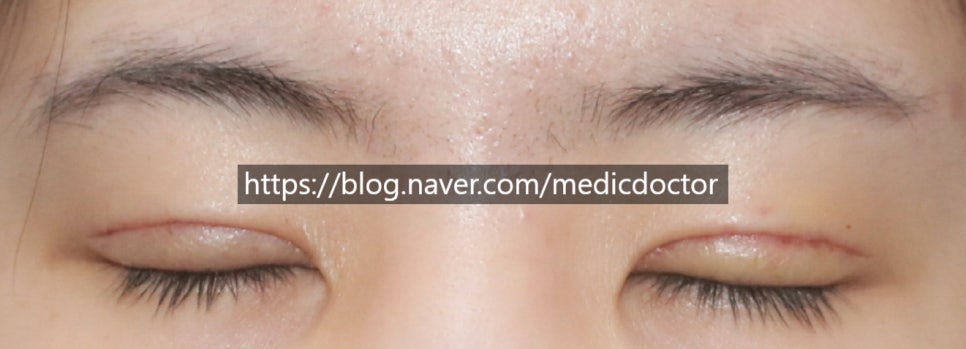
Eyes closed. The line still appears red.
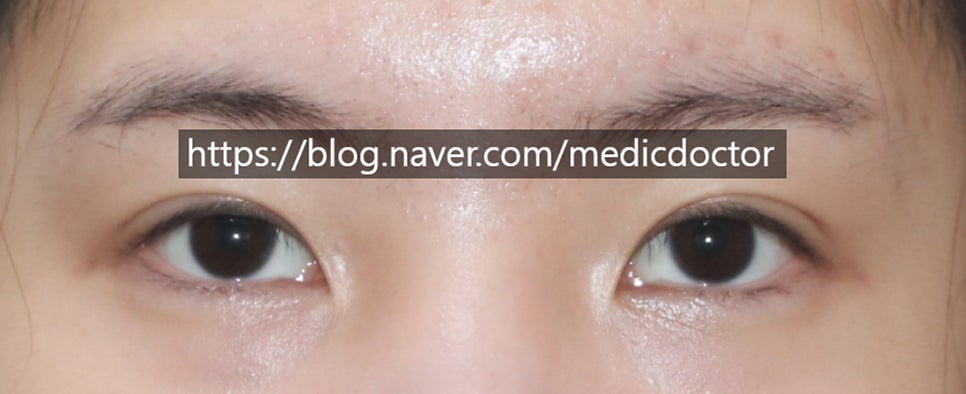
Two months post-op. Most of the swelling has gone down, and the symmetry is holding well.
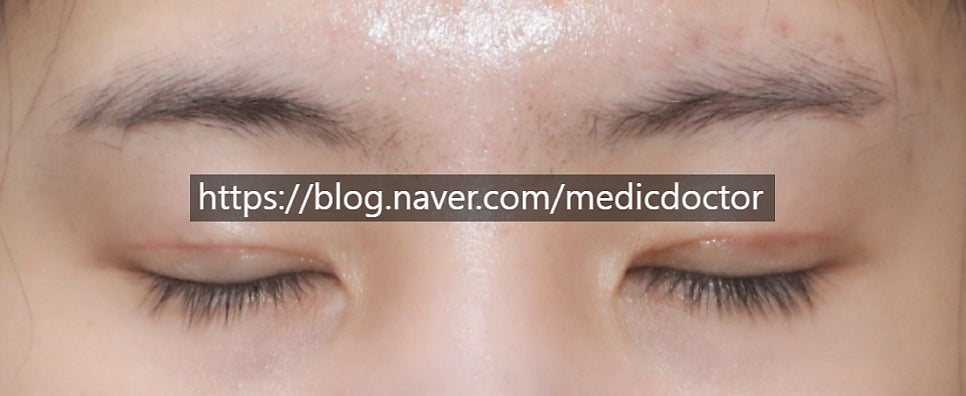
At two months, the scar color is still reddish and uneven.
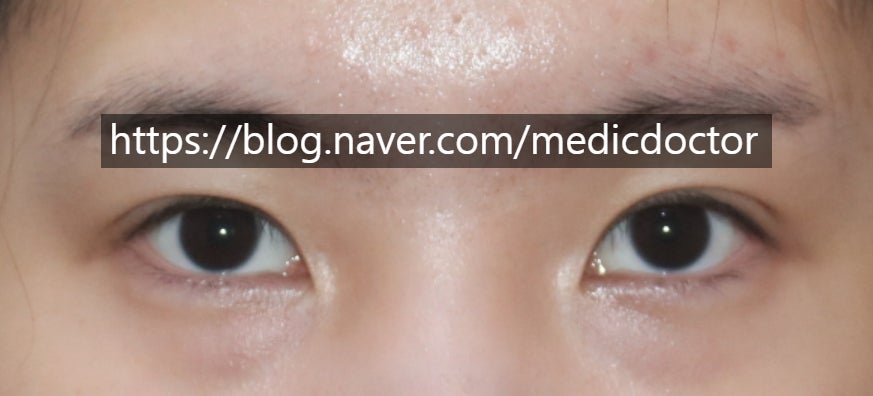
At six months. The pupils are evenly matched, and the crease has been lowered to where the patient wanted it.
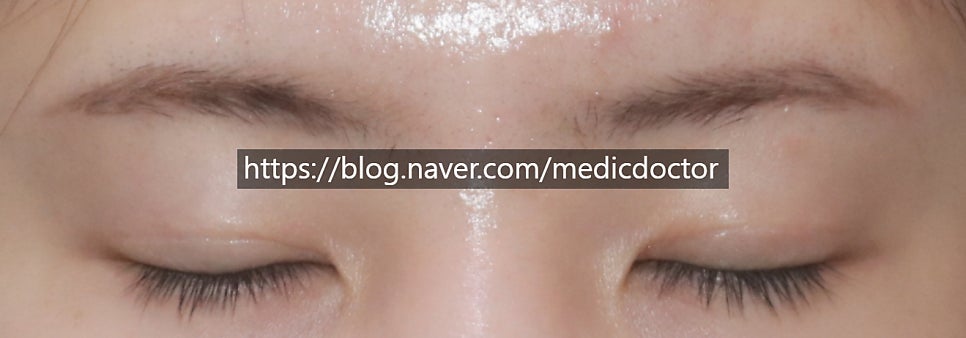
At six months post-op, the scarring has faded and the symmetry holds.
For this patient, we performed an additional ptosis-correction step on one side.
A great many sutures were embedded from the previous non-incisional procedure, and we removed a substantial number of them.
Overall, the surgery turned out well.