
It has been a while since my last post.
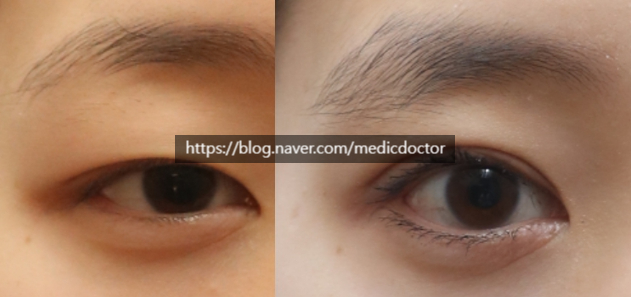
After a primary double-eyelid surgery, patients often ask for a small, conservative crease the first time around because they are nervous about the result.
And in some patients, the crease drops with age.
What if the crease itself is simply too low?
Then it is better to raise it.
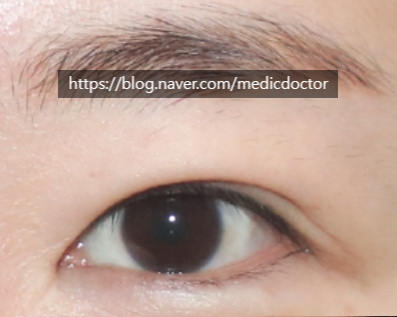
Pre-op: in-fold.
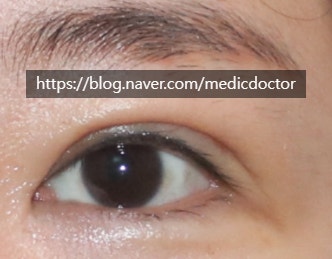
Post-op: in-out fold (one week).
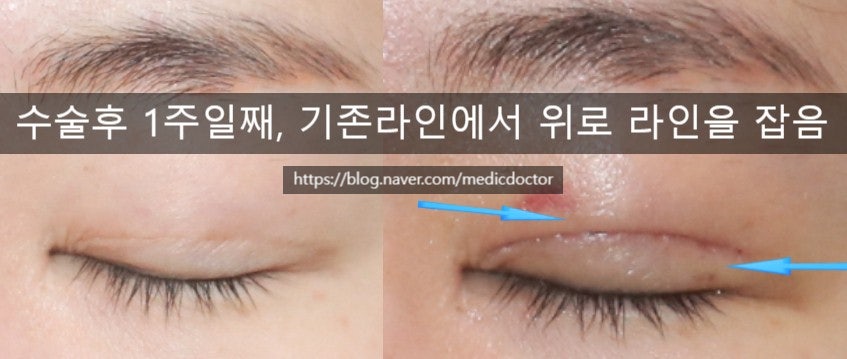
I make a fresh incision above the existing scar and release the lower scar from below. The upper arrow marks the new suture line just after stitch removal; the arrow immediately below points to the original scar — a faint white line if you look carefully.
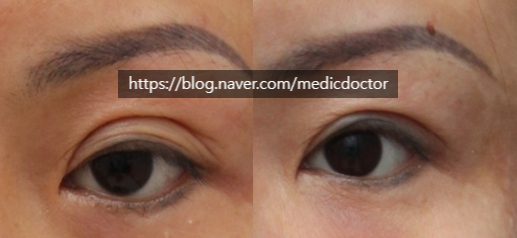
If the issue is skin laxity rather than crease height, it is better to leave the crease alone and excise the redundant skin.
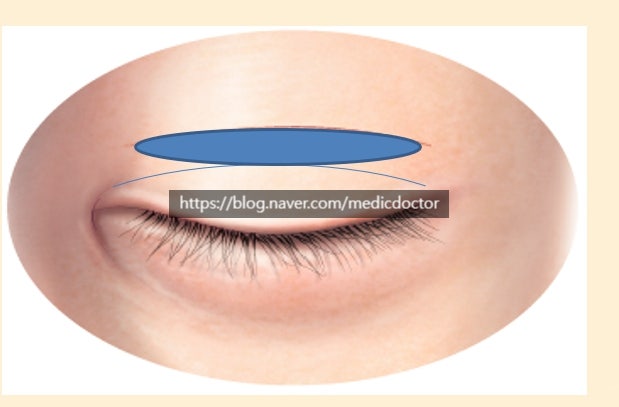
Of course, the two approaches can be combined.
Raising the crease aggressively without removing any skin produces a sausage-shaped lid and a sleepy look. In those cases, lowering the crease is the better choice.
Quick post for a cold afternoon. That's all for today.