
It has been a while since my last post.
Here we go.
Even when the crease itself is not particularly high, an eyelid can still take on a sausage-like appearance.
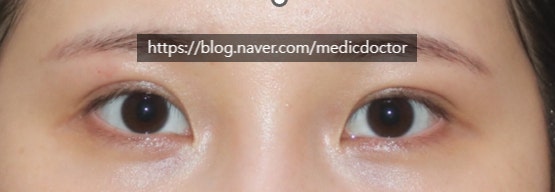
This patient came in because, although her crease was not unusually high, the lid still looked sausage-like and unnatural with the eyes closed.
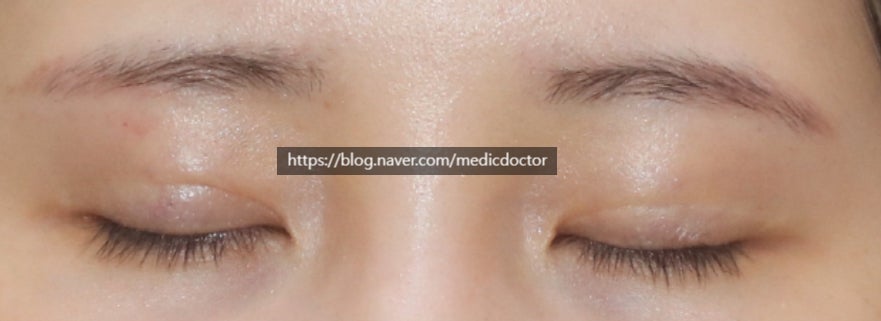
On the closed-eye view, you can see a hollow running down the center.
There is no tissue left in the middle. Effectively, the orbicularis oculi is missing along that band.
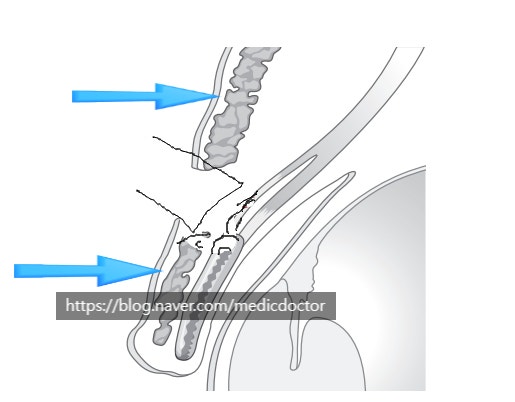
On the schematic, you can see that everything except the skin layer has been excised through the center.
This is what surgeons mean when they say a fix is too tight. It does not mean the suture itself was tied down hard.
The flattening tissue (the orbicularis oculi, marked with the blue arrow) has been removed wholesale, leaving only skin draped over the wound.
Excised tissue cannot be regenerated, but we do our best to gather the surrounding tissue inward and re-drape it as smoothly as possible.
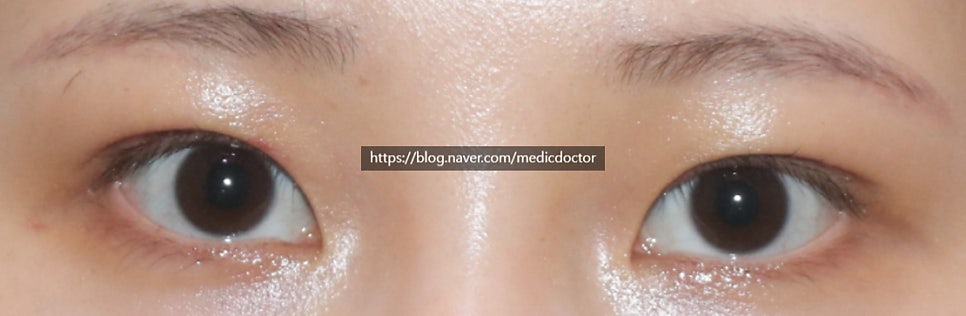
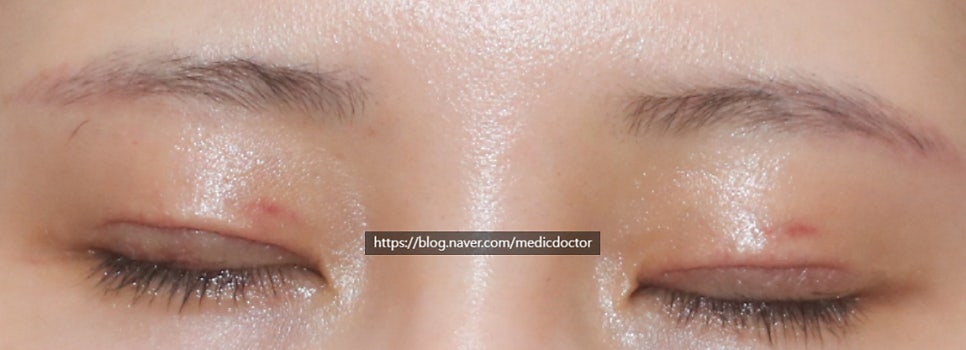
One week post-op.
The faint white line above the incision is the original scar; the new incision sits just below it.
At one week the line can look uneven. It improves with time, and it is normal for the scar to firm up and protrude through about three months before settling down again.
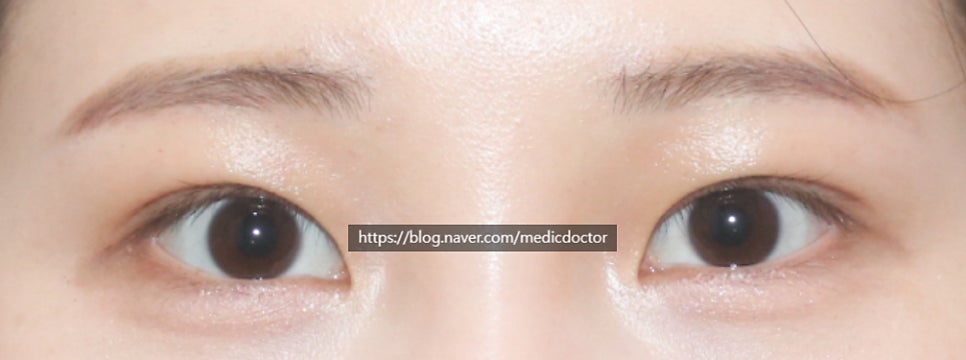
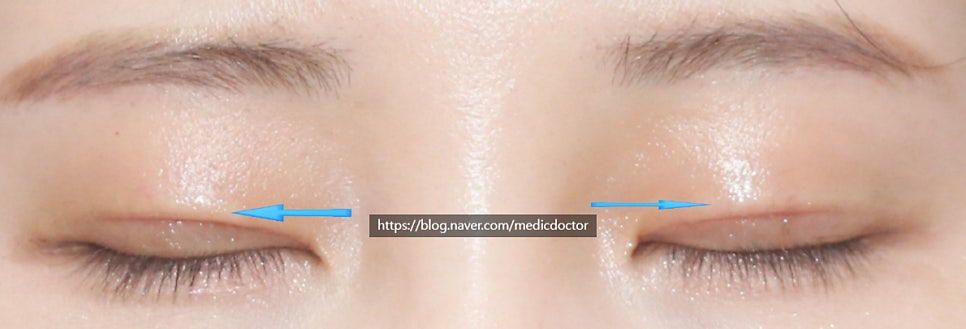
Two weeks post-op.
The slight fullness above the incision flattens further with time.
That said, the more the crease is lowered, and the worse the prior scarring, the more residual fullness you will see above the incision. It continues to improve gradually.
The faint white line marked by the blue arrow is the original scar.
Patients often call this a step-off. It is not a true step-off — it is the original scar tissue and a small amount of residual skin left in place to drape over and conceal the new crease below.
This too softens over time, though it does not disappear completely.
An earlier post that may help as background.
I will keep sharing more cases. Thank you for reading.