

Upper Blepharoplasty vs. Sub-Brow Lift: Which Eye Surgery Is Right for You?
To give you the bottom line first: if the problem is redundant skin at the double eyelid crease, upper blepharoplasty (upper eyelid surgery) is the usual approach; if the brow itself has descended and is pressing down on the upper eyelid, a sub-brow lift is what to consider. The two procedures address droop in different 'locations,' so choosing one without an accurate diagnosis may not give you the degree of improvement you are after.
■ Why is it so easy to confuse the two?
In the mirror the symptom looks much the same — the eyes appear droopy — but the tissue responsible is different.
- When upper blepharoplasty is indicated: brow position is normal, but the skin above the double eyelid crease has stretched, blocking the visual field or making the eyes look narrower.
- When a sub-brow lift is indicated: the eyebrow itself has dropped so that the whole upper eyelid looks heavy, and the patient has developed a habit of contracting the forehead to raise the brows.
It is not uncommon for both causes to be present together, so the consultation needs to assess brow position and the degree of skin laxity side by side.
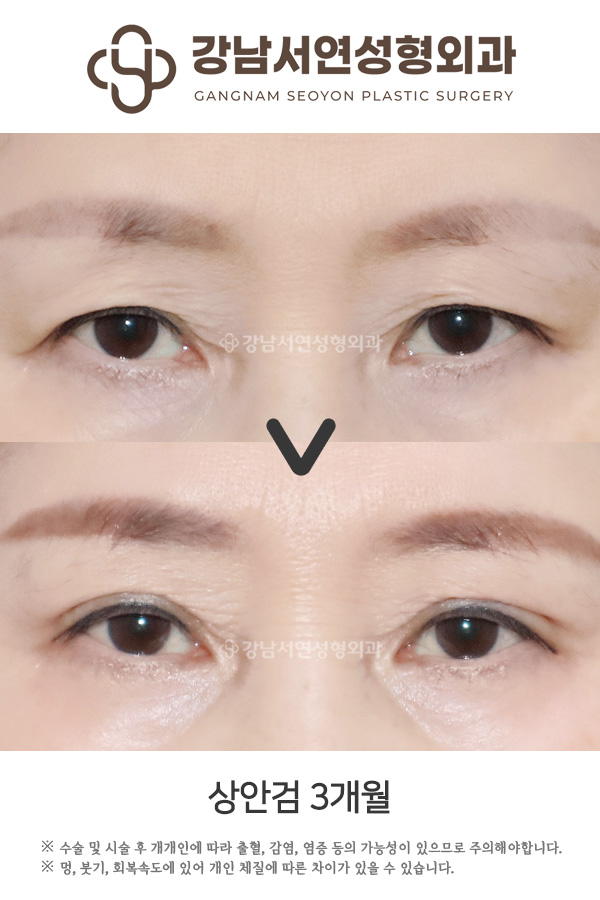
■ What upper blepharoplasty (upper eyelid surgery) is
The procedure involves an incision along the double eyelid crease to remove the redundant skin and, where needed, some orbicularis muscle and fat. Brow position is left unchanged; only the excess skin of the eyelid itself is addressed.
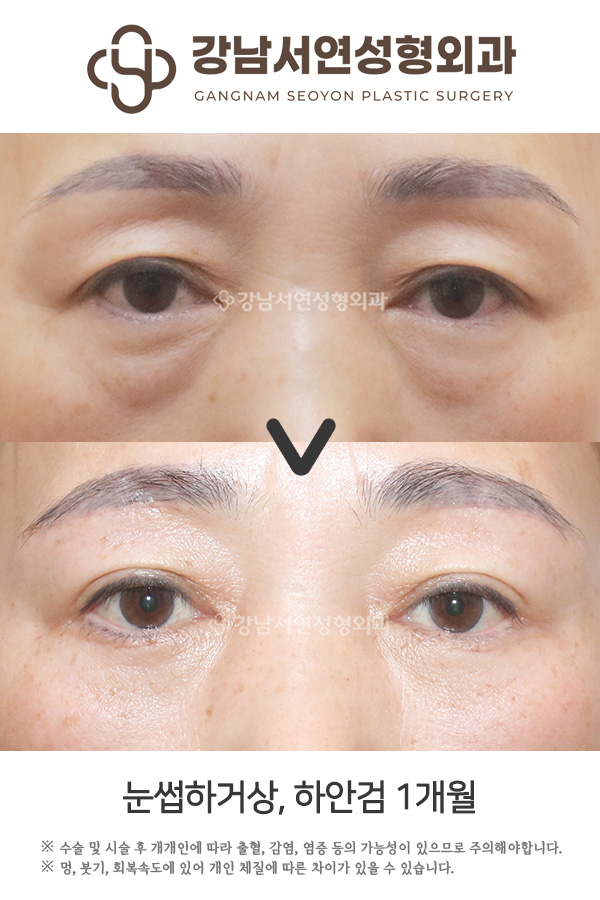
■ What a sub-brow lift is
An incision is made along the line just beneath the eyebrow, and the descended brow together with the tissue beneath it is lifted and fixed in position. Unlike a forehead lift, which raises the entire forehead, this is carried out through an incision confined to the brow line, so it differs in both recovery time and the extent of the incision.
■ Comparing the two procedures
■ When both procedures are considered together
When the brow has descended and the skin above the double eyelid crease is lax at the same time, a sub-brow lift alone can leave the skin laxity behind, while upper blepharoplasty alone can leave the brow droop untouched. In such cases combining the two procedures may be considered; since the condition of the brow and eyelid tissue differs from person to person, this should be decided on the basis of a detailed diagnostic assessment.
■ FAQ
Q. When is upper blepharoplasty on its own not enough?
A. When the eyebrow itself has descended. If only upper blepharoplasty is performed in that situation, the skin is tidied up but the brow still presses down on the upper eyelid, so a heavy look can remain. In these cases I consider a sub-brow lift alongside it.
Q. Is the scar from a sub-brow lift noticeable?
A. The incision line sits along the line just beneath the eyebrow, so when it follows the grain and direction of the brow hairs, it often settles fairly inconspicuously once healing is complete. There can be variation depending on the individual's brow density and skin condition.
Q. How do you decide which of the two procedures should come first?
A. I assess brow position, whether the patient habitually uses the forehead muscles, and the amount of skin above the double eyelid crease together. Visual inspection alone is sometimes not enough to tell them apart, so a detailed consultation is recommended.
■ In closing
Upper blepharoplasty and sub-brow lift share the same goal of improving 'droopy eyes,' but they are procedures that approach different tissues in different locations. Understanding the difference between the two and identifying where your own droop originates is the first step toward a natural result.



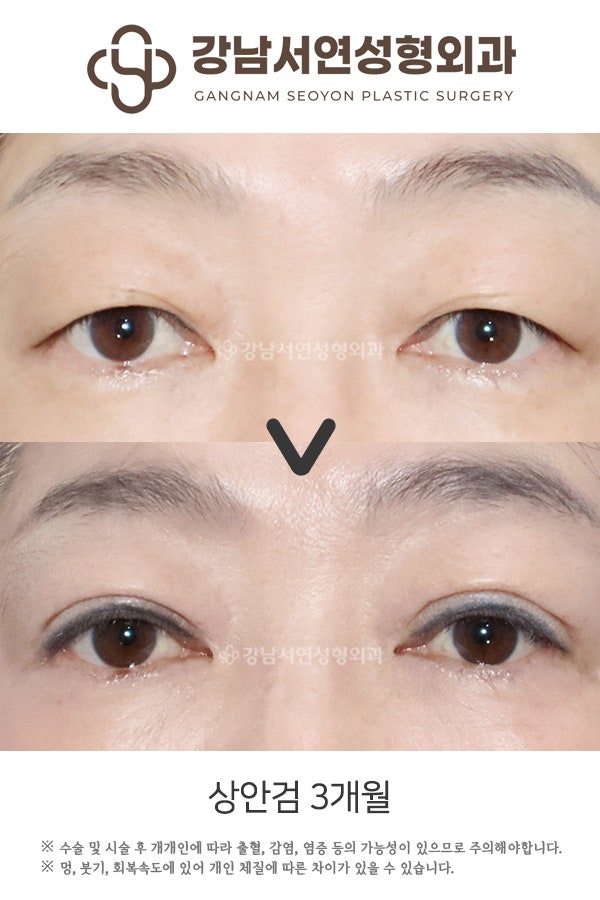
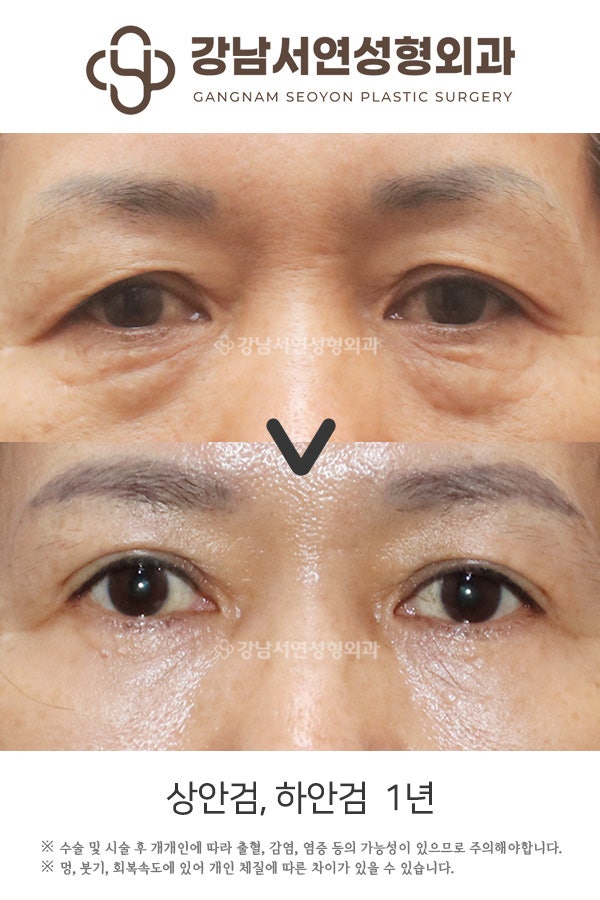
The photographs in this post were taken under identical conditions with the patient's prior consent.
In addition, side effects such as bleeding, infection, and inflammation may occur after plastic surgery or procedures depending on the individual, so caution is required.