
My drooping eyelids keep getting sore and chafed — can upper blepharoplasty solve it?
Every time you look in the mirror, do your upper eyelids look unusually heavy, and have you noticed that at some point the inner surface of the eyelid keeps getting chafed and sore?
Many people brush it off, thinking "it must just be age." But chafing and soreness caused by drooping eyelids can be more than simple skin ageing — it can be a sign that the muscle that opens the eye is itself losing function. Today we will go through the causes of these symptoms and whether upper blepharoplasty can genuinely be the solution.
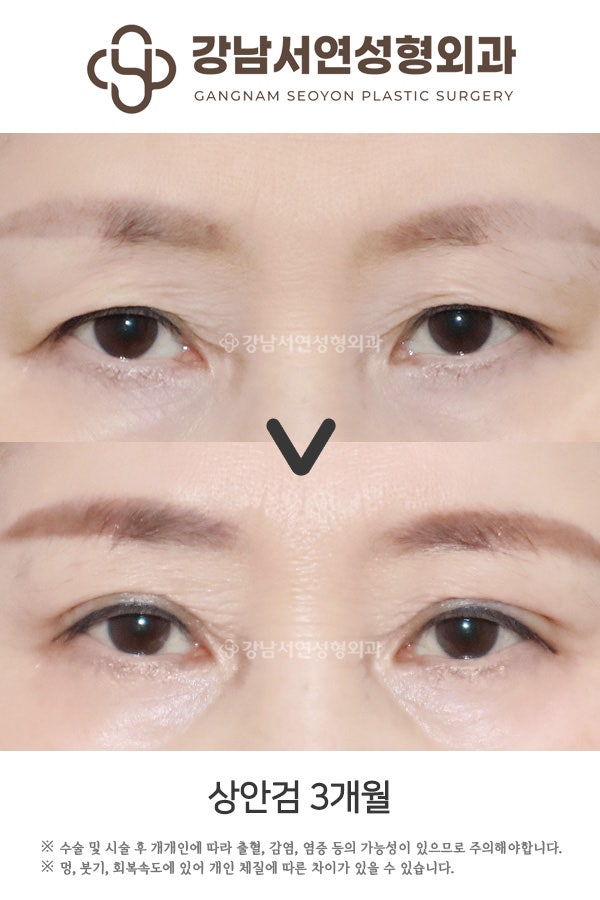
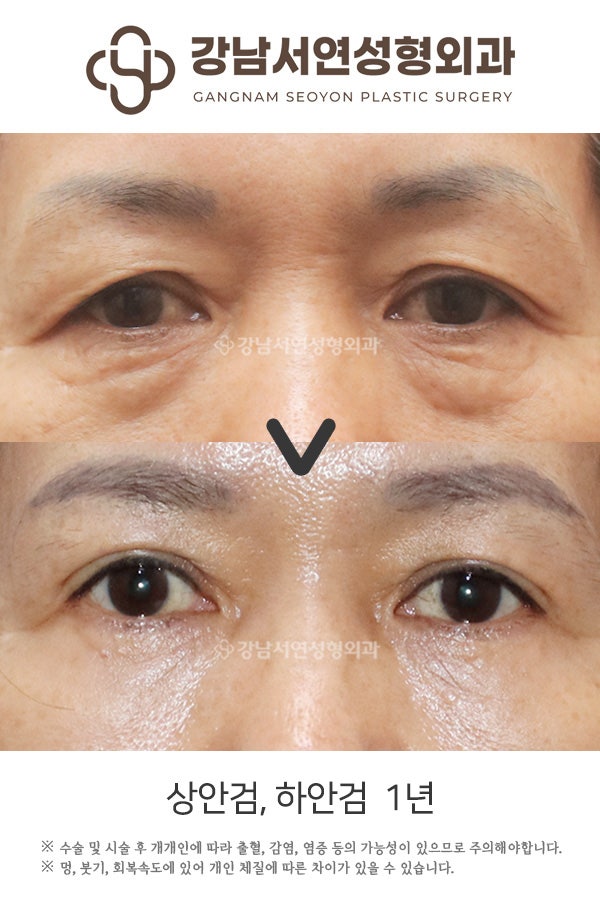
・・・
Why do the eyelids keep getting chafed and sore?
Chafing and soreness of the eyelids arise largely from the following three causes overlapping.
1. Drooping skin folding over on itself between the eyelids, creating a moist environment where sweat and oil collect
2. The muscle that lifts the eyelid (the levator) becoming slack or separating from the tarsal plate, so that the forehead and eyebrow strain every time the eye opens, increasing friction on the skin
3. Eyelashes turning in against the eye under the drooping eyelid, causing repeated irritation and a foreign-body sensation
Of these, the first can be relieved to some extent by simple moisturising and cleansing care, but the second and third involve a fundamental change in the structure itself, so care alone will not resolve them.
・・・
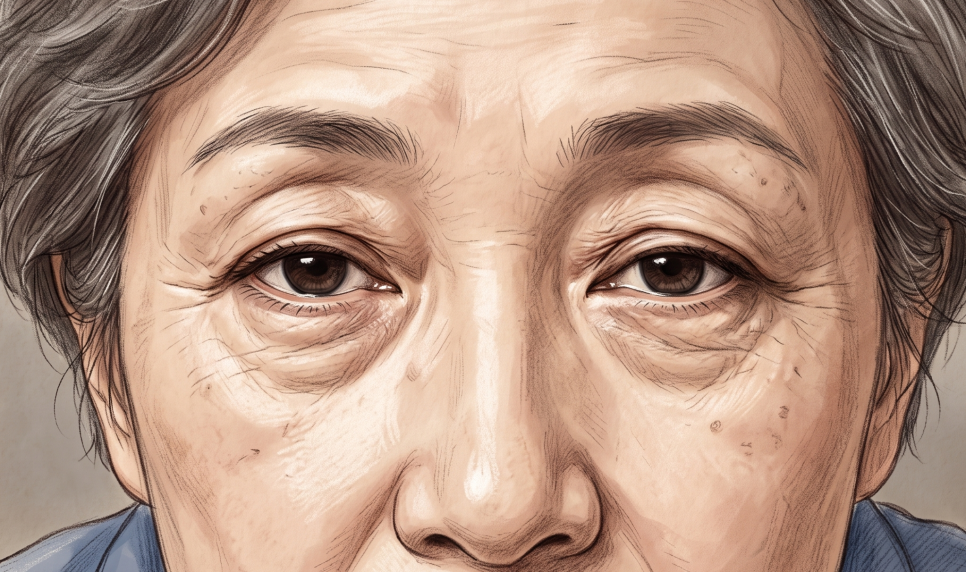
It may not be simple ageing
When eyelid drooping becomes severe, functional problems like the following often appear alongside the chafing and soreness.
- The eyelid blocks your field of vision, giving a heavy, obstructed feeling
- You find yourself straining your forehead when you open your eyes
- Your eyes feel especially heavy and tired by the afternoon
- Your eyelashes keep poking into your eye
If these symptoms are present together, this may be closer to ptosis than to simple cosmetic drooping, and an accurate diagnosis is needed.
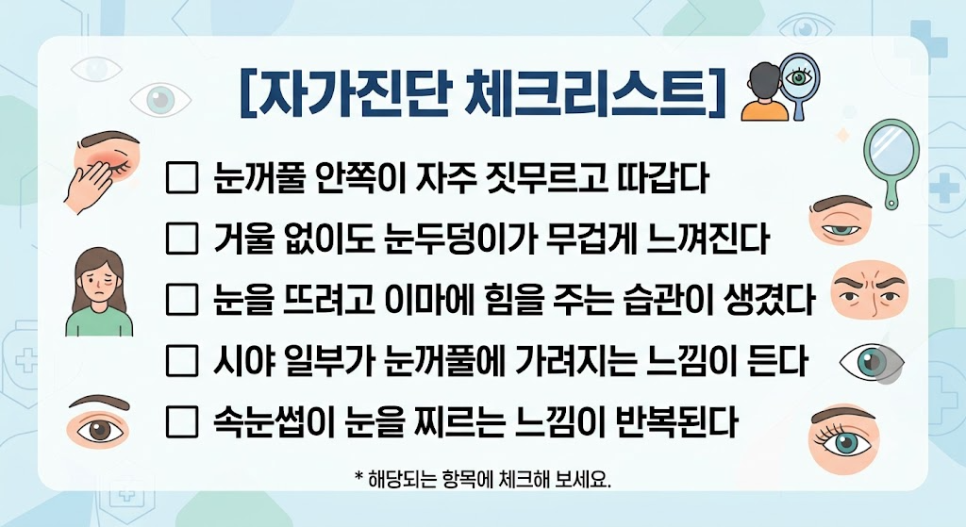
→ If two or more apply to you, it is time to consider a consultation about upper blepharoplasty.
・・・
What is upper blepharoplasty?
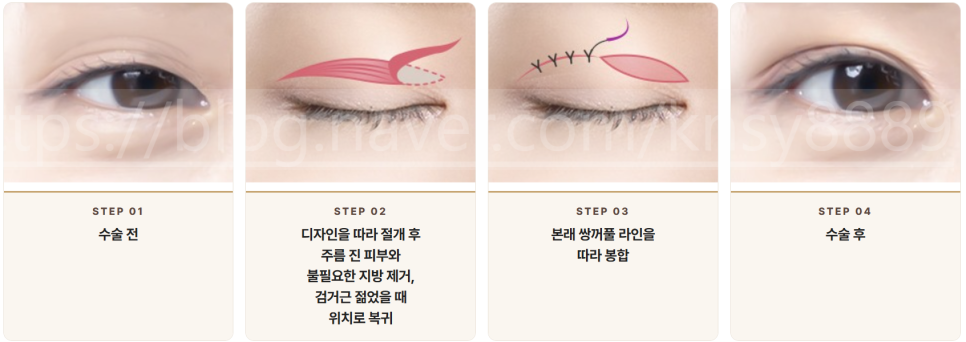
Upper blepharoplasty is surgery that addresses excess upper eyelid skin and unnecessary fat, and returns a slack or displaced levator muscle to its proper position, correcting both the strength of eye opening and the drooping line together.
It is not simply a matter of cutting away skin. What matters is diagnosing the condition of the skin, fat and muscle comprehensively, and then deciding the extent of excision and the degree of muscle correction that suits the individual. If this process is not precise, symptoms such as chafing or soreness can recur, or the eyes can end up looking unnatural.
・・・
How does it differ from ordinary double eyelid surgery?
Whereas ordinary double eyelid surgery focuses on designing a new eyelid line, upper blepharoplasty removes drooping skin and fat while also aiming to restore the field of vision and improve function. If your case involves functional discomfort such as chafing and soreness, an upper blepharoplasty approach may suit you better than simple line correction.
・・・
How long does recovery take?
Sutures are usually removed after 5–7 days, and the major swelling subsides within a week, so you can go out in daily life with a mask or sunglasses. That said, it takes around 3–6 months for the natural result to settle completely.

・・・
Frequently asked questions
Q. If I have chafing, do I definitely need surgery?
Mild chafing can be relieved with cleansing and moisturising care. However, if it comes with an obstructed field of vision, eyelashes poking the eye, or a habit of straining the forehead, care alone has its limits and it is best to seek a consultation.
Q. How can I tell whether upper blepharoplasty or double eyelid surgery is right for me?
An accurate judgment requires diagnosing the degree of skin drooping and the strength of eye opening (the condition of the levator muscle). The approach differs depending on whether it is purely a line issue or whether reduced muscle function is also involved.
Q. Is surgery possible even at an older age?
If there is no major problem with your general health, age in itself is not an absolute barrier. However, a diagnosis that takes individual skin elasticity and healing capacity into account must come first.
Q. Can upper and lower blepharoplasty be done at the same time?
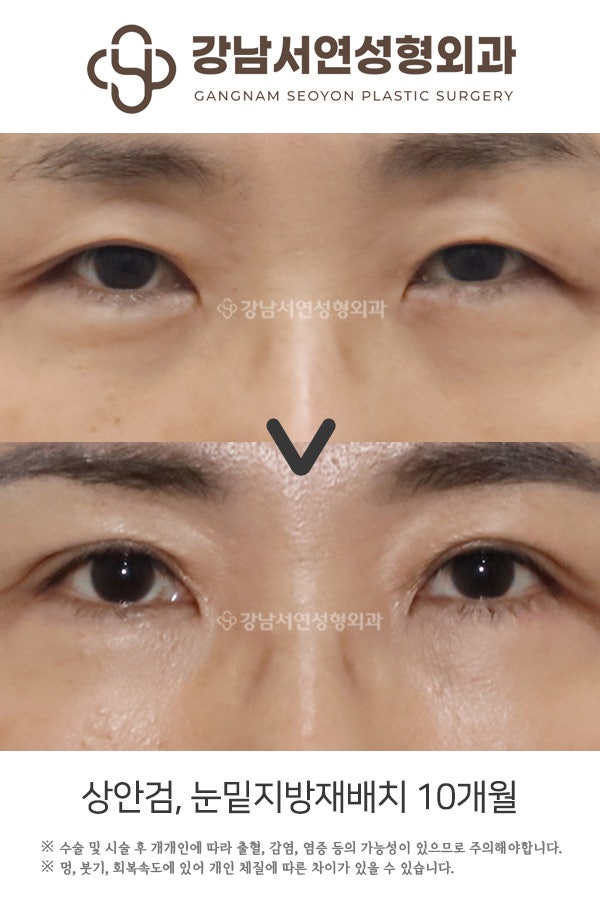
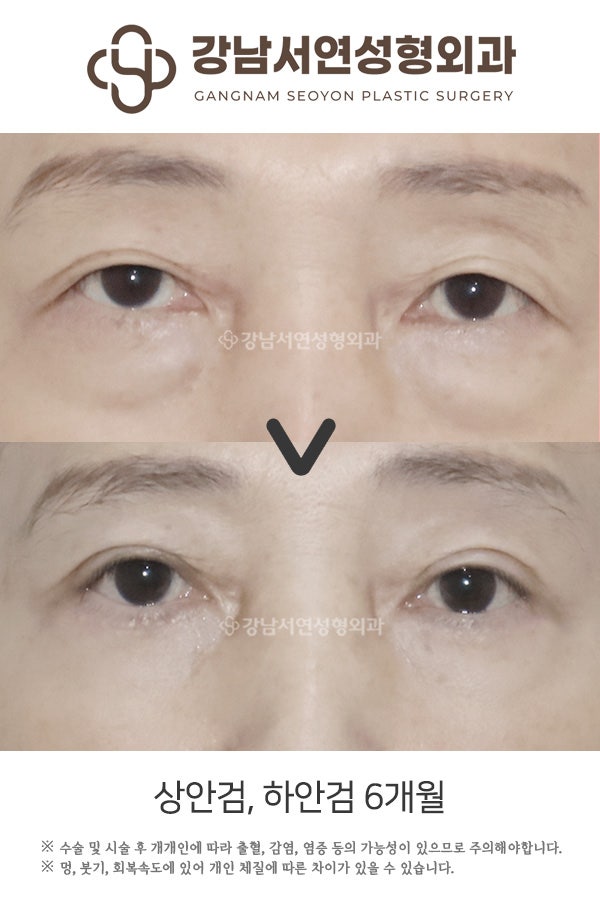
Yes. Addressing the upper and lower eyelids together can be expected to give a more natural, youthful effect, so they are often performed together.
Q. Can the chafing come back even after surgery?
If skin alone is excised without accurately diagnosing the cause of the drooping, recurrence is possible. Correcting the condition of the levator muscle as well is what reduces the risk of recurrence.
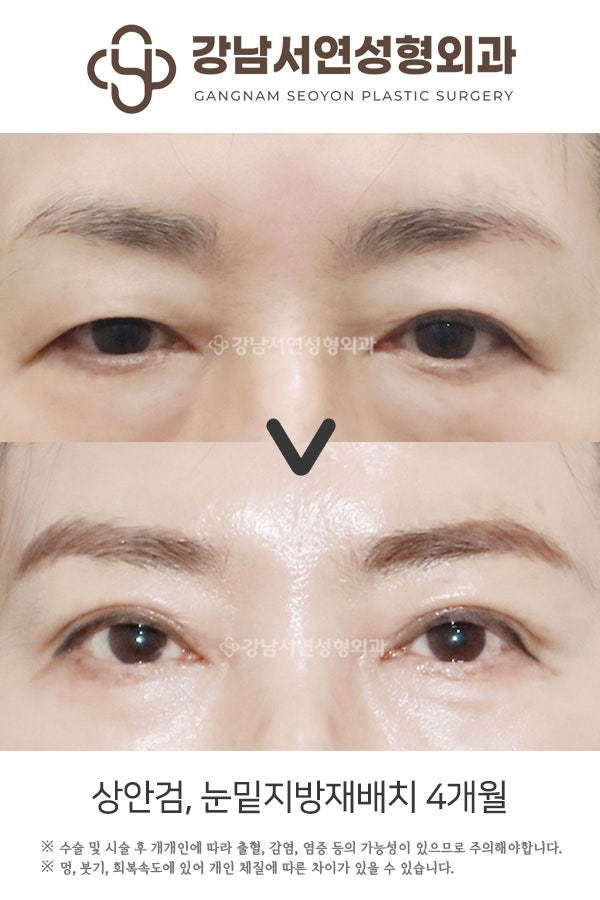
・・・
In closing
Chafing and soreness of the eyelids are easy to dismiss as merely uncomfortable symptoms, but if they come with an obstructed field of vision or eyelashes poking the eye, the problem may also be connected to eye health. What matters most is finding the method that suits you after an accurate diagnosis of the cause.
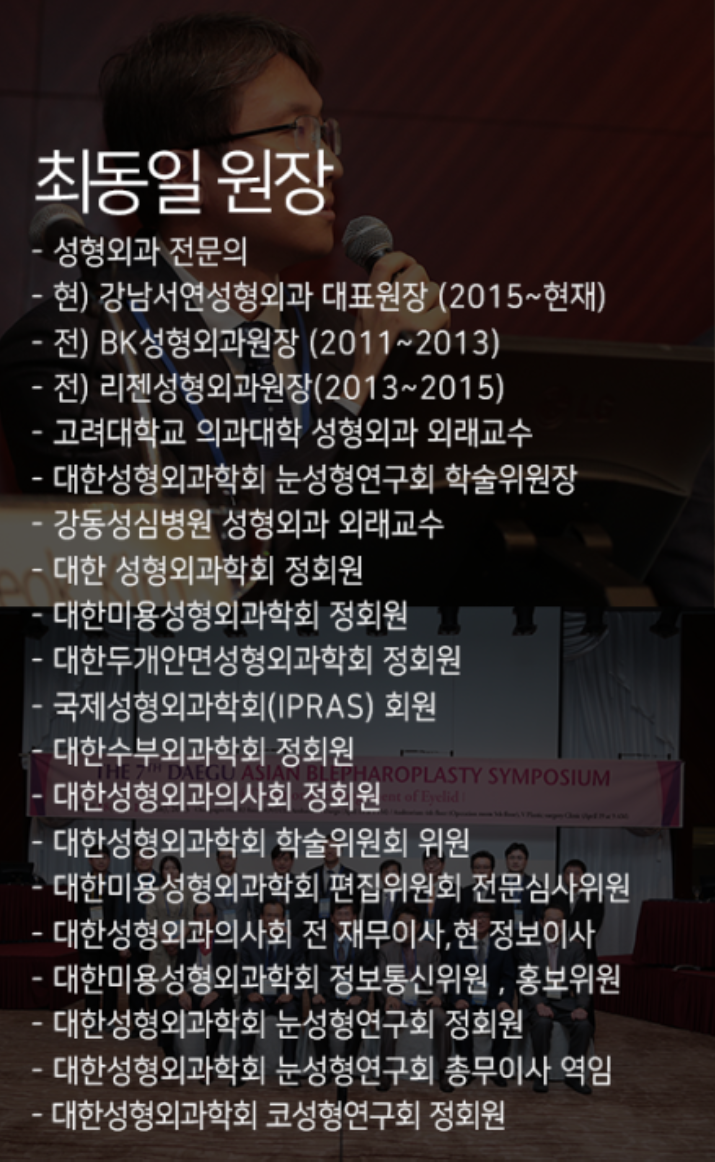
At Gangnam Seoyon Plastic Surgery, director Dr. Choi Dong-il, with 23 years of experience, personally handles everything from consultation to aftercare, analysing the condition of the skin, fat and muscle comprehensively to build a natural result.
※ After surgery, side effects such as bleeding, infection and inflammation may occur depending on the individual, and the degree may vary, so please decide only after a thorough consultation with a specialist.

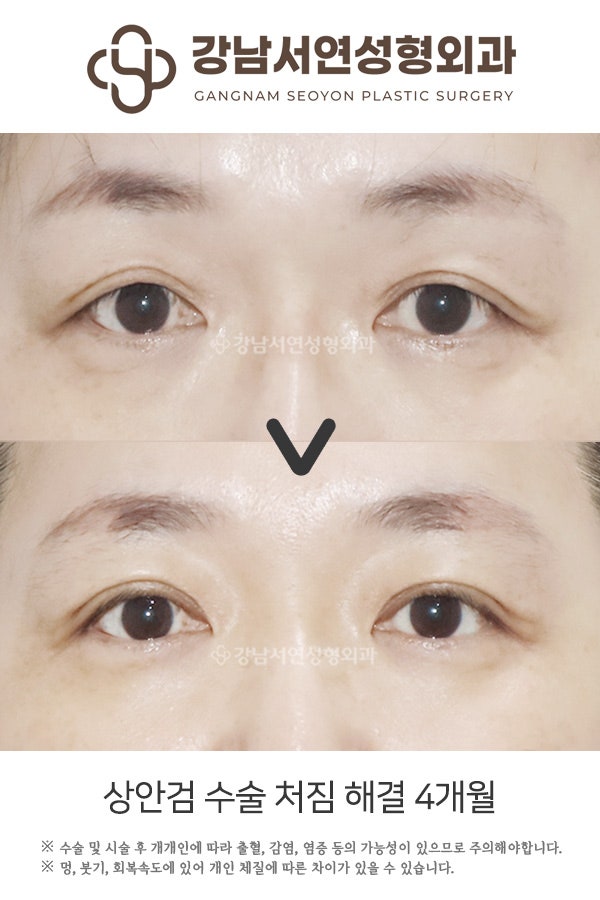
The photographs in this post were taken under identical conditions with the patient's prior consent.
In addition, side effects such as bleeding, infection, and inflammation may occur after plastic surgery or procedures depending on the individual, so caution is required.