
Buried suture removal is a revision procedure that precisely removes, through a tiny opening, the sutures inserted during buried-suture double eyelid surgery. We explain whether an incision is needed, whether the eyes return to their original state, and the recovery period.
---
The buried-suture (non-incision) method is currently the most commonly performed double eyelid surgery. Because it forms the crease using only sutures without any incision, it offers fast recovery and little swelling, which is why many people choose it. The problem arises when you dislike the resulting line or feel a foreign-body sensation. That is exactly when buried suture removal — that is, removing the buried sutures — becomes necessary.
Today we will look at exactly what kind of procedure buried suture removal is, and why it is a surgery that "looks simple but is in fact highly demanding."
---
■ What is buried suture removal?
Buried suture removal is a revision procedure that locates and removes, from beneath the eyelid skin, the buried sutures inserted to form the crease during buried-suture double eyelid surgery. Also called "buried suture removal" or "buried-thread release," it is classified as a separate revision category, distinct from incisional revision.
The key point is this: because the buried sutures are embedded thinly beneath the skin around the eye, removing them requires far more experience and fingertip sensitivity than cutting the skin open and removing them under direct view. The surgeon must track their location by touch and experience alone, without ever seeing the suture.
---
■ People who consider buried suture removal
01. Those unhappy with the result after buried-suture surgery
02. Those who feel a foreign-body sensation or discomfort in the eyelid
03. Those whose original crease was faint but whose eyes now look pinched after the buried-suture procedure
04. Those whose line was set too high and who want to return to their original eye shape
---
■ If the buried sutures are removed, do the eyes return to normal?
We are asked this very often. To give the conclusion first: in most cases, removing the sutures releases the line and the eyes return close to their original shape. On rare occasions the line does not release and remains, but even then, combining removal with massage raises the likelihood that it will release.
In other words, while we cannot guarantee 100% that "simply removing the sutures restores everything," in most cases the line releases naturally.
---
■ Does buried suture removal involve an incision?
No. The answer is NO.
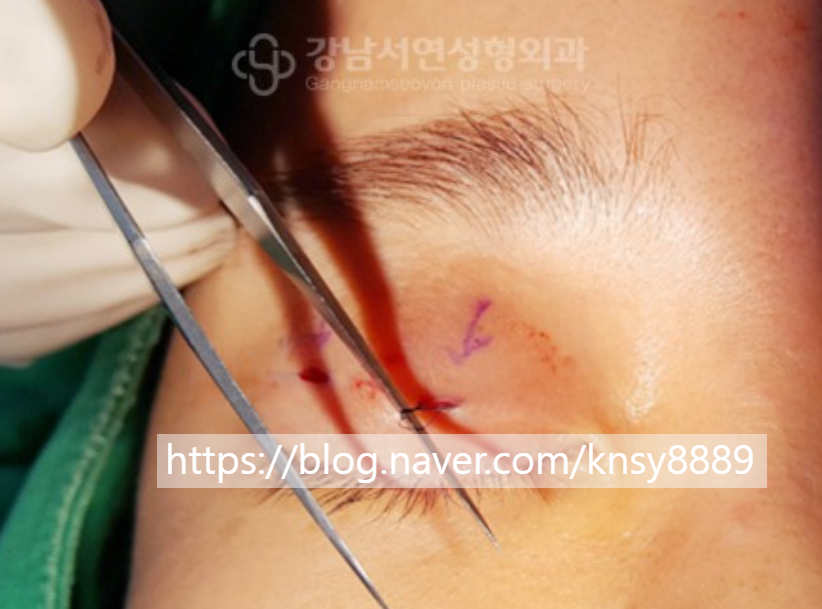
At Gangnam Seoyon Plastic Surgery, we locate and remove the sutures using only a very small opening — similar in size to the one originally made during the buried-suture surgery — at the site where the buried-suture method was first performed. Because the tissue is neither cut nor torn, there is almost no damage and recovery is fast.
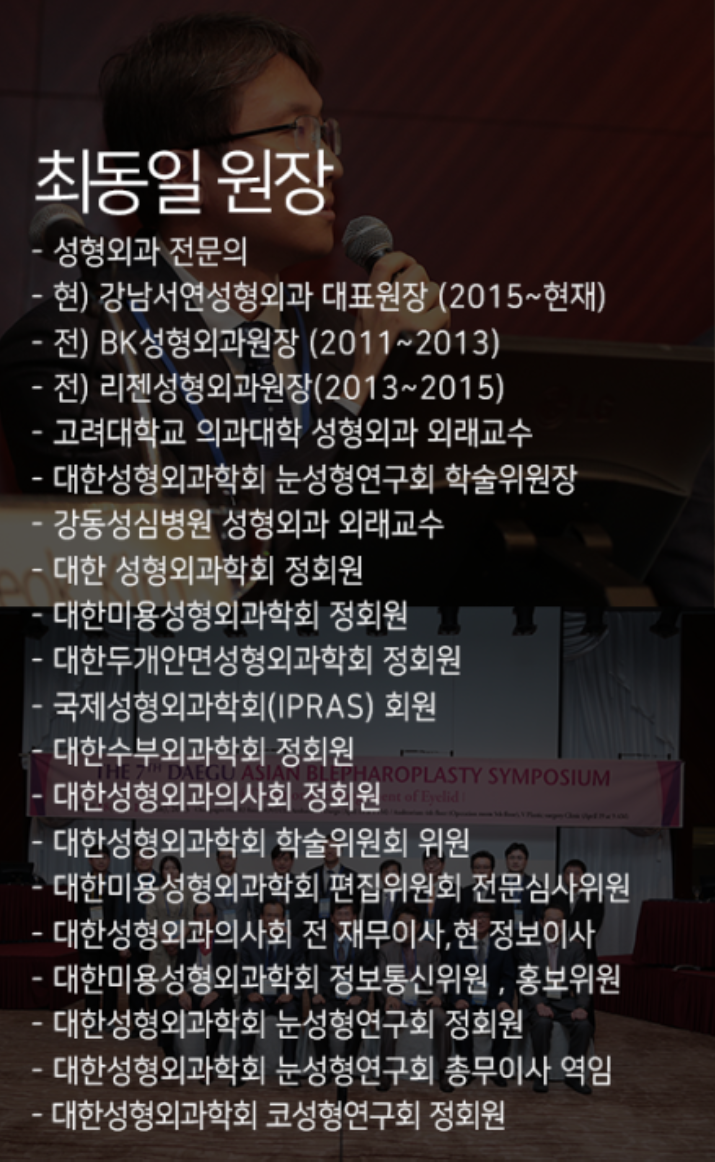
This approach is not something Dr. Choi Dong-il learned from another clinic; it is know-how he developed himself through long clinical experience. Because the position and thickness of buried sutures differ from patient to patient, considerable skill is required to locate them precisely through only a tiny opening.
---
■ How can you confirm that the sutures were really all removed?
Occasionally, patients who had buried sutures removed at another clinic visit us because they still feel a foreign-body sensation. They say the previous clinic told them "there is no way to confirm whether the sutures were removed," and in fact there have been cases where we found and removed them again at our clinic.
To eliminate such unnecessary doubt, Gangnam Seoyon Plastic Surgery records and keeps footage of the suture-removal process. Because we document the very moment the suture comes out of the body, you can confirm the result without any doubt about whether it was removed.
---
■ Buried suture removal — procedure information
Operation time: 30–60 minutes
Anesthesia: sedation anesthesia or local anesthesia
Treatment visits: 1–2 times
Suture removal: after 5–7 days
Hospitalization: same-day discharge
Return to daily life: after 3–7 days

Because there is no large incision, the recovery period is often similar to — or even slightly shorter than — that of ordinary buried-suture surgery.
---
■ Buried suture removal — Frequently Asked Questions (FAQ)
Q. Does the line disappear just by removing the sutures?
A. In most cases the line releases naturally after the sutures are removed. However, some marks may remain, and frequent massage increases the likelihood that it will release.
Q. Is an incision made?
A. No. Because we make only a very small opening at the site of the previous buried-suture procedure to remove them, there is almost no tissue damage.
Q. Is a revision surgery essential after suture removal?
A. It is not essential. However, if you want a new line, suture removal and revision surgery can be performed together.
Q. Is the recovery period longer than for ordinary buried-suture surgery?
A. It is similar or even slightly shorter, because no incision is made.
---

■ In closing
Buried suture removal may look like "a simple procedure of just pulling the sutures out," but in reality it is a highly demanding revision surgery in which the surgeon must find, by touch alone, sutures that cannot be seen. We recommend deciding only after carefully checking whether an incision is involved, how removal is confirmed, and the surgeon's level of skill.
At Gangnam Seoyon Plastic Surgery, we precisely remove buried sutures through a minimal opening without any incision, and we record and keep footage of the removal to give you confidence in the result. If you are unhappy with your line after the buried-suture method or feel a foreign-body sensation, we encourage you to begin with an accurate diagnosis.
※ After surgery, side effects such as bleeding, infection, or inflammation may occur depending on the individual, and satisfaction with the results may vary from person to person.

The photographs in this post were taken under identical conditions with the patient's prior consent.
In addition, side effects such as bleeding, infection, and inflammation may occur after plastic surgery or procedures depending on the individual, so caution is required.