
Hello!
For surgery with high patient satisfaction,
always giving our very best,
we are Gangnam Seoyon Plastic Surgery :)
Today we would like to explain asymmetric eye correction along with a variety of cases.
We will go over the basic principles of asymmetric eye correction,
and then show you actual surgical cases of asymmetric eye correction :)
Other than brightness adjustment, the photos below
have not been retouched in any way :)

Generally, "asymmetric eyes" refers to a case in which one eye is larger or smaller than the other.
Eye asymmetry can sometimes be an asymmetry in itself, but it is also frequently accompanied by facial asymmetry.
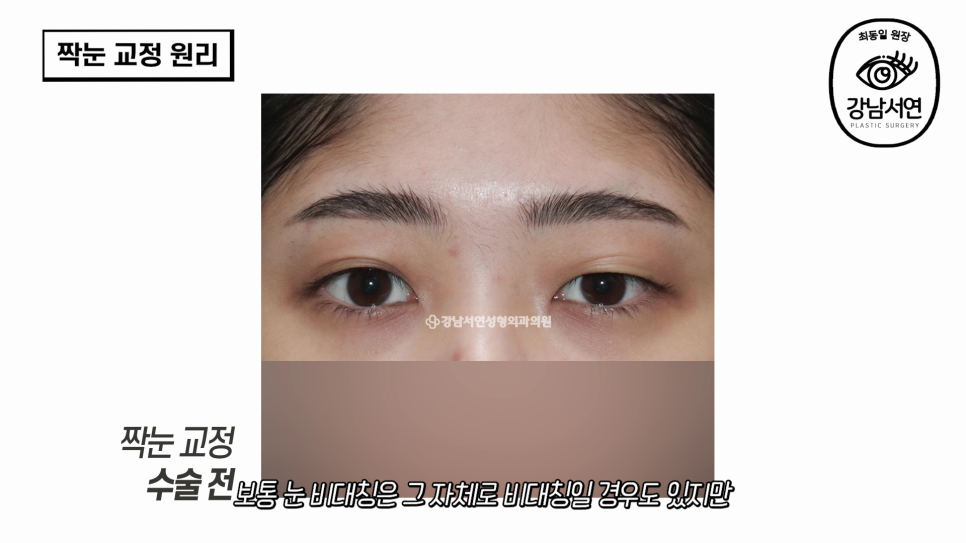
If you look at the photo, this patient's right eye (in the photo) also appears to open smaller,
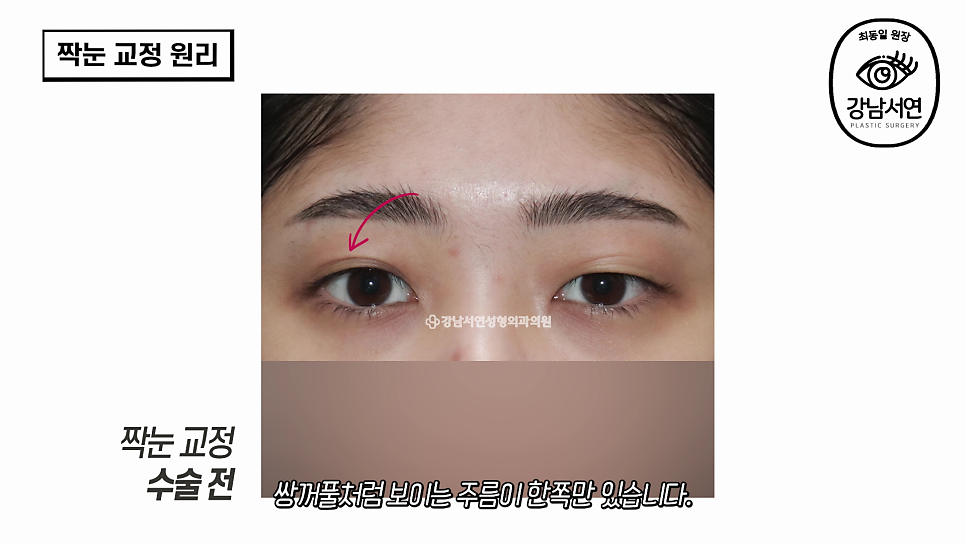
and a crease resembling a double eyelid is present only on the left eye in the photo.
If you look closely at the eyebrows, the left eyebrow in the photo sits higher and the right eyebrow lower,
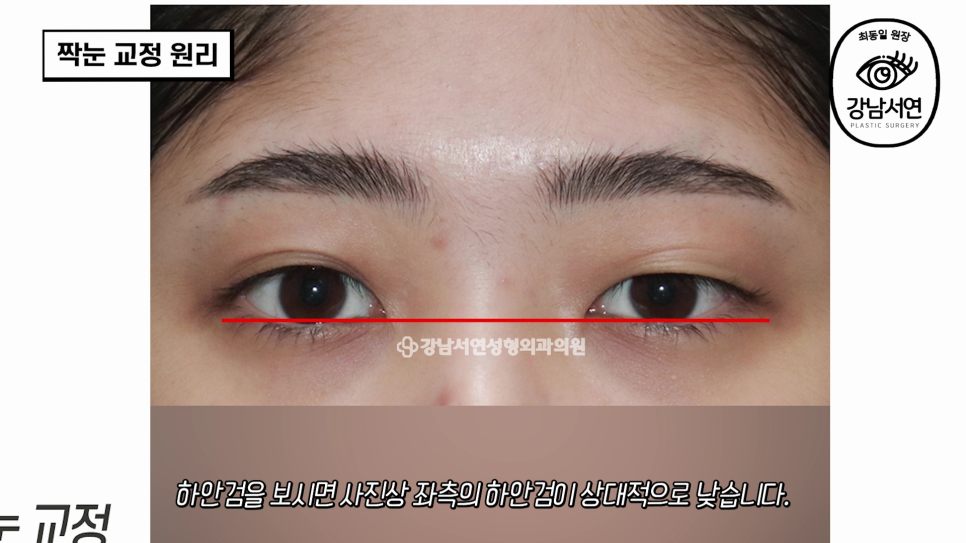
and looking at the lower eyelids, the left lower eyelid in the photo is relatively lower.
This can be described as a facial asymmetry in which the bone structure itself is larger on the left side in the photo.
In such cases, the amount of eye-shape (ptosis) correction and the skin must be adjusted so that both eyes appear symmetrical.
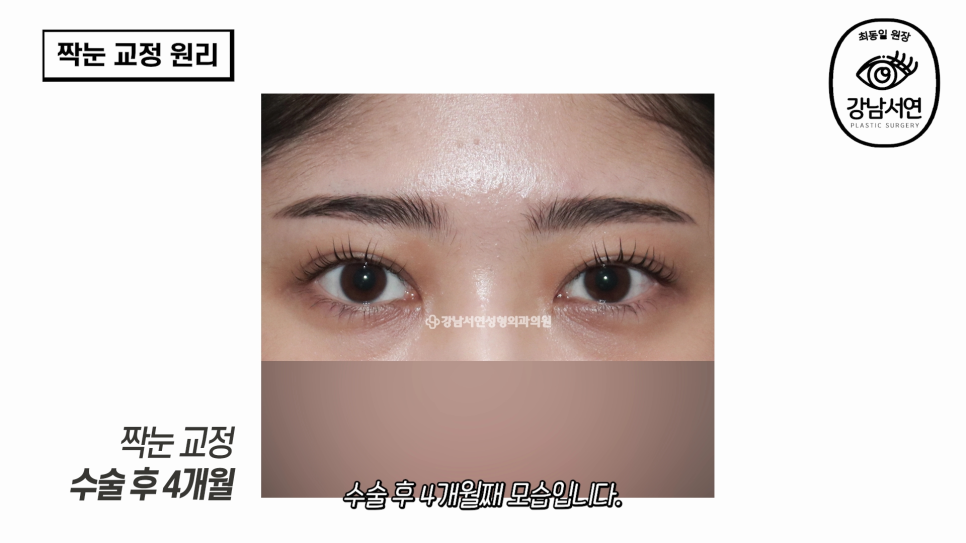
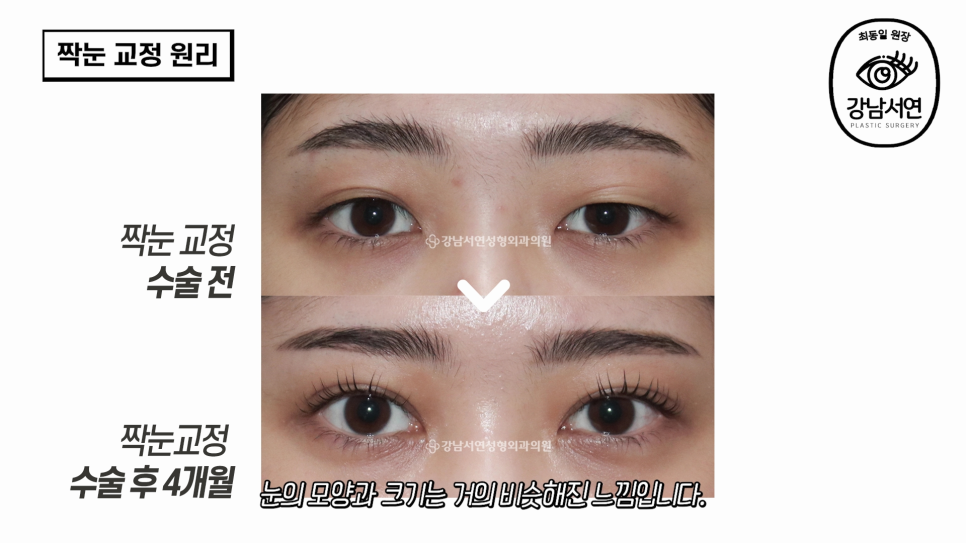
This is the appearance at 4 months after surgery.
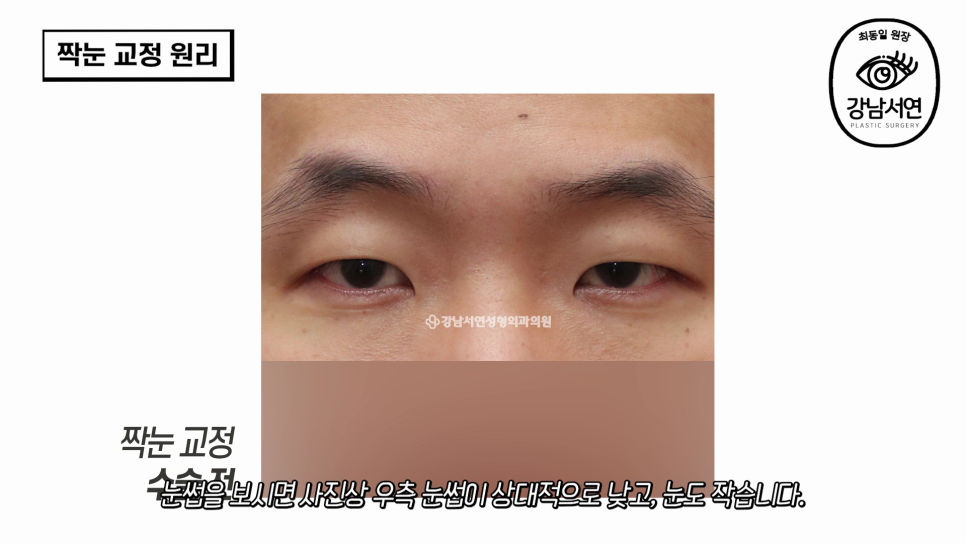
Here is the next case.
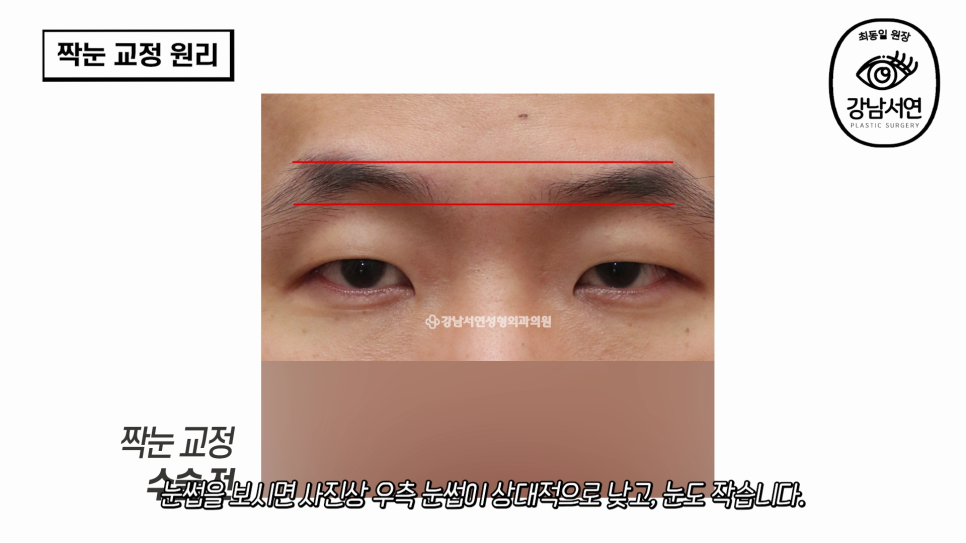
Looking at the eyebrows, the right eyebrow in the photo is relatively lower, and that eye is also smaller.
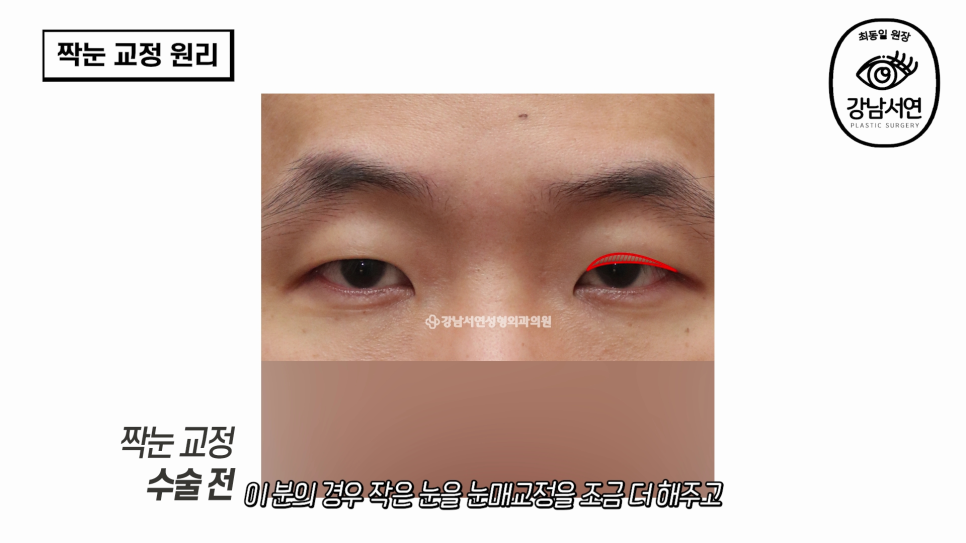
In this patient's case, the smaller eye receives a bit more eye-shape (ptosis) correction, along with additional skin removal and similar steps.
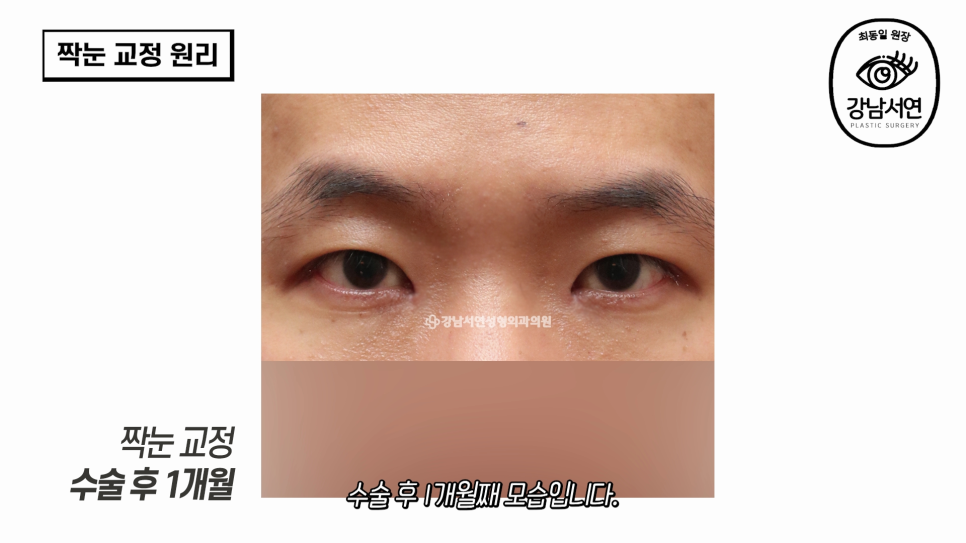
This is the appearance at 1 month after surgery.
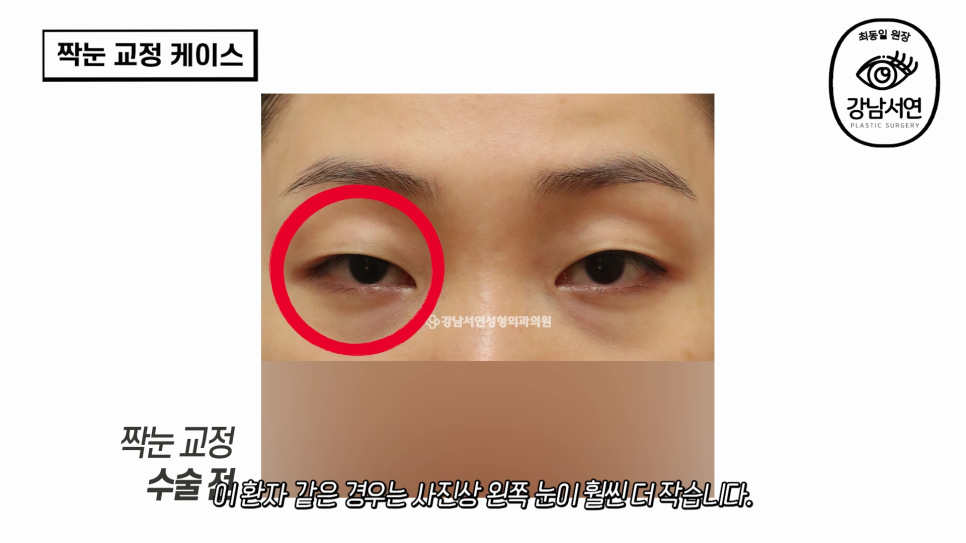
In this patient's case, the left eye in the photo is much smaller.
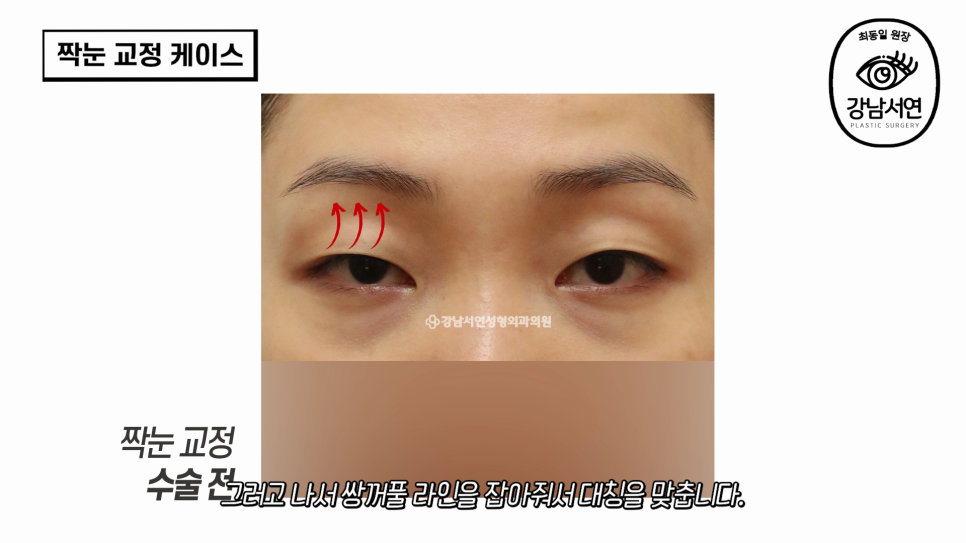
So, to achieve symmetry, we perform more eye-shape (ptosis) correction on the left eye in the photo (the patient's right eye),
and then set the double-eyelid line to match the two sides.
In such cases the degree of skin sagging can differ somewhat,
so we sit the patient up partway through the operation to adjust the double-eyelid line,
and then, if there is any sagging skin, we trim a little to achieve symmetry.
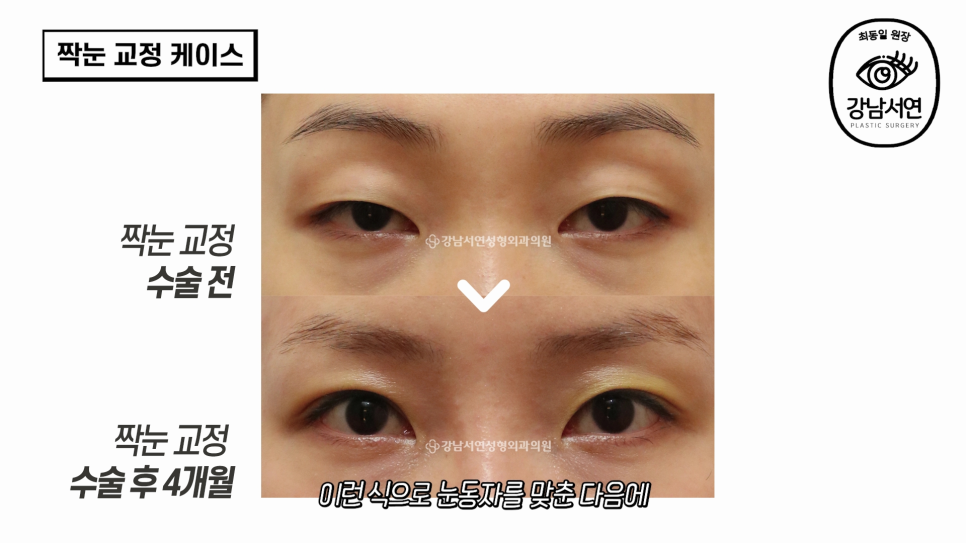
In this way, after matching the amount of exposed pupil, we set the double-eyelid line.
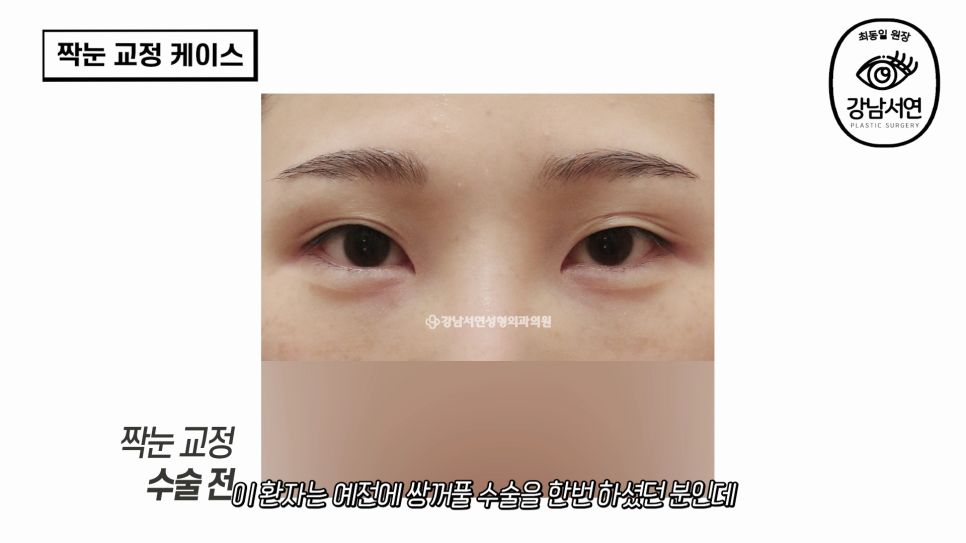
This patient had previously undergone double-eyelid surgery once,
but one side's line had come undone, so we reset the line once again while
also performing a canthal opening procedure.
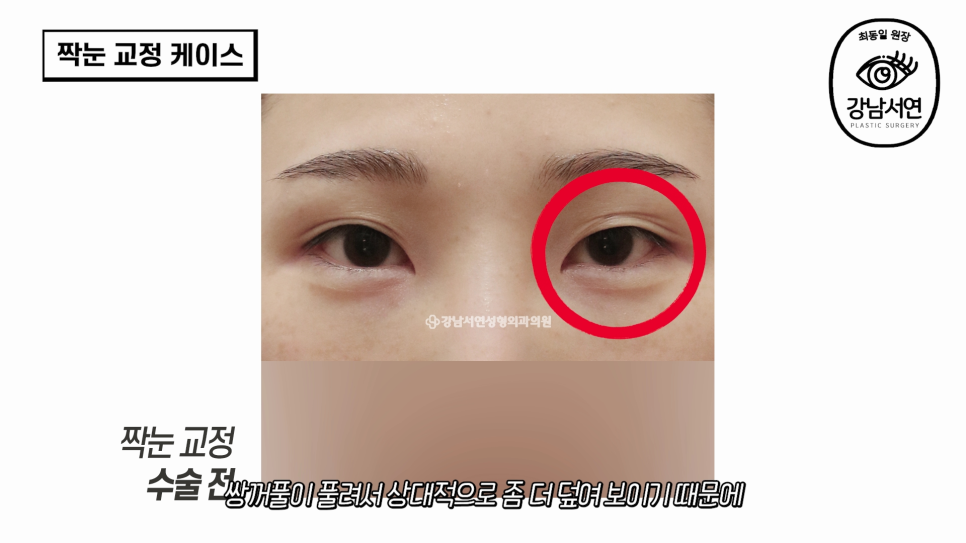
So, in the case of the right eye in the photo,
the double eyelid had come undone and it looked relatively more covered,
so this was a case in which we set the line and performed a canthal opening.
We also performed a lateral canthoplasty and a lower canthal opening, so the lower corner came down,
and this was a case in which the double-eyelid line was set nicely as well.
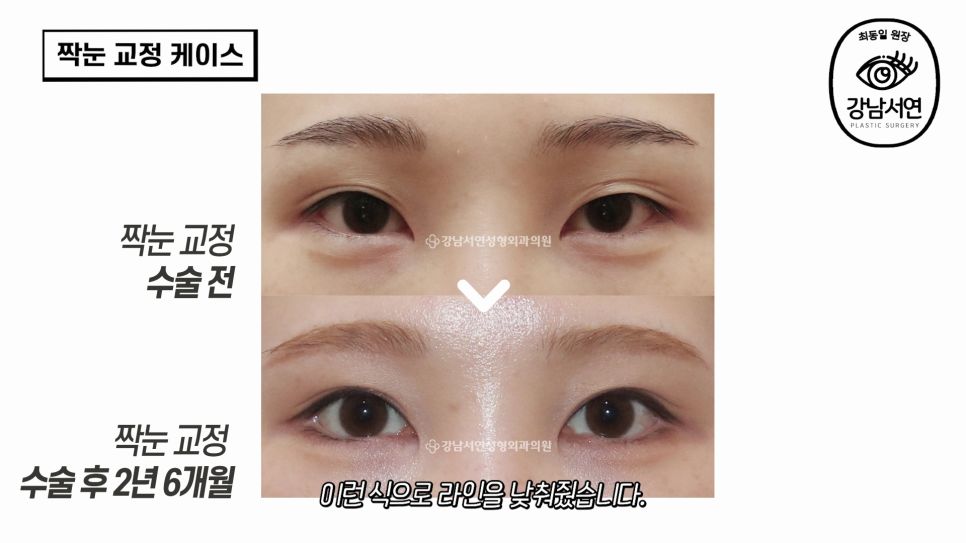
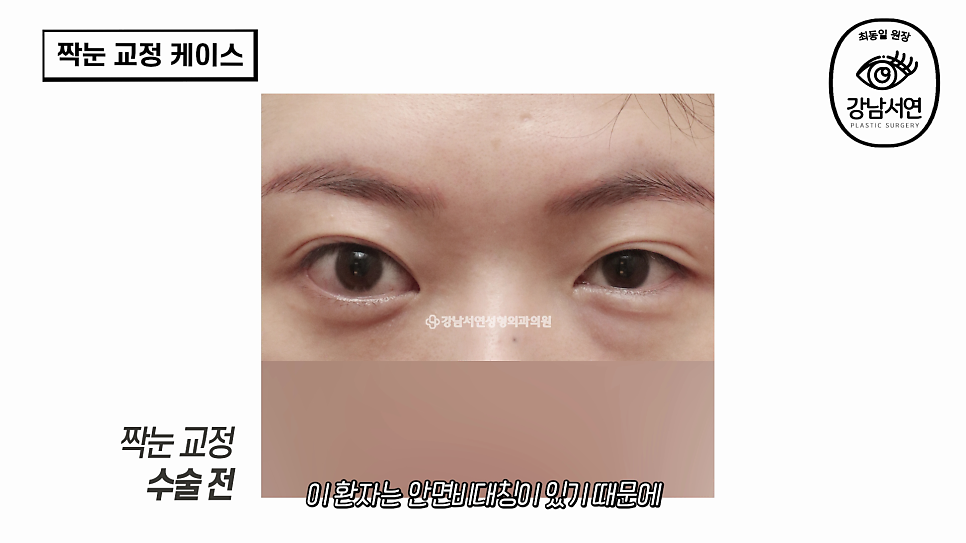
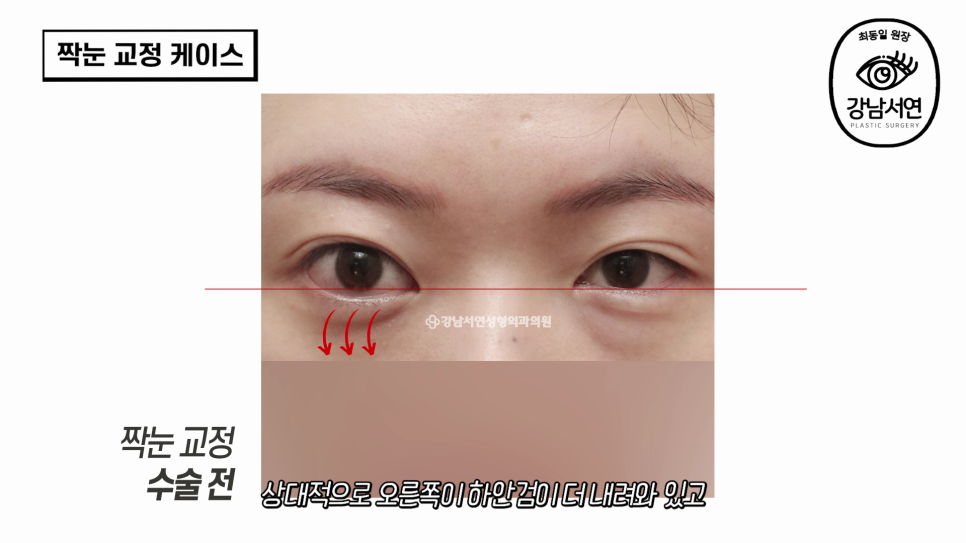
Because this patient has facial asymmetry, the lower eyelid of the left eye in the photo is relatively more descended,
while the right eye in the photo is more elevated.
And because the degree of exposed pupil is slightly different,
we could of course lower the right eye in the photo a bit more,
but doing so would actually create a different asymmetry,
so in order to make them look as similar as possible,
we first matched the double eyelids as closely as possible,
and made the amount of exposed pupil similar.
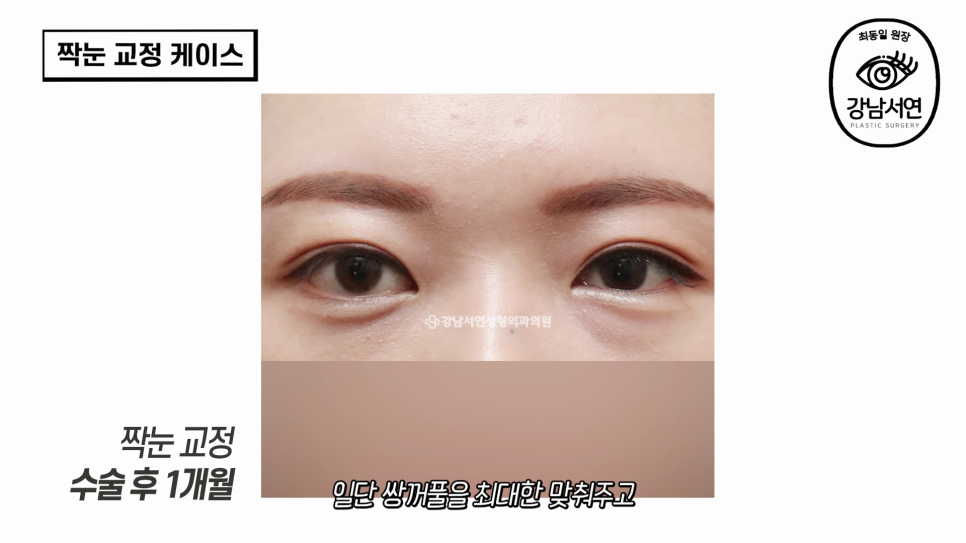
So although we matched the double eyelids and the exposed pupils in the upper part,
because this patient has facial asymmetry,
lowering the right lower eyelid further toward the other side would carry risk,
so we believe finishing at this level is the best option.
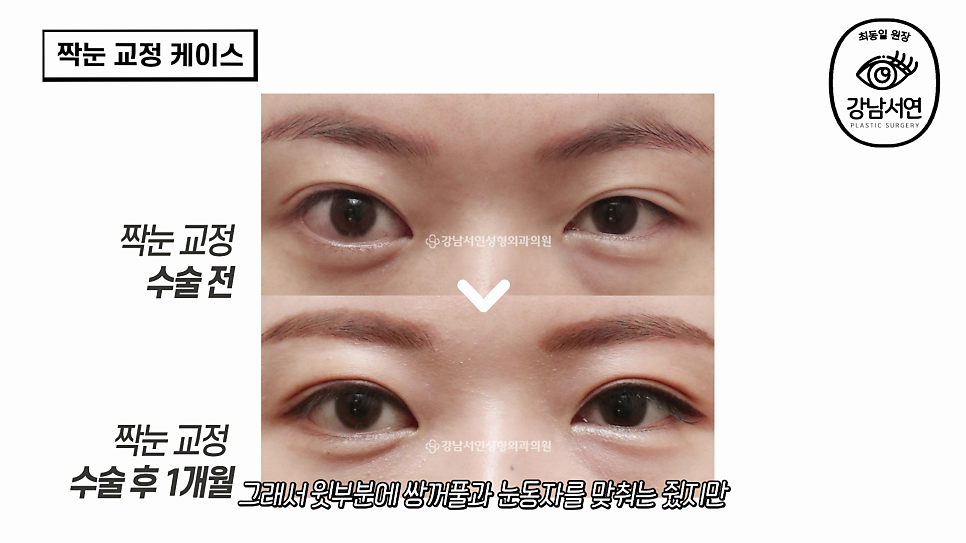
Skeletal asymmetry is difficult to make completely identical.
So our goal is to make the two sides as similar as possible.
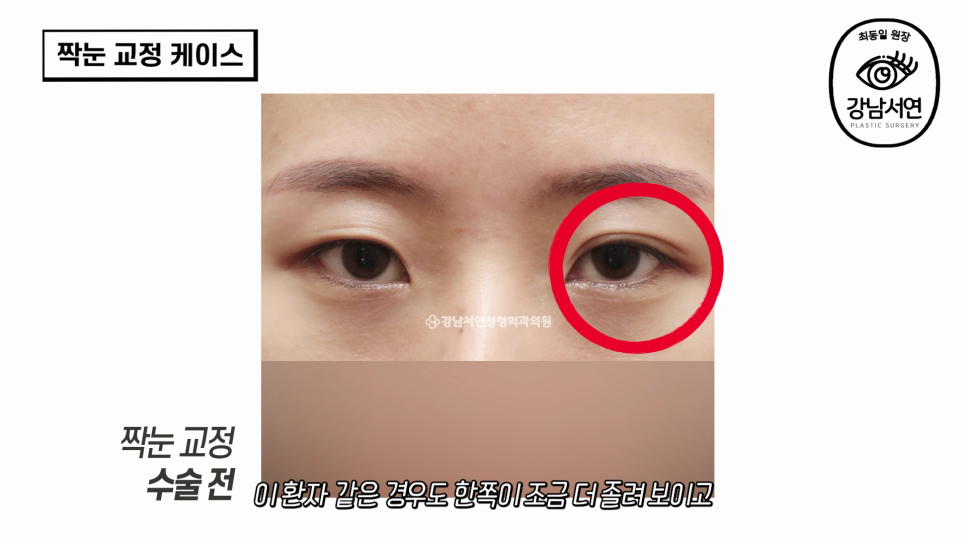
In this patient's case as well, one side looks a bit sleepier,
and only one side has more of a crease.
So we first made the amount of exposed pupil on both sides fairly similar,
and this is a patient in whom we performed incisional eye-shape (ptosis) correction to create double-eyelid symmetry.
So we made the two sides as similar as possible, matching the amount of exposed pupil,
and then created the double eyelids.
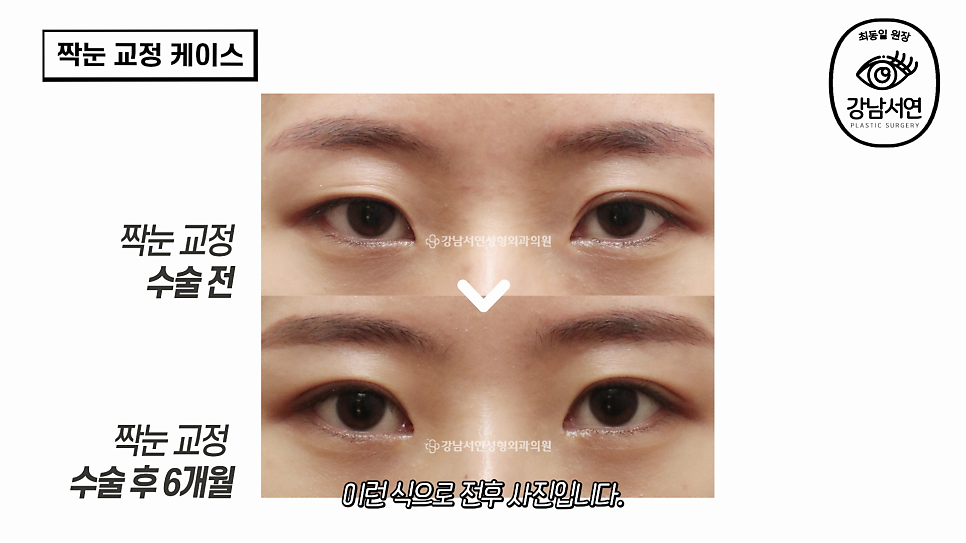
These are the before-and-after photos.
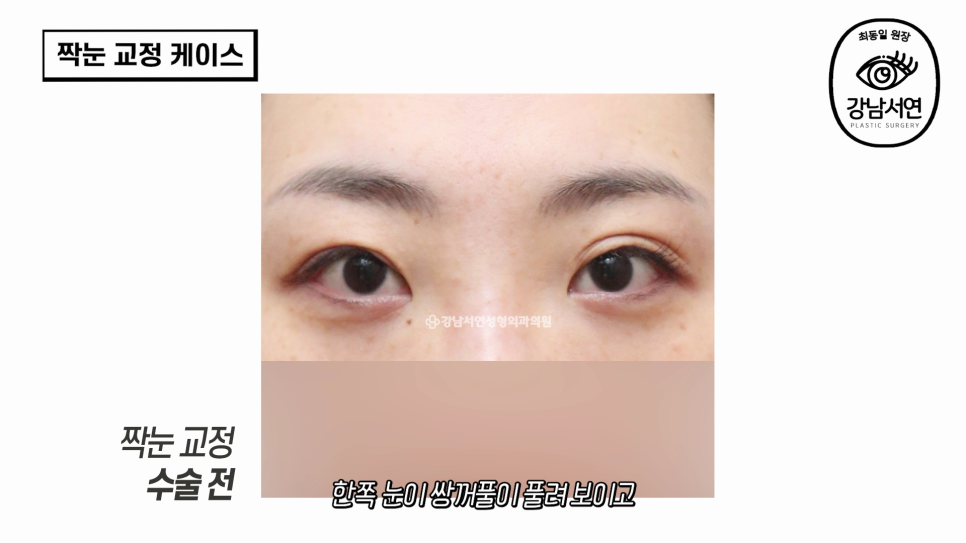
In this patient's case as well, the amount of exposed pupil differs,
one eye's double eyelid looks undone,
and the left side in the photo has a somewhat low line.
So we match the amount of exposed pupil and then perform the double-eyelid correction.
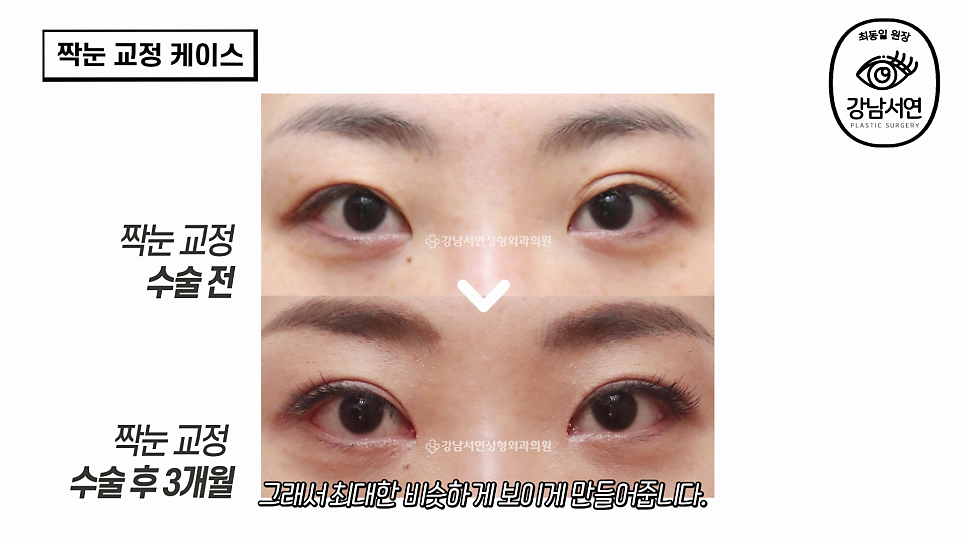
In this way, we make the two sides look as similar as possible.
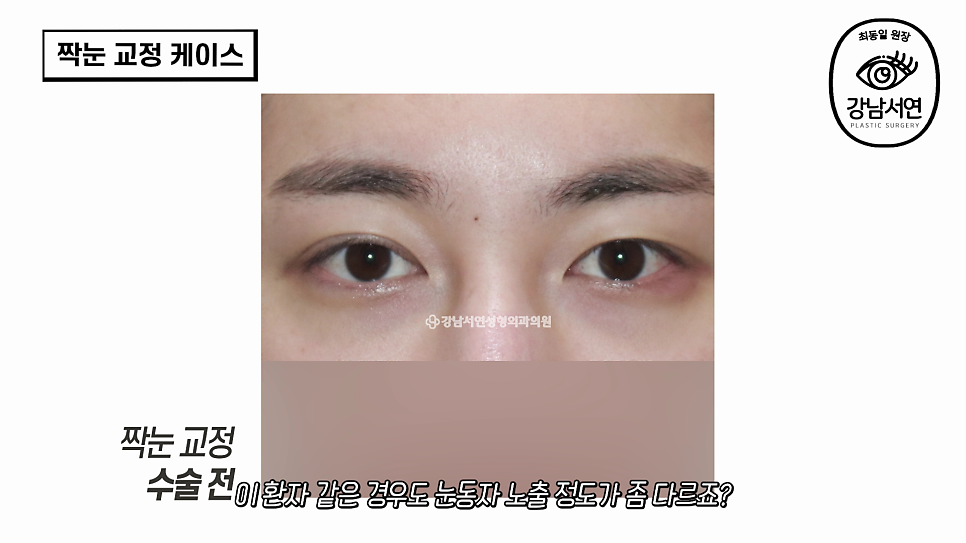
In this patient's case as well, the amount of exposed pupil is a bit different, isn't it?
Because the left eye in the photo looks much sleepier,
we match the amount of exposed pupil and then correct the double-eyelid line.
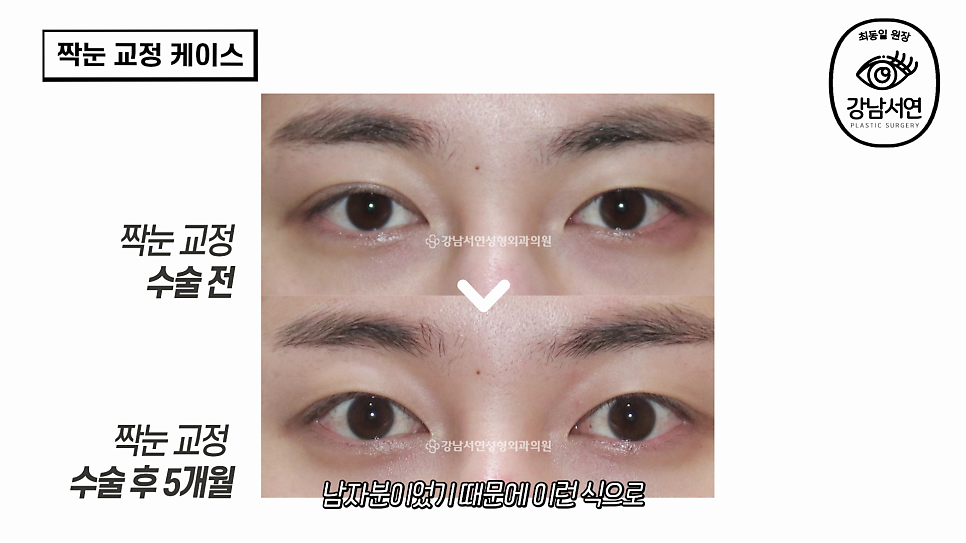
Because this was a male patient, we performed it in a way that keeps the double eyelid as inconspicuous as possible.
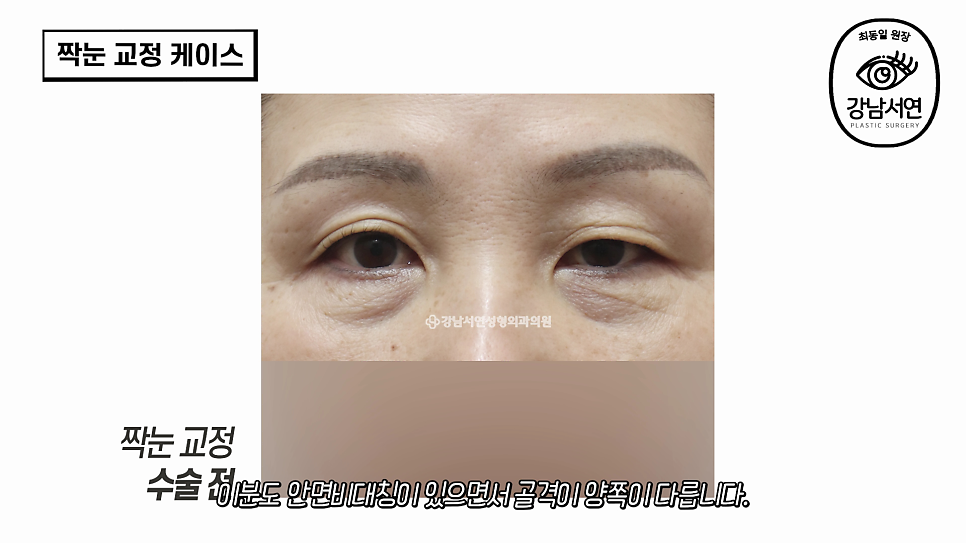
This patient also has facial asymmetry, with a bone structure that differs between the two sides.
And because the amount of exposed pupil was different,
we performed more eye-shape (ptosis) correction on the right eye in the photo,
and then corrected the double eyelids.
We also factor in the degree of sagging, aiming to make the two sides look as similar as possible.
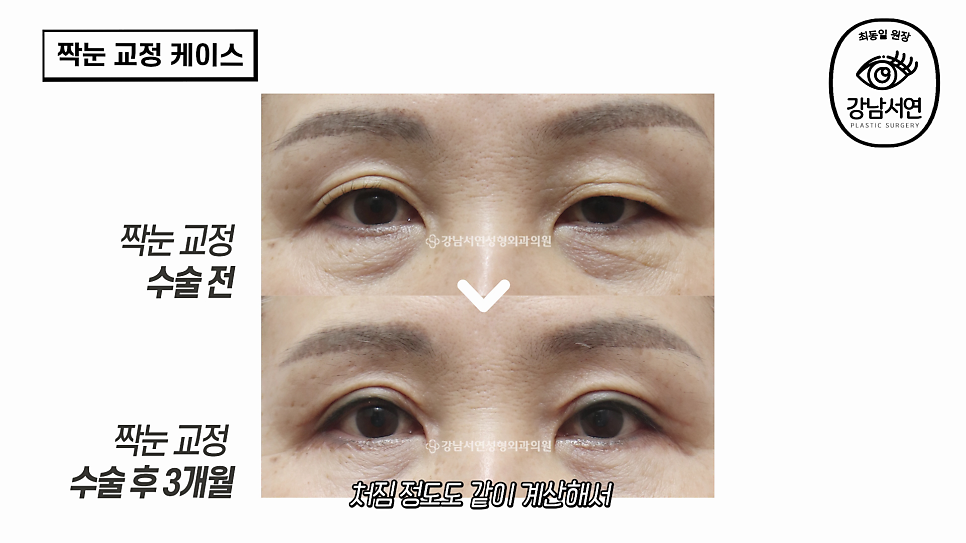
A lower blepharoplasty was performed at the same time as well.
We hope today's post has been helpful.
Because the surgical method varies greatly depending on each patient's condition,
it is best to come in for a detailed consultation in person.
For more on asymmetric eye correction cases,
you can find further details in the video below.
↓↓↓↓↓↓
The photographs in this post were taken under identical conditions with the patient's prior consent.
In addition, side effects such as bleeding, infection, and inflammation may occur after plastic surgery or procedures depending on the individual, so caution is required.