
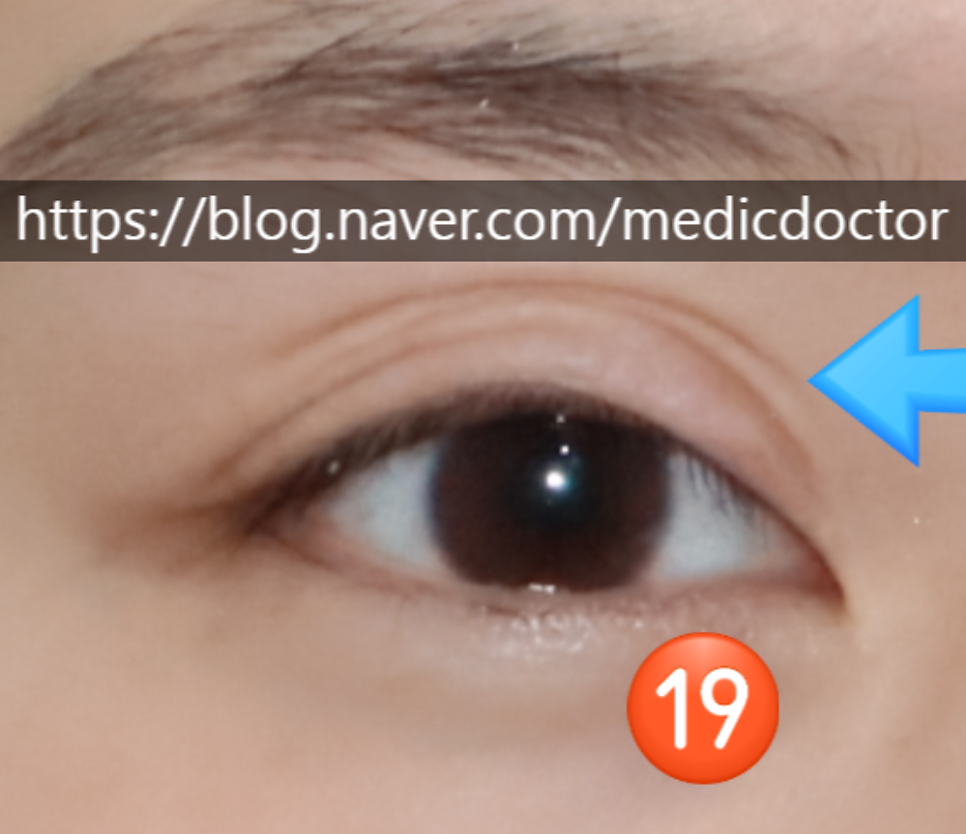
Early correction of incisional double eyelid surgery means performing a correction when problems such as abnormal adhesion, an irregular crease or left–right asymmetry appear relatively soon after double eyelid surgery done with the incisional method. Unlike the buried-suture (non-incision) method, the incisional method involves excising and suturing skin and tissue. For this reason, the causes that call for early correction and the approach to it are also different.
■ Typical situations that call for early correction after the incisional method
- When adhesion at the incision site has formed excessively or unevenly, leaving the crease looking unnatural
- When there is clear asymmetry in the height, width or shape of the left and right creases
- When eye-shape (ptosis) correction was performed at the same time and the open-eye appearance or drooping turns out differently than expected
When the eye-shape correction has been overcorrected or undercorrected
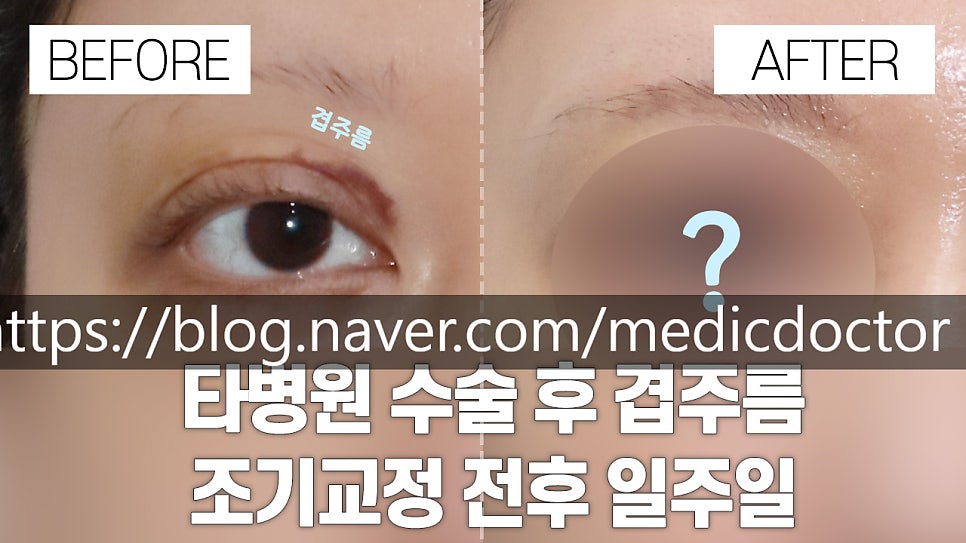
Swelling and tissue reaction right after incisional surgery can be greater than after the buried-suture method. It is therefore difficult to decide on early correction from an unnatural-looking crease in the early period alone. The usual practice is to observe for long enough while the tissue stabilizes and the scar and adhesion settle, and then assess the final result.
■ Early correction after the incisional method: what needs to be re-examined?
When considering early correction after the incisional method, we assess the following factors comprehensively.
- Adhesion status: whether areas of excessive adhesion and areas of insufficient adhesion are mixed
- Amount of skin excised: whether too much or too little skin was excised at the initial surgery
- Concurrent eye-shape correction: if eye-shape correction was performed at the same time, how the muscle and aponeurosis were handled
- Whether the scar position matches the crease
These factors are often difficult to judge from the visible shape of the crease alone, so the initial surgical records need to be reviewed together with the current condition of the tissue.
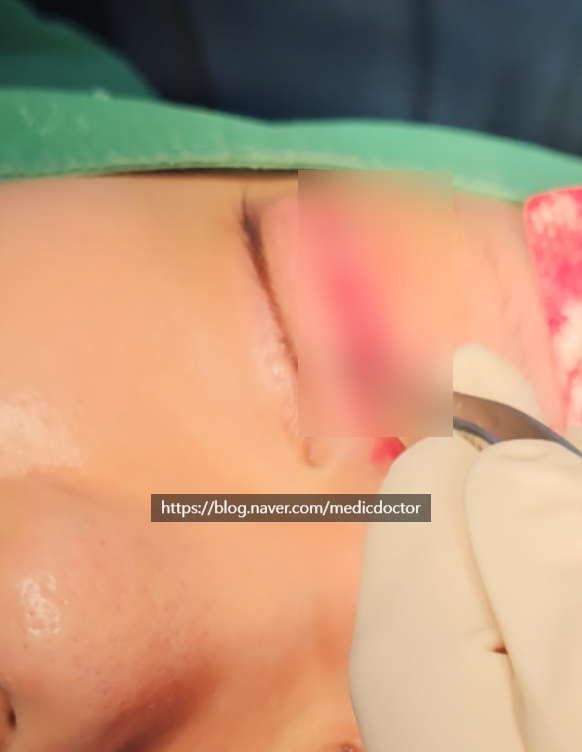
During early correction, we open the site directly to determine whether there is any abnormality.
■ Early correction after the incisional method: how is the timing determined?
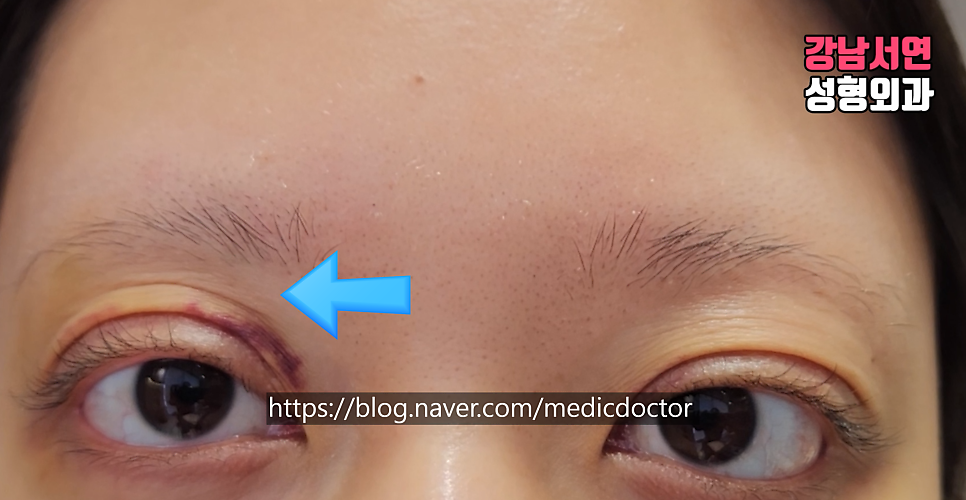
With the incisional method, adhesion can take relatively longer to settle after the tissue has been excised and sutured than it does with the buried-suture method. Even so, it is best to check after the major swelling has subsided. It is generally recommended to assess the condition once the swelling has sufficiently stabilized, usually around 1–3 weeks after surgery. However, if there are signs of infection, severe left–right asymmetry or impaired eyelid function, earlier correction may be needed as an exception.
■ What to check before early correction after the incisional method
1. Identify the extent of excision, the adhesion method and whether eye-shape correction was performed at the initial surgery
2. Determine whether the problem lies in the crease itself or is related to eye shape or eyelid function
3. Consultation on whether re-incision is needed and on the approach suited to the tissue condition
4. Advance guidance on scar care and the recovery period
Compared with the buried-suture method, early correction after the incisional method may involve working on the tissue again. Consultation with a medical team that can review both the initial surgical records and the current tissue condition is therefore especially important.
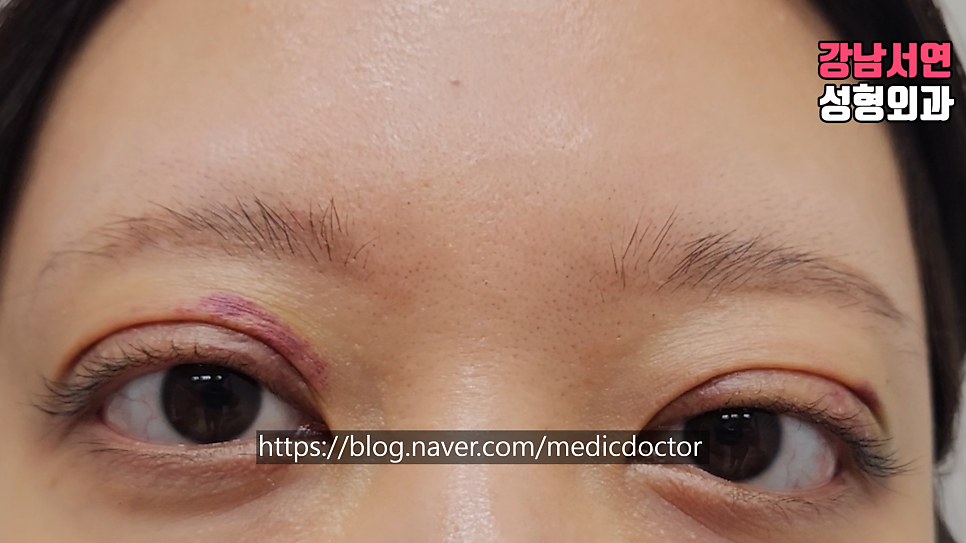
After surgery
Q1. How soon after surgery can early correction of incisional double eyelid surgery be done?
A. The tissue can take time to stabilize after the incisional method, but the decision is usually made between 1 and 3 weeks after surgery.
Q2. If I am not happy with my incisional crease, can I have revision surgery right away?
A. The crease can change with the swelling right after surgery and the early state of adhesion. It is advisable to decide only after confirming that the problem persists once the tissue has sufficiently stabilized.
Q3. Is early correction done differently for the incisional and buried-suture methods?
A. Yes, it is different. With the buried-suture method, the main cause is often loosening of the sutures or insufficient adhesion. With the incisional method, uneven adhesion, the amount of skin excised and whether eye-shape correction was performed must all be considered together.
Q4. Can the scar be managed as part of early correction after the incisional method?
A. In some cases, whether the scar position matches the crease and the condition of the scar are reviewed together and built into the correction plan. The approach may vary depending on each individual's condition.