
Today's topic:
This patient had ptosis correction and fat grafting at another clinic.
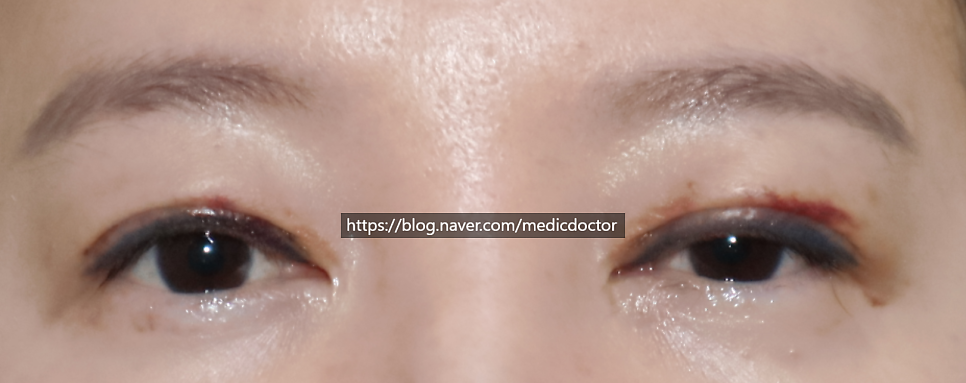
On the photo, the right eye looks particularly sleepy.
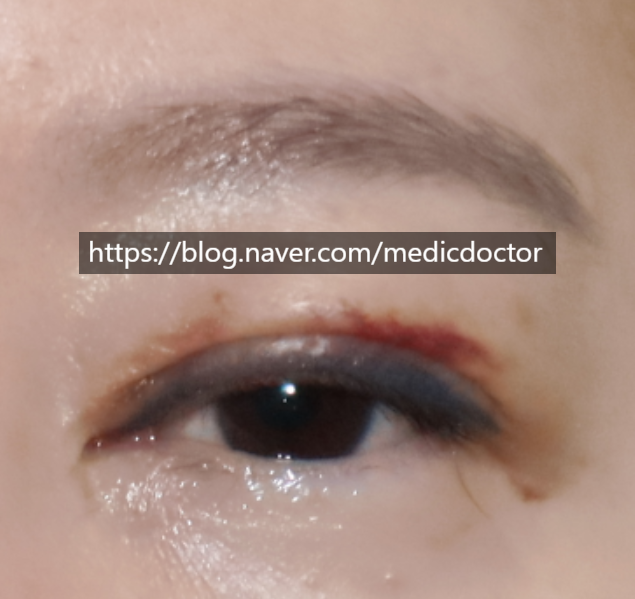
Her presenting symptoms:
Tightness and a sense of pressure since the ptosis correction.
The repair generally follows this sequence:
Remove all sutures, release the adhesions, and return the eyelid to its pre–ptosis-correction state.
Any tissue damage is then repaired as much as possible.
How the functional symptoms will respond — improvement, worsening, or no change — cannot be predicted with certainty.
Most patients improve once the anatomy is restored to its original position, though we cannot guarantee it.
Any residual crease asymmetry is corrected after six months.
The incision line itself cannot be moved.
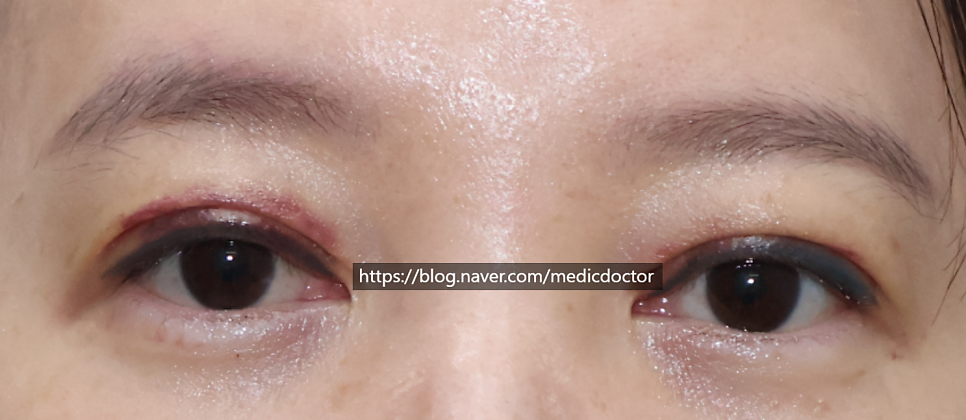
One week post-op. Eye opening feels much easier, and her symptoms have largely resolved.
Frankly, even I had a hard time understanding why ptosis correction had been performed in the original surgery.
The patient is pleased with the outcome — gratifying for me as well.
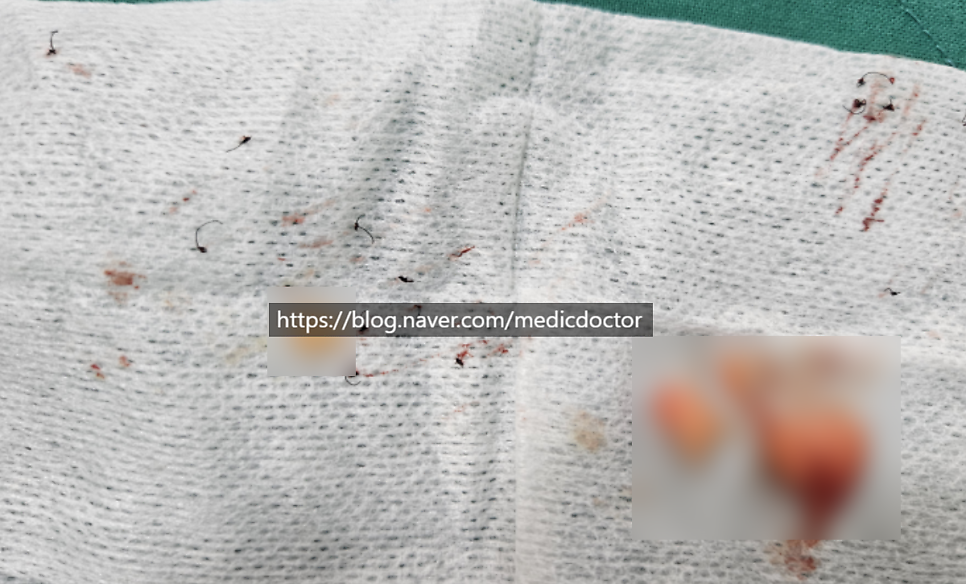
Removed sutures and the unnecessary fat that had been grafted. Foreign tissue near the structures that move the eye can cause adhesions and make eye opening uncomfortable.
Pre-op view.