
When ptosis correction is taken too far,
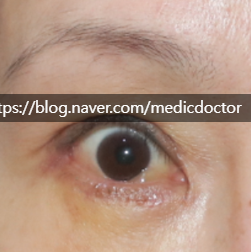
the eyes can take on a startled, wide-open look.
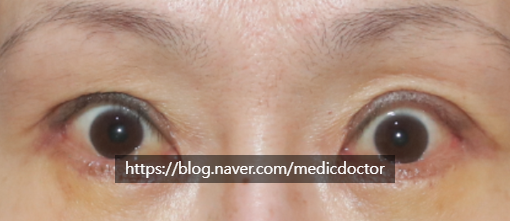
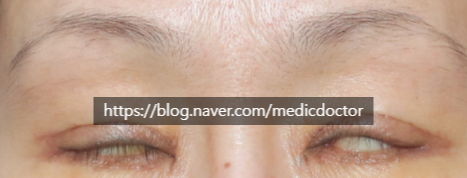
The lids no longer close fully, and even a partial blink leaves the entire pupil exposed.
The first priority is getting the diagnosis right.
Ptosis correction is for true ptosis. Performing it on a patient with pseudo-ptosis is exactly how this kind of over-correction happens.
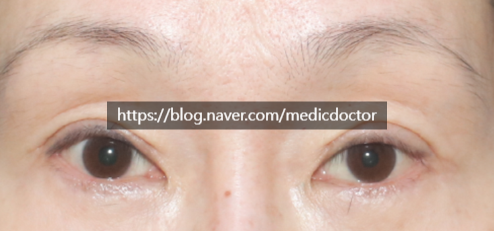
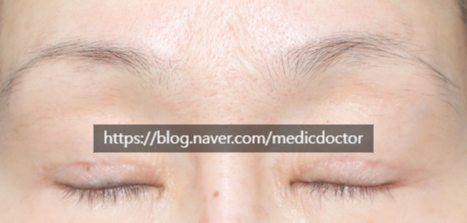
Releasing the over-correction soon after the original surgery brings the lid back down quickly. This is best done two to three weeks post-op.
The challenge is when the early window has closed. Past about a month, an early revision is no longer feasible and a retraction repair becomes necessary.
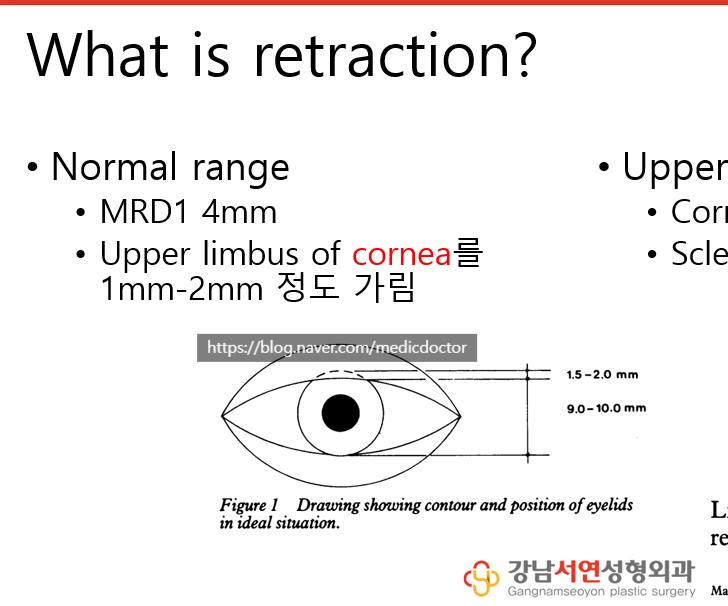
Eyelid retraction means the upper lid no longer covers the iris by the normal 1–2 mm — instead, the iris is fully exposed, giving the wide, startled look in the photo above.
Bringing the lid back down is what retraction repair does.
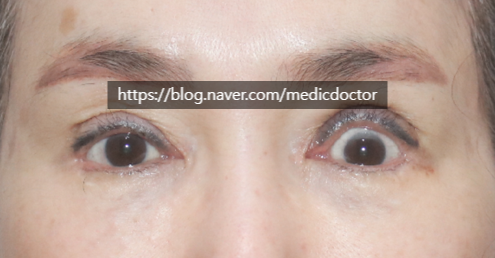
An eye opening this widely is in a retracted state.
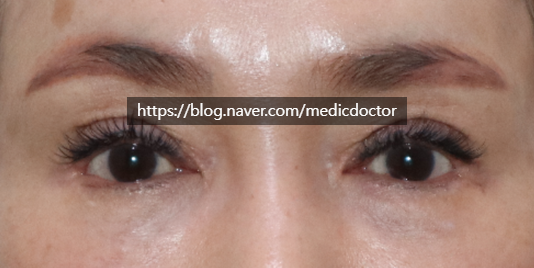
When the upper lid once again covers the top of the iris, the correction has been achieved.
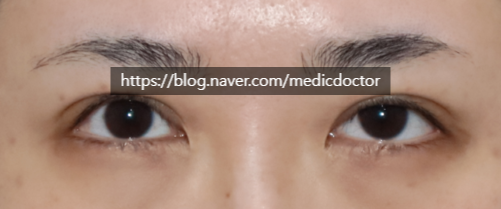
In this patient, the left eye on the photo opens too widely.
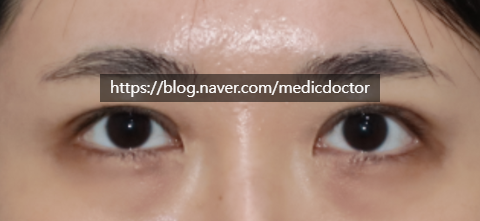
Post-op view.
Related video below.
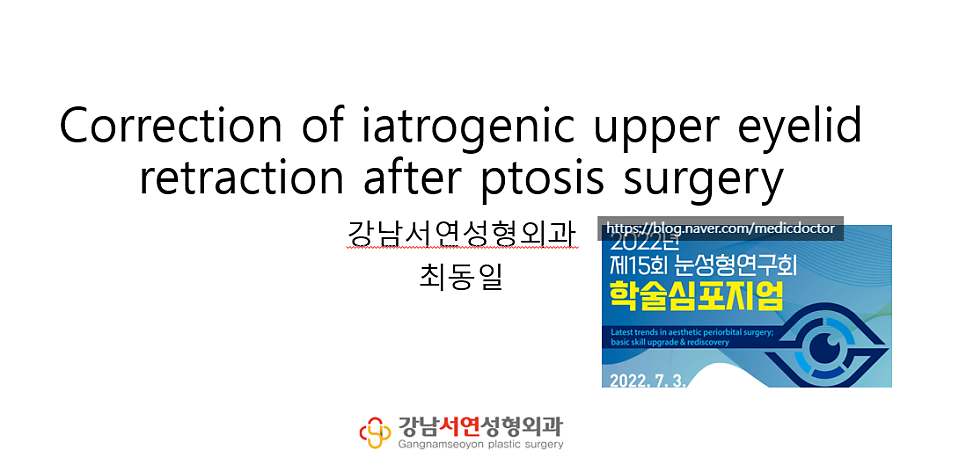
Excerpted from a lecture I gave at the 2022 Eye Plastic Surgery Symposium.
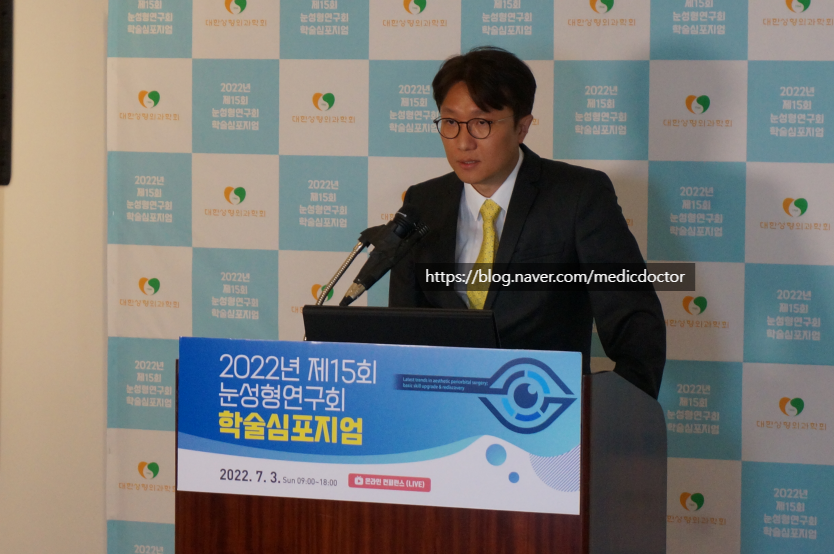
Of all the procedures we perform, this one carries one of the higher rates of early revision.
The shape continues to shift until it settles.
We can balance the iris exposure surgically, but the eyes — being living tissue — keep adjusting after surgery.
Following our post-op guidance helps us bring both sides into balance.
Some degree of subtle asymmetry is normal and should be expected.
When I ask you to wait, please wait. When I recommend an early revision, please come in for it.
Gangnam Seoyon Plastic Surgery is committed to giving you our best.