
It has been a while since I posted. I want to emphasize one thing: you have to understand the underlying principle of asymmetric-eye correction and tailor the surgery accordingly.
When we say asymmetric eyes, we usually mean one side is bigger or smaller than the other.
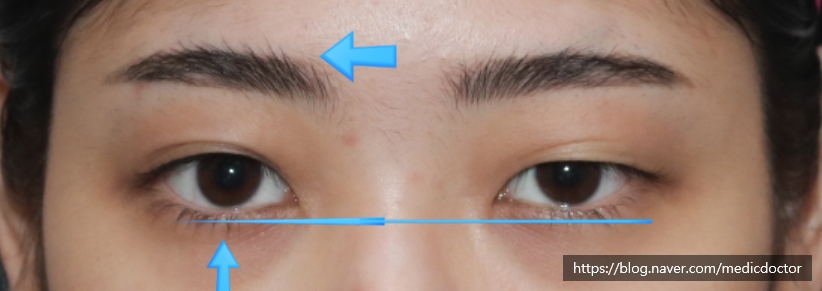
On this patient, one eye opens noticeably less than the other, and the crease appears on one side but not the other.
The eyebrows look tattooed at first glance, but on closer inspection, the right brow sits higher and the left sits lower.
In a word: facial asymmetry.
Her right lower lid (arrow) also sits lower. The bony skeleton on her right side is simply larger.
In a case like this, I tune the ptosis correction differently on each side and adjust the skin excision to balance them.
See the earlier post for reference.
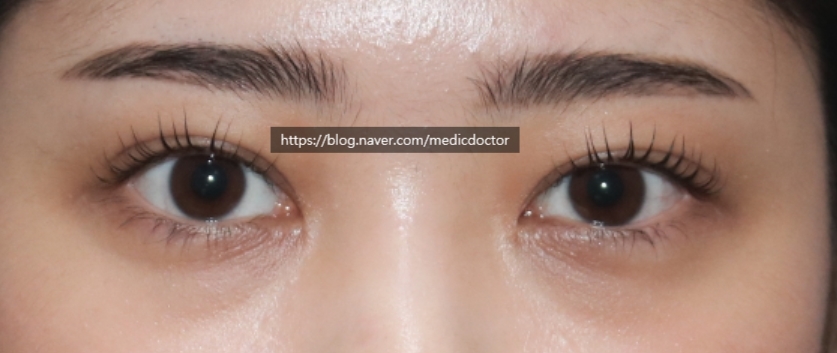
Four months post-op.
Her right side is still the larger side skeletally, but the eyes look essentially balanced.
She had incisional ptosis repair plus medial epicanthoplasty.
The scar is unobtrusive and the result looks natural.