Today's topic.
When the eyes are uneven, one of them can read as a sleepy, half-closed stare, and that can lead to social misreads.
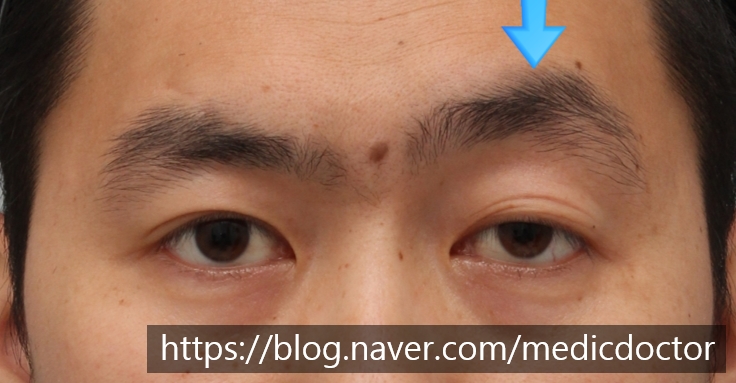
It can be uncomfortable when an unintended glance gets misread that way.
Better, of course, is the kind of clean, balanced gaze you see on the celebrity below.

On this patient, one eye looked notably sleepier, so I did ptosis correction on that side.
But you cannot do just one side. Hering's law of equal innervation and other variables come into play.
So we operate on both eyes.
When a patient like this is constantly recruiting one eyebrow to lift the lid, that eyebrow drops once the lid is properly opened by surgery.
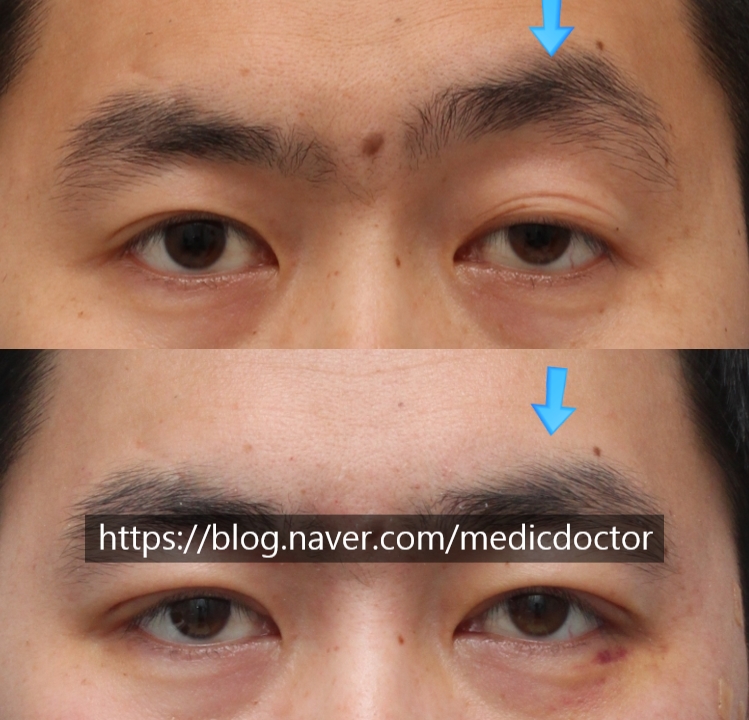
Pre-op, and one week post-op at suture removal.
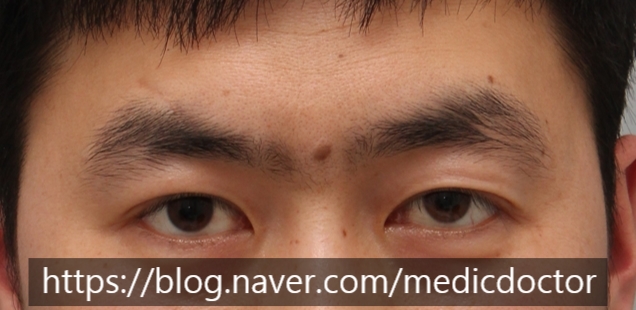
At six months, the swelling is fully resolved, the brow is no longer being recruited, and the symmetry is good.
That was an example of asymmetry caused by unilateral ptosis, corrected with ptosis surgery.
Here is a different kind of case.
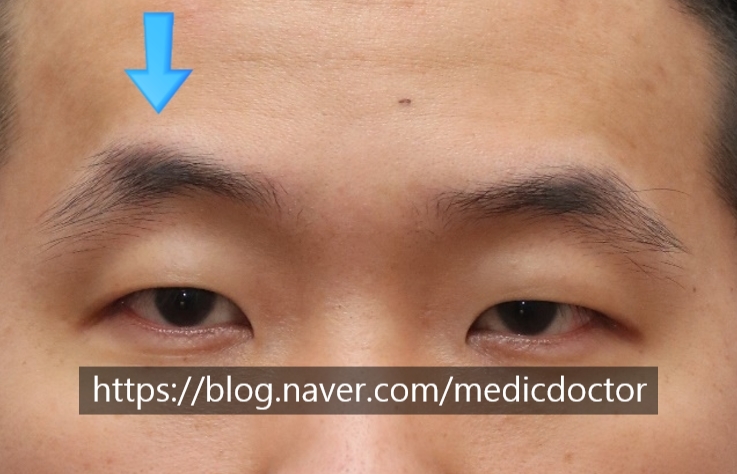
Pre-op, this patient's right eye is larger and the left eye is smaller. Here, though, the brow on the larger-eye side sits higher rather than lower — the opposite of the previous case.
This is facial asymmetry — the bony skeleton on the right side is overall larger.
For this kind of case, I do more ptosis correction on the left side and adjust the skin excision differently between the two sides to balance things out.
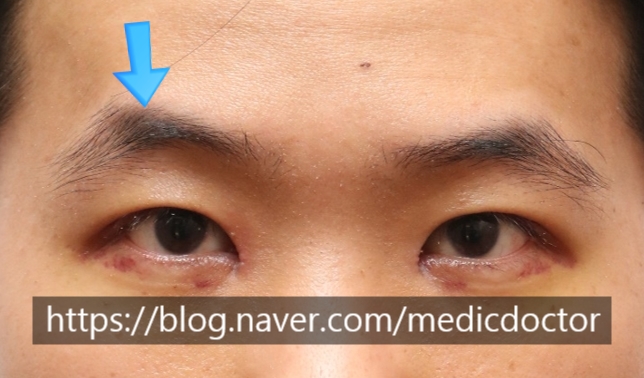
After suture removal. Some bruising remains, but symmetry is essentially there and the eye sizes match. The brow position is something we cannot move.
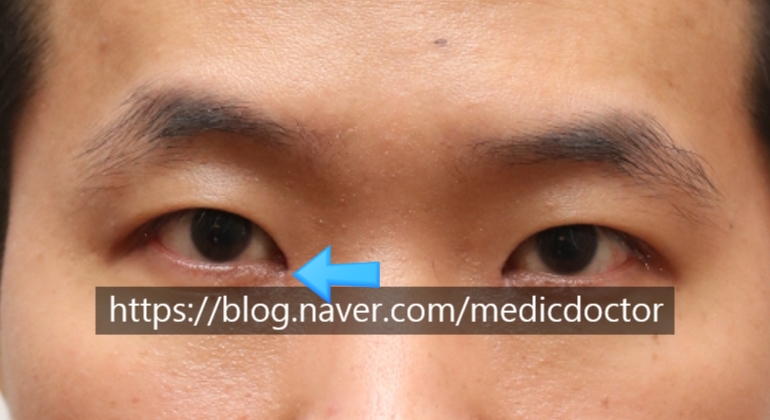
One month out — much of the swelling has settled and the symmetry is holding.
If you trace a horizontal line across the photo, you can also see that the right lower lid sits higher than the left.
Unfortunately, asymmetry correction is very difficult — practically impossible — with the non-incisional approach. It really has to be done with the incisional method.
That said, even with the incisional approach the swelling and scarring stay manageable. Talk it through with an experienced surgeon.
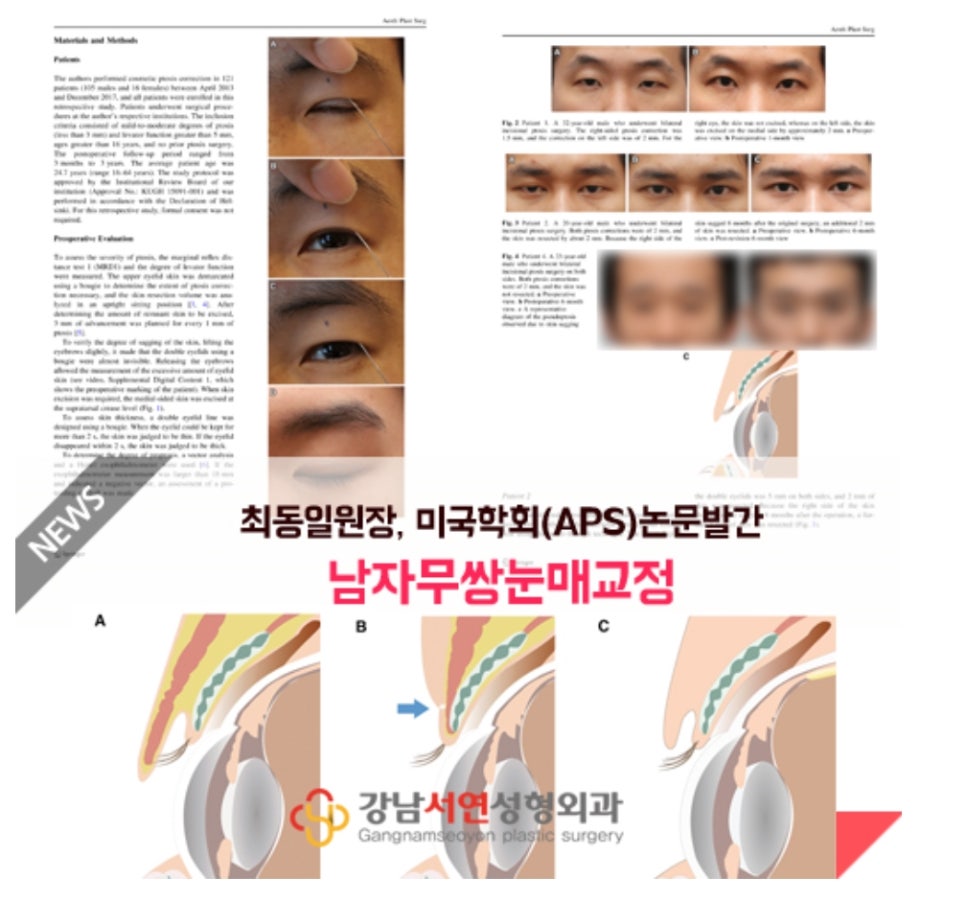
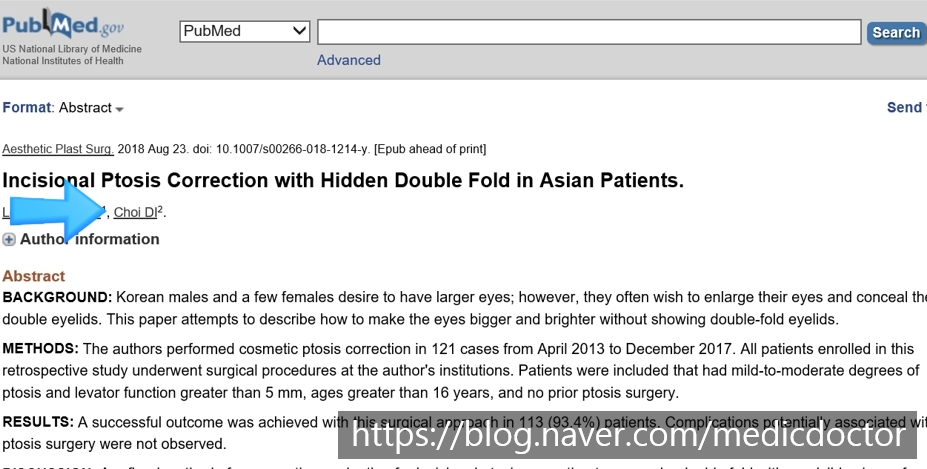
This material is drawn from a paper I published in 2018.