
When we do incisional ptosis correction, the things to watch for most carefully are over-correction, under-correction, and asymmetry.
There are situations where we need to revise early. This post is about releasing an over-tight incisional ptosis correction.
Early revision can prevent downstream complications, and it spares both patient and surgeon a lot of stress.
Right after ptosis surgery, the eyes can look symmetric on the table because of local anesthetic and other factors. But once those wear off, you can see that one side is over-corrected or under-corrected.
In the photo below, one eye is over-corrected. Here we are loosening that side.
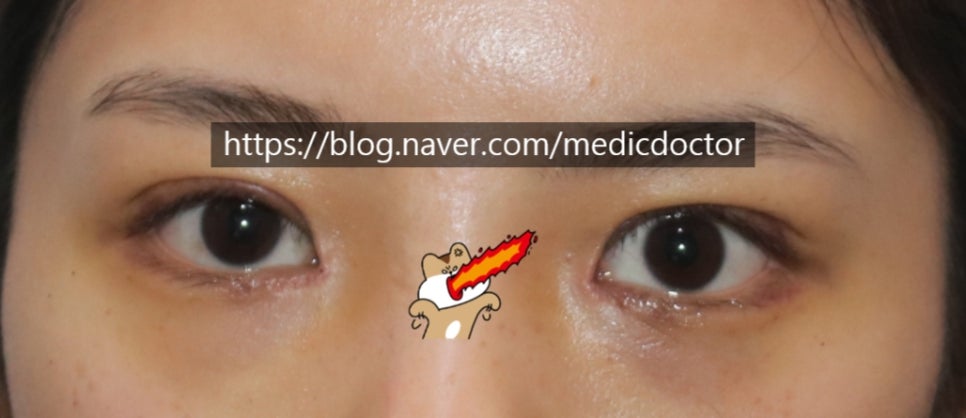
Look at the patient's left eye in this photo.
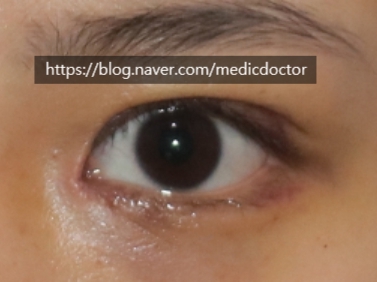
When you see this kind of over-correction post-op, it is better to address it early rather than wait it out.
Sometimes we revise at the one-week suture-removal visit if the asymmetry is obvious. Sometimes we wait two weeks for the swelling to settle a bit more.
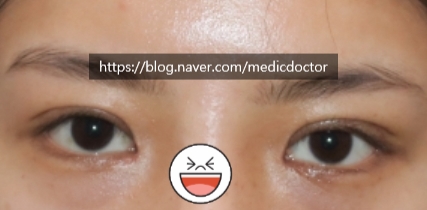
If the suspension points are reset cleanly, the correction is straightforward.
Once it has been left for a long time, however, the operation changes substantially.
All the adhesions have to be released.
Adhesions involving the levator aponeurosis, Müller's muscle, and conjunctiva all have to be taken down for the result to come right.
These late revisions usually take about an hour.
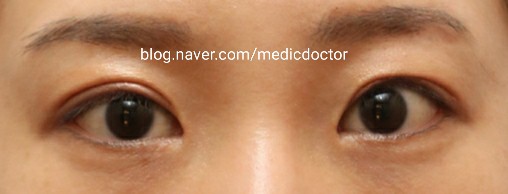
One side is clearly over-corrected.
This patient is more than six months out from her original surgery.
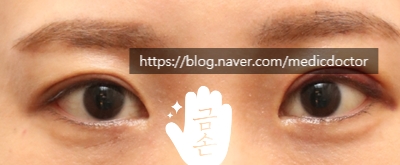
We resolved the over-correction.
When the over-correction is long-standing, the revision is best done by an experienced plastic surgeon — that is how you minimize complications.