
Hello!
For surgery with high satisfaction,
always doing our very best,
this is Gangnam Seoyon Plastic Surgery :)
Today, among eye surgeries for middle-aged patients, we're going to learn about upper blepharoplasty (upper eyelid surgery).
When we talk about the eye surgeries that middle-aged patients often get, we usually mean upper blepharoplasty and lower blepharoplasty.
Upper blepharoplasty improves eyelids that have drooped with age,
while lower blepharoplasty improves under-eye fat that bulges out and skin that has sagged,
and today, among eye surgeries for middle-aged patients, we're going to talk about upper blepharoplasty.
The photos below have had no retouching applied,
other than brightness adjustment :)

Originally, upper blepharoplasty is a general term for surgeries performed on the upper part of the eye, such as double eyelid surgery and sub-brow lifting,
but these days, upper blepharoplasty usually refers to a surgery that removes drooping eyelid skin and creates a double eyelid,
and it is generally regarded as a surgery done mainly in middle age.
When performing upper blepharoplasty, since the skin has stretched much more than in younger people, an incision must be made to cut away the skin,
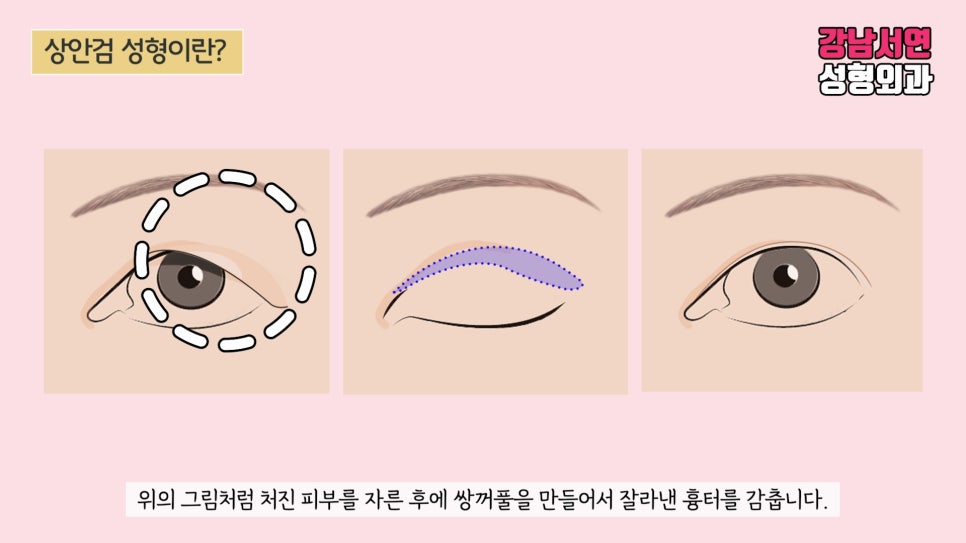
and as shown in the image above, after cutting away the drooping skin, a double eyelid is created to hide the scar from the incision.
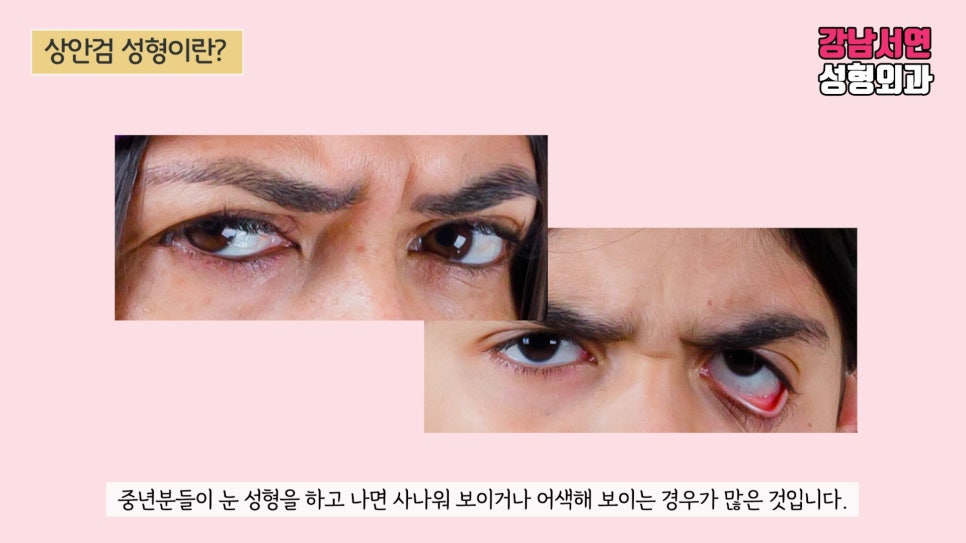
One of the things people worry about most when considering upper blepharoplasty is
that middle-aged patients often end up looking fierce or unnatural after eye surgery,
so there is a point that Dr. Choi Dong-il focuses on when performing upper blepharoplasty.

Since older patients have skin that has drooped considerably, it is difficult to make them look like they are in their teens or twenties,
but the goal is to make them look natural in their current state, without the sense of drooping eyelids, while appearing about 10 years younger than their actual age.

So how can we improve drooping eyelids naturally, without looking unnatural?
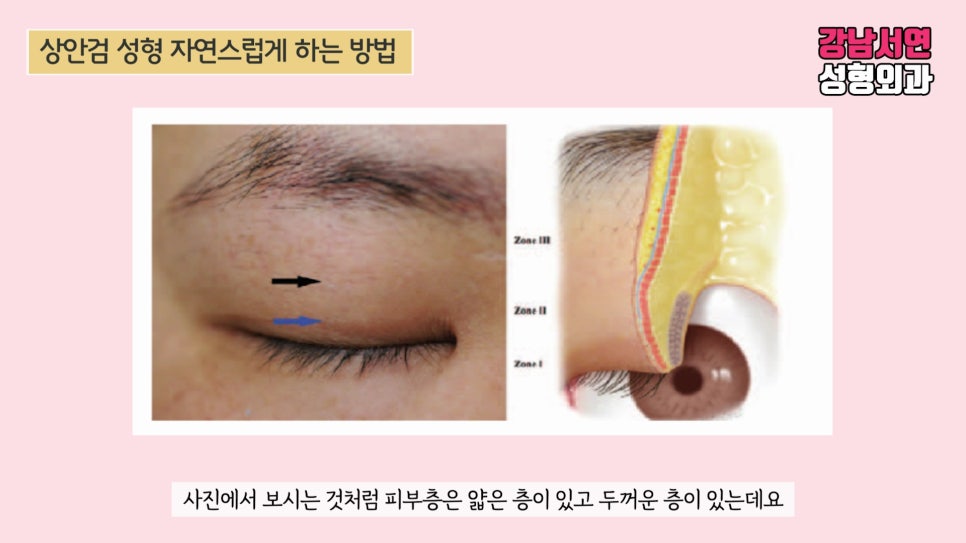
As you can see in the photo, the skin has thin layers and thick layers,
and the eyelid skin is thinner closer to the eyelashes and thicker closer to the eyebrows.
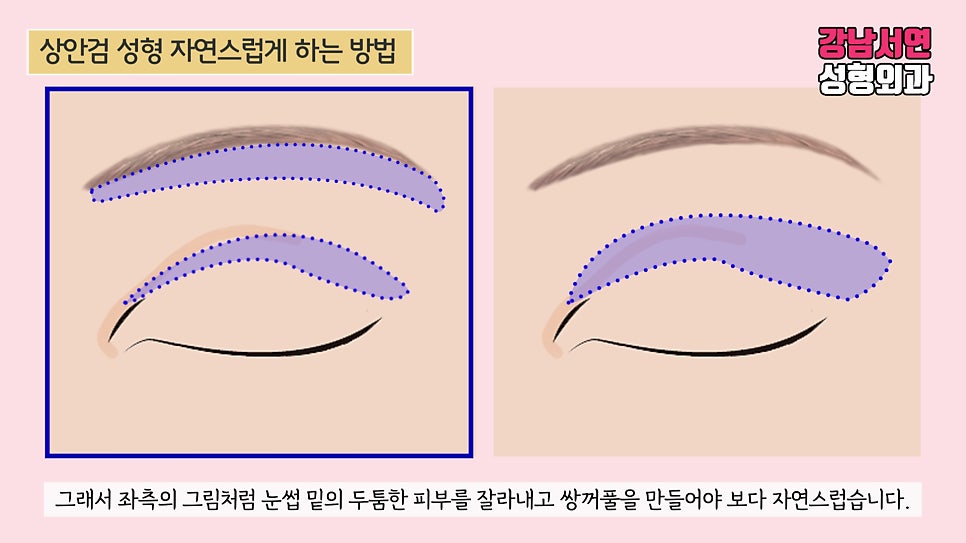
So, as shown in the image on the left, it is more natural to cut away the thick skin below the eyebrow and create the double eyelid.
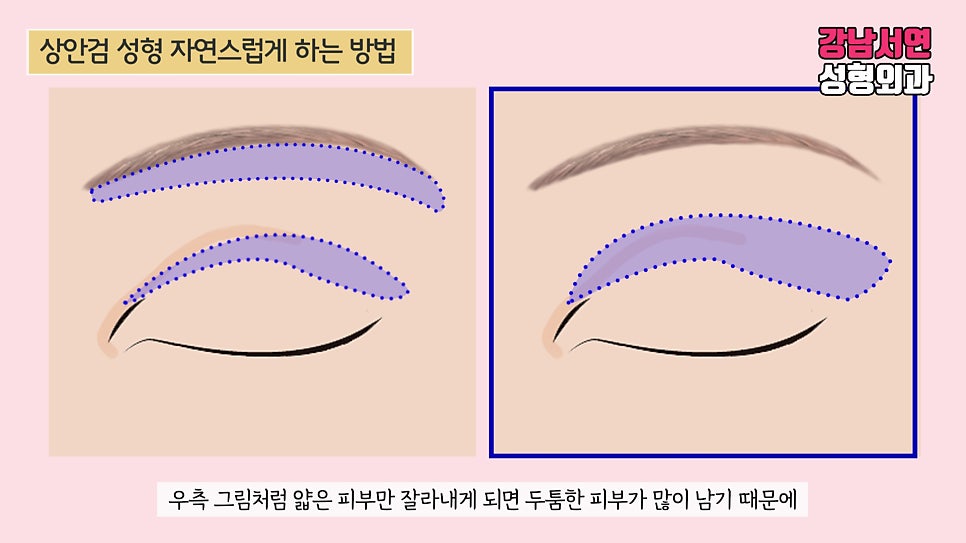
As shown in the image on the right, if only the thin skin is cut away, a lot of thick skin remains, so the area above the eye can look bulky and unnatural.
That said, if the skin itself is quite thin, then doing it as in the image on the right is fine too.
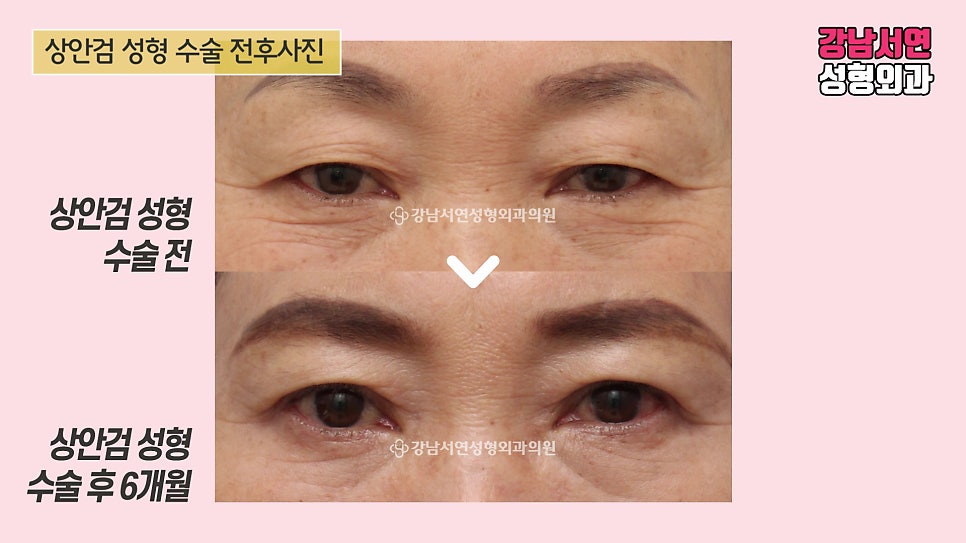
Next, we'll show you before-and-after photos of upper blepharoplasty.
In the pre-surgery photo, you can see the eyelid drooping and covering the pupil.
Here is the next case.
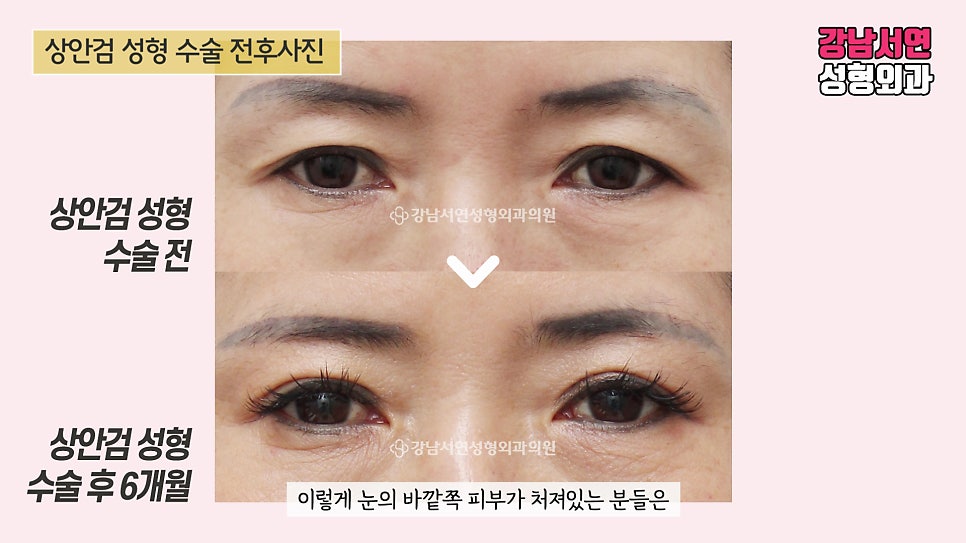
For patients whose skin has drooped on the outer part of the eye like this, good results can be achieved just by adjusting that area well.
In this case, there are instances where things improve with just a sub-brow incision like this.
Here is the next case.
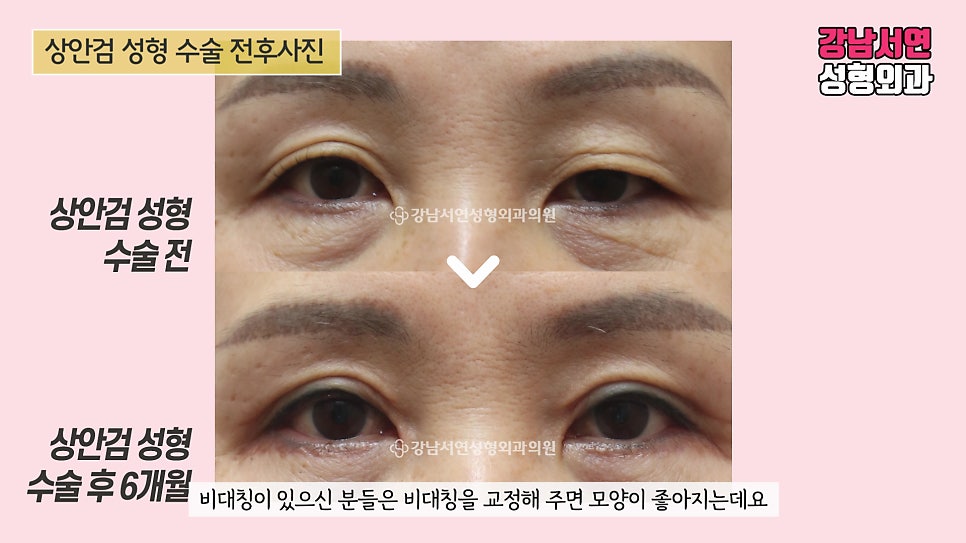
By improving drooping eyelids like this, you can achieve the effect of looking much younger.
For patients with asymmetry, correcting the asymmetry improves the shape.
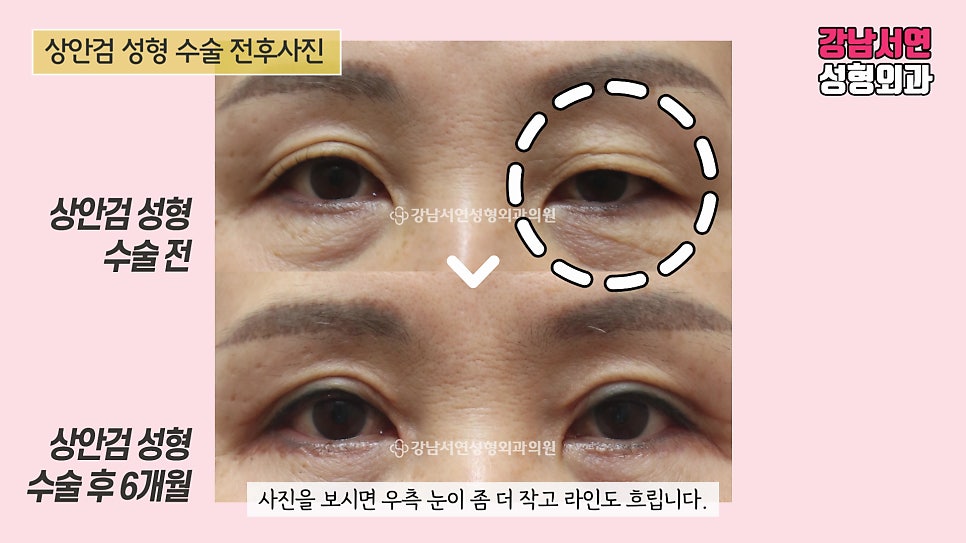
In the photo, the right eye is a bit smaller and the line is also fainter.
In such cases, performing eye-shape (ptosis) correction surgery at the same time helps.
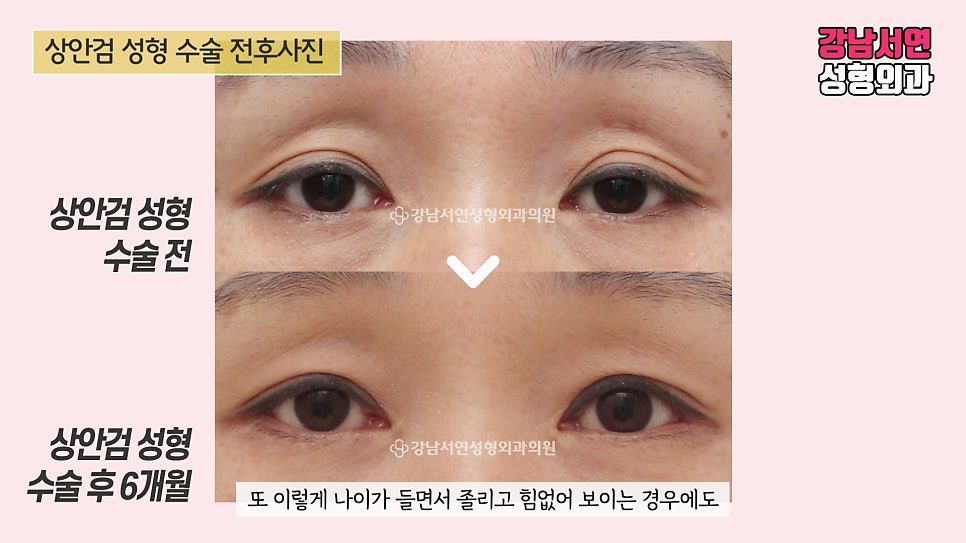
Also, in cases like this where the eyes look sleepy and weak with age, eye-shape correction improves the appearance.
There are also cases where hollowing above the eye becomes severe with age,
and in these cases, adding fat grafting at the same time is beneficial.
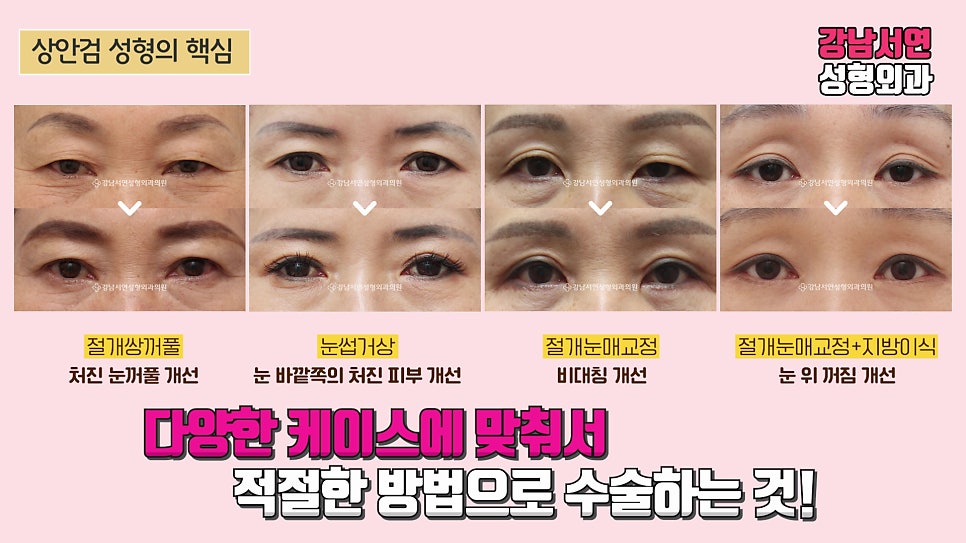
The key to upper blepharoplasty
can be said to be operating appropriately on each of the various cases according to what it needs.
That is why, for upper blepharoplasty, it is best to consult with an experienced doctor before making a decision.
Regarding upper blepharoplasty,
you can find more detailed information through the video below.
↓↓↓↓↓↓
The photographs in this post were taken under identical conditions with the patient's prior consent.
In addition, side effects such as bleeding, infection, and inflammation may occur after plastic surgery or procedures depending on the individual, so caution is required.