
Hello!
For surgery with high patient satisfaction,
always doing our best —
this is Gangnam Seoyon Plastic Surgery Clinic :)
When performing eye-shape (ptosis) correction for men with monolid eyes, we usually operate with the incision method,
because in the case of men, the non-incision method often does not suit them well.
So today, we will look at why the surgery called non-incision eye-shape correction is not appropriate for men,
and, when non-incision eye-shape correction is performed in a case where it is not appropriate,
the side effects that can arise —
let's find out together :)
The photos below, apart from brightness adjustment,
have not been retouched in any way :)

First, let me tell you about the cases where non-incision eye-shape correction should not be done.
It would be good to keep this in mind when you are considering surgery.
1) When the skin is thick
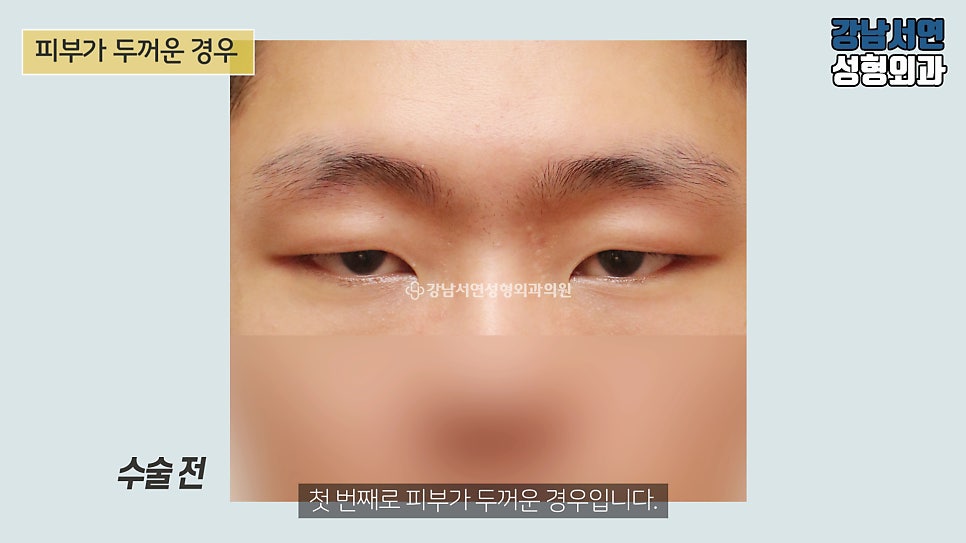
If the skin is thick, the double-eyelid fold tends to come undone even after surgery,
so from the doctor's standpoint, we have no choice but to recommend a method that does not come undone and lasts a long time.
Men's skin is definitely thicker than women's,
and because there is often more subcutaneous tissue that makes the eyelid look thick, we recommend the incision method.
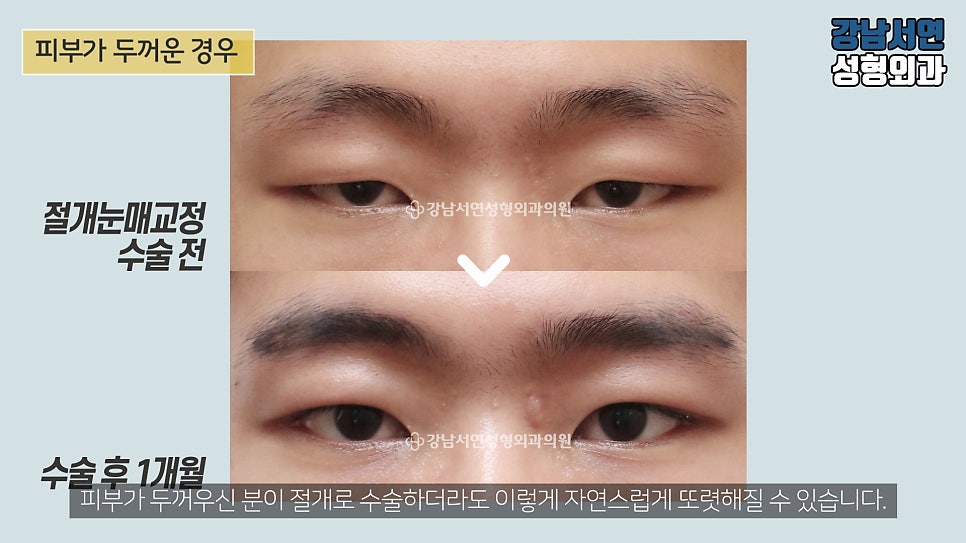
Even for a person with thick skin, operating with the incision method can produce eyes that become this naturally defined.
2) When eye-opening function is poor
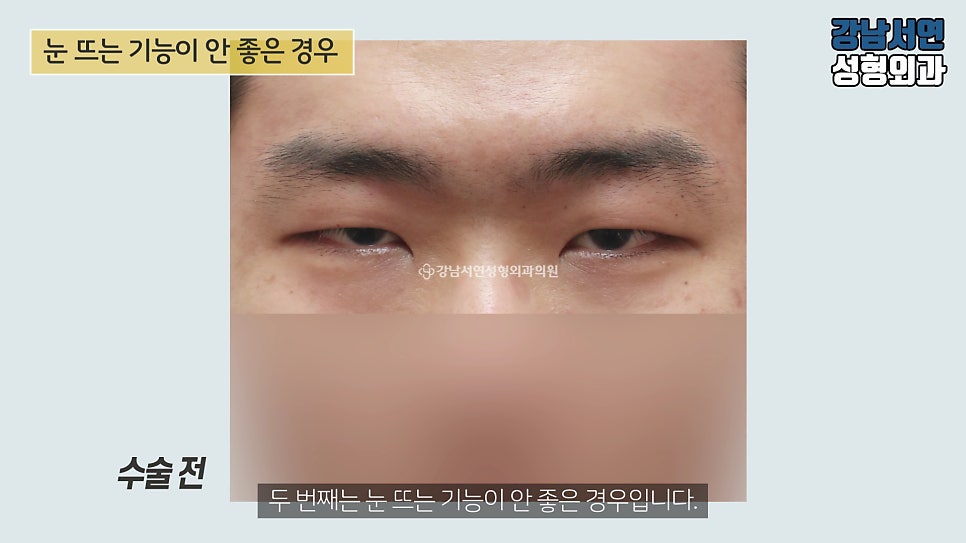
For a person whose eyes look severely sleepy, non-incision surgery has almost no effect.
Also, forcing a non-incision procedure can cause the side effect of worsening tightness and pulling.
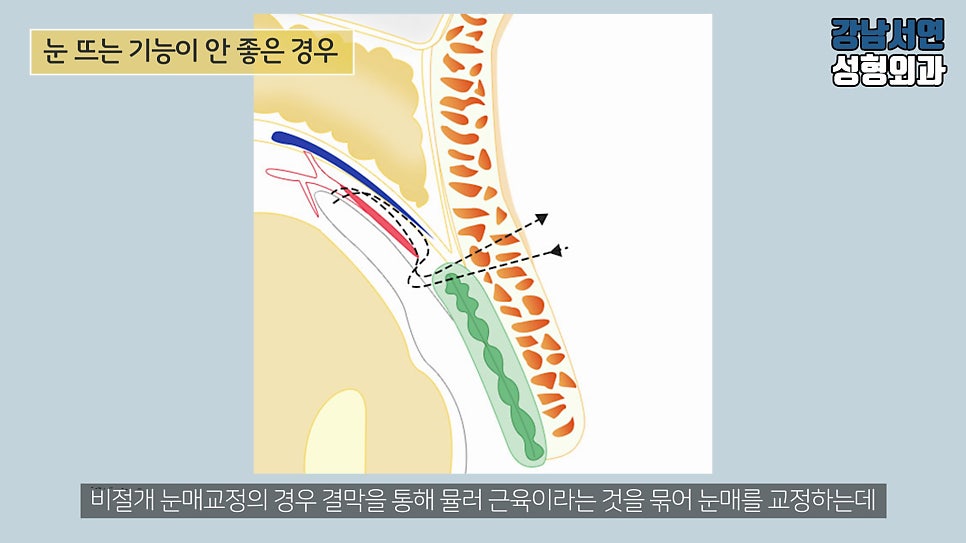
In non-incision eye-shape correction, the eye shape is corrected by tying the muscle called Müller's muscle through the conjunctiva,
but because the amount of correction is limited,
personally, I think it is only worth trying in patients with very mild ptosis — that is, someone who opens their eyes almost normally
but simply wants their eyes to be a little larger.
If one gets greedy and pulls Müller's muscle too much, the patient will feel a great deal of discomfort.
Because of this, there are also many unfortunate cases of patients returning for an incision procedure after a non-incision one.
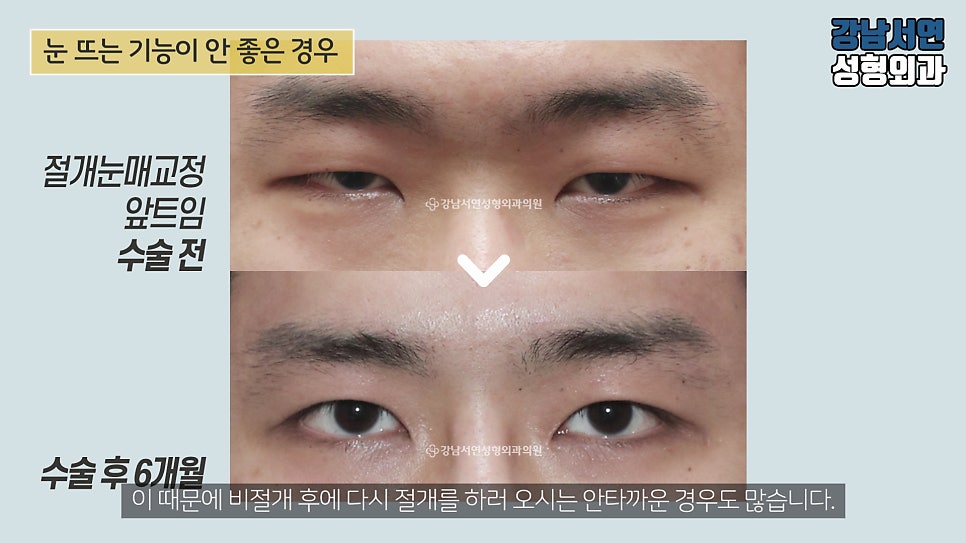
In addition, when eye-opening function is poor, people often open their eyes using the forehead, which frequently creates forehead wrinkles.
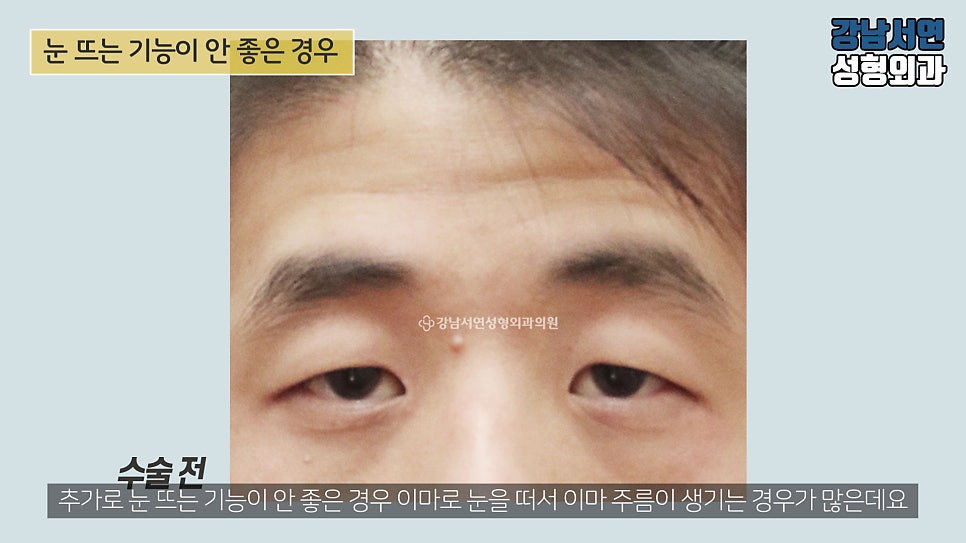
Usually, a person who cannot open their eyes wide because of insufficient eye-opening strength ends up opening their eyes with the forehead.
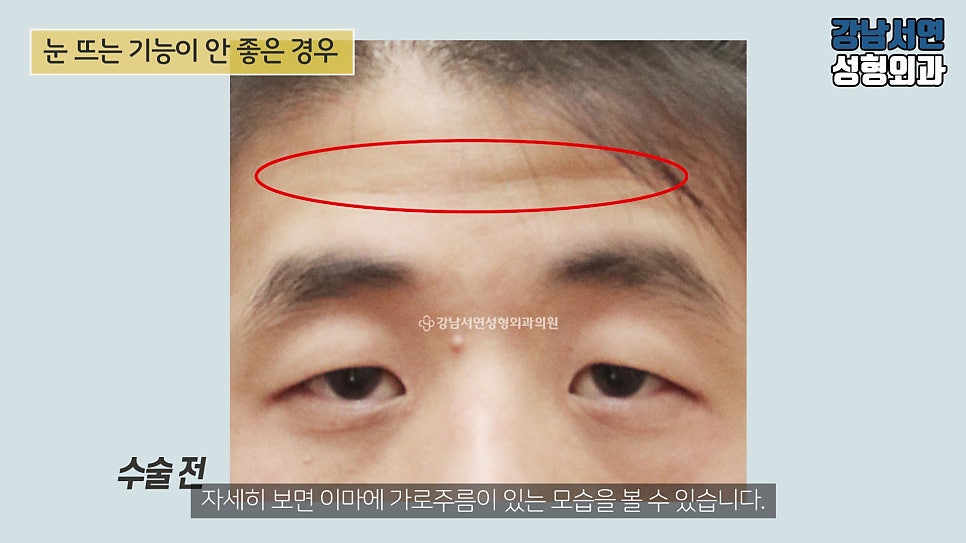
If you look closely, you can see horizontal wrinkles on the forehead.
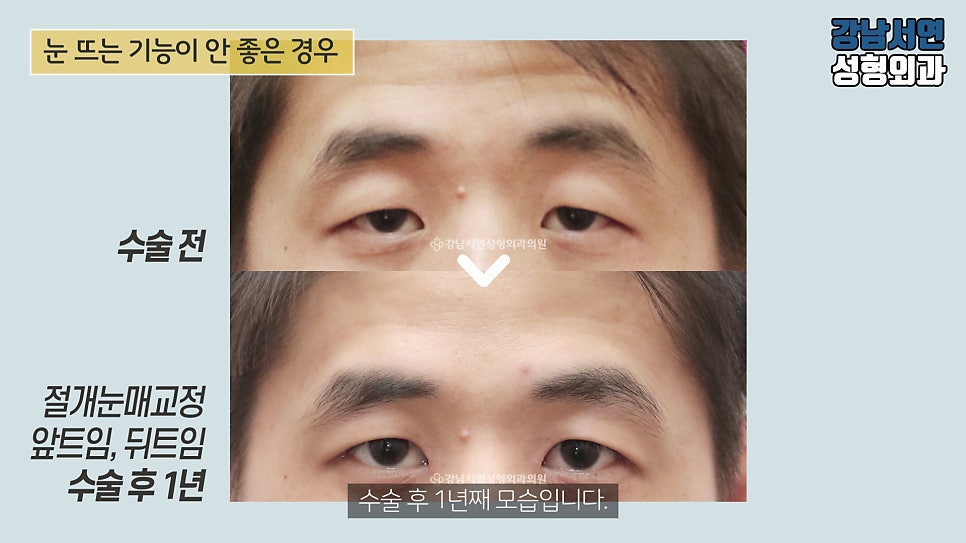
This is how it looks one year after surgery.
Because the forehead is no longer used, the patient can open their eyes well without forehead wrinkles.
Occasionally, even after incisional eye-shape correction, there seems to be little difference between before and after,
and this is because, before surgery, the patient used the forehead to open the eyes wide and make them look big.
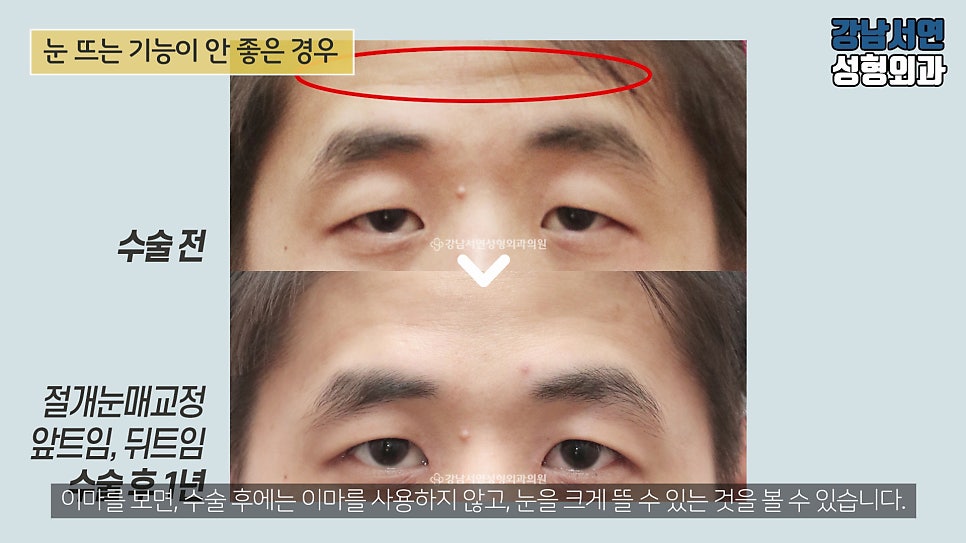
So even if there seems to be no before-and-after difference when looking only at the eyes,
if you look at the forehead, you can see that after surgery the patient can open their eyes wide without using the forehead.
3) When it is a revision surgery
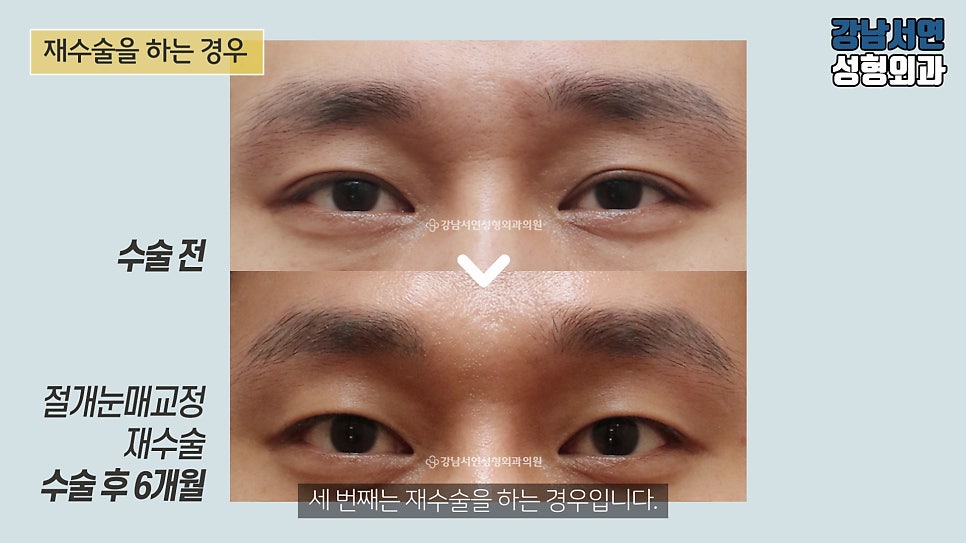
In the case of revision surgery, it must be done with the incision method.
If done incorrectly, a double line (double crease) can form and the correction may fail,
so it is always best to operate with the incision method.
4) When there is a lot of fat in the eyelid
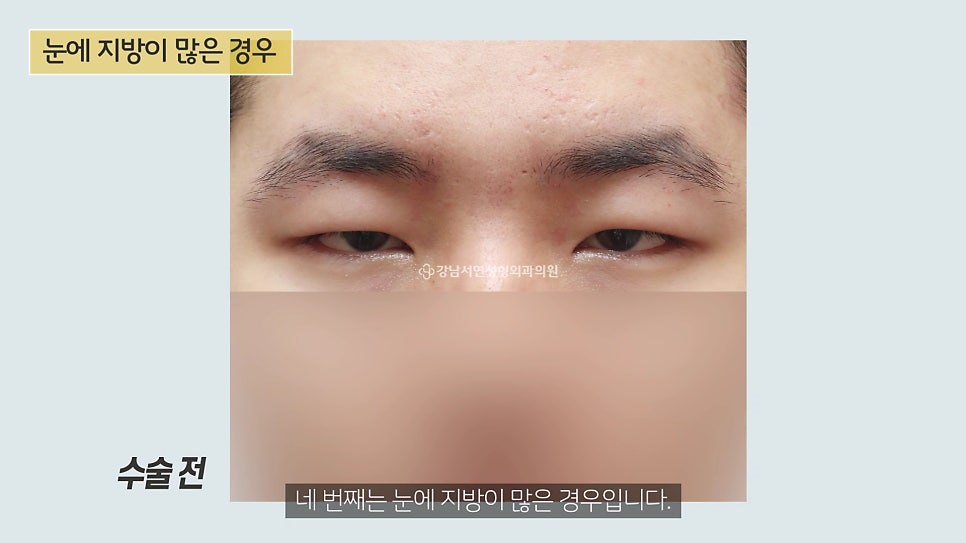
In this case, the fat must be appropriately removed, so the non-incision method is difficult.
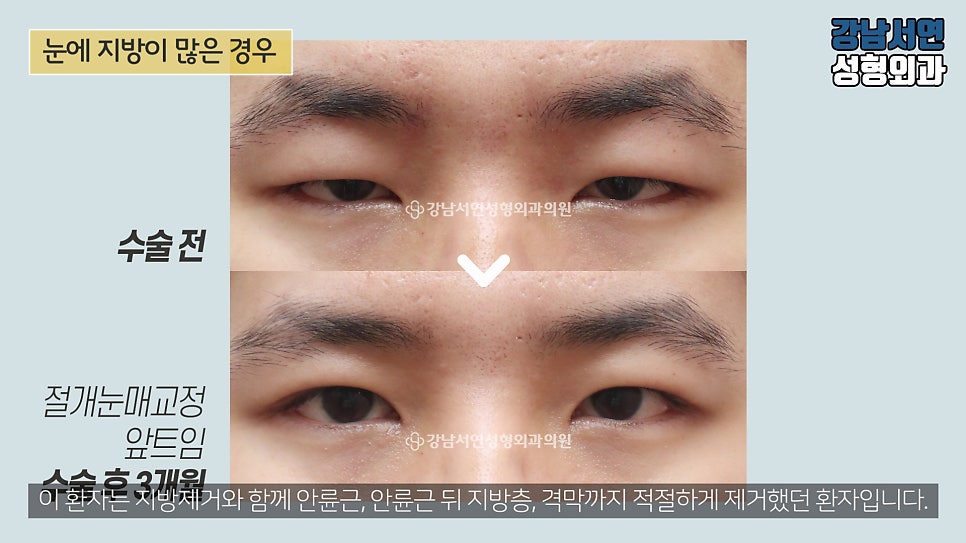
For this patient, along with fat removal, the orbicularis oculi muscle, the fat layer behind it, and the septum were all appropriately removed.
5) When there is a congenital double eyelid
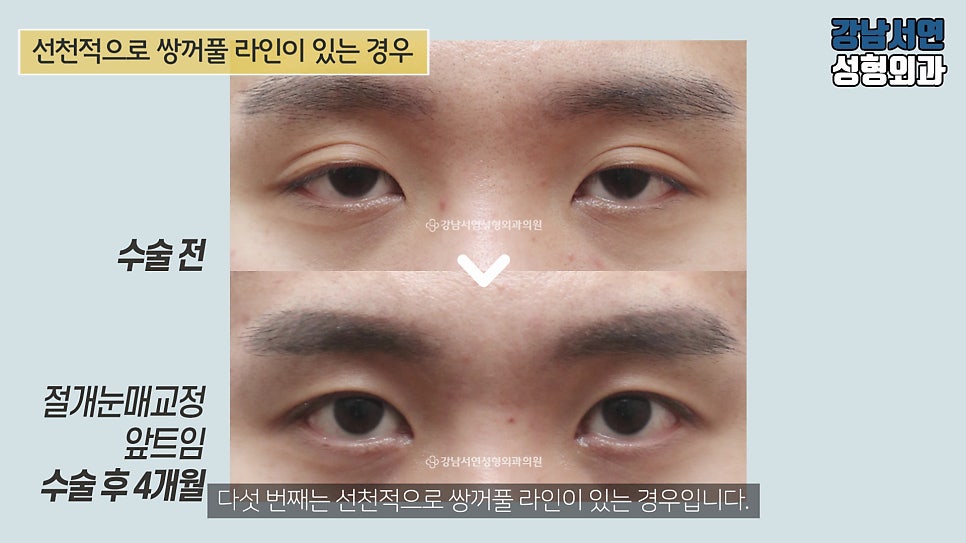
Monolid eye-shape correction sets a very low double-eyelid line and rolls the fold into the skin above the eye,
so that the double eyelid is not visible but the eyes become large and defined;
however, without first releasing the existing double eyelid, it is difficult to set a low fold line and roll it inward.
Two or three folds could end up forming.
6) When the skin is sagging
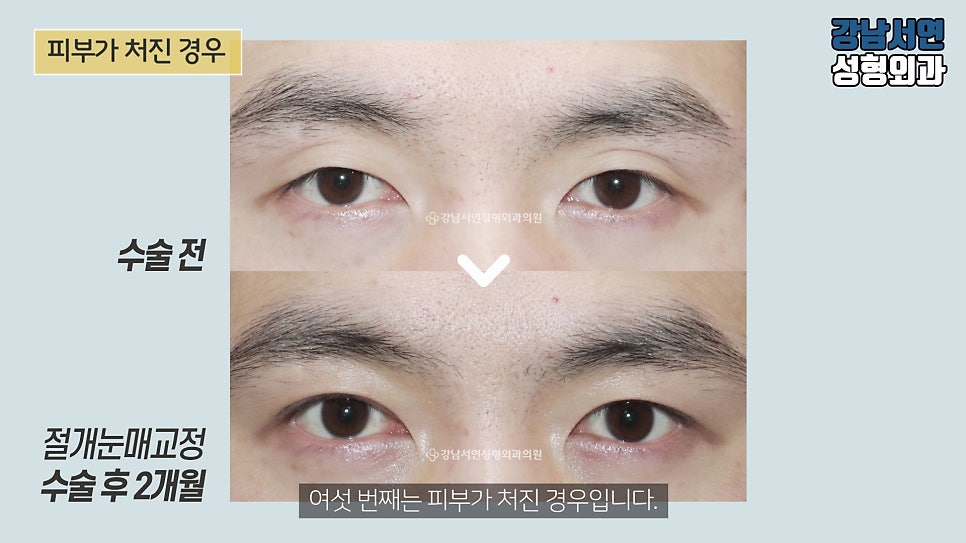
Especially for older patients, the skin is sagging in most cases,
and if surgery is performed without removing the sagging skin, the result will be aesthetically unpleasing.
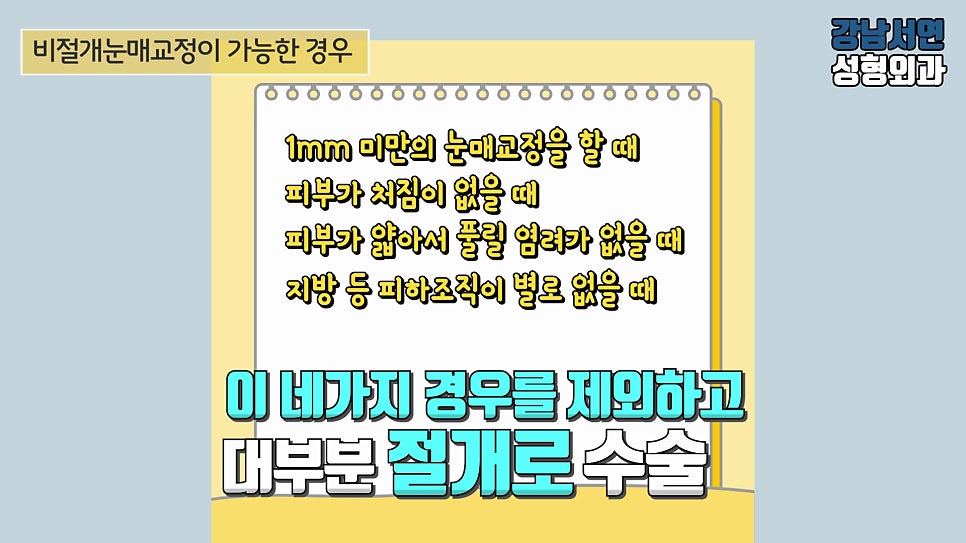
So what are the cases where non-incision eye-shape correction is possible?
There are four cases where non-incision eye-shape correction is possible:
1) When correcting less than 1 mm of eye shape
2) When there is no skin sagging
3) When the skin is thin, so there is no worry of the fold coming undone
4) When there is little subcutaneous tissue, such as fat
Apart from these four cases, surgery is mostly done with the incision method.
Today we looked at the reasons we recommend incisional eye-shape correction for men and at the side effects of non-incision eye-shape correction.
We hope this has been helpful as you consider surgery,
and we hope you have your surgery done well with the method that suits you :)
Regarding non-incision eye-shape correction for men,
you can find more detailed information through the video below.
↓↓↓↓↓↓
The photographs in this post were taken under identical conditions with the patient's prior consent.
In addition, side effects such as bleeding, infection, and inflammation may occur after plastic surgery or procedures depending on the individual, so caution is required.