
It's been a busy stretch and posts have been sparse, so I'd like to share a few cases from this past winter and others that have stayed with me.
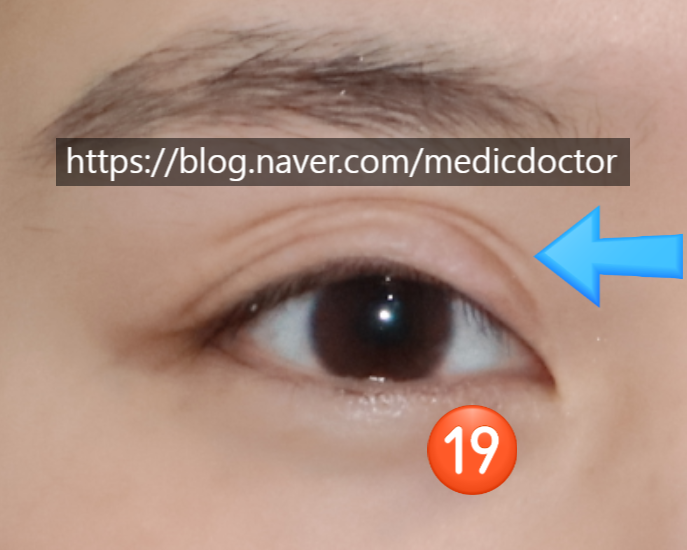
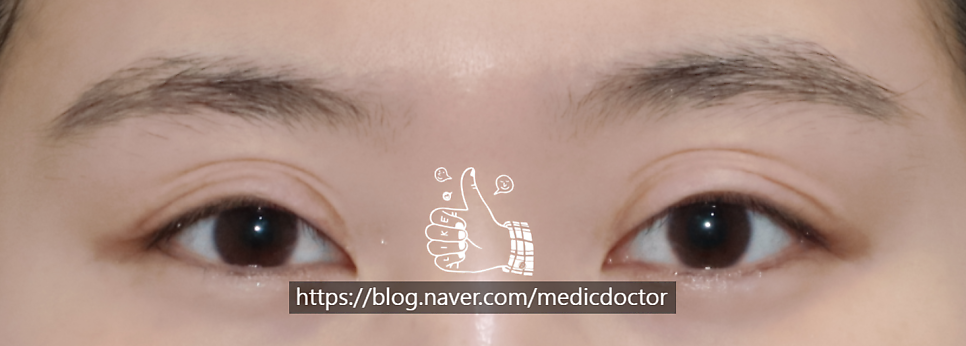
Before surgery.
A case with persistent multiple upper eyelid creases. The crease had originally been set too high, was lowered in a previous surgery, and now neither the old line nor the newly placed line folds properly.
These cases usually involve a shortage of skin, dense surrounding adhesions, and considerable internal scarring.
The core technique here is releasing the adhesions thoroughly and preventing them from re-forming.
When adhesions re-form, a triple fold tends to set in more deeply.
The first marker of a successful release is that no multiple upper eyelid creases are visible immediately after surgery.
In rare cases of very thin skin, there may be slight creasing, but most patients show none. Even when present, the crease should fall along the new incision line, with only mild wrinkling beyond it — that's acceptable. If the lid still folds along the original problem line, the release has failed.
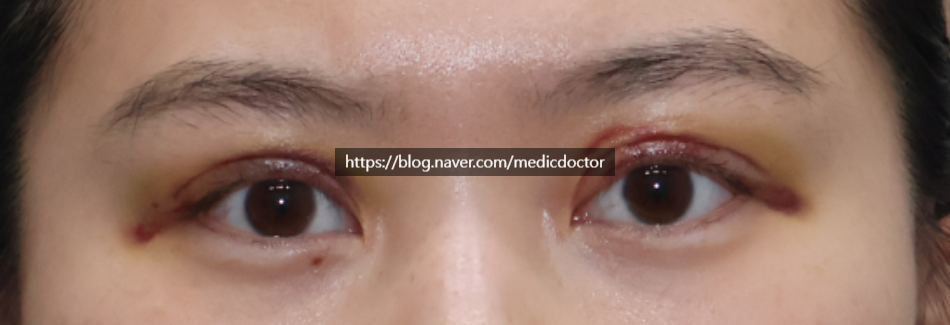
Only one week post-op, with the right side on photo still more swollen.
This will continue to settle. The decisive point is that the multiple upper eyelid creases did not return at the start.
Occasionally a faint wrinkle appears in the early post-op period, sometimes deepening when the patient squints. Swelling and stiffness around the incision can make this look worse between months one and three. If the wrinkle stays away from the incision line, it generally won't resolve on its own — an early revision is needed to release it.
https://blog.naver.com/medicdoctor/223561267266
Related post above.
For multiple upper eyelid creases revision, the core technique — and the experience that goes with it — is releasing adhesions well and keeping them from re-forming.
That's where outcomes tend to diverge.