
Why lower the crease?
First, when the patient wants a smaller, less prominent crease.
Second, when the lid takes on a "sausage" look. The higher the crease sits, the more pronounced this effect becomes.
To lower the crease, we mark a new incision line below the original. The next decision is whether to excise the strip of scar tissue between the two lines or to leave it in place.
Leaving the strip in place gives you the scar-preserving high fold correction — colloquially the "two-line" technique (두줄따기); excising it gives the "single-line" technique (한줄따기).
These are colloquial Korean expressions and carry no standing in formal medical nomenclature.
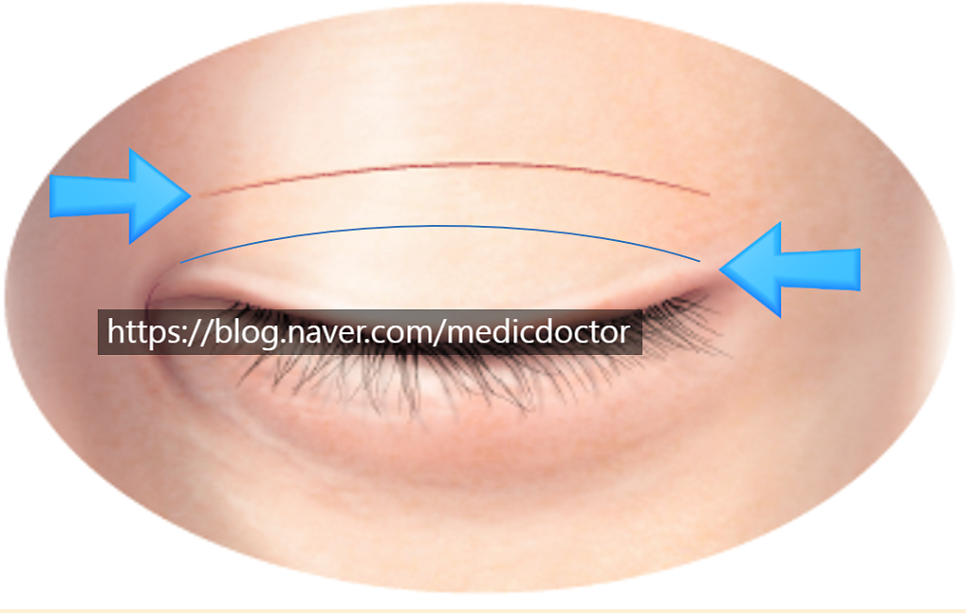
If the brown line above marks the original incision, the blue line below is the new one. The next step is deciding whether to excise the skin in between.
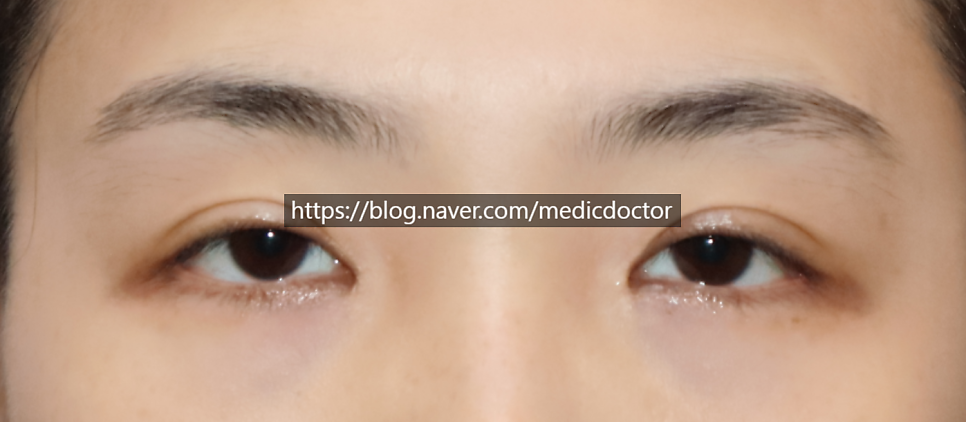
This patient felt her crease was sitting higher and more awkwardly than expected, which is what brought her in.
She described the look as "sausage lid," so we lowered the crease and excised a portion of the skin.
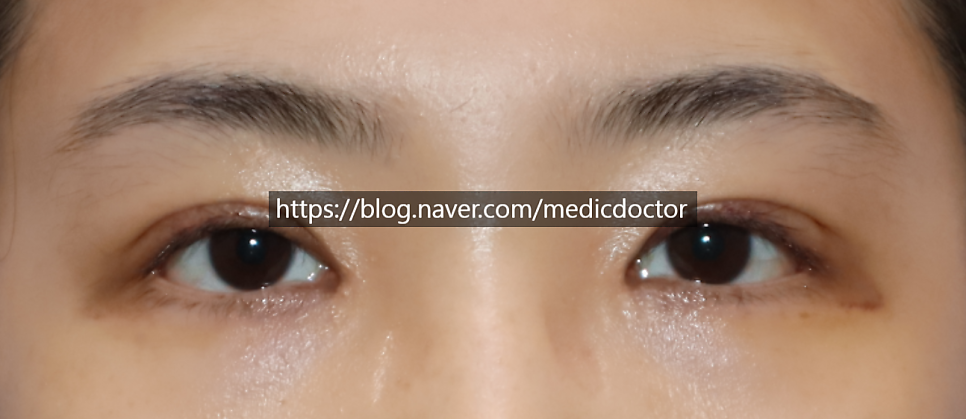
At suture removal. We trim a small amount of scar at the crease and convert the fixation to a softer hold.
Scarring, however, does not vanish entirely. The internal damage from the previous surgery sets the limits of what scar revision can achieve.
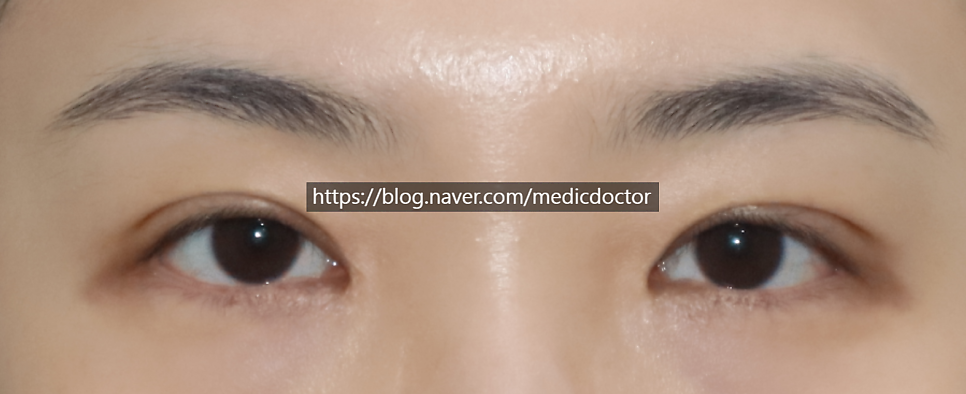
Two months post-op. Some residual swelling.
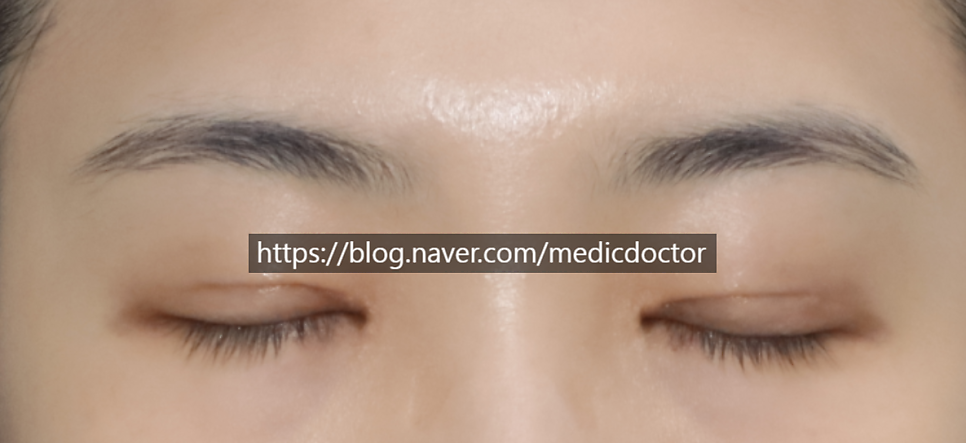
She came in once concerned about possible inflammation.
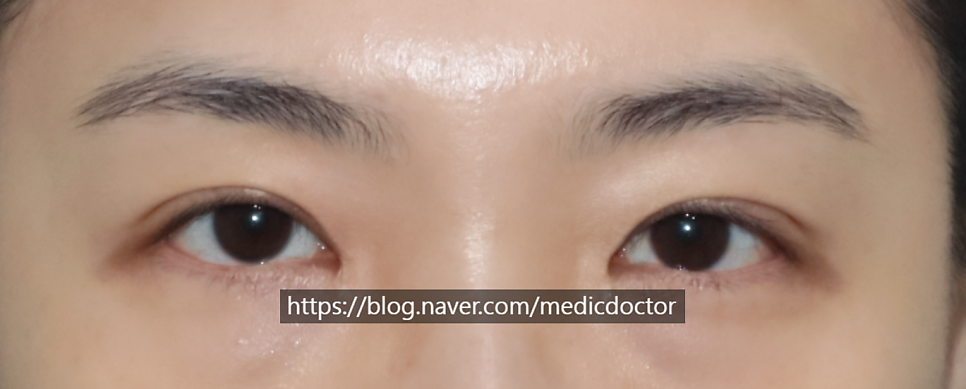
Four months post-op. The crease has settled lower and the sausage-lid look has clearly improved.
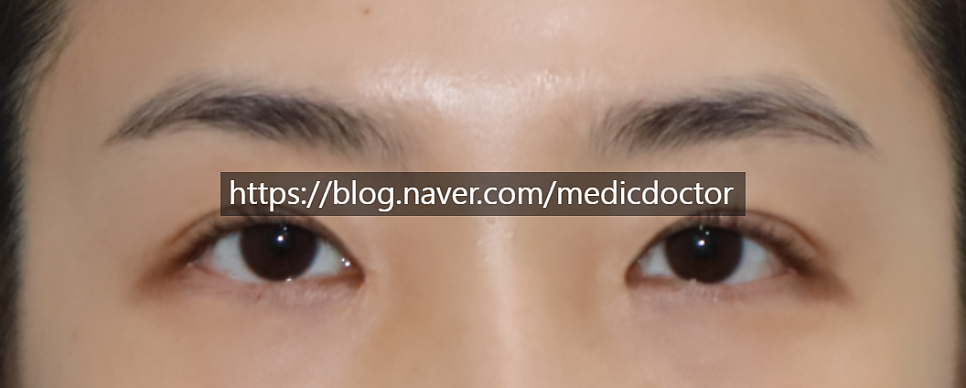
Six months post-op.
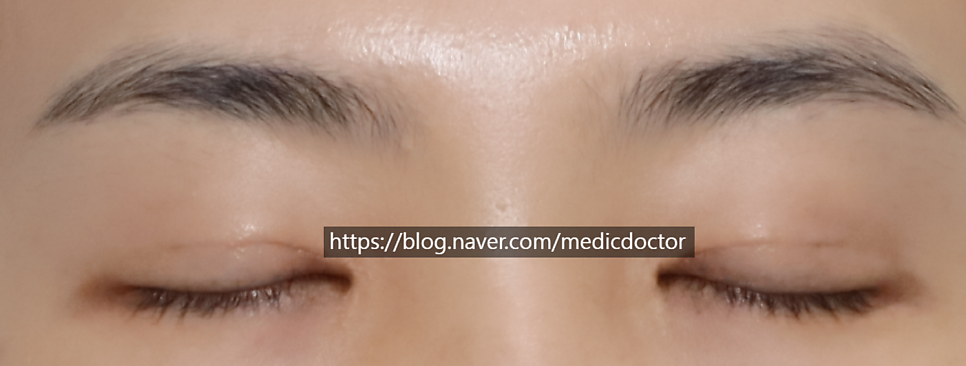
She wondered whether the right eye on photo (her own left) looked slightly fuller, but it's a subtle, well-within-natural-range difference.
Mid-recovery, she noticed what looked like a small dark spot on the left crease, which turned out to be a retained suture.
We confirmed it at the clinic. The site can develop inflammation — though it tends to be a small pustule rather than true infection. See the photo above.
Now well past the one-year mark, the shape is holding up nicely.
The overall impression and finished look are strong enough to feature among our representative cases — which is what prompted me to write this up. 😊
Hope this is useful.
On occasion, a suture works its way out post-op, or a small pustule develops where one used to be. This happens and is no cause for concern once the suture is removed. See the earlier post:
https://blog.naver.com/medicdoctor/224087703647
Which procedure is right for you can only be determined after an in-person evaluation.