
Some patients who had a buried-suture procedure (sometimes marketed as "natural-adhesion" surgery) come to us wanting their multi-knot sutures removed.
Most buried-suture techniques use a single-knot method.
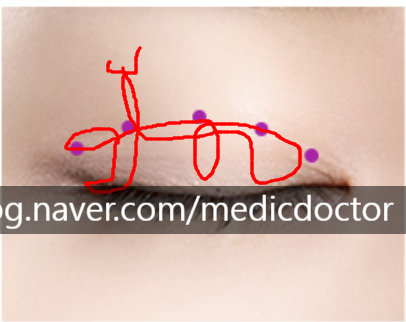
When a single knot sits at the end of the pinhole, the suture pulls out in one continuous piece.
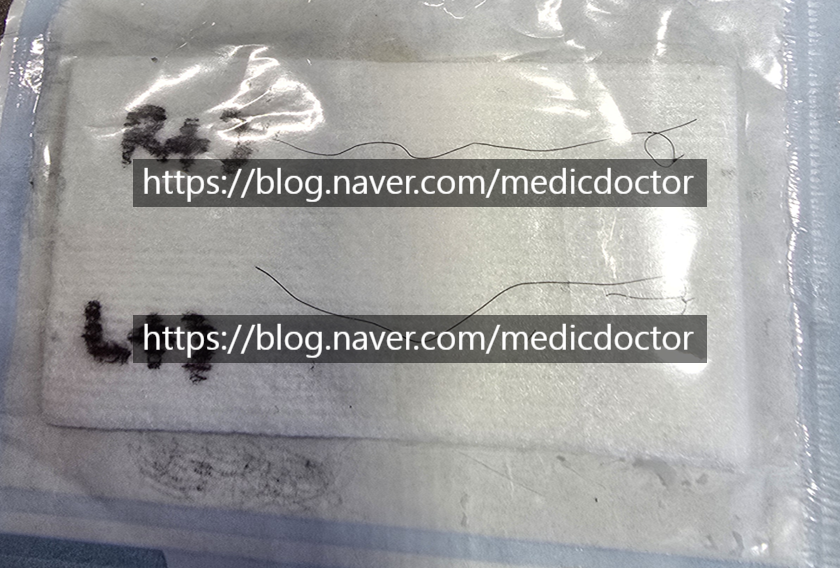
This is the typical length we extract, though the length varies.
Sometimes shorter, sometimes longer.
Multi-knot configurations, on the other hand, leave very small suture fragments embedded throughout the tissue. Patients often don't remember which type they had, or were given inaccurate information by the original clinic — so we sometimes discover a multi-knot setup only during the removal procedure.
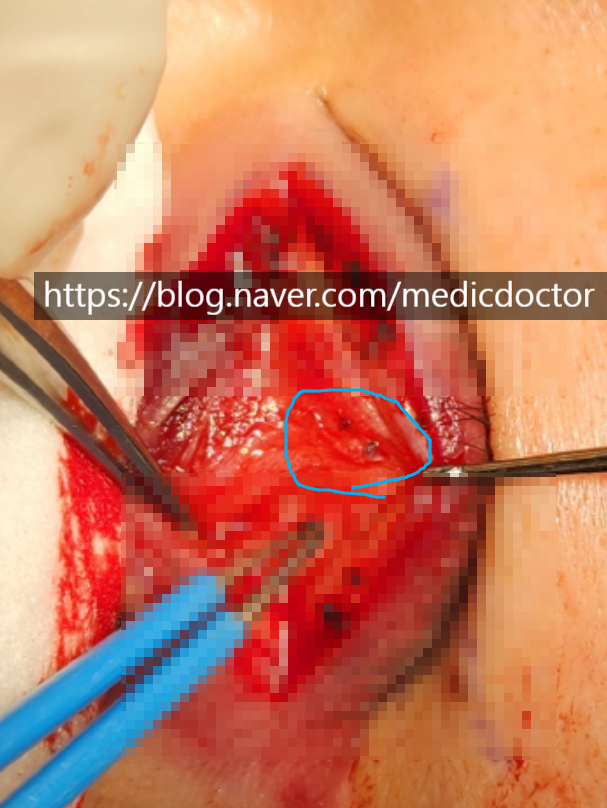
When we open the lid through an incision, the suture fragments are buried in tissue, which makes extraction difficult.
Locating each fragment is genuinely hard. We may find one or two with luck, but there's no way to know how many were placed in the first place.
Some patients with multi-knot setups choose to convert directly to the incisional method on the same day.
If the existing crease is heavy and the patient wants it lowered, we can perform the incisional procedure on the same visit.
For single-knot configurations, the long suture allows us to extract it cleanly using specialized instruments and techniques unique to our clinic.