
It looks like it has been about five months since my last post.
Between international meetings, lecture preparation, and a fairly busy stretch overall, I let the blog go quiet.
I will start sharing some of the cases I have built up in the meantime.
There is plenty on my plate: papers to write, more lectures to prepare, and a chapter for an aesthetic plastic surgery textbook I am co-authoring.
Today's topic is non-incisional ptosis suture removal.
This patient had non-incisional ptosis correction elsewhere and came in because her eyes felt harder to open afterward.
A pulling, catching sensation, essentially.
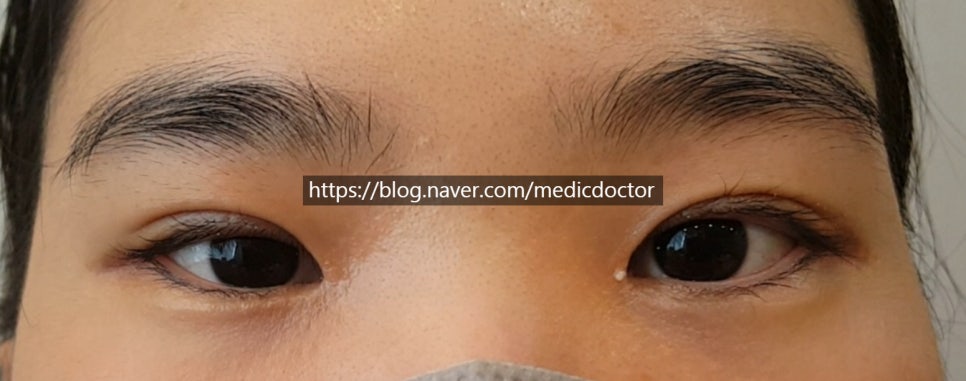
Pre-op view. You can also see a small blemish on her left eye (the left side of the photo). She had the buried-suture ptosis correction at an ophthalmology clinic and came to us because of the pulling sensation.
I had explained that I could only remove sutures placed with a single-knot technique, and she said hers was a single-knot — so we proceeded.
Once we were in, however, it turned out to be a multi-knot technique.
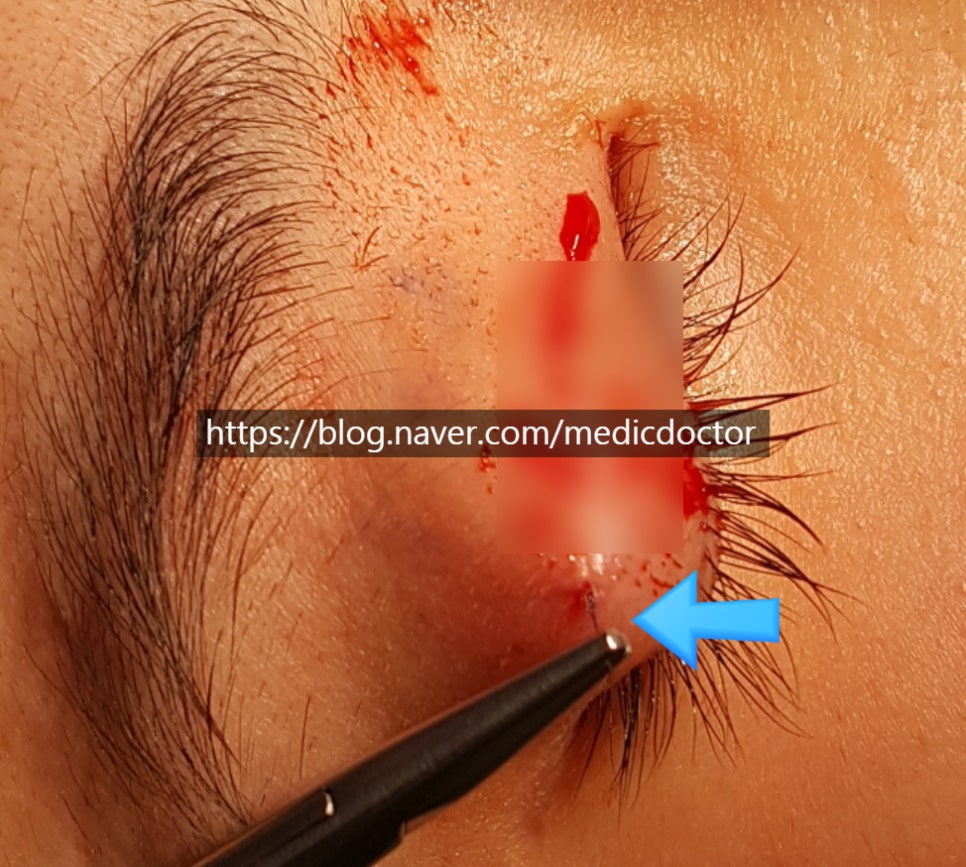
Blood is naturally pixelated.
Can you see the suture? At the tip of the arrow above.
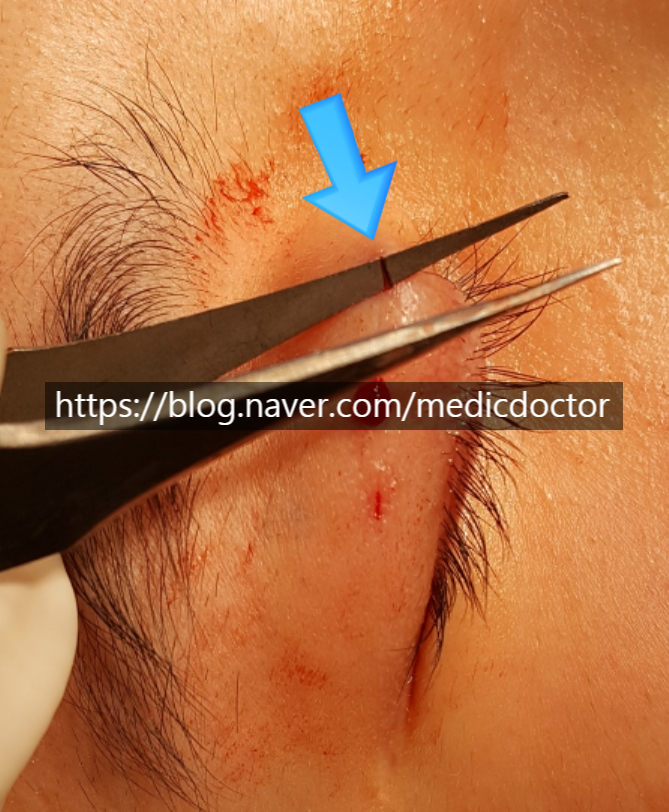
There is a separate knot more medially as well.
And here is the suture caught on the forceps.
Finding these sutures is essentially needle-in-a-haystack work, but with enough volume and experience it becomes manageable.
The question patients ask most often is this.
"If you remove the sutures, will the crease come undone?" Honestly, in theory it might not — but in practice the creases have always come undone.
"Even sutures that have been in for years?" Yes, those have come undone too.
As I have accumulated more cases, the crease almost always releases. Some patients release immediately; for most others, the crease is gone within a month.
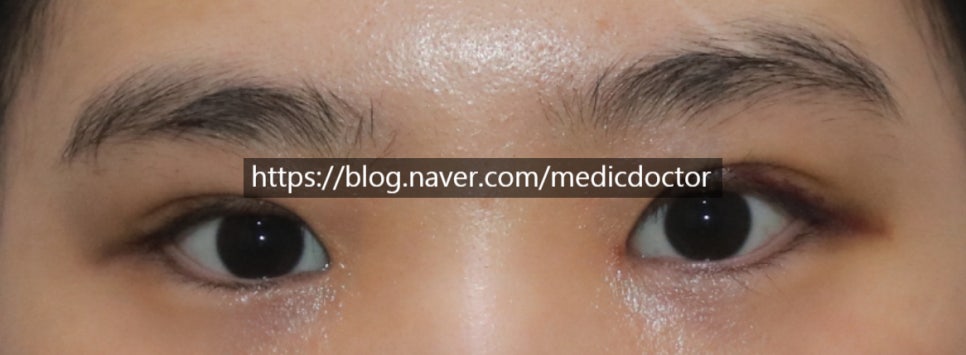
Two days post-op. She tells me her eyes feel much easier to open. The crease itself should release shortly.
One caveat with multi-knot cases: only the original surgeon knows how many sutures were placed, so a residual suture is always possible. Any retained suture means the crease will not release. Coming in with at least the suture count helps a great deal.
She is only two days out, so we will need a longer follow-up.
I do have a video of an earlier patient who went through the same procedure.