
I want to walk through how swelling typically progresses after upper blepharoplasty.
Upper blepharoplasty is a broad term that can include a double-eyelid procedure, brow lift, and so on.
For most patients, however, it specifically means trimming the redundant upper-lid skin and forming a crease.
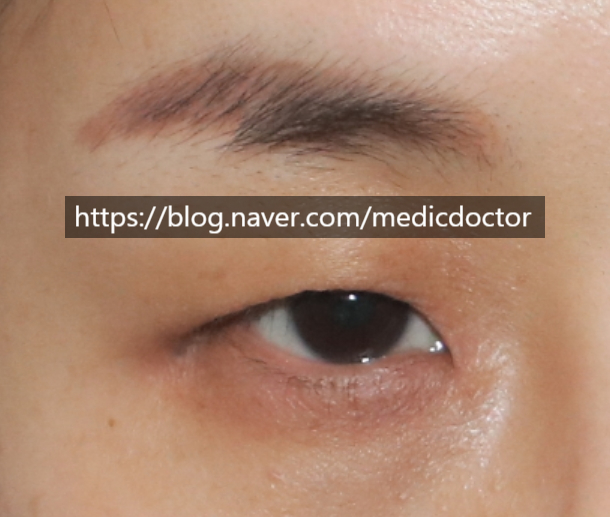
This is a patient in her fifties who came in for upper blepharoplasty.
In the photos, the lateral aspect of her lid hangs and gives her a tired, hooded look.
She had also been compensating by lifting her forehead, so her brows sit unusually high.
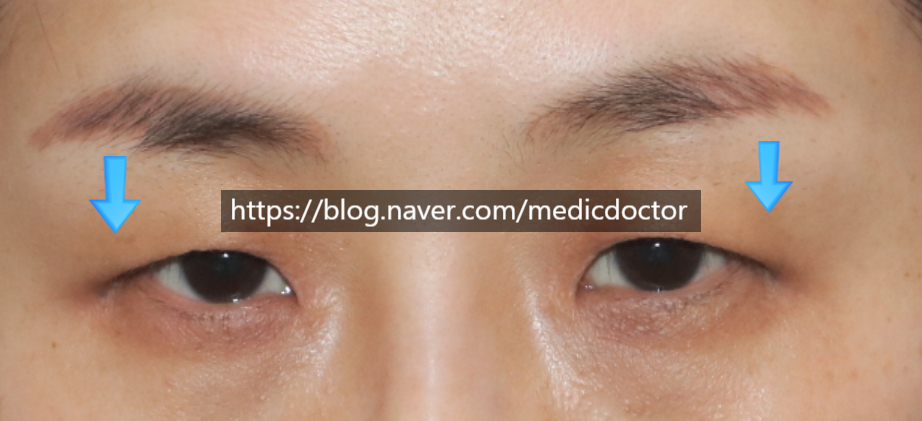
We designed the crease carefully and trimmed the redundant skin.
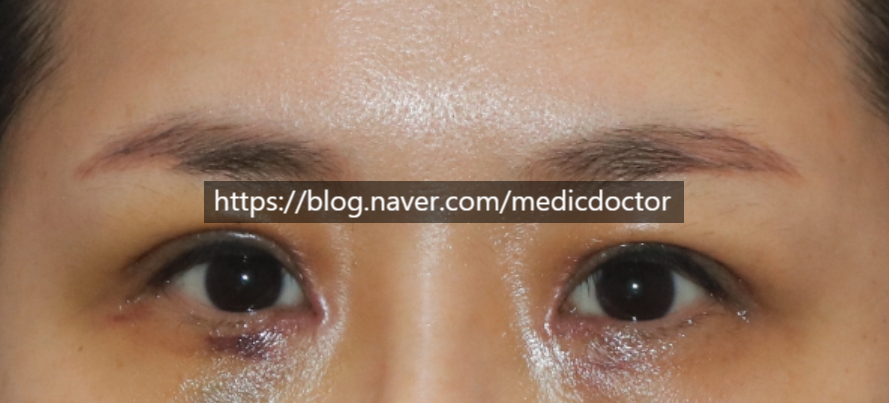
One week post-op. There is some bruising but minimal swelling.
Bruising tracks downward with gravity. The dark bruising you see here will continue to descend, turn yellow, and resolve.
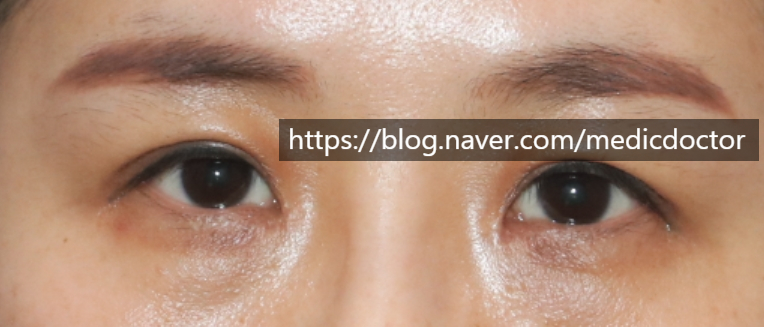
Swelling has come down considerably. Her brow tattoos are slightly mismatched, so even when the lids are in fact symmetric there is a faint difference in appearance.
Here is a video summary.
I usually make a final assessment at the six-month mark.
With aging upper blepharoplasty there are several variables — one side may settle more than the other over time, or a habit of lifting one brow can return.
Patients can absolutely have residual concerns about shape, or want a bit more sagging skin removed.
When that happens, we revise. Come back at six months for a re-consultation.
One important caveat: please do not push for an early revision.
The wound needs time to mature.