
A post on single-line revision and the scar-preserving high fold correction (the "two-line" technique).
I wrote on the scar-preserving high fold correction about two years ago.
Quick refresher.
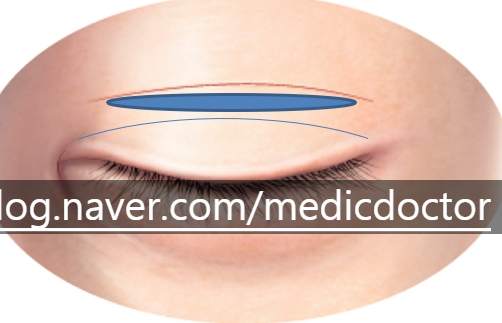
Imagine the existing crease is the brown line and the new crease, set below it, is the blue line.
We release the existing adhesion — and excise the scar at the same time.
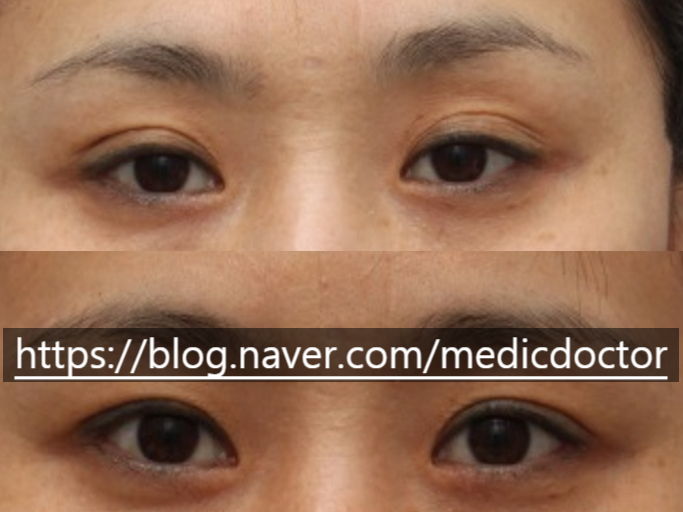
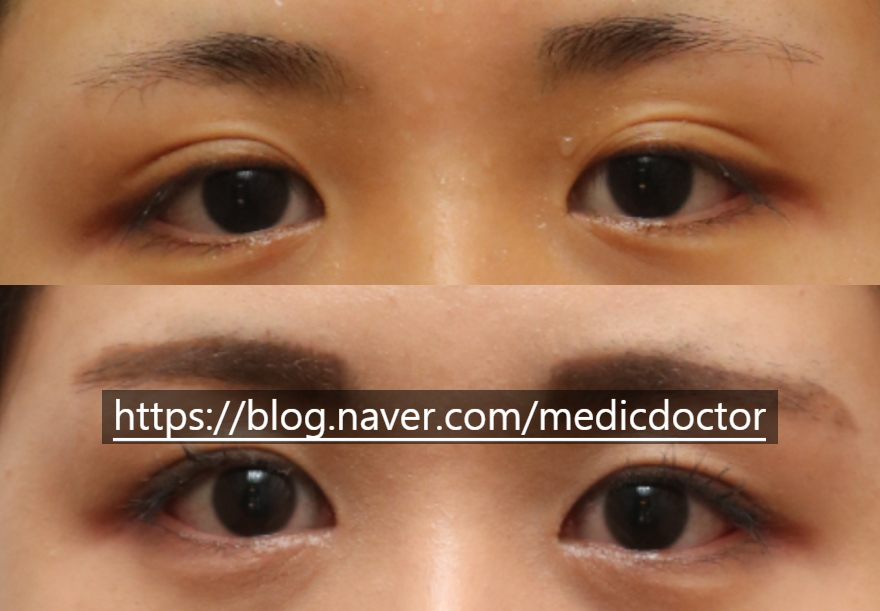
After excision, there is a single crease line when the eye is closed. That is the single-line revision (한줄따기).
So what is the scar-preserving high fold correction?
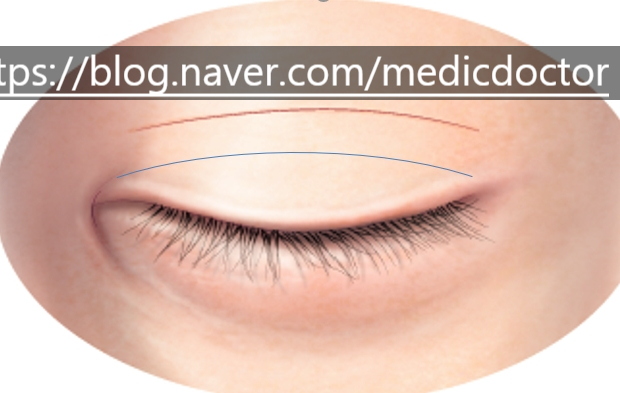
We leave the existing crease (brown line) in place, set a new crease below it (blue line), and release the existing adhesion.
The result is two scar lines. That is the scar-preserving high fold correction.
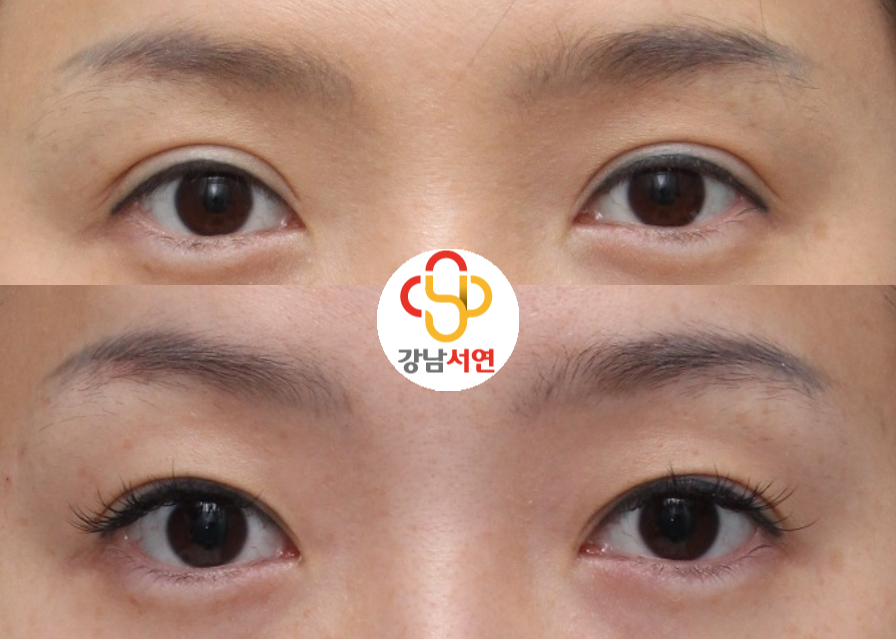
The next photo shows the resulting scars.
The faint line above is the old scar; the slightly more pronounced line below is the new one. About four months out, so the new scar still reads red.
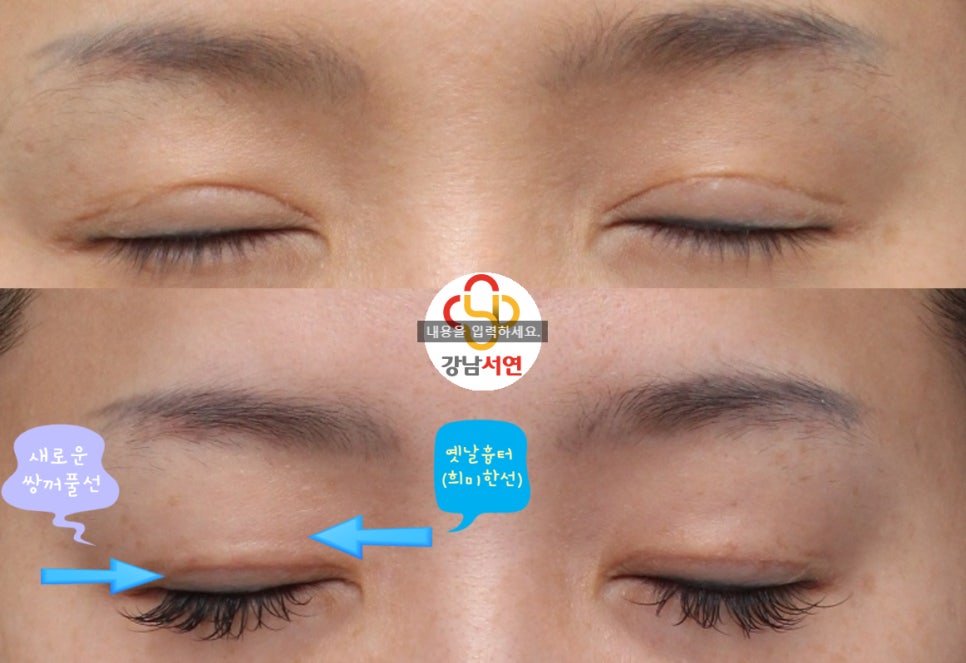
Another patient at one year out.
Both upper and lower scars fade significantly over time.
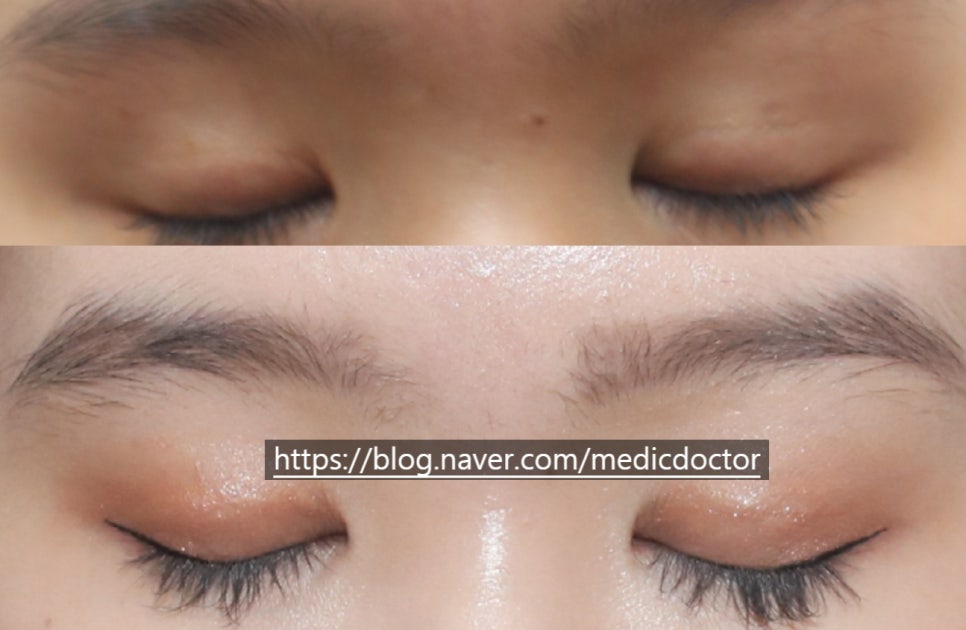
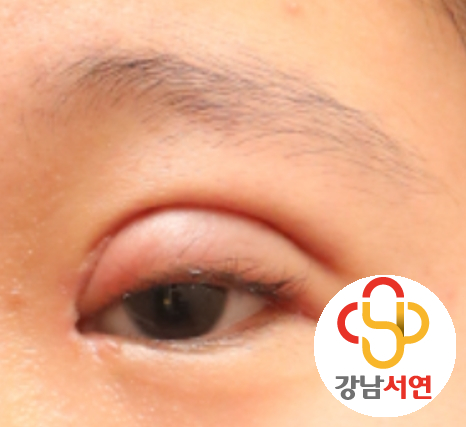
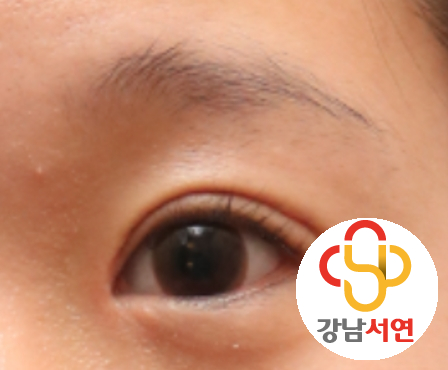
This patient was also revised the same way.
Conditions for this surgery:
Some skin reserve is required. The patient should be able to fully close their eyes.
And it should be at least six months out from the original surgery — the longer, the better the success rate.
Beyond that, an experienced surgeon performing the work cleanly is what drives the outcome.