
Non-incisional ptosis correction has gotten a lot of attention recently.
I want to walk through the complications, and the cases where this technique simply should not be used.
There are several names for the non-incisional approach — buried suture, pinch technique, non-incisional method, natural-adhesion method, and so on.
All of them are variations on the same buried-suture concept.
What is the buried-suture method?
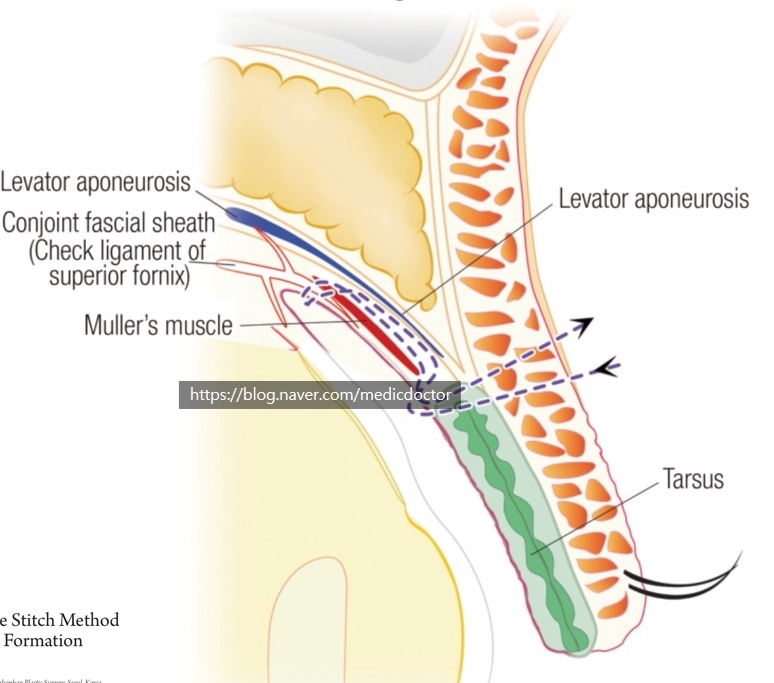
The suture is passed from the skin through the conjunctiva and back, pinching the layers together.
These are the cases where it should not be done.
1. Thick skin — releases easily.
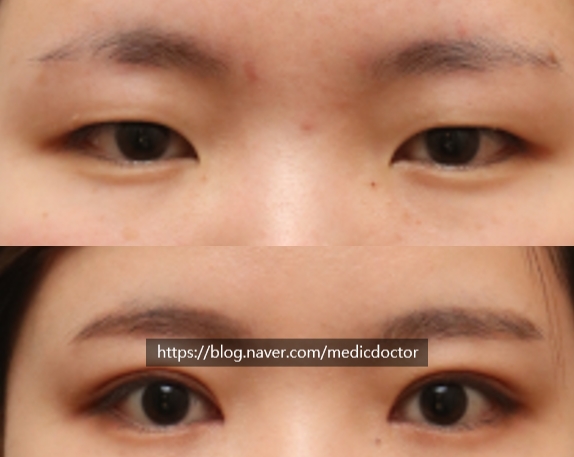
This patient went on to have incisional ptosis correction.
2. Heavy lid fat — also releases easily.
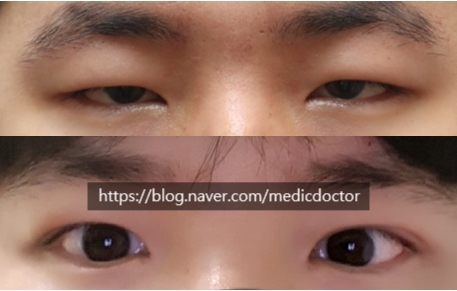
This patient also went on to incisional ptosis correction.
3. Weak eye-opening force — I recommend incisional ptosis correction. Pulling the lid up with a single concentrated buried suture creates real discomfort. The incisional approach distributes the load evenly across the levator, and with that, the discomfort.
Think of it like trying to pull a person along: pulling them by the whole body, by one arm, or by a single finger — which one is comfortable?
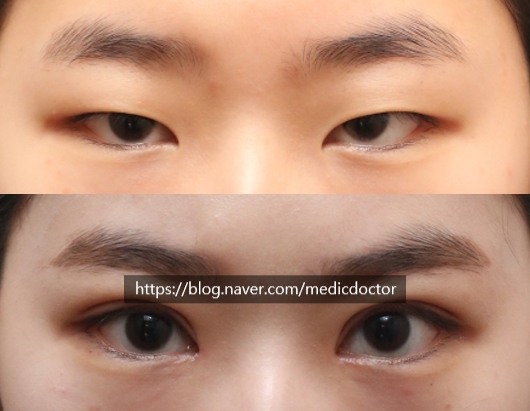
4. Skin laxity — the result simply does not show. Loose skin drapes over the new crease and hides it.
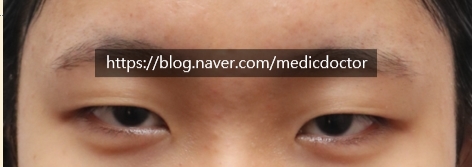
5. Cases that need true reshaping of the eye — these need a combination of ptosis correction and skin excision to give a proper shape.
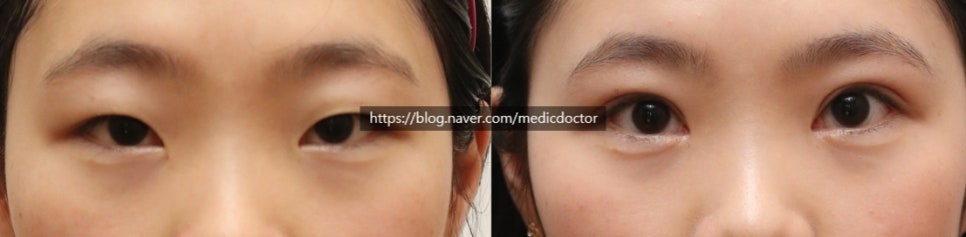
6. Significant asymmetry between the two eyes.
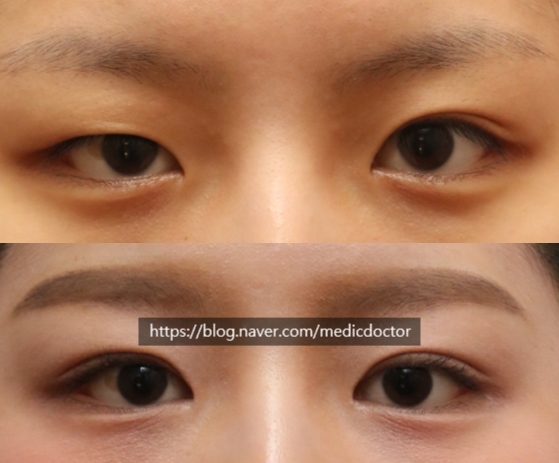
So when is buried-suture or non-incisional ptosis correction the right choice?
1. No skin laxity.
2. Strong eye-opening force, and ptosis is mild at most.
3. Thin skin.
Like this patient.