
Our paper on medial epicanthal fold reconstruction (epicanthoplasty reversal) was just accepted by a major American journal.
Patients seeking epicanthoplasty reversal have already been through a lot of distress, so this operation has to be approached with real care.
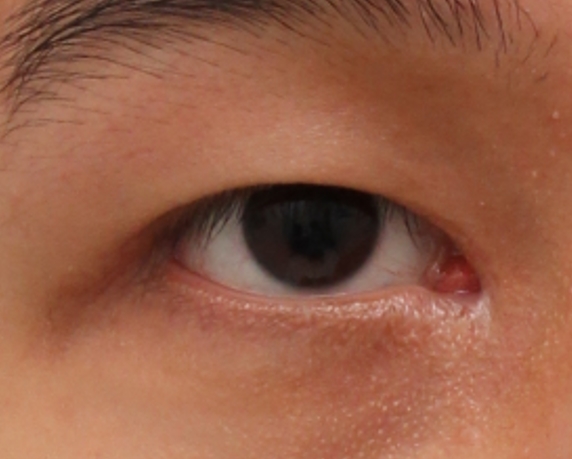
When the lacrimal lake is too exposed after an aggressive medial epicanthoplasty, the look becomes harsh.
Getting a paper accepted is genuinely a proud moment.
The title is "Reconstruction of Medial Epicanthal Fold Using V-Y Advancement and Turnover Flap."
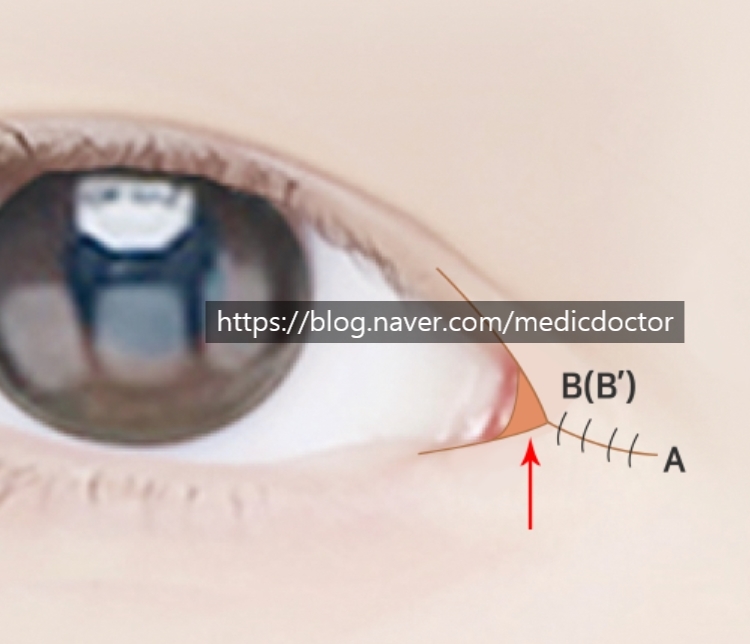
It describes a turnover flap technique for restoring the medial epicanthal fold.
I actually presented this work in 2014 at a Severance Hospital lecture for plastic surgery specialists.
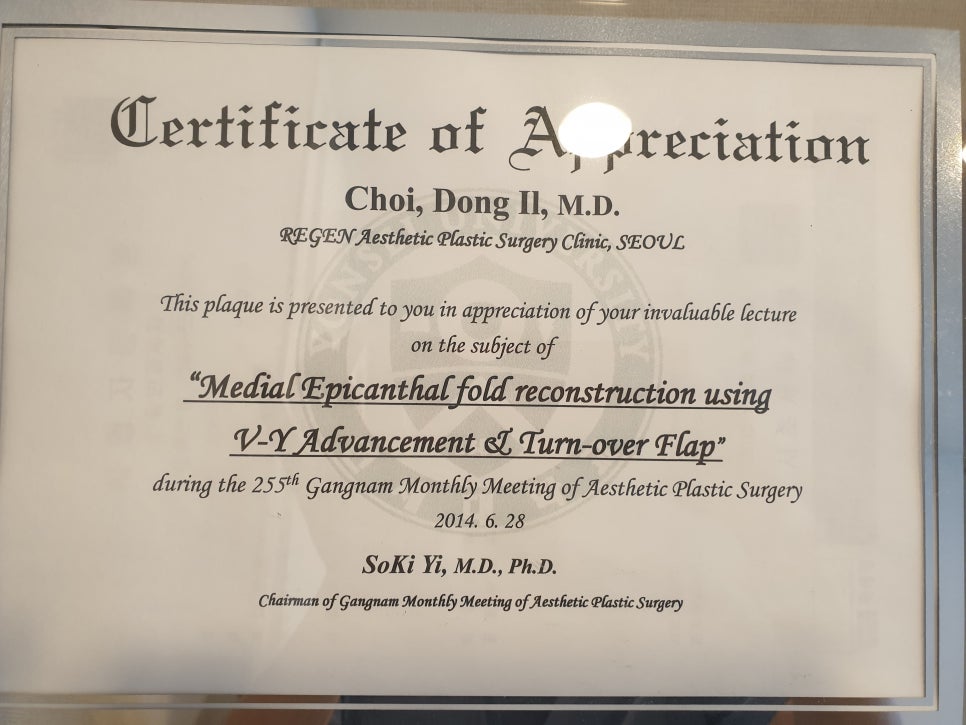
It feels good to see it finally in print.
There are still relatively few published papers on epicanthoplasty reversal, including ours.
Citation:
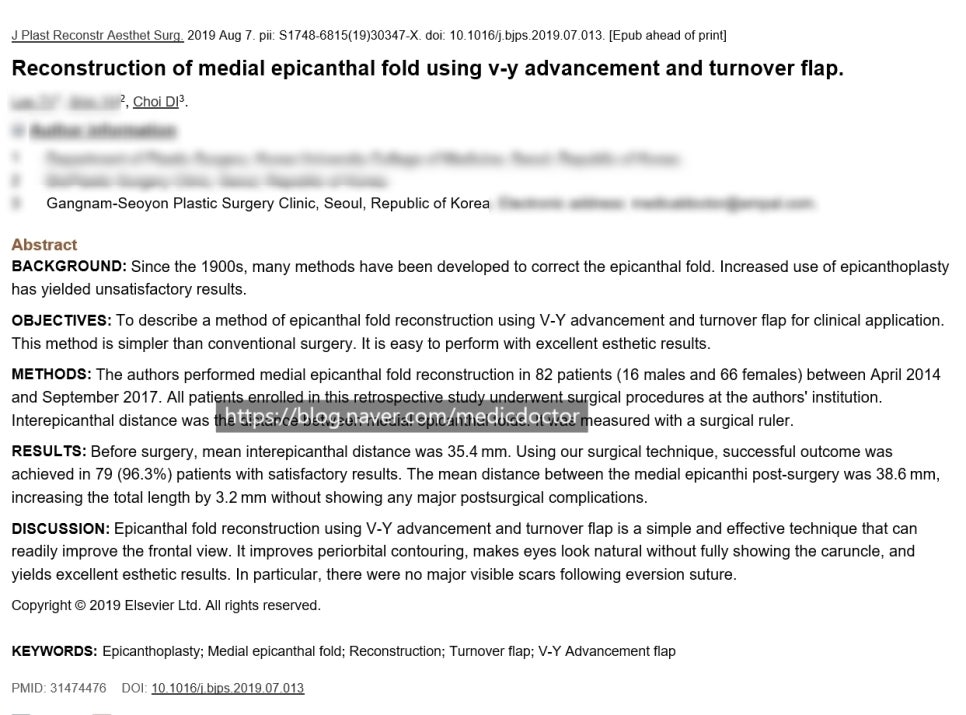
I am the corresponding author, which means I served as the senior author on the project.
The core principles of this operation are: cover the lacrimal lake as completely as possible, conceal the resulting scar, prevent recurrence of the original deformity, and avoid creating any new scar burden.
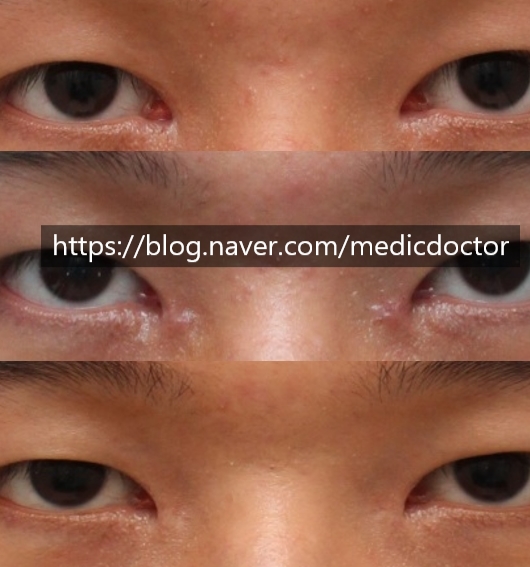
Pre-op, one week post-op, and six months post-op.