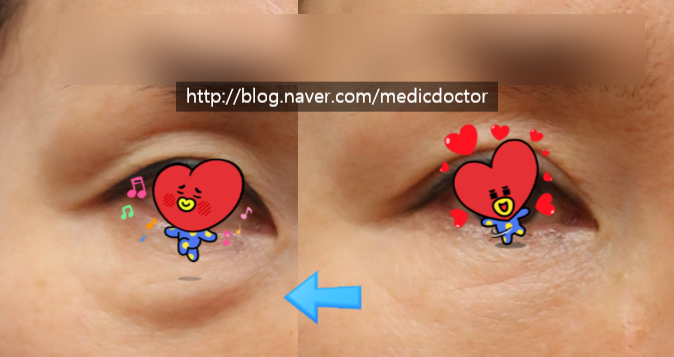
Patients often ask whether upper and lower blepharoplasty can be done at the same time.
Upper blepharoplasty typically refers to the procedure for older patients with redundant, sagging upper-lid skin. We excise the loose skin and create a crease that hides the resulting incision.
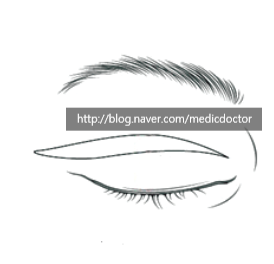
As shown above, we trim the redundant skin and tuck the incision into the new crease. Lower blepharoplasty addresses the bulging lower-lid fat through repositioning, and trims any redundant skin.
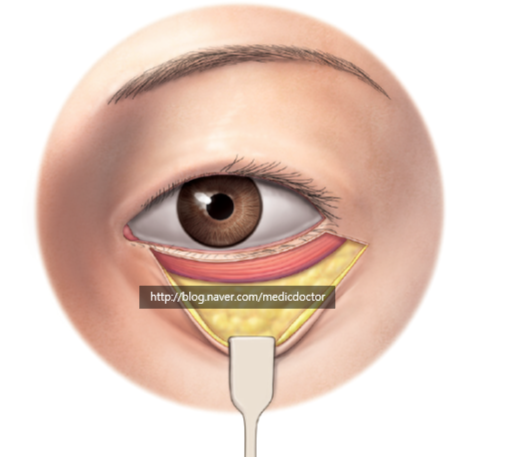
It is for patients who present with a visible fat bulge under the eyes.
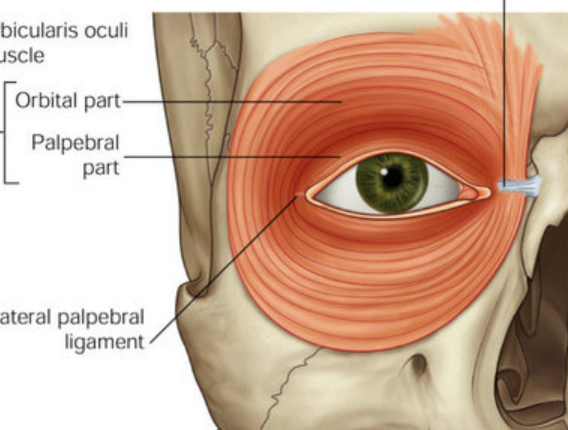
Surrounding the eye is the orbicularis oculi, the circular muscle responsible for eye closure. When we operate on both the upper and lower lids in the same sitting, we incise the orbicularis on both sides of the eye. This can temporarily reduce the muscle's tone, leading to mild lagophthalmos or dry eye. These symptoms are almost always transient. If they persist, lubricating eye drops will keep things comfortable until the muscle recovers.