
When that happens, both patient and surgeon find themselves under real stress. The patient wonders, "Did I really pick the right surgeon? Will it go wrong again? I am scared of needles." From the surgeon's side, there is the lingering thought of "if only I had done a little more."

Most plastic surgeons, myself included, consider a revision rate under 10 percent the mark of a strong eyelid surgeon. My own rate is comfortably below 10 percent.
That said, even I revise my own work occasionally. My own sister had a touch-up a week after her surgery last summer for some residual skin redundancy. There are distinct windows for revisional eyelid surgery. 1. Within the first one to four weeks. Most early revisions are ptosis corrections, for over- or under-correction, or when the patient cannot open the eye normally. Patients are often transferred to me from other clinics in this window.
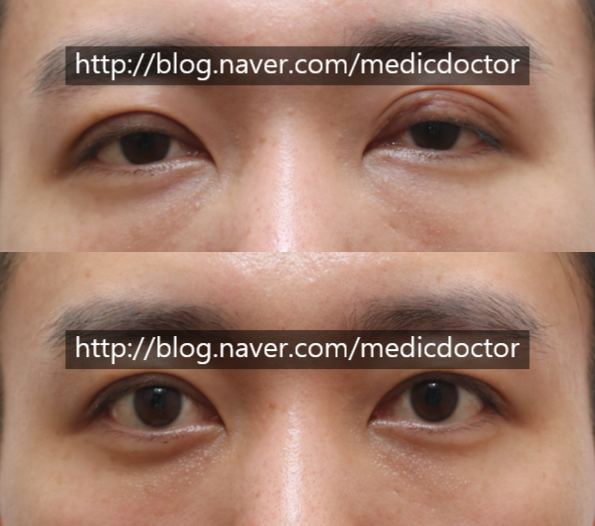
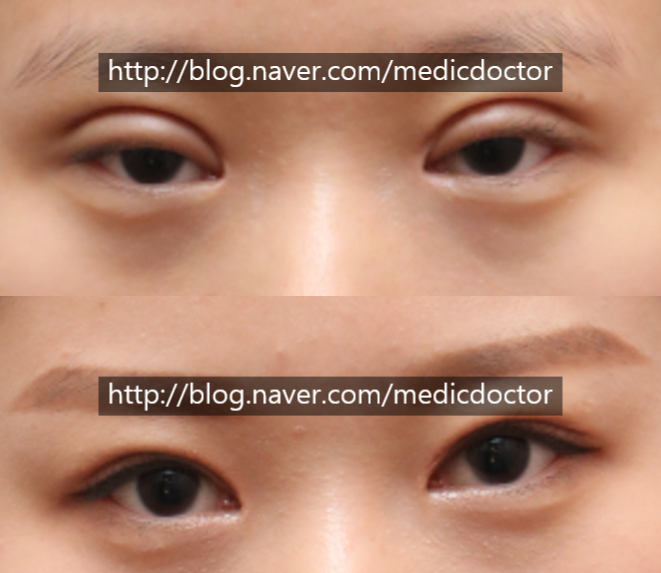
This patient was referred to me by another clinic. I am grateful when colleagues trust me with their patients. 2. Between one and six months. The scar is still maturing and the soft tissue has not settled, so I generally avoid revising in this window. The exceptions are cases where the patient takes on the risk knowingly, or where the result is bad enough that returning to normal social life is not possible. The patient below was transferred to me about a month after her original surgery elsewhere.
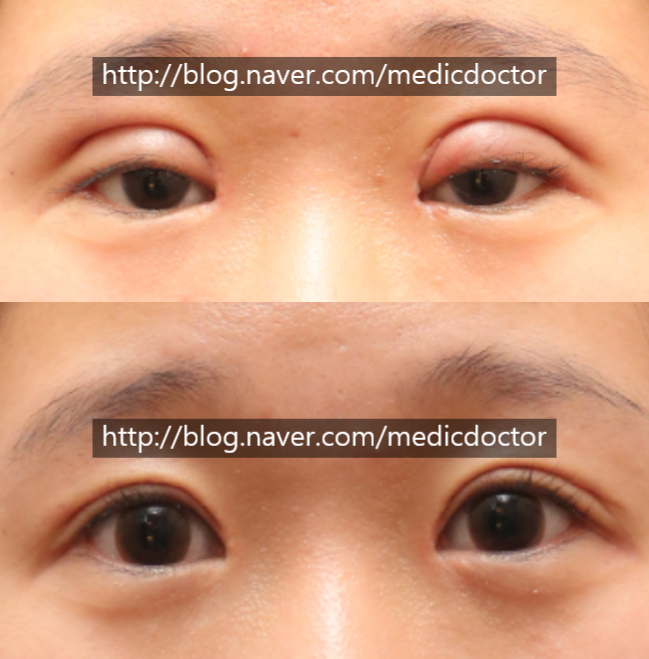
3. After six months. This is the most common window for revisional eyelid surgery. The scar has matured enough that we can correct even fine asymmetries.
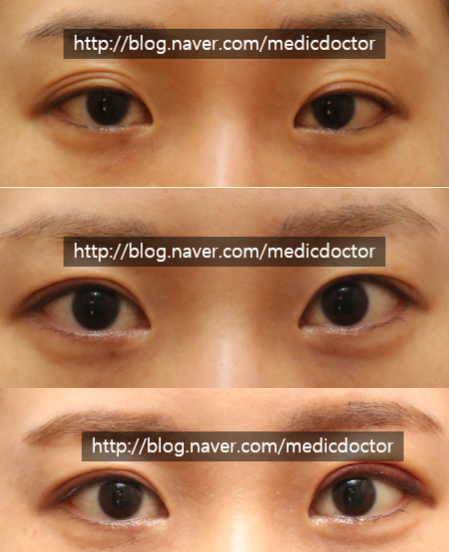
The right timing depends on the patient's specific situation. For revisional ptosis correction in particular, the approach changes with the timing, so it is important to talk this through with someone who does this work regularly. The advantage of revising within the first month is that adhesions have not yet formed, which makes the correction technically easier. For dissatisfaction with the shape of the fold itself, I personally prefer to wait until after six months, when the scar is stable. This is my opinion and does not represent every surgeon, but I think most colleagues would agree with the overall picture.