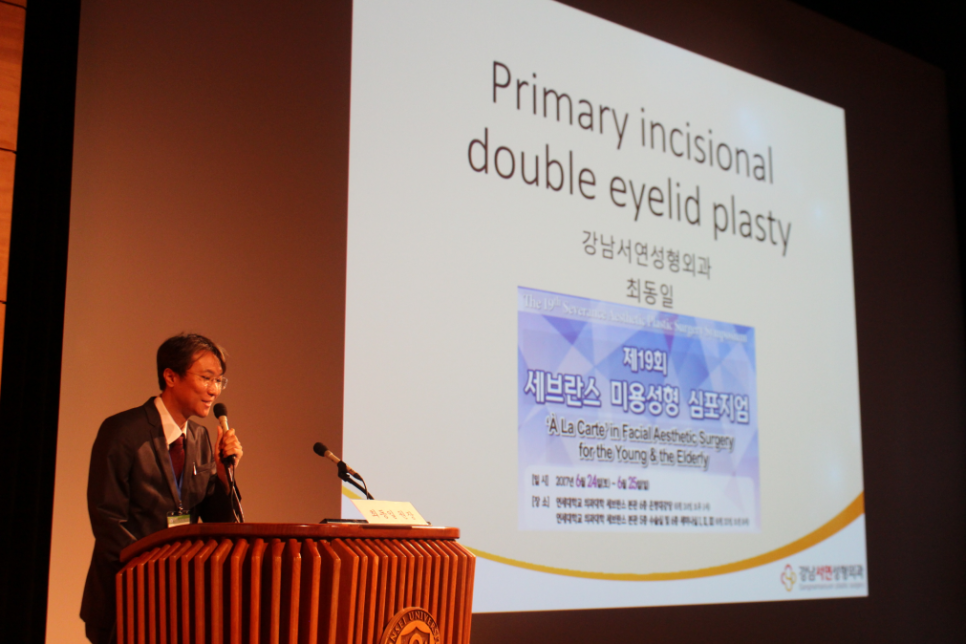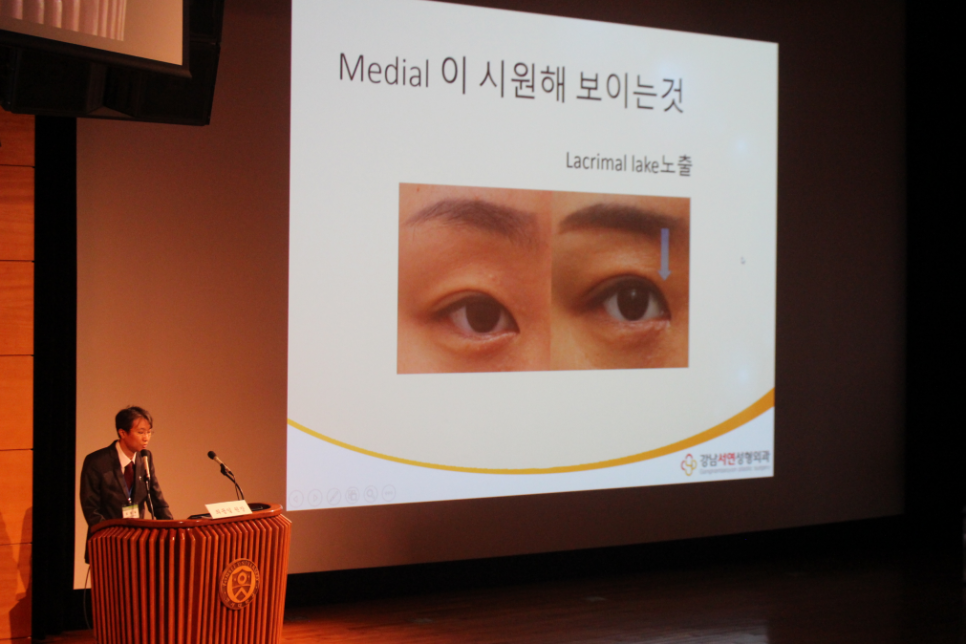
These are slides from a talk I gave at Severance Hospital, Yonsei University College of Medicine, on June 24-25, 2017. Korean surgeons broadly group double-eyelid shapes into three categories: in-fold, in-out fold, and out-fold.
In Korean clinical shorthand we say infold, outfold, and the in-between shape. The strict medical terms are tapered fold (in-fold) and parallel fold (out-fold), with anything in between described as in-out.
This shape is a tapered (in-fold) crease.

This is an out-fold (parallel) crease.
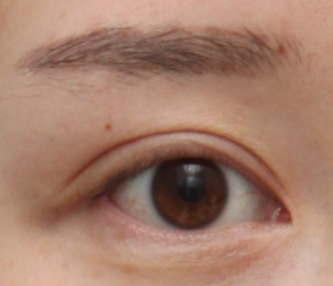
And this in-between shape is the in-out fold.
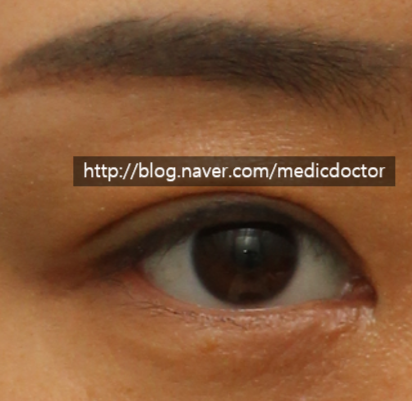
Any of these can be converted to another. In to out, in to in-out, out to in. We can move freely between shapes.
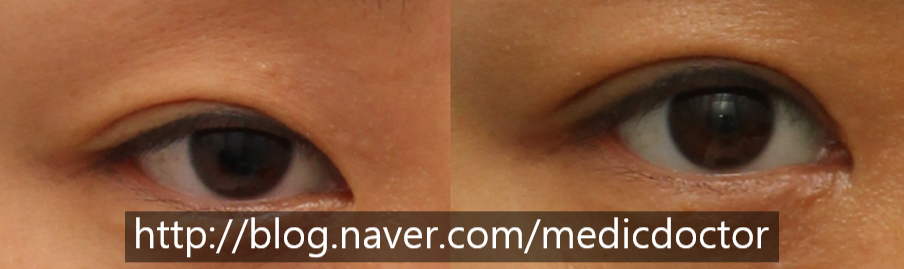
This patient was converted from an in-fold to an in-out fold.
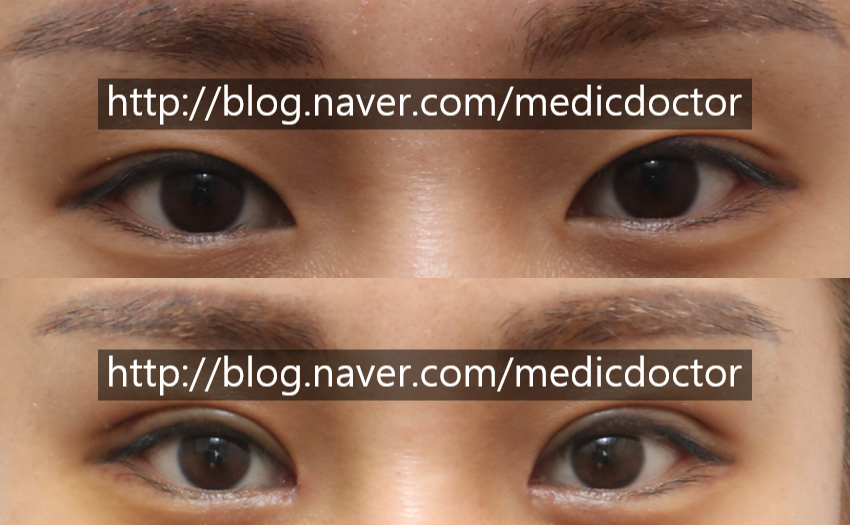
Honestly, patients like this one are the most common scenario. One week post-op.
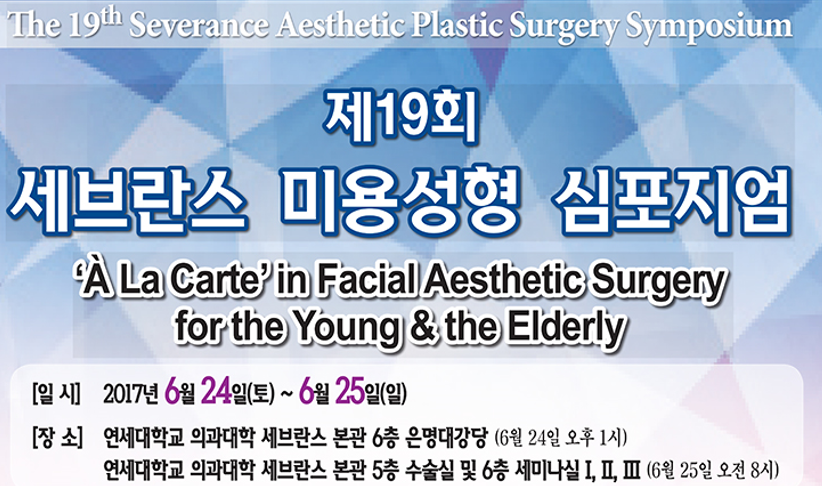
I built this post around the talk I gave in June 2017. The session was a discussion of how good ingredients (the patient's own anatomy) yield a good dish, and how an a la carte approach lets us tailor the surgery to each individual.