
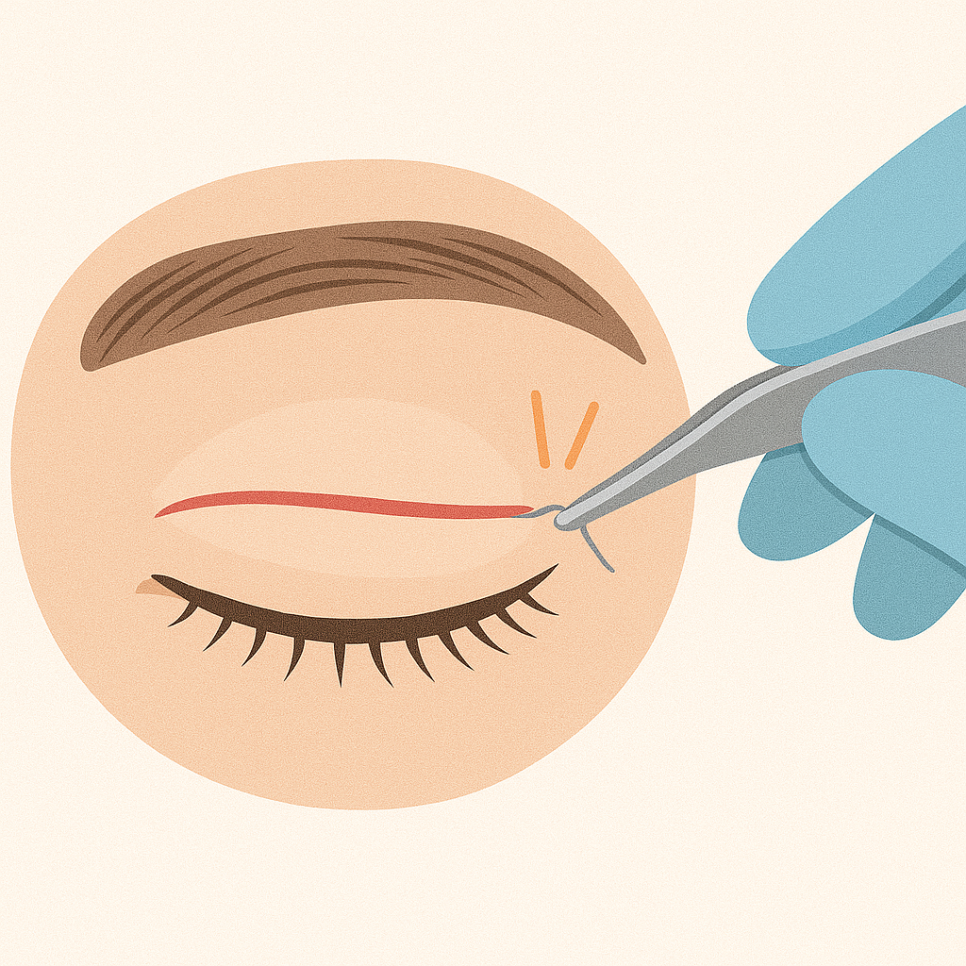
After double-eyelid surgery, the most common question is: "When should the stitches be removed?"
It varies slightly from clinic to clinic,
but most specialists advise day 7 after surgery as the standard.
Let us clearly lay out the reasons and the aftercare, based on clinical standards!
1️⃣ For double-eyelid stitch removal, "day 7 after surgery" is the standard
Removing double-eyelid stitches on the 7th day after surgery is the safest.
At this point, the sutured area has healed stably,
and both pain and scarring risk have decreased.
👉 In other words, "day 7" is the balance point between recovery and safety!
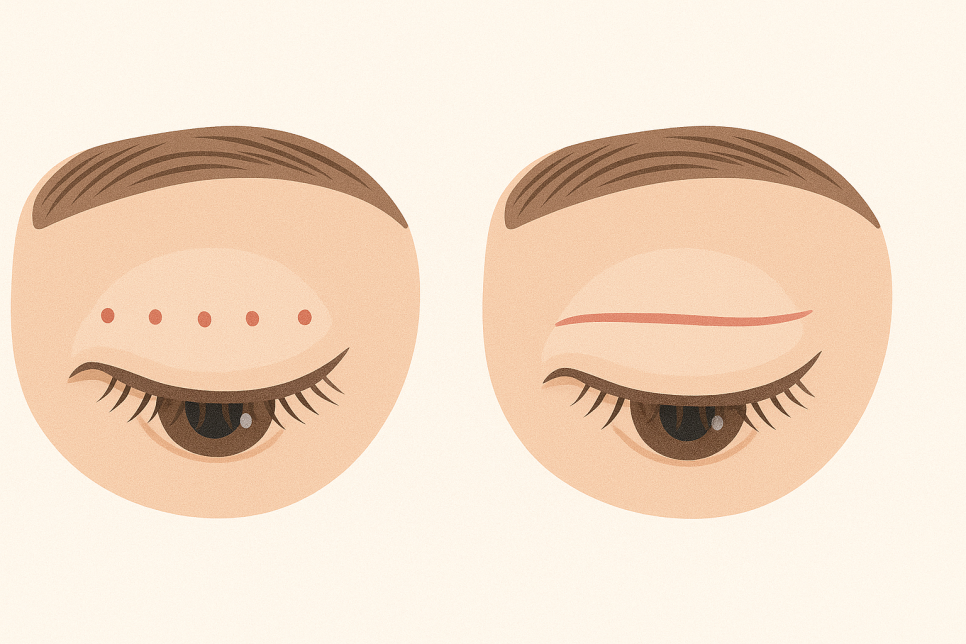
2️⃣ Differences in removal timing by surgical method
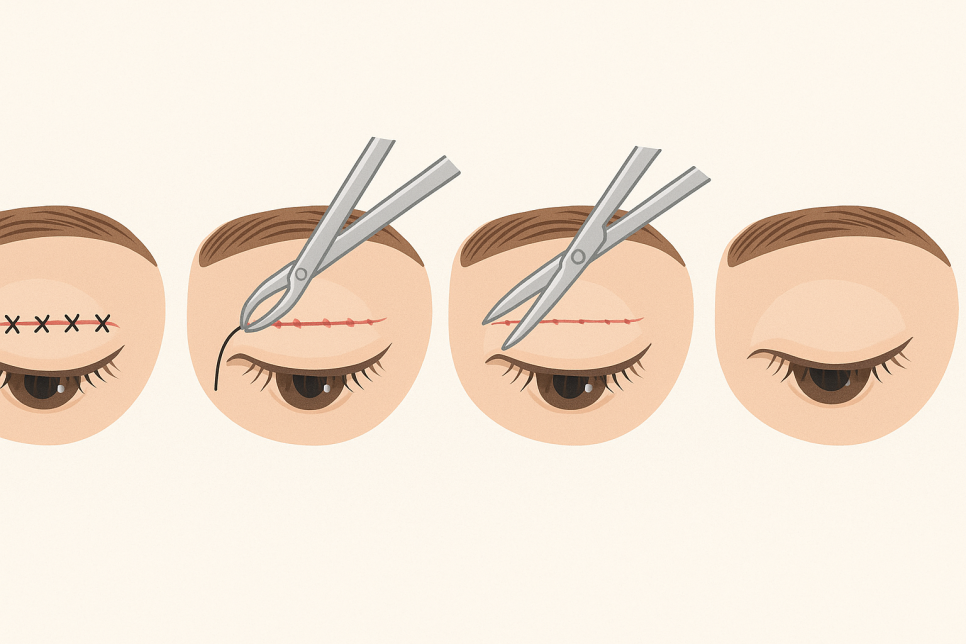
3️⃣ Does stitch removal hurt? Is anesthesia needed?
Many people are especially curious about the pain.
It doesn't hurt as much as you might fear!
Stitch removal can be done without anesthesia,
and when the thread is cut with medical tweezers, it's just a slight prickling sensation.
- Pain level 👉 about like plucking an eyebrow
- Time 👉 roughly 3–5 minutes for both sides
- Face washing 👉 possible right after removal
- Makeup 👉 recommended from 2–3 days afterward
4️⃣ Precautions after stitch removal (be sure to follow!)
Having the stitches removed doesn't mean it's all over!
During this period the wound is still sensitive,
so please be sure to follow the aftercare below!
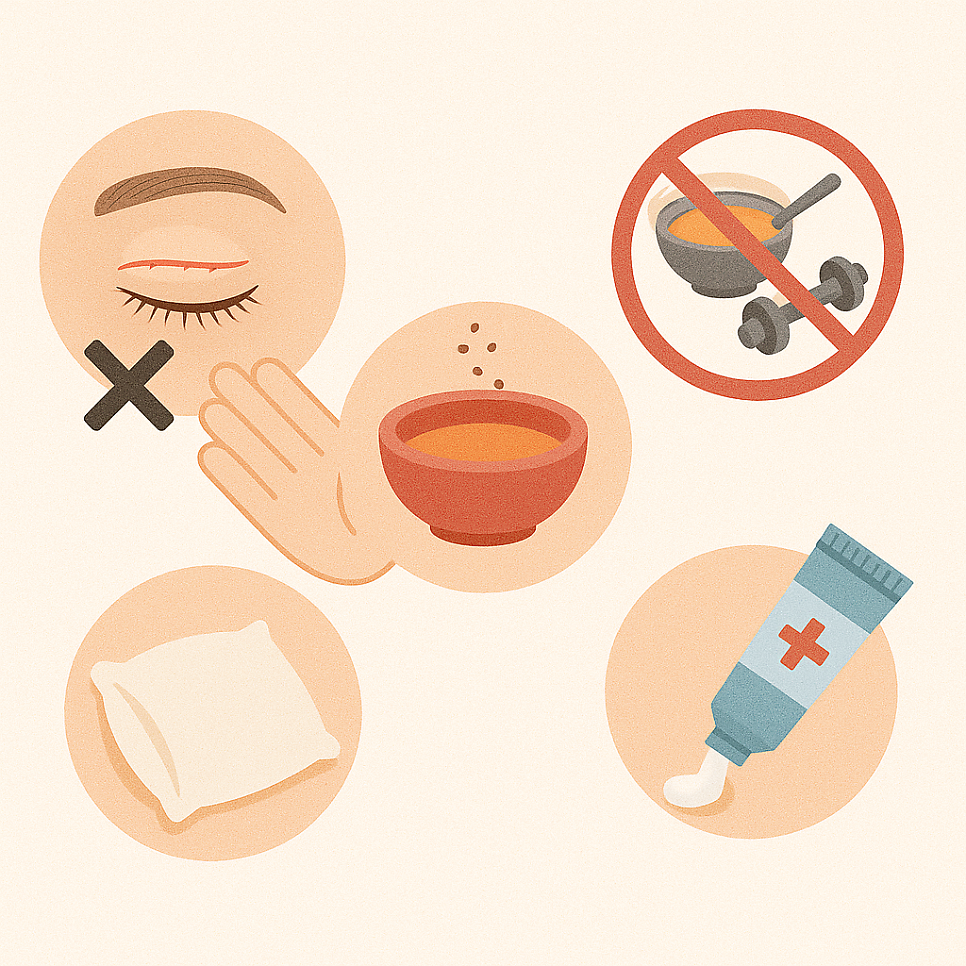
✔️ Do not rub your eyes
✔️ Avoid salty foods (to reduce swelling)
✔️ No sauna, exercise, or alcohol for 1 week
✔️ Keep your pillow elevated while sleeping
✔️ Apply antibiotic ointment consistently (if prescribed)
📢 If swelling or pain is severe after stitch removal,
visit the clinic right away to check for inflammation!
5️⃣ Why does the timing differ from clinic to clinic?
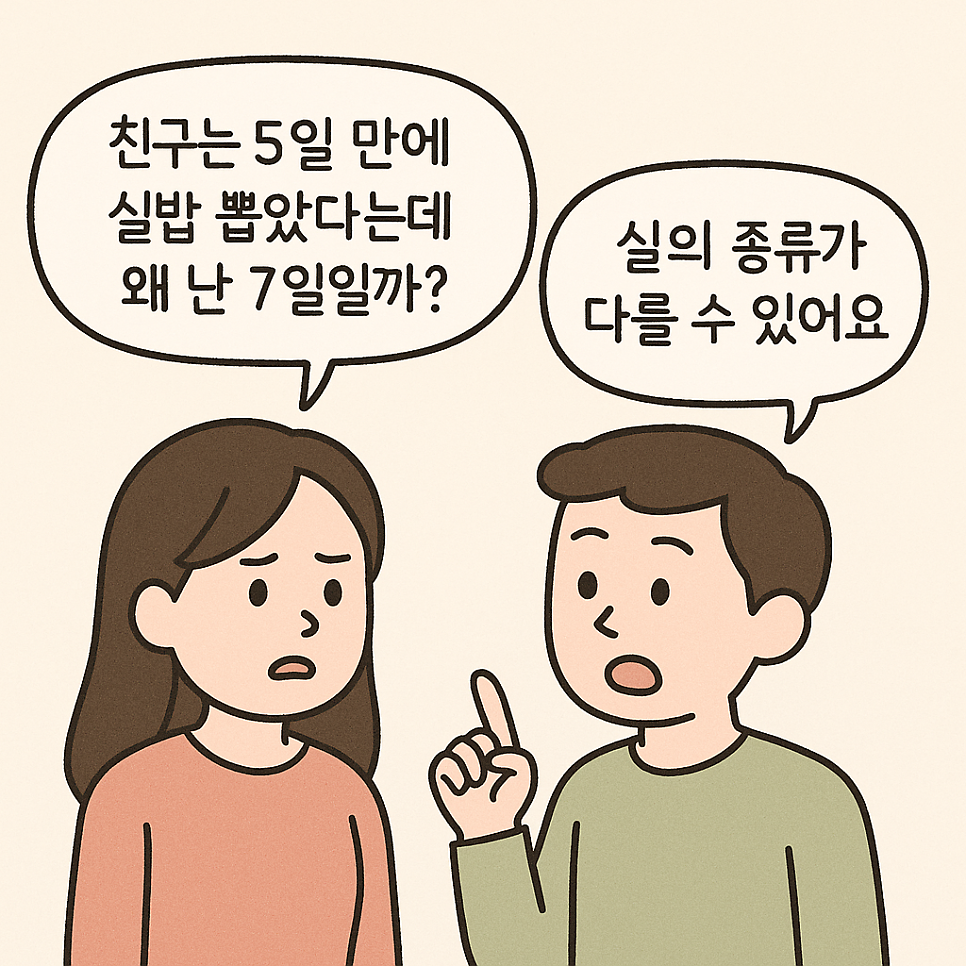
"My friend had her stitches out in 5 days, so why is mine 7 days?"
Cases like this are common~
The reasons are
✔️ The type of thread (absorbable/non-absorbable)
✔️ The suture depth
✔️ Differences in skin thickness
these are the reasons.
Ultimately, the condition of your own eyes and the doctor's judgment are the criteria.
Rather than simply going by the date, removal after a specialist's examination is the safest!
6️⃣ Recovery process after stitch removal (day-by-day summary)
After stitch removal, you are not yet fully recovered.
Swelling or slight asymmetry is a natural part of the process.
✔️ Weeks 1–2: swelling eases, the line begins to settle
✔️ 1 month: the natural double-eyelid line is complete
✔️ 3 months: the final line stabilizes
🎯 Getting plenty of rest speeds up your recovery!

👨⚕️ Conclusion: removal on day 7 is the most ideal
To sum up,
double-eyelid stitch removal on the 7th day after surgery is the safest and most favorable for recovery.
If removed too early, the wound is not healed enough,
and if removed too late, the thread can become embedded in the skin,
👉 so day-7 removal plus a doctor's examination is the most ideal timing.
🗝️ Key summary
To summarize,
rather than removing double-eyelid stitches quickly,
the key is to "remove them safely at the point when your eyes have recovered."
On day 7 after surgery, together with a doctor's confirmation,
have them gently removed and begin a healthy recovery!
👉 Book a consultation with a Gangnam Seoyon Plastic Surgery specialist
Gangnam Seoyon Plastic Surgery before-and-after photos
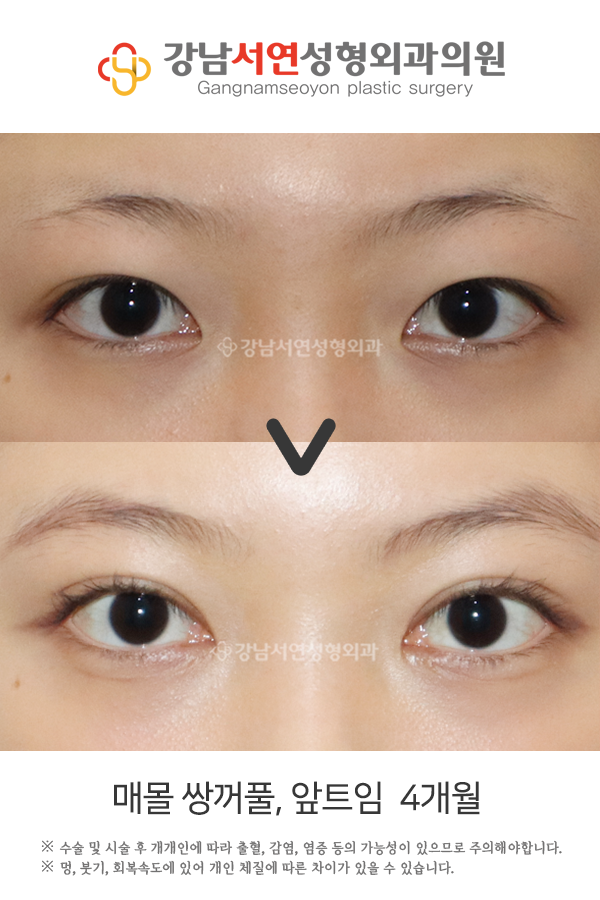
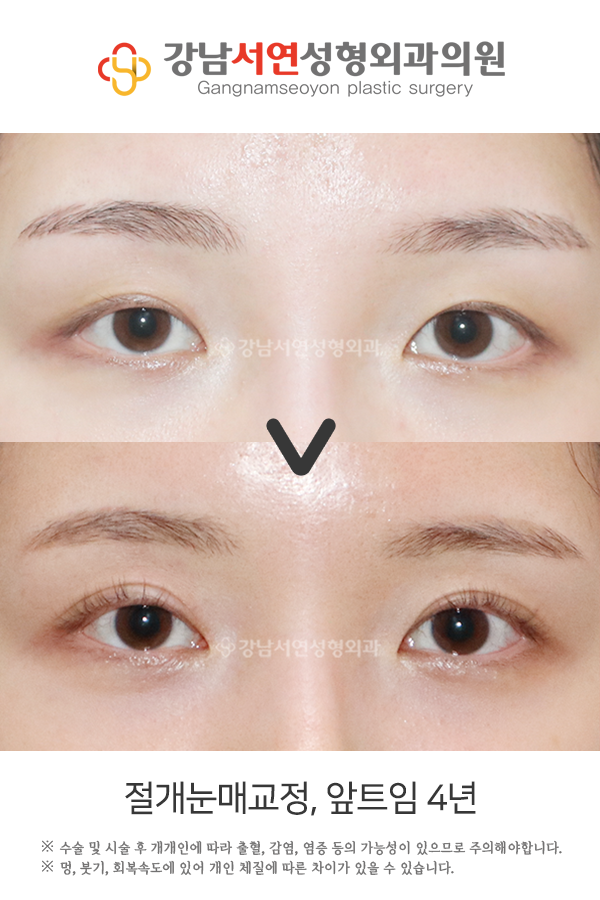
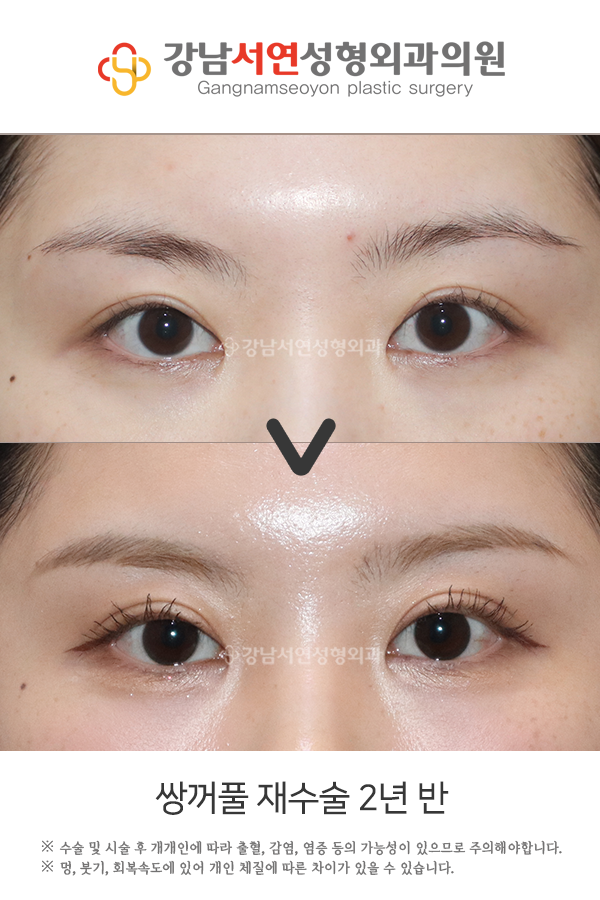
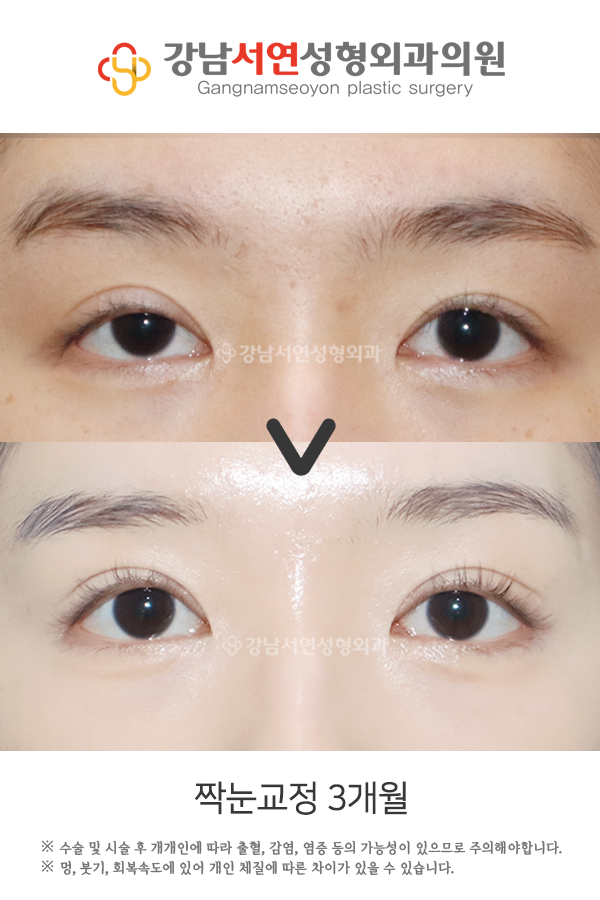
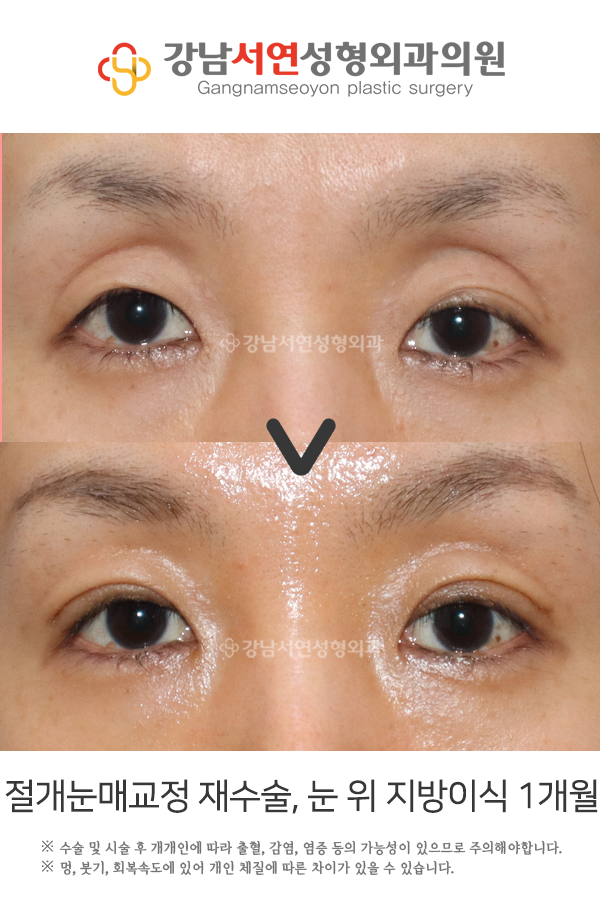
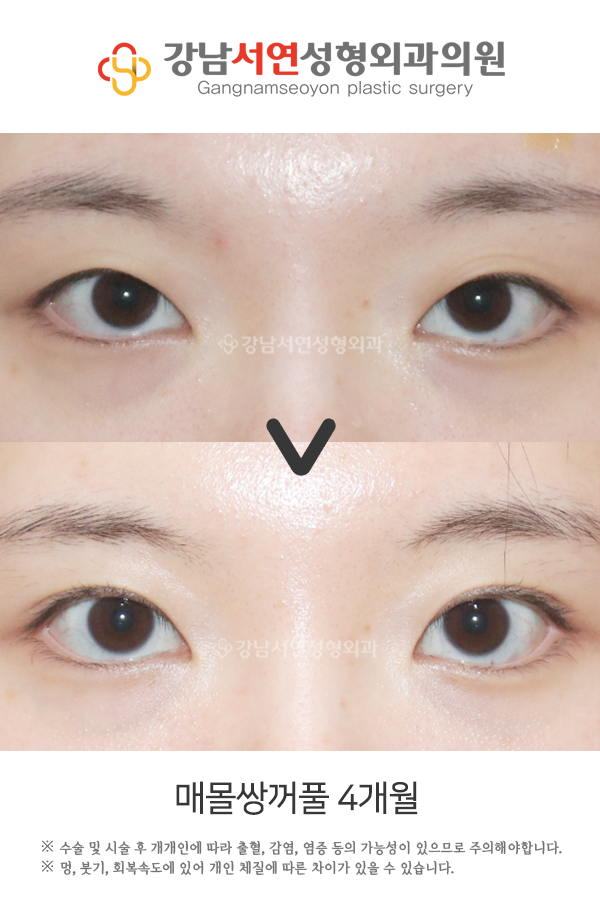
The photographs in this post were taken under identical conditions with the patient's prior consent.
In addition, side effects such as bleeding, infection, and inflammation may occur after plastic surgery or procedures depending on the individual, so caution is required.