
Hello!
For surgery with high patient satisfaction,
always doing our best —
this is Gangnam Seoyon Plastic Surgery Clinic :)
Today, we would like to take a look at Dr. Choi Dong-il of Gangnam Seoyon Plastic Surgery's
lateral canthoplasty revision,
what kind of people receive lateral canthoplasty revision,
and how the surgical method works —
we will explain along with before-and-after surgery photos.
The photos below, apart from brightness adjustment,
have not been retouched in any way :)

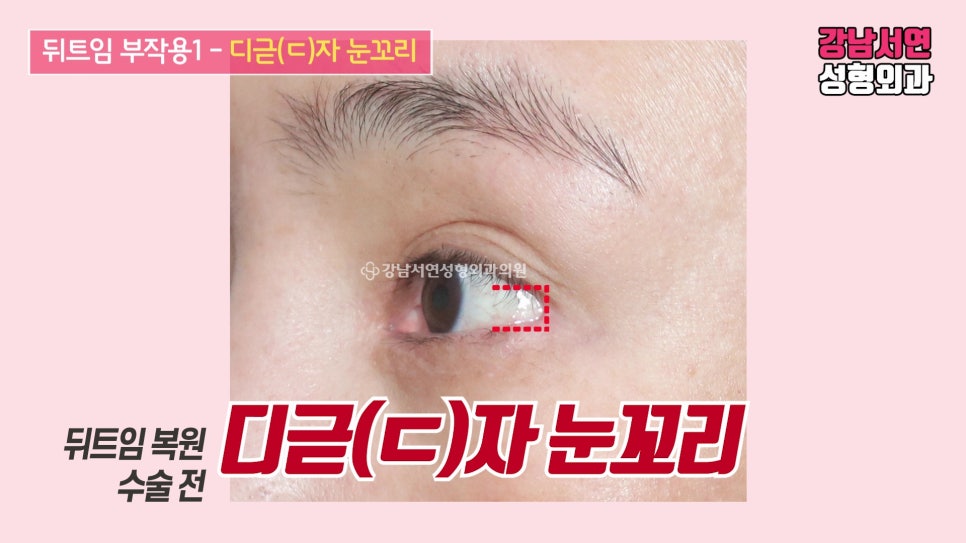
Occasionally, when lateral canthoplasty is done excessively,
various side effects can appear.
The first side effect of lateral canthoplasty is a squared, ㄷ-shaped outer eye corner.
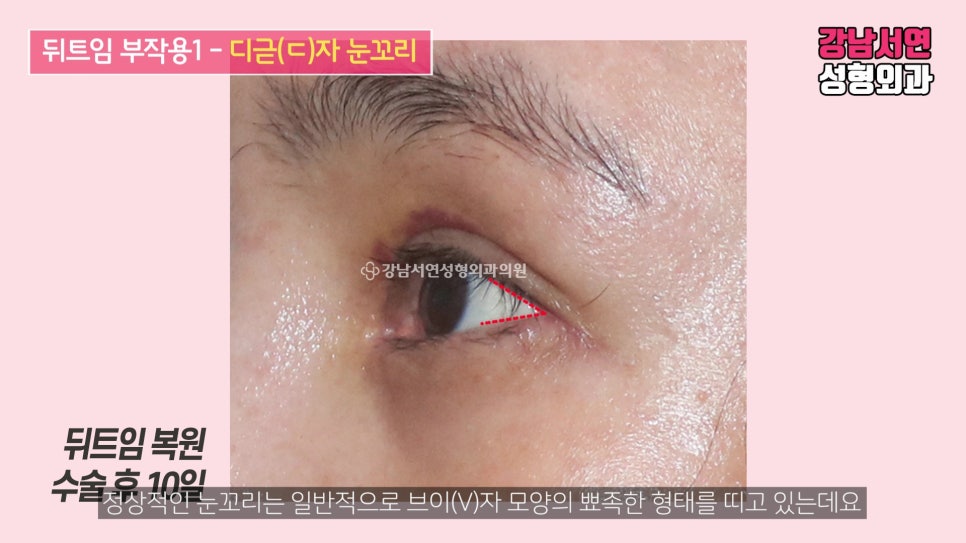
There are differences from person to person, but a normal eye corner
generally has a V-shape,
with a pointed form.
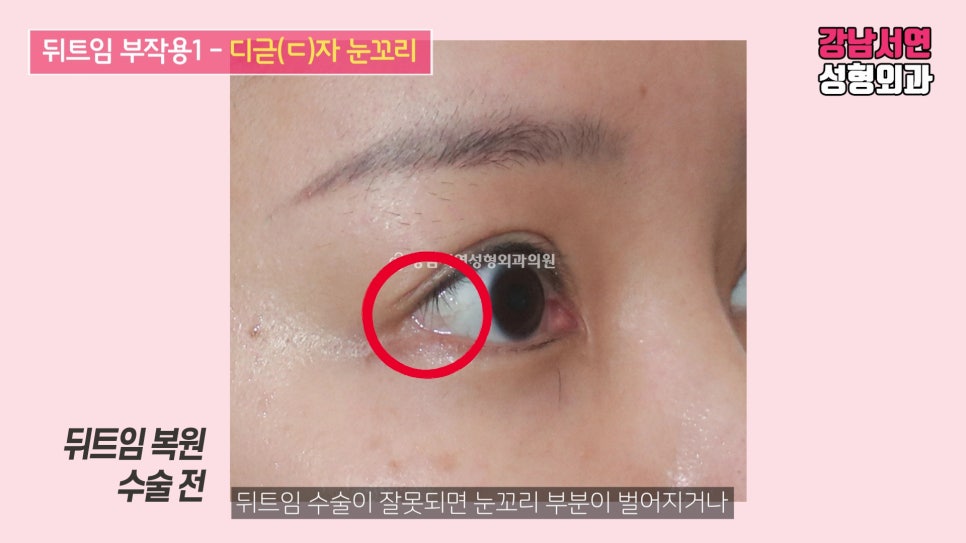
If lateral canthoplasty goes wrong, the eye corner can gape open,
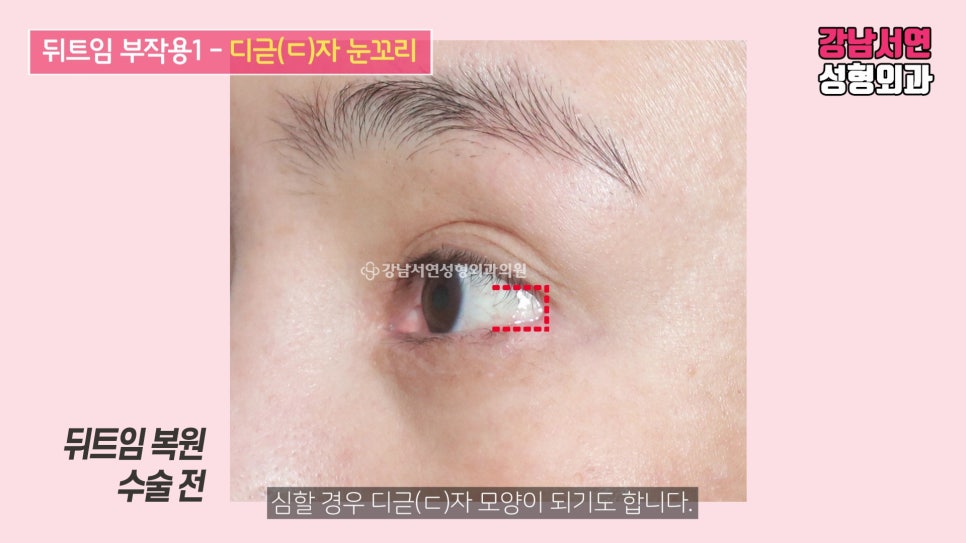
and in severe cases it can become a squared, ㄷ-shape.
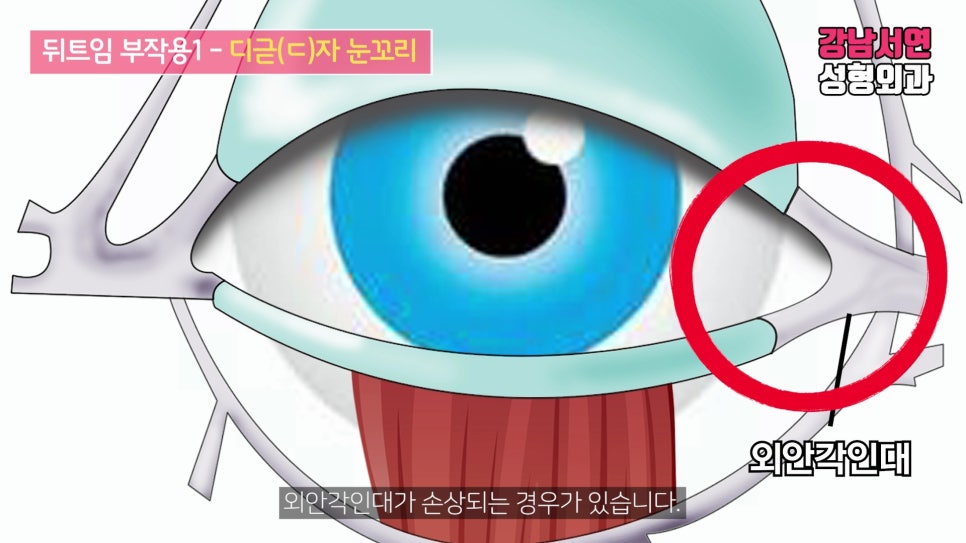
To explain why this happens:
when the slit-opening surgery is performed excessively,
the lateral canthal ligament can be damaged.
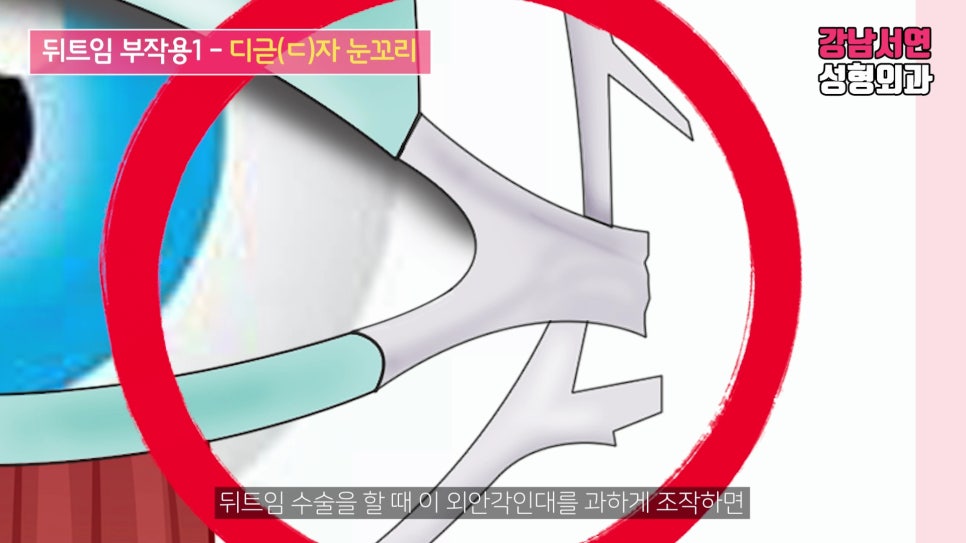
The lateral canthal ligament is a ligament attached to the lower eyelid,
and it supports the eye from both sides and helps the eye close.
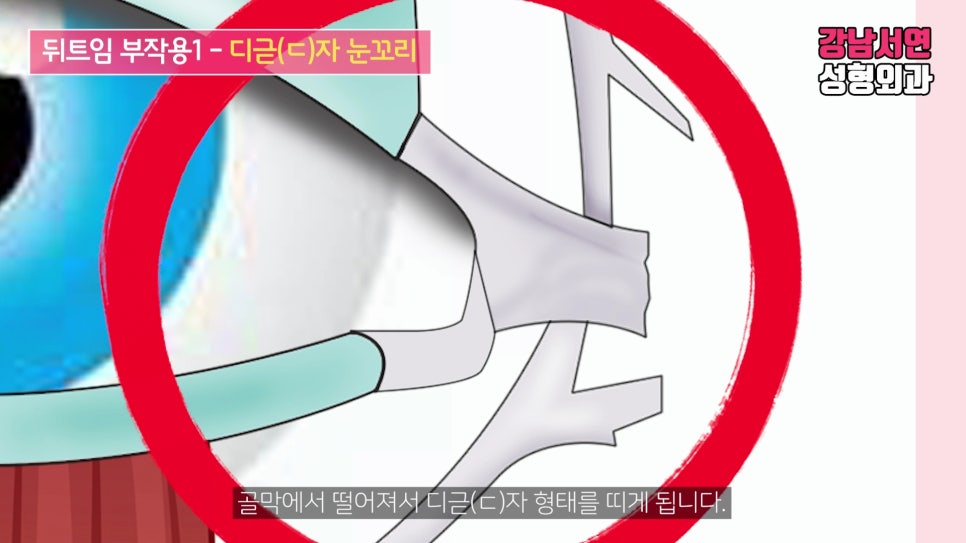
When lateral canthoplasty is performed, if this lateral canthal ligament
is manipulated excessively, it detaches from the periosteum,
and the eye corner takes on a squared, ㄷ-shape.
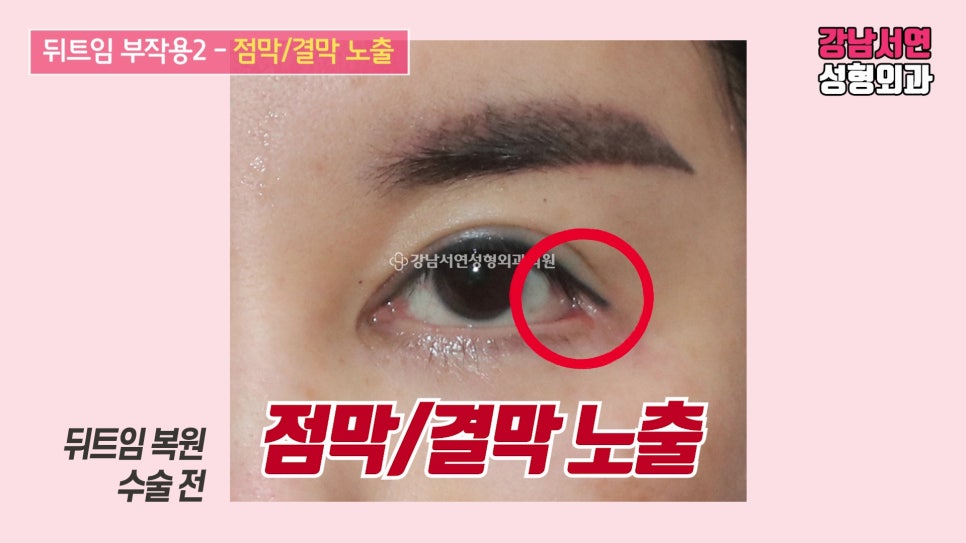
The second side effect of lateral canthoplasty is, after the surgery,
the case where the mucosa or conjunctiva becomes exposed.
This too is related to the lateral canthal ligament.
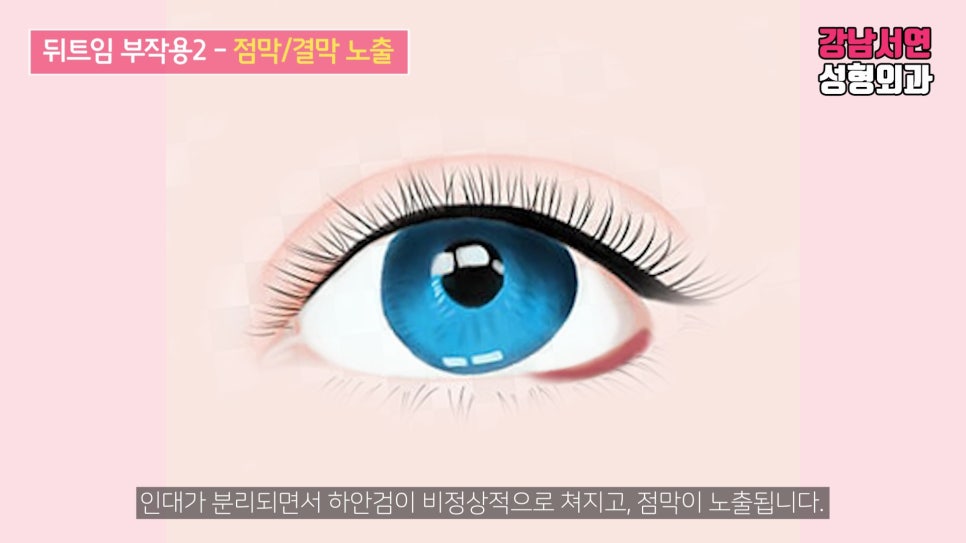
If the lateral canthal ligament is damaged by excessive surgery,
the ligament separates,
the lower eyelid sags abnormally, and the mucosa becomes exposed.
In severe cases the eye may not close completely (lagophthalmos),
and the face can look as if it is about to cry.
So how is lateral canthoplasty revision surgery performed?
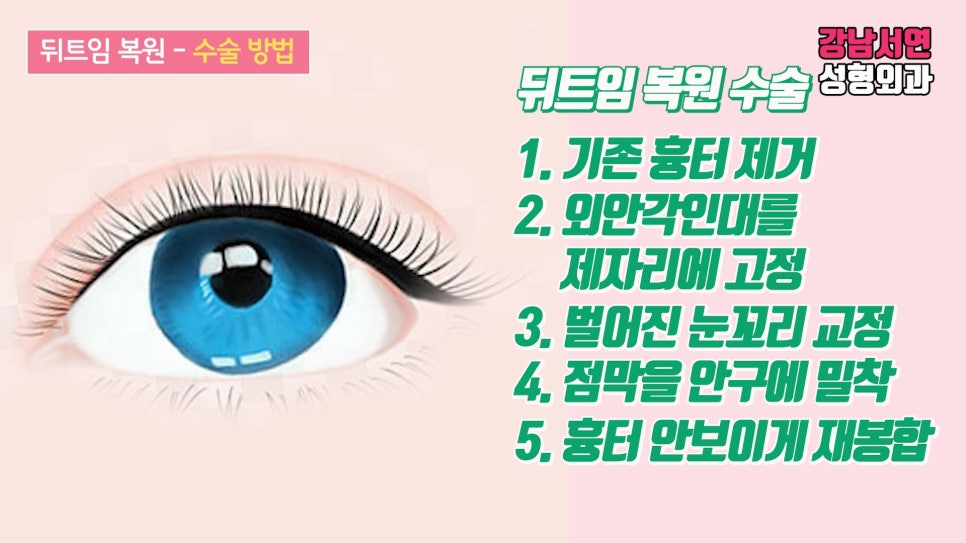
First, lateral canthoplasty revision surgery does the following:
1. It cleanly removes the existing scar,
2. finds the detached lateral canthal ligament
and returns it to its original position,
3. restores the gaping eye corner to a normal shape,
4. brings the sagging or everted mucosa back into close contact with the eyeball.
5. Then it re-sutures while making the scar as invisible as possible.
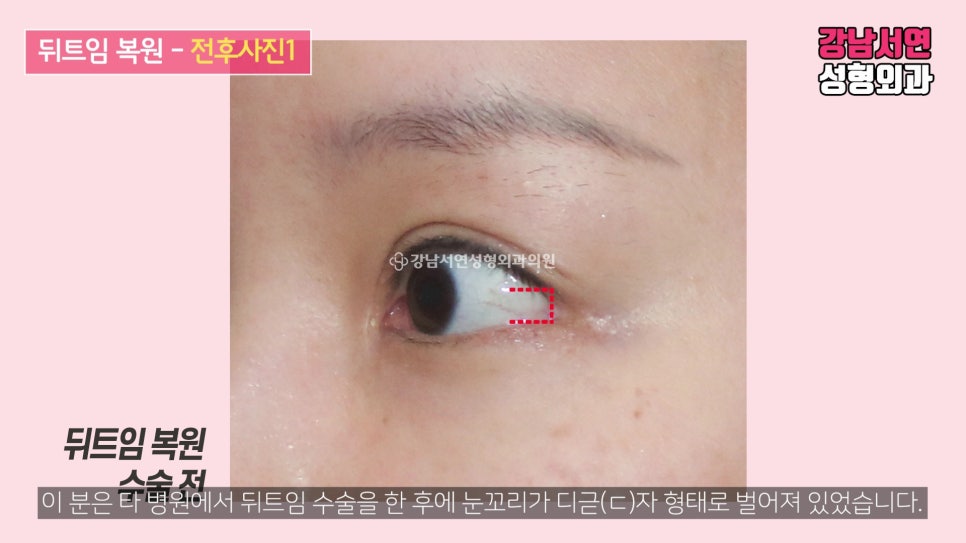
Let's take a look at some lateral canthoplasty revision before-and-after photos.
This patient, after having lateral canthoplasty at another clinic,
had an eye corner that had gaped open into a squared, ㄷ-shape.
In this case, the key to the lateral canthoplasty revision surgery is
first cleanly excising the scar from the previous surgery,
fixing the lateral canthal ligament that detached from the periosteum back into place so it does not recur,
while keeping the incision scar invisible.
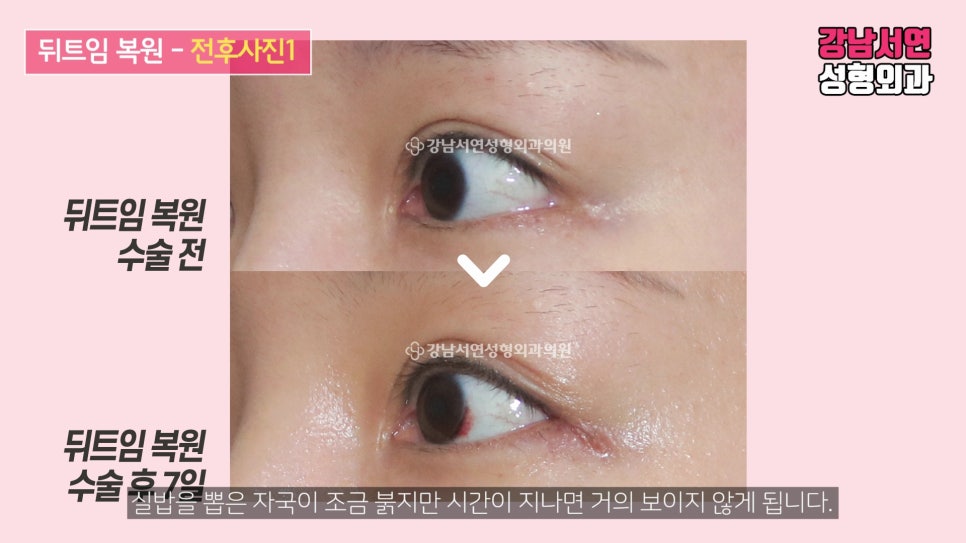
This is how it looks one week after surgery.
The marks from the removed stitches are a little red, but they become almost invisible over time.
Here is the next case.
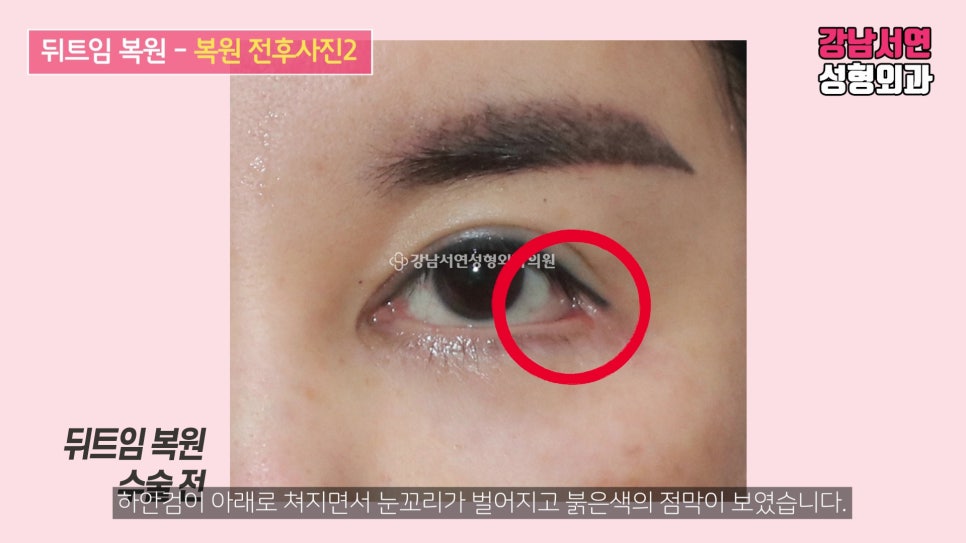
This patient, after having lateral canthoplasty at another clinic,
had the lower eyelid sag downward so that the eye corner gaped open
and red mucosa was visible.
The lower eyelid, like a sagging clothesline,
was in a drooping state.
In this case, the revision surgery
can be thought of as pulling the sagging clothesline taut again.
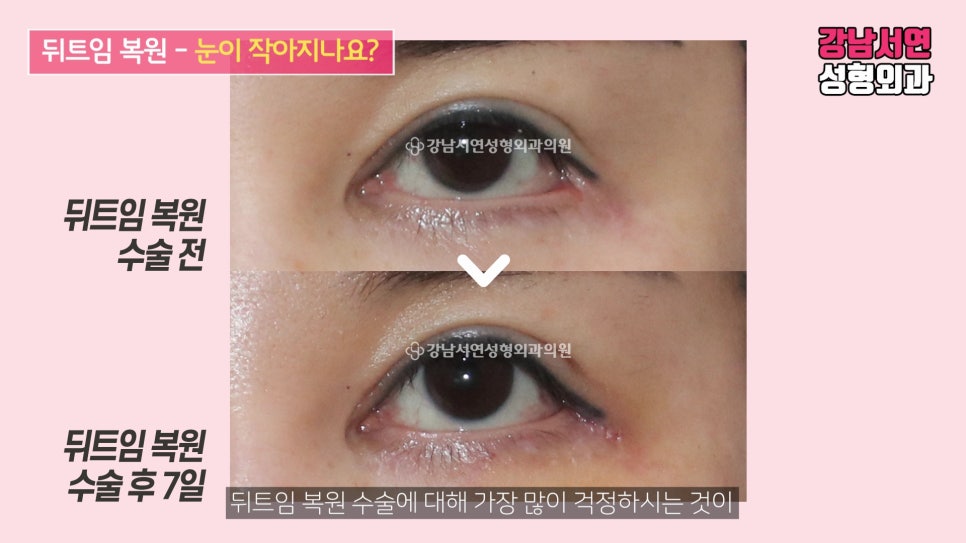
This is how it looks one week after surgery.
Regarding lateral canthoplasty revision,
you can find more detailed information through the video below.
↓↓↓↓↓↓
The photographs in this post were taken under identical conditions with the patient's prior consent.
In addition, side effects such as bleeding, infection, and inflammation may occur after plastic surgery or procedures depending on the individual, so caution is required.