
Hello!
For surgery with high patient satisfaction,
we always do our very best.
This is Gangnam Seoyon Plastic Surgery :)
Today, we'd like to explore Gangnam Seoyon Plastic Surgery Dr. Choi Dong-il's
approach to male monolid eye-shape correction.
We'll explain what kind of patients undergo male monolid eye-shape correction,
how the surgery is performed,
and walk you through it with before-and-after photos.
The photos below have had no retouching whatsoever,
aside from brightness adjustment :)

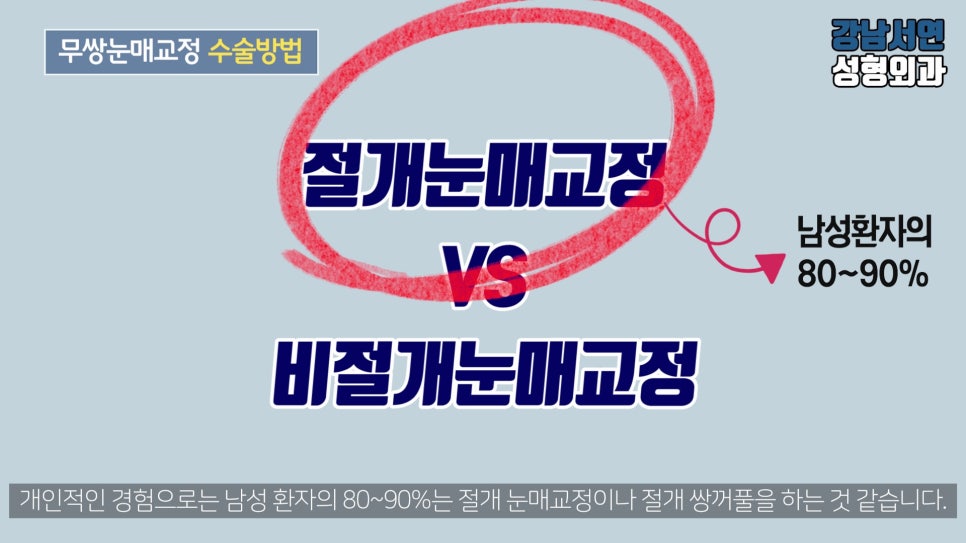
First, male monolid eye-shape correction is carried out using either an incisional or a non-incision eye-shape correction method.
In my personal experience, about 80–90% of male patients
end up having incisional eye-shape correction or incisional double-eyelid surgery.
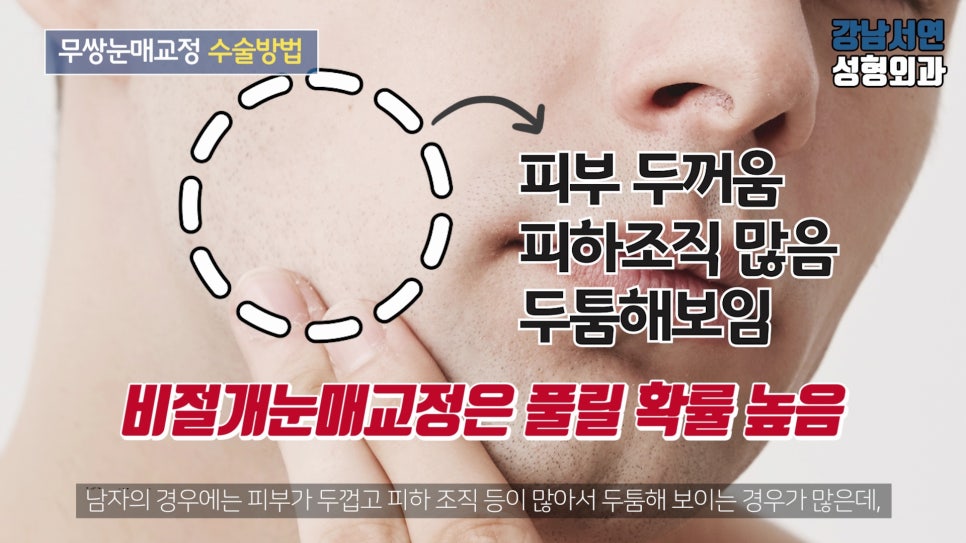
In men, the skin is thick and there is a lot of subcutaneous tissue,
so the eyelids often look bulky,
and if a non-incision eye-shape correction is done, there is a high chance it will come undone.
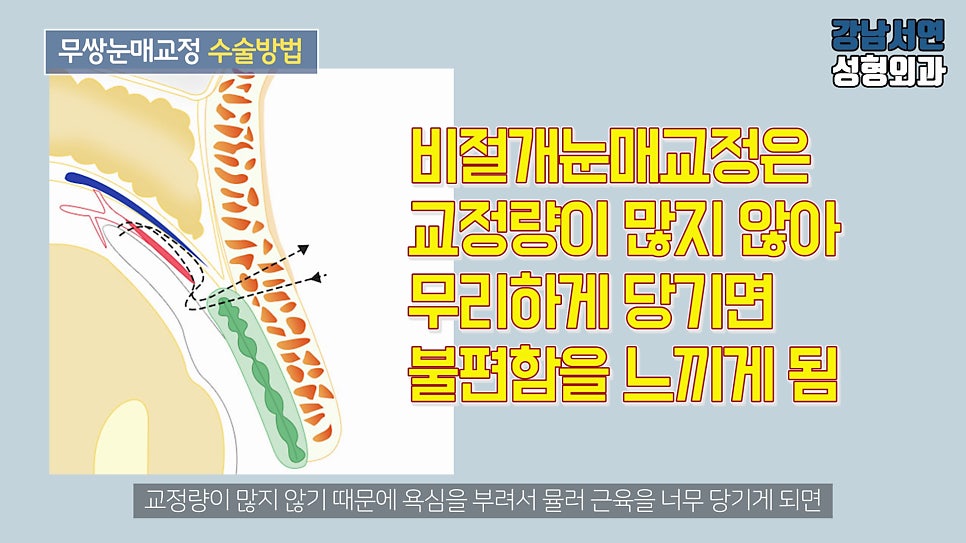
With non-incision eye-shape correction, the eye shape is corrected by tying off the Müller's muscle through the conjunctiva, and because it can only achieve a small amount of correction, pulling the Müller's muscle too tightly out of ambition leaves the patient feeling very uncomfortable.
For this reason, there are many unfortunate cases where patients come back for an incisional procedure after a non-incision one.
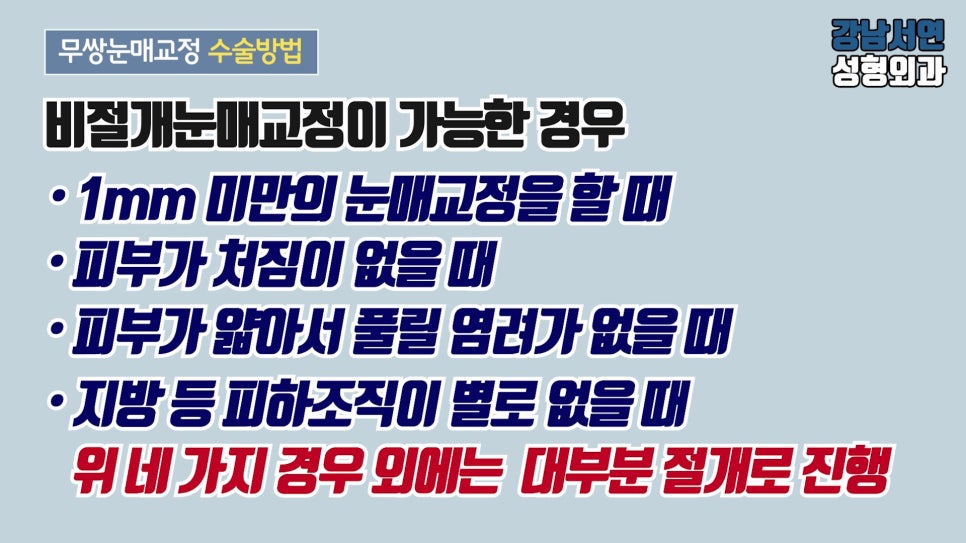
There are four situations in which non-incision eye-shape correction is possible:
when the correction needed is less than 1 mm,
when there is no skin drooping,
when the skin is thin so there is no worry of it coming undone,
and when there is little subcutaneous tissue such as fat.
Apart from these four situations, most cases proceed with an incisional method.
So, what kind of people is male monolid eye-shape correction suitable for?
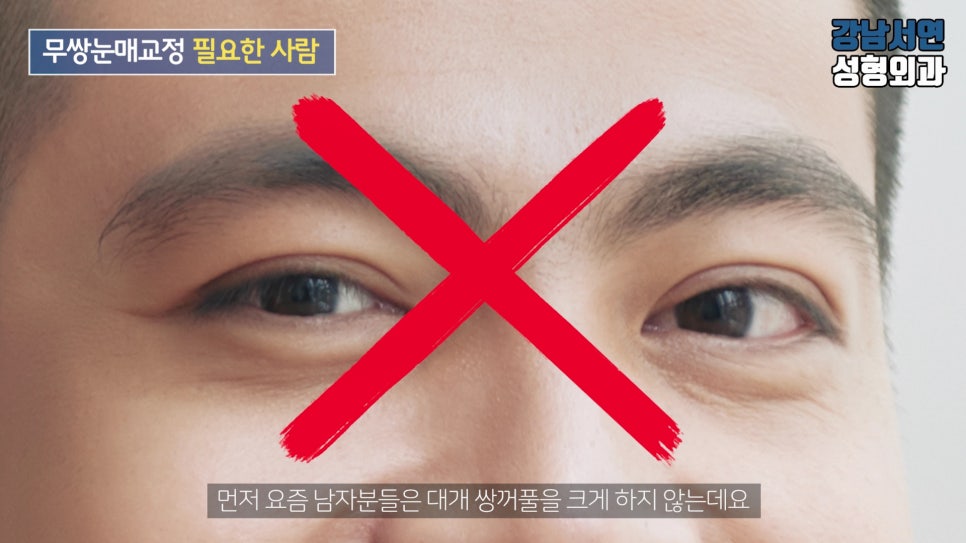
First, these days most men do not want large double eyelids,
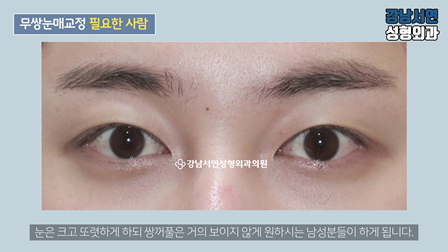
so male monolid eye-shape correction is basically
chosen by men who want large, clearly defined eyes while keeping the double-eyelid fold almost invisible.
Let's look at this in more detail.
Male monolid eye-shape correction 1. People with small, heavy-looking eyes
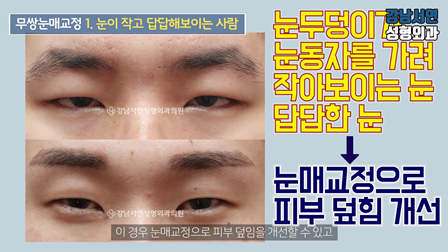
The first is when the eyelid covers too much of the pupil, making the eyes look small and giving a heavy impression.
In this case, eye-shape correction can improve the skin coverage.
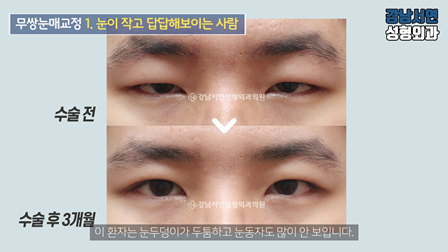
This patient has thick eyelids and very little of the pupil showing.
This was a patient in whom not only fat but also the orbicularis oculi, the fat layer behind it, and the septum were all appropriately removed.
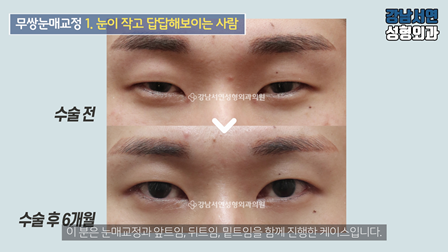
This was a case in which eye-shape correction was combined with epicanthoplasty, lateral canthoplasty, and lower canthoplasty.
Male monolid eye-shape correction 2. People who open their eyes using their forehead
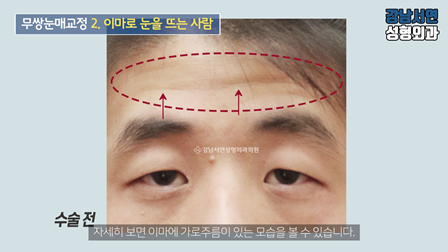
The second is people who open their eyes using their forehead.
Usually, people who lack the strength to open their eyes and cannot open them wide end up using their forehead to do so.
If you look closely, you can see horizontal wrinkles on the forehead.
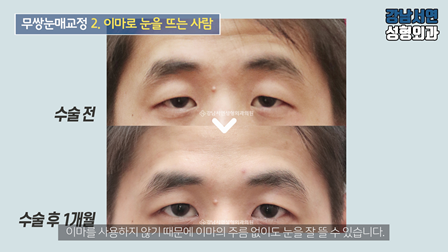
This is how they look one year after surgery.
Sometimes, even after monolid eye-shape correction, there seems to be little difference between before and after,
and this is because, before surgery, the patient used the forehead to open the eyes wide and make them look bigger.
So even though there seems to be no difference before and after when looking at the eyes alone,
if you look at the forehead, you can see that after surgery the patient can open the eyes wide without using the forehead.
Male monolid eye-shape correction 3. People with asymmetric eyes
The third is people with asymmetric eyes.
Eye asymmetry is sometimes an asymmetry in itself, but it is often accompanied by facial asymmetry.
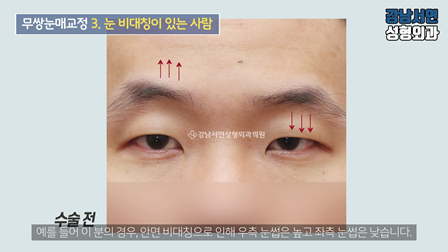
For example, in this patient, facial asymmetry makes the left eyebrow appear high and the right eyebrow low in the photo.
And the right eye is relatively smaller than the left.
In such cases, even with eye-shape correction the eyebrow position does not straighten out, so making the eyes perfectly symmetrical is very difficult, but eye-shape correction can make them look as similar as possible.
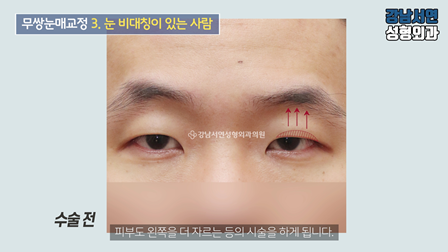
In this patient's case, the smaller right eye received a bit more eye-shape correction and more skin removal than the left.
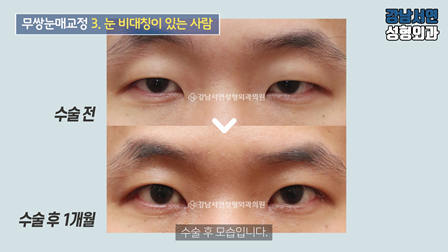
This is how it looks after surgery.
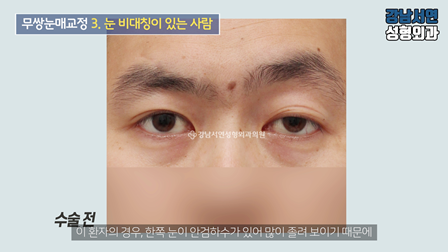
In this patient's case, one eye had ptosis and looked very sleepy, so that side needed eye-shape correction,
but because variables such as Hering's law can come into play, we cannot operate on just one side and instead operate on both eyes.
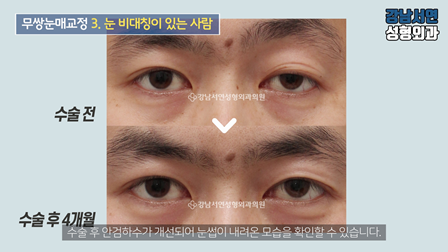
This is how it looks after surgery.
When consulting about male eye-shape correction, the thing patients ask about most is swelling.
So we'd like to show you how it looks one week and one month after surgery.
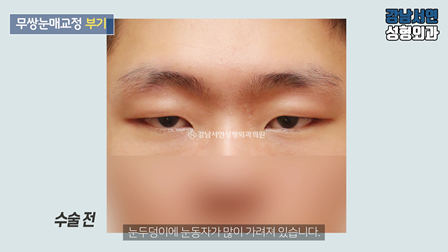
This is how it looks before surgery.
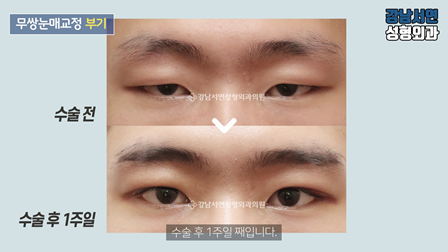
This is one week after surgery.
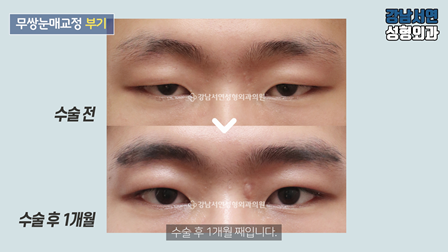
This is one month after surgery.
This is a different patient.
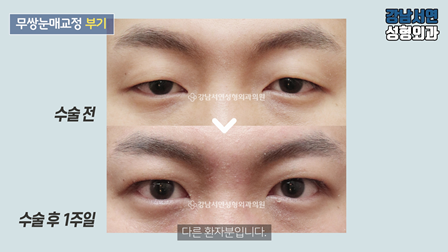
This is one week after surgery, and the swelling may make the impression feel slightly stronger.
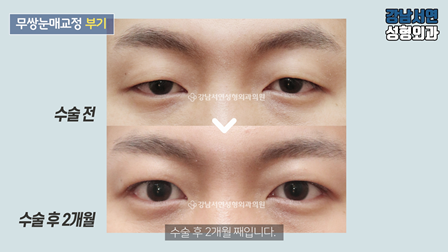
This is two months after surgery.
For more on male monolid eye-shape correction,
you can find more detailed information in the video below.
↓↓↓↓↓↓
The photographs in this post were taken under identical conditions with the patient's prior consent.
In addition, side effects such as bleeding, infection, and inflammation may occur after plastic surgery or procedures depending on the individual, so caution is required.