
Scar-Preserving High Fold Correction (the "Two-Line" Technique) Scars: A Complete Guide to Prevention and Aftercare, Including How It Differs from Skin Excision
1. What Is Scar-Preserving High Fold Correction? (The Standard Approach to Revising an Existing Crease)
The scar-preserving high fold correction is a revision technique used to correct cases where an existing double-eyelid crease sits too high and looks unnatural (sometimes called "sausage eyes"). The core goal is to release the adhesions of the existing crease and form a new crease below it, creating a natural eye shape.
[Surgical Process]
- Precisely dissect the adhesion tissue of the existing double-eyelid crease
- Form a new crease below the existing line, proportioned to the eye
- Perform the procedure in a way that minimizes damage to the skin and soft tissue
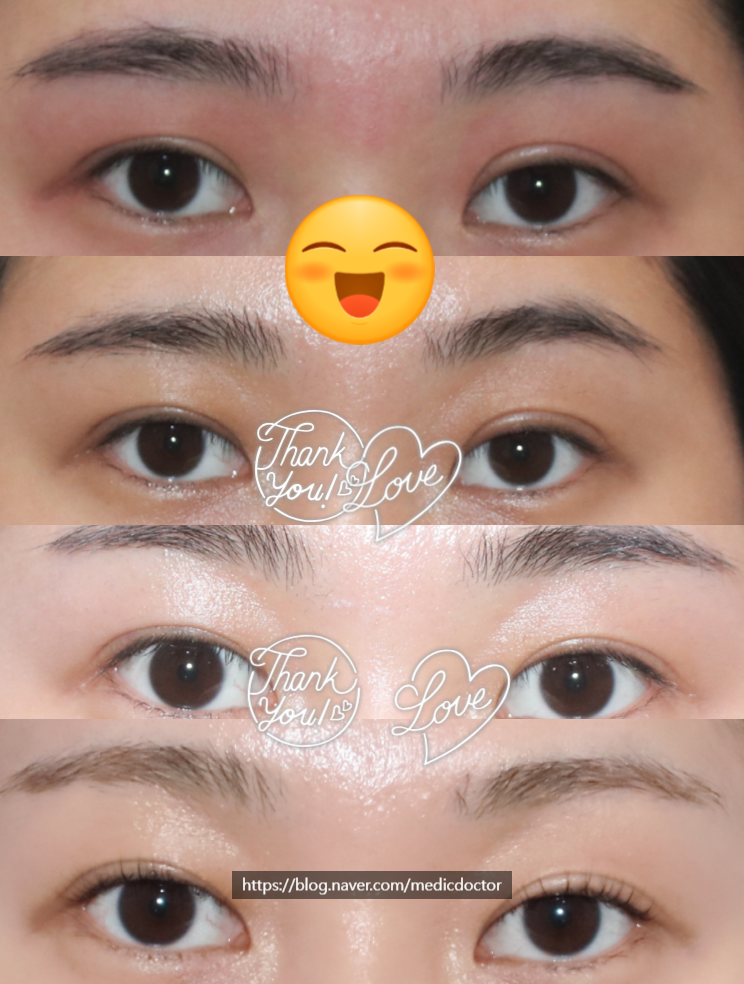
2. How Can Scarring from Scar-Preserving High Fold Correction Be Prevented?
Because the scar-preserving high fold correction releases only the adhesions rather than fully removing the scar tissue from the original incision line, the risk of significant additional scarring is low to begin with. That said, the following factors are important for minimizing scarring further.
- Precise incision design: Planning the incision line with the eye shape and skin texture in mind so the scar remains inconspicuous
- Minimal-damage dissection technique: Delicate surgical technique that reduces tissue damage is key to preventing scars
- Consideration of individual skin type: Patients prone to keloid scarring or pigmentation should be informed of this during consultation beforehand
- Sun protection over the surgical site: Essential for preventing pigmentation during early recovery
Even though it is a revision procedure, the scar-preserving high fold correction has the advantage of a relatively lighter scar burden compared with a fresh incision surgery, thanks to its technique of making the most of the existing crease.
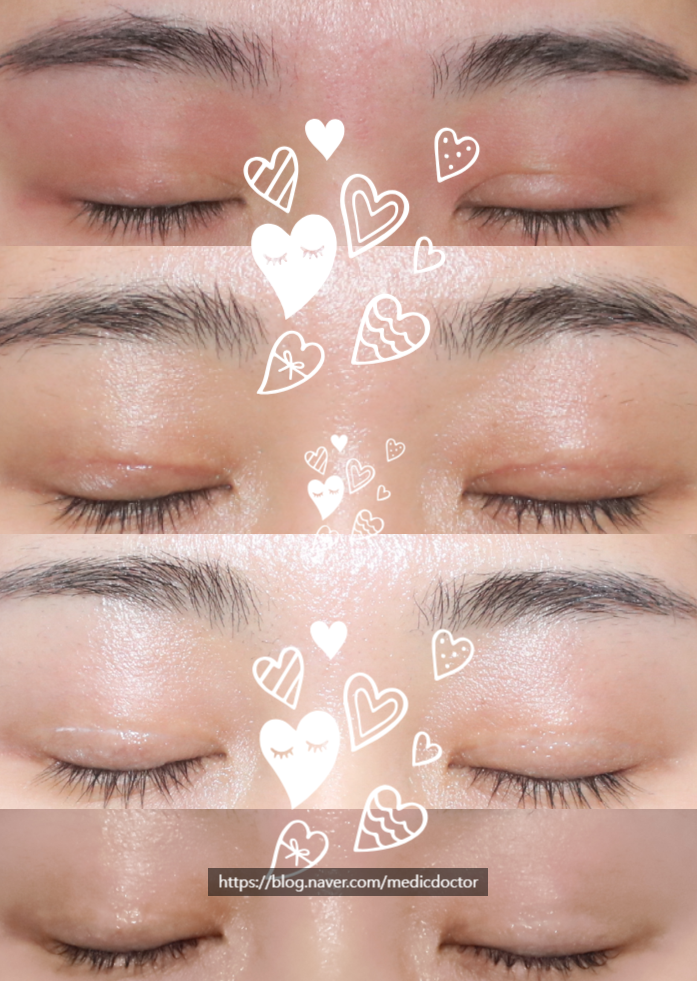
3. What Are the Scar Care Tips After Scar-Preserving High Fold Correction?
Care priorities differ depending on the stage of recovery.
[Immediately After Surgery to Day 3]
This is when swelling and bruising are at their worst → gently open and close the eyes repeatedly during this period. Sleep with your head elevated on a higher pillow as well.
[Around 1 Week]
Time for suture removal → begin sun protection once the sutures are removed
[2 to 4 Weeks]
Most of the swelling has resolved → this is when the crease begins to settle naturally; only massage after consulting with your surgeon
This is also a good time to start applying scar ointment.
[3 to 6 Months]
The crease and scar reach their final, stable state → scar-focused laser treatments become an option
[Key Tips for Scar Care]
- Continue applying sunscreen consistently for at least 1-2 months even after suture removal
- Use the scar ointment recommended by your surgeon for the prescribed period
- The crease may look temporarily unnatural due to early swelling, but this is a normal part of the recovery process
- Because tissue in a revision site can be more sensitive, aftercare matters even more than it does after a first-time surgery
- It's best to judge the final result only after at least 3 months have passed
4. What Is the Difference Between Scar-Preserving High Fold Correction and Skin Excision?
The two procedures differ in purpose and in the patients they're suited for.
[Suitable For]
Scar-preserving high fold correction: Revision cases where an existing crease is already present
Skin excision: First-time double-eyelid surgery, or cases with a significant amount of excess tissue
[Surgical Method]
Scar-preserving high fold correction: Dissect the adhesions of the existing crease, then form a new one
Skin excision: Remove skin to design a new crease from scratch
[Tissue Removal]
Scar-preserving high fold correction: Minimal alteration of tissue
Skin excision: Can remove excess skin, fat, and other tissue
[Scar Burden]
Scar-preserving high fold correction: Results in two visible crease lines as a drawback, but preserves as much tissue as possible
Skin excision: A scar forms along the incision line, making scar care during recovery important
[Main Purpose]
Scar-preserving high fold correction: Correcting the height of the crease, restoring a natural eye shape
Skin excision: Reshaping the eye, creating a more defined double-eyelid crease, correcting sagging
In short, the scar-preserving high fold correction is a revision procedure that lowers the crease while leaving the existing line in place, whereas skin excision redesigns the entire eye shape from scratch — a fundamental difference between the two. The scar-preserving high fold correction suits cases where the crease position itself is the problem, as with "sausage eyes," while skin excision may be more appropriate when sagging or excess fat calls for a more fundamental reconstruction.
5. Summary
- The scar-preserving high fold correction is a revision procedure that naturally lowers "sausage eyes" caused by an overly high double-eyelid crease
- Preventing scars relies on precise incision design and minimal-damage technique
- Scar care should be tailored to each stage of recovery (immediately-3 days, 1 week, 2-4 weeks, 3-6 months)
- Because it makes use of the existing crease, unlike the excision method, the scar burden is relatively lower
As the scar-preserving high fold correction is a technique that requires especially careful judgment even among eye revision procedures, a thorough consultation with a specialist experienced in revision surgery is more important than anything else.