
Forehead-lifting to open the eyes — and how I correct it with male no-crease ptosis surgery.
When a patient cannot fully open the eyes, the frontalis often gets recruited to help lift the lids.
It looks like this. If you look closely, you can see horizontal forehead creases forming as the patient strains to open the eyes.
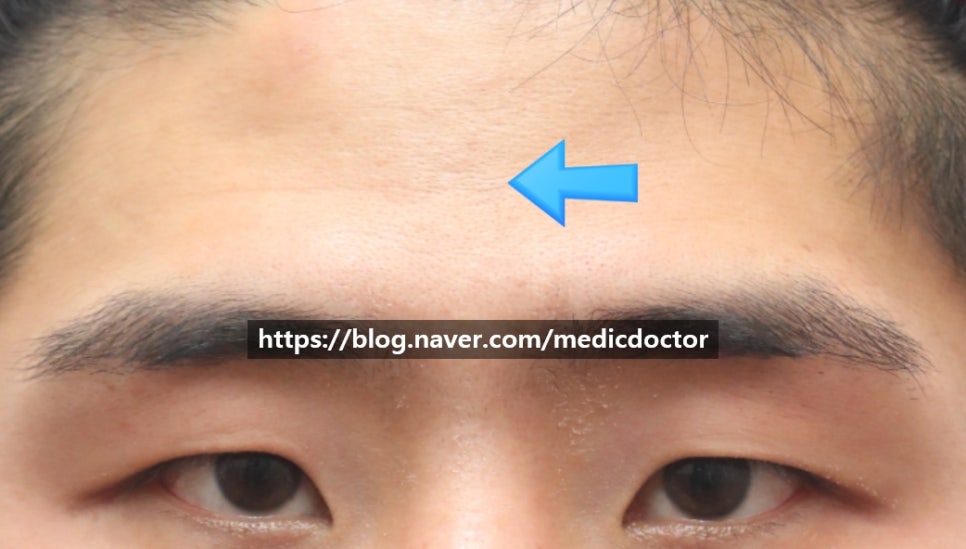
The arrow marks where the patient was using the forehead muscle to compensate.
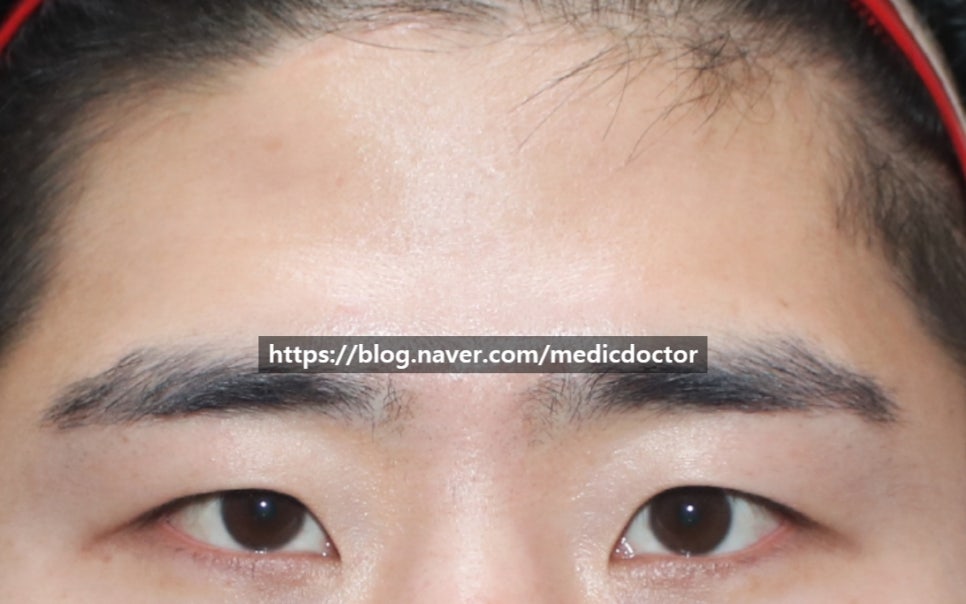
One year post-op. The eyes open well without any forehead recruitment.
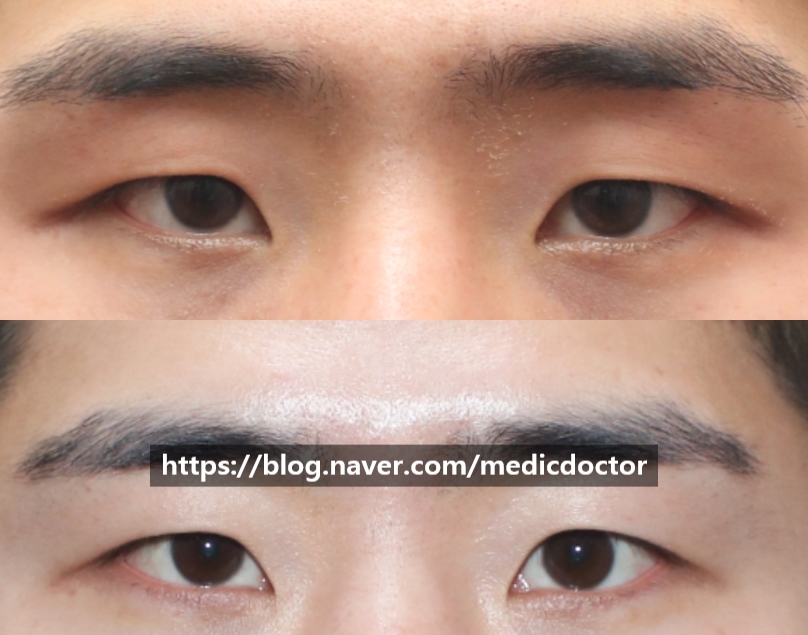
If you isolate just the eyes, the change can look subtle, but you can really see it once you compare with-frontalis to without-frontalis.
In some no-crease ptosis cases, the before-and-after looks deceptively small at first glance. The reason is that the patient was already using the forehead pre-op to make the eyes look bigger than they actually were.
Here is another case along the same lines.
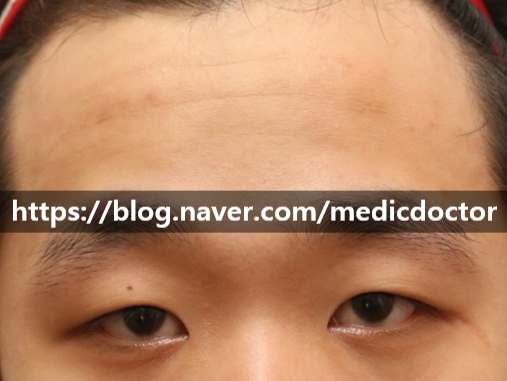
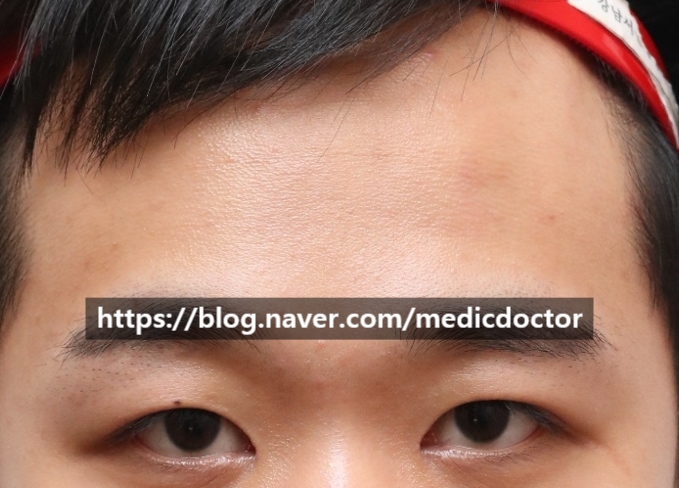
On this patient too, looking just at the eyes, the change does not jump out. But notice the mole on the right side — pre-op it sat well above the eye, and post-op it is right next to the lid.
That tells you how much the eye has actually opened, and that the forehead is no longer being recruited.
Both patients consented to having their photos shared. The follow-ups shown are at one year and six months respectively.