
(Apologies for the misspellings in the original Korean keyword search — the proper Hangul terms are different from what was typed there.)
I have written about this before, and I want to add a few more details.
One of the advantages of the buried-suture technique is that it is a relatively simple procedure and, if the patient does not like the result, it can in principle be reversed.
The downside is that less experienced surgeons can have real trouble locating the sutures to remove them.
Looking for a needle in the sand, basically.
See my earlier post.
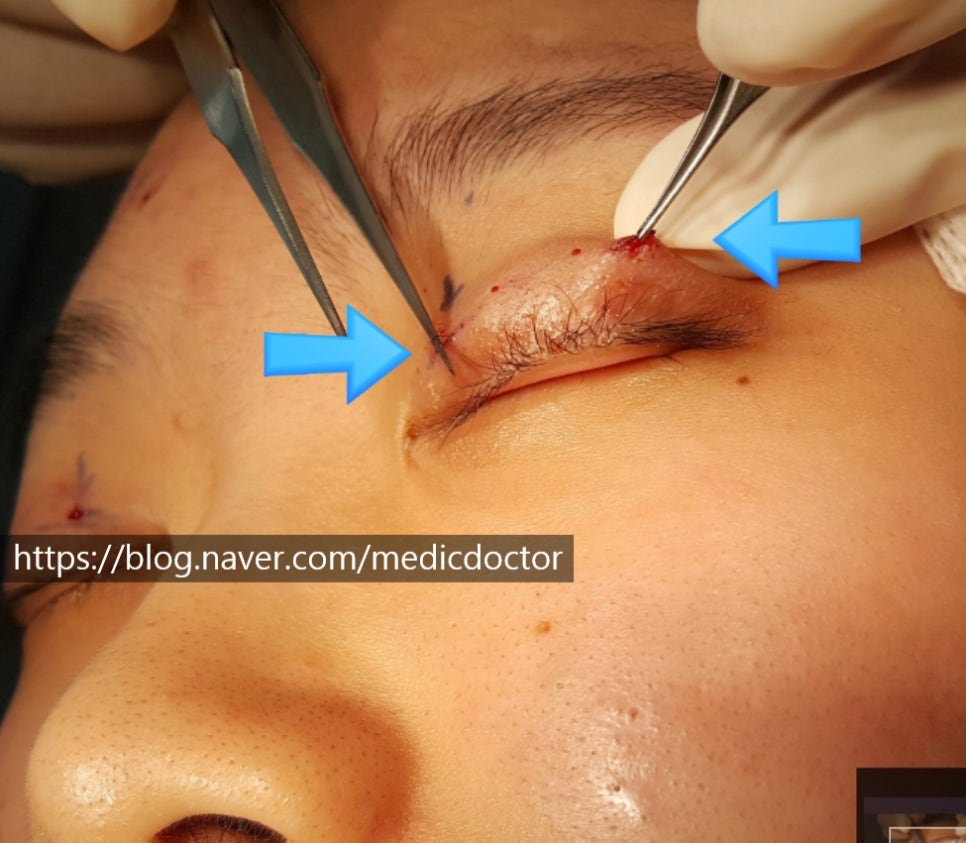
I typically use two pinhole-sized entry points to find the sutures. It takes a high level of technical skill.
In the photo below, you can see the two punctures we made to identify and retrieve the sutures without injuring the surrounding tissue.
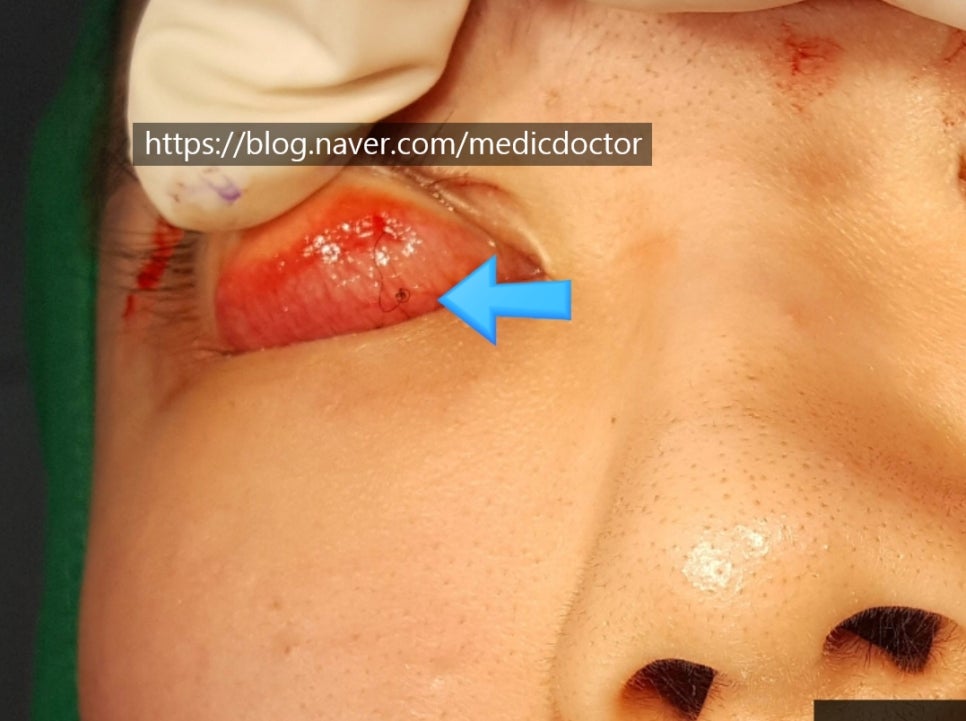
When the patient has had non-incisional ptosis correction, the sutures sometimes need to be retrieved from the conjunctival side as well.
I close each entry point with a single stitch — the wounds are no bigger than a needle puncture, and a single suture keeps the scar minimal.
It is barely visible.
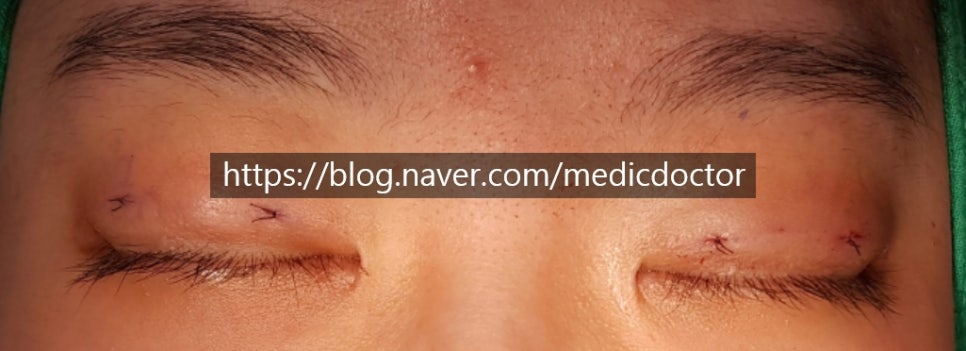
This patient only wanted the sutures removed and did not want a new crease set, so we did not create one.
An earlier post showed a different patient where, after suture removal, we re-set the crease.
The procedure itself takes about 15 minutes. With the right technique it is straightforward — without it, it can be endlessly difficult.