
I want to walk through how I approach small, short eyes — the so-called 'cockle-shell' eye — and how I make them look as large as possible.
By small or short eyes, I mean eyes that look almost like a buttonhole, or eyes with a short horizontal length.
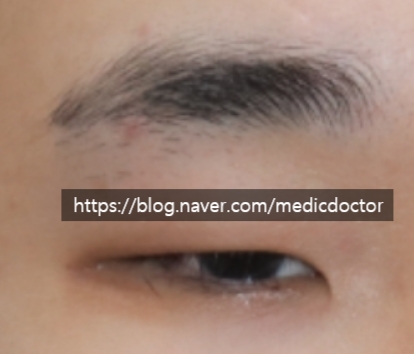
These patients usually have a small underlying globe.
I will be honest — when the globe itself is small, you cannot turn it into a truly large eye.
But there is a lot we can do to make the eye look as large as possible. Here is how I think about it.
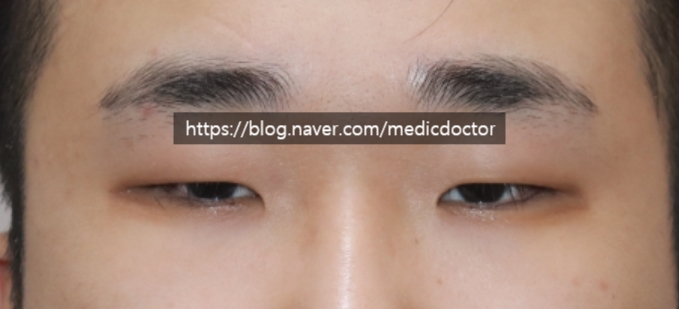
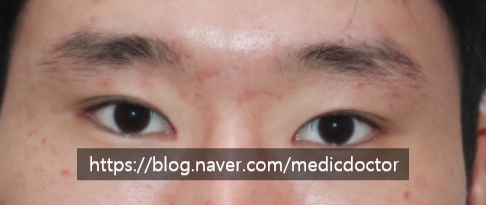
This patient's eye is genuinely small — weak eye-opening force and a short horizontal and vertical dimension.
The most effective strategy is to first open the eye with ptosis correction, and then add epicanthoplasty.
And the crease should be either barely visible or essentially hidden — that gives you the largest visual eye.
Patients sometimes assume a bigger crease will make the eye look bigger, but for short eyes that approach actually makes the eye look smaller, or unnatural.
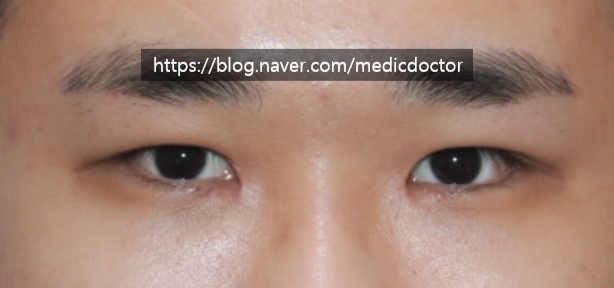
One month post-op. There is still some residual swelling, but the eye is already significantly larger.
Another case.
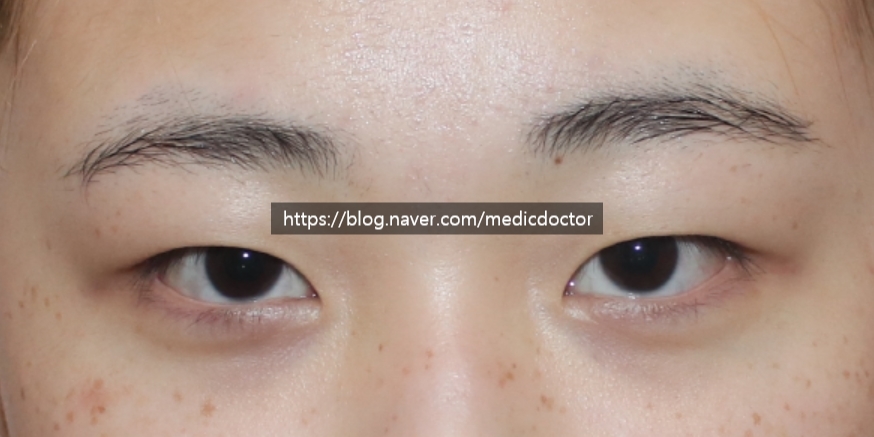
Her outer corner sits high and the iris is heavily covered by the upper lid.
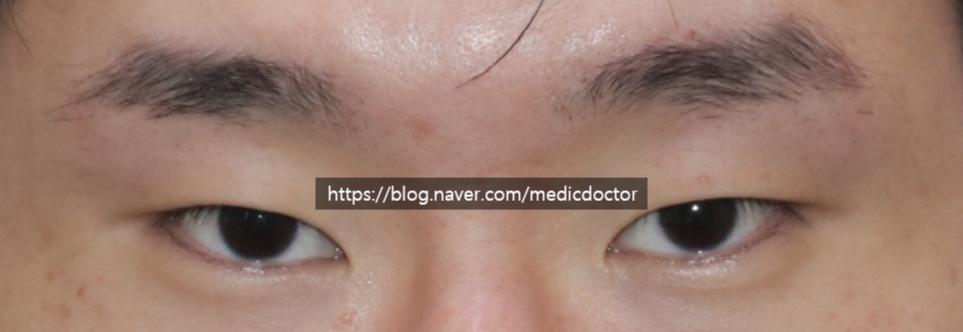
My goal here is to bring the lateral canthus down visually, sharpen the eye opening, and soften the overall expression.
The expression looks much softer now. You can hide the crease completely or leave it barely visible — both work.
Of course, as the swelling continues to settle, the crease will tuck under a bit more.
For most female patients, leaving the crease softly visible gives the most beautiful result.
Keeping the fold thin is one of the keys to a beautiful shape.
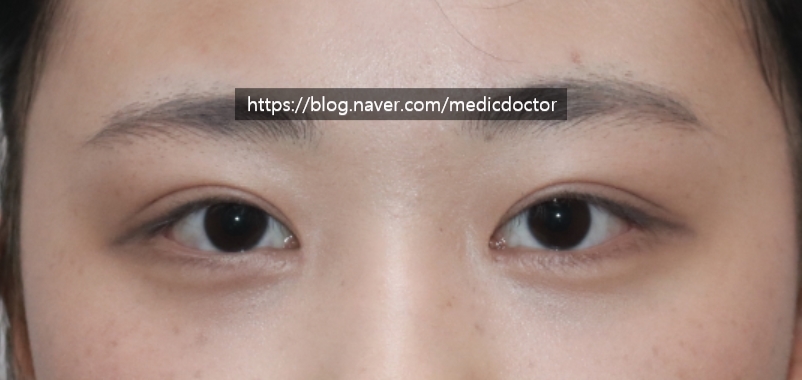
A subtle in-out fold tends to soften the expression. The look is much more gentle.
Another patient, one week post-op. There is still some swelling, but the eye is already noticeably larger.
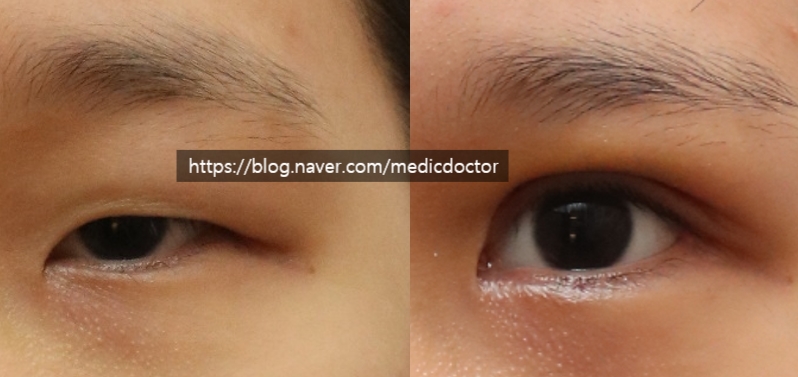
That is my approach to making short, small eyes look as large as possible — what I sometimes call 'big-eye' surgery.
Medial, lateral, and lower epicanthoplasty, and incisional ptosis correction are all part of the toolkit.