
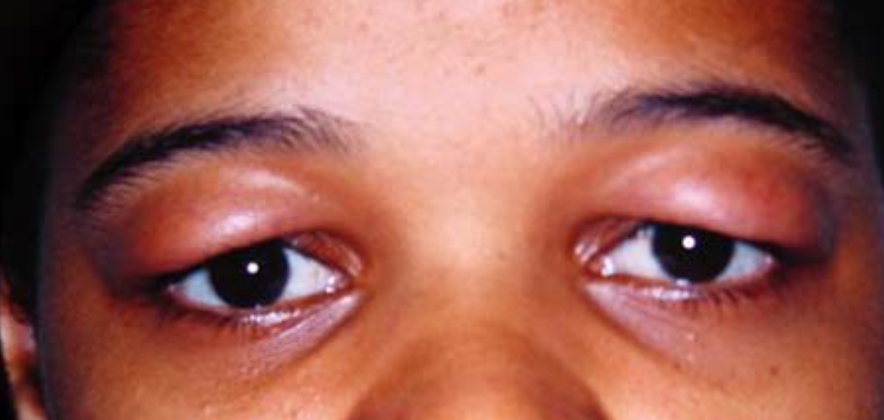
In November 2016, I gave a talk on managing the lacrimal gland as one cause of a heavy upper lid. It applies to patients like the one below, with significant fullness above the eye. Not every heavy upper lid is from the lacrimal gland, but in patients who do have a prolapsed gland, the finding stands out. The patient pictured here is non-Asian, and because heavy upper lids are uncommon in that group, the feature reads even more clearly.
This session was conducted in English, so the entire talk had to be delivered in English.

The title slide.
Here I am taking a question. Standing next to me is a senior colleague I admire, Dr. Shin.

The treatment approach.
Excerpted from the journal article.
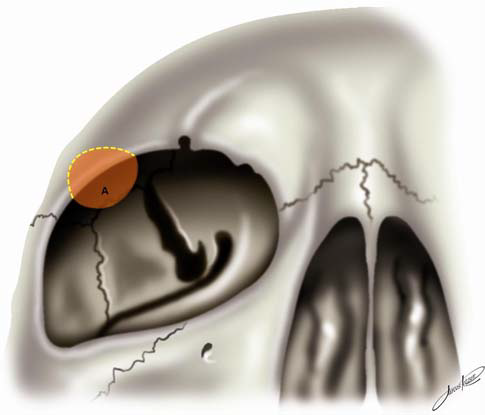
The lacrimal gland sits at the lateral aspect of the orbital wall. Most people assume the tear gland is on the medial side, near the nose, but the tears are actually produced laterally and then flow toward the nose.
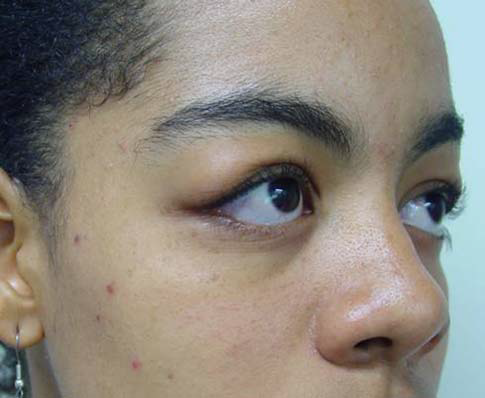
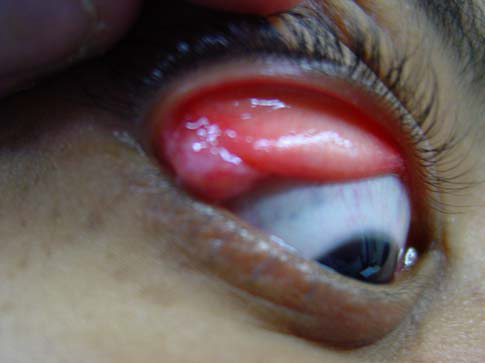
On the conjunctival side, you can see the lacrimal gland prolapsing forward. Once the patient is operated on, the upper-lid fullness resolves, as below.
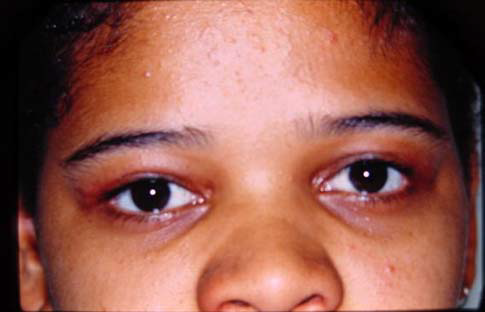
The technique looks like this.
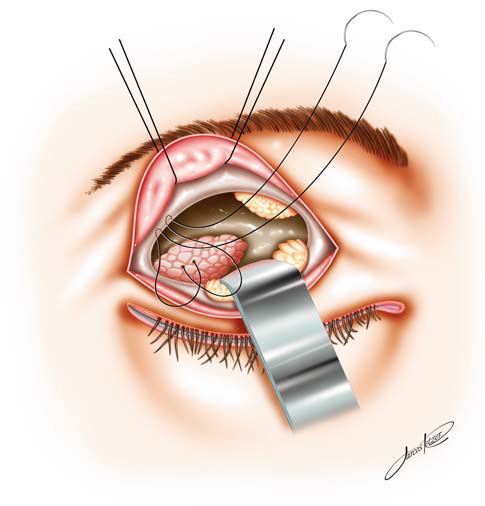
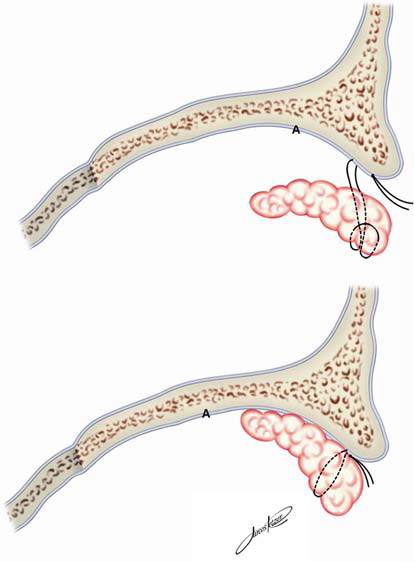
The gland is positioned back into the bony recess. If it is not properly secured, it will recur, so the fixation step takes some skill.