
Hello!
For surgery with high patient satisfaction,
always doing our very best -
this is Gangnam Seoyon Plastic Surgery :)
Today we would like to talk about the scars that form after the scar-preserving high fold correction (the "two-line" technique).
The photos below have had no editing
other than brightness adjustment :)

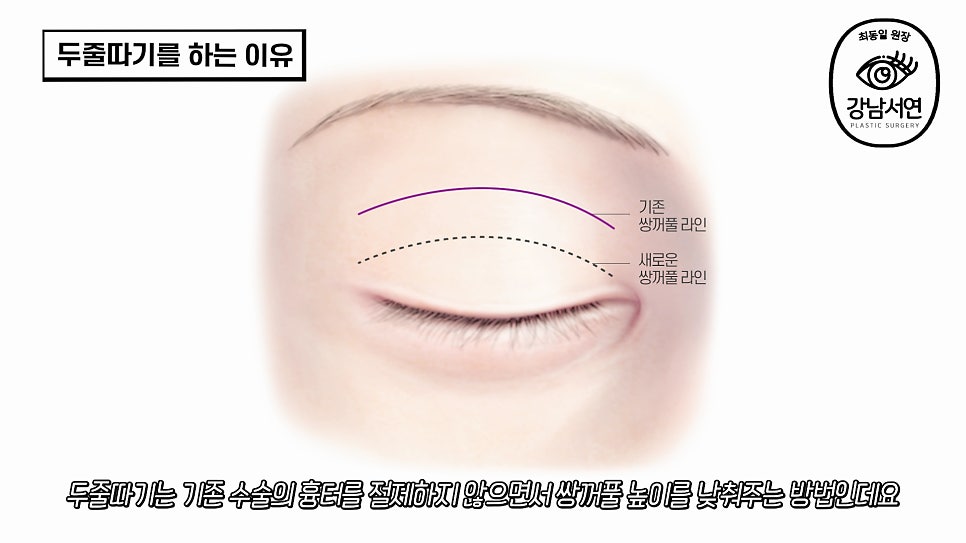
First, let us explain why the scar-preserving high fold correction is done.
The scar-preserving high fold correction is a method that lowers the height of the double-eyelid fold without excising the scar from the previous surgery,
and it is done when there is a lack of spare skin.
Cutting out the scar from the previous surgery removes skin, which can leave you short of skin, so the scar-preserving high fold correction is used in cases where even the scar has to be put to use.
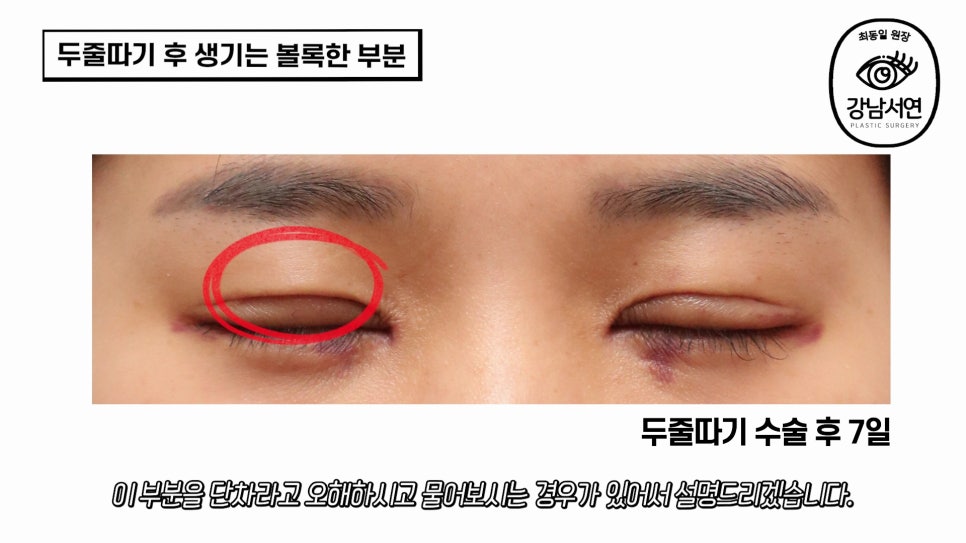
Right after the scar-preserving high fold correction, the area above the incision line looks slightly raised, and some patients mistake this for a step and ask about it, so we will explain.
First, this is a measure to prevent multiple upper eyelid creases.
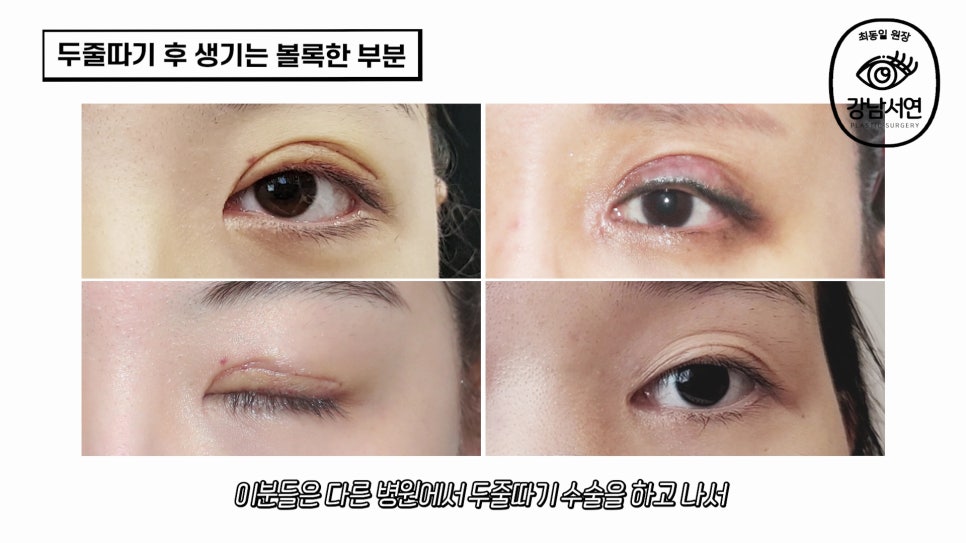
These patients had the scar-preserving high fold correction at another clinic and developed adhesions that led to multiple upper eyelid creases.
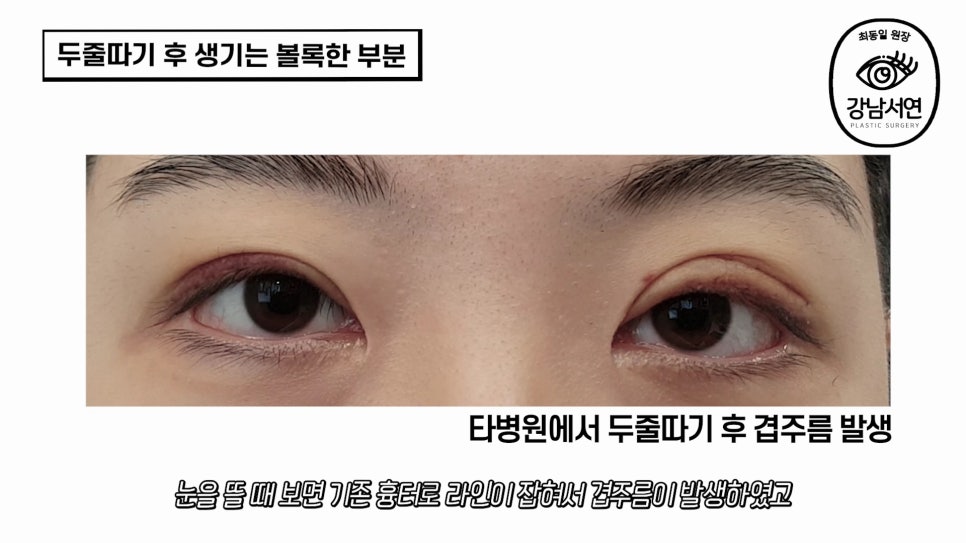
When they open their eyes, the fold catches at the old scar and multiple upper eyelid creases have formed,
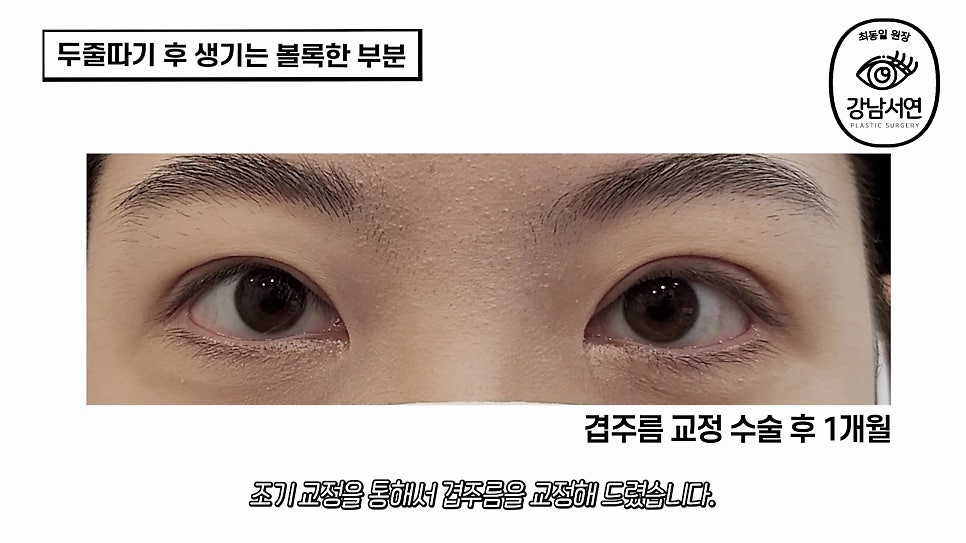
and through early correction like this, we corrected the multiple upper eyelid creases.
To prevent this, several
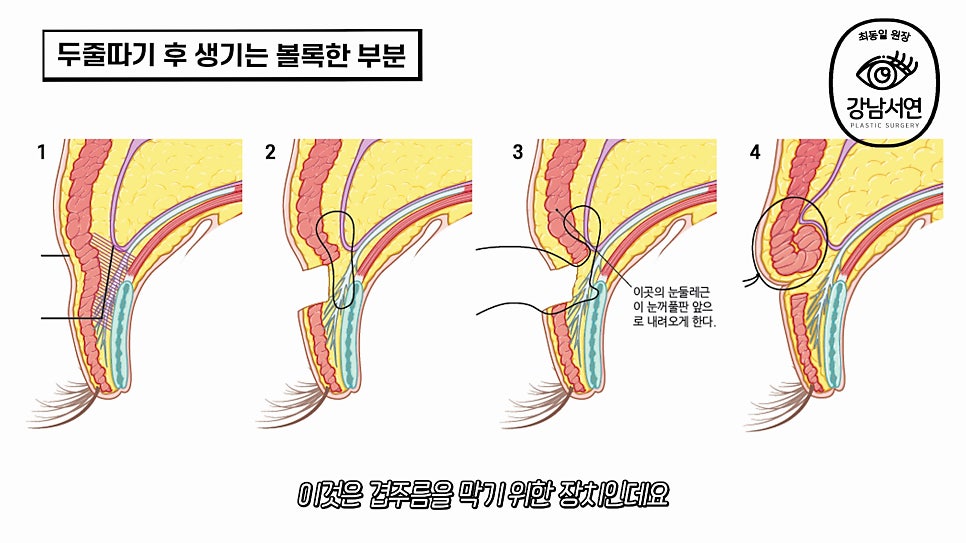
measures are created above the incision line so that multiple upper eyelid creases do not develop.
This method is widely used and is described in textbooks; it is not some unusual technique that Dr. Choi Dong-il does on his own.
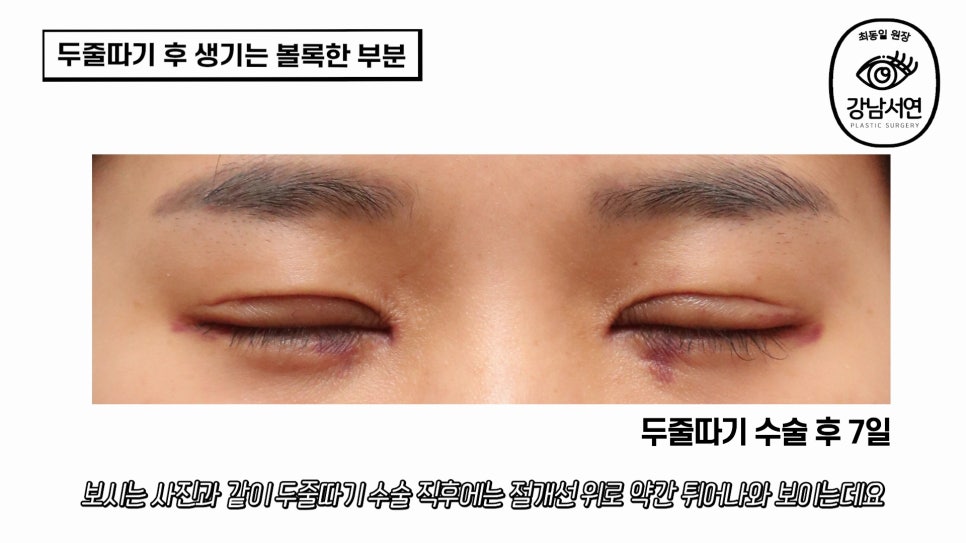
Because this has to be prevented, as you can see in the photo, right after the scar-preserving high fold correction the area above the incision line looks slightly raised,
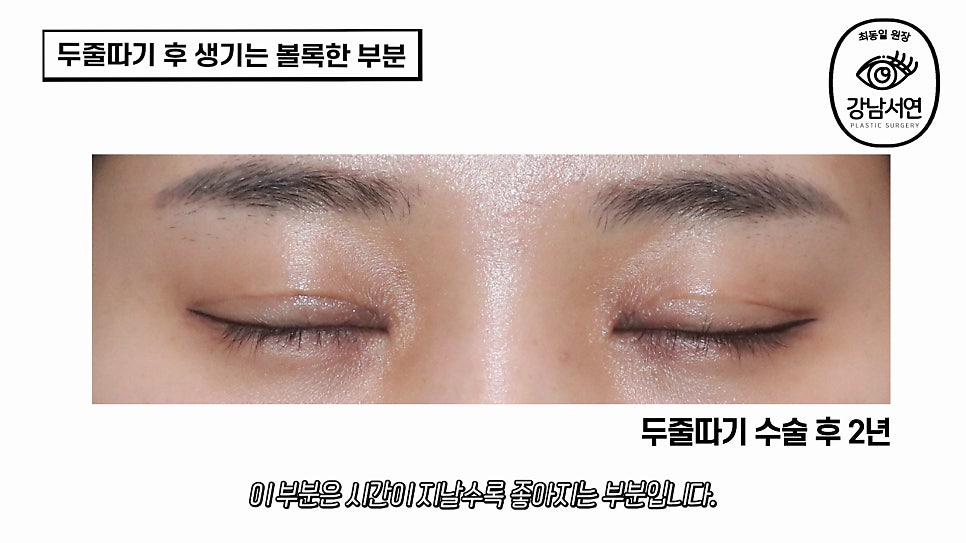
and this area improves over time.
This is a measure to prevent multiple upper eyelid creases, and the only way to remove it would be to cut it out, but then the fold line might barely be lowered at all.
Because the scar-preserving high fold correction is done precisely because there is a shortage of skin, this area cannot be cut away.
Of course, all of this is fully explained to the patient during the consultation before surgery.
In fact, the patient in the photo above said she had surgery at another clinic to release an eye-shape (ptosis) correction,
reportedly releasing the eye-opening muscle and even separating the Müller's muscle, but it corrected nothing at all.
Eyelid-retraction (ptosis) correction surgery first
separates the levator, the eye-opening muscle, from the tarsal plate to expose the Müller's muscle,
and then separates the conjunctiva from the Müller's muscle to carry out the retraction-correction surgery.
The tissues have to be dissected carefully, step by step like this, to release the adhesions,
and the surgery itself has many variables and is difficult for someone without much experience to perform.
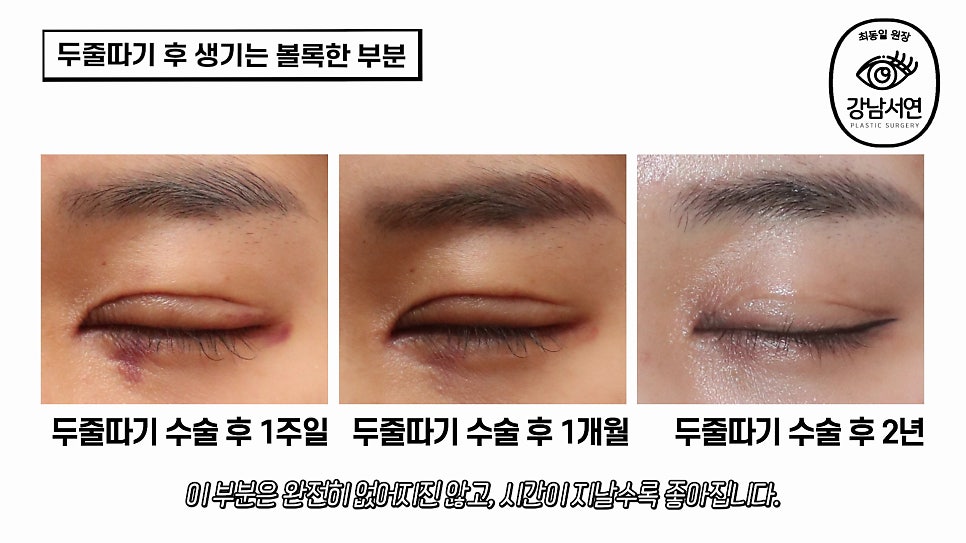
This area does not disappear completely, but it improves over time.
In the photos, this is the appearance one week after surgery, and you can see it is still slightly raised even at one month.
It varies from person to person, but it can look like this for at least a year or more.
This photo is about two years out. The mark from the original incision, the scar, never disappears entirely, but it improves over time.
If you are considering the scar-preserving high fold correction, you should take this into account.
The scar from the scar-preserving high fold correction is strongly affected by the existing incision scar from the previous surgery.
The better the existing scar, that is, the more tissue that was left behind, the less scarring can result,
whereas if the existing scar is very severe or little tissue was left, the scar is bound to be severe.
As this shows, revision surgery cannot create tissue that is not there, so your first surgery should also be done carefully.
This also occurs especially when the line is lowered a great deal.
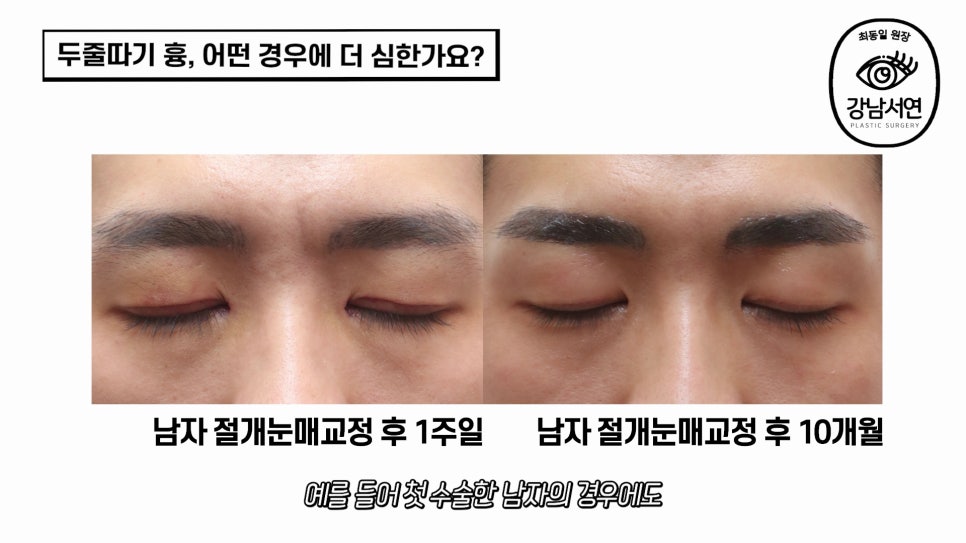
For example, even in a man having his first surgery, if the fold is set low, a folded-looking area appears like the following.
This is not a step; the double eyelid is there, but to keep it covered and hidden, some skin is left drooping above the fold line.
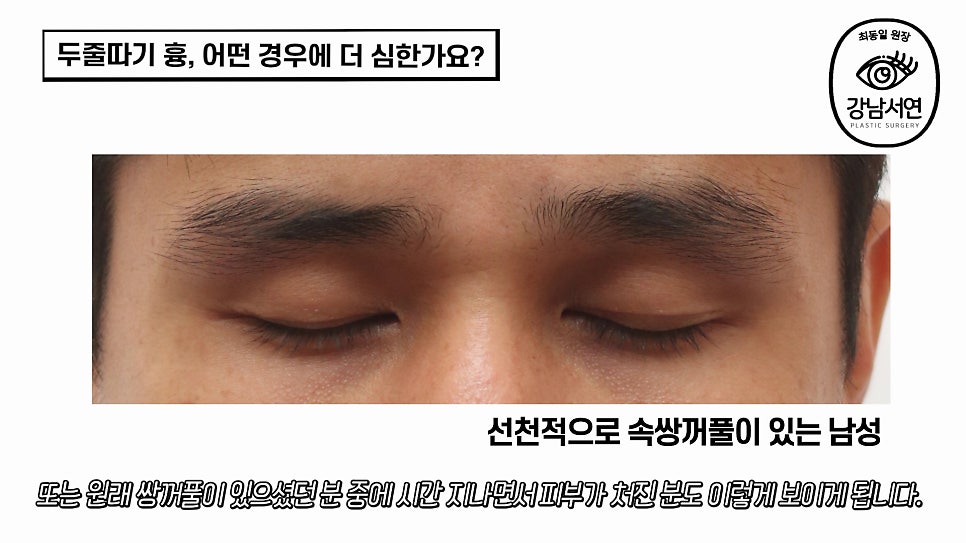
This also appears in people whose double eyelid is naturally tucked away like an inner fold, or in people who originally had a double eyelid but whose skin has drooped over time.
Today we looked at the scar after the scar-preserving high fold correction that is mistaken for a step,
and we hope the misunderstanding has been cleared up a little.
Because the surgical method varies greatly depending on each patient's condition, if you have the chance to visit our clinic, we will suggest the treatment method best suited to you.
For more about scar-preserving high fold correction scars,
you can find more detailed information in the video below.
↓↓↓↓↓↓
The photographs in this post were taken under identical conditions with the patient's prior consent.
In addition, side effects such as bleeding, infection, and inflammation may occur after plastic surgery or procedures depending on the individual, so caution is required.