
Some patients who had a buried-suture procedure (often marketed as "natural-adhesion" surgery) want their crease back to its original state — either because they don't like the result or simply prefer their pre-op look.
Reversing an incisional procedure usually requires another incision. With buried-suture or natural-adhesion procedures, simply removing the original sutures often returns the lid to its pre-op shape.
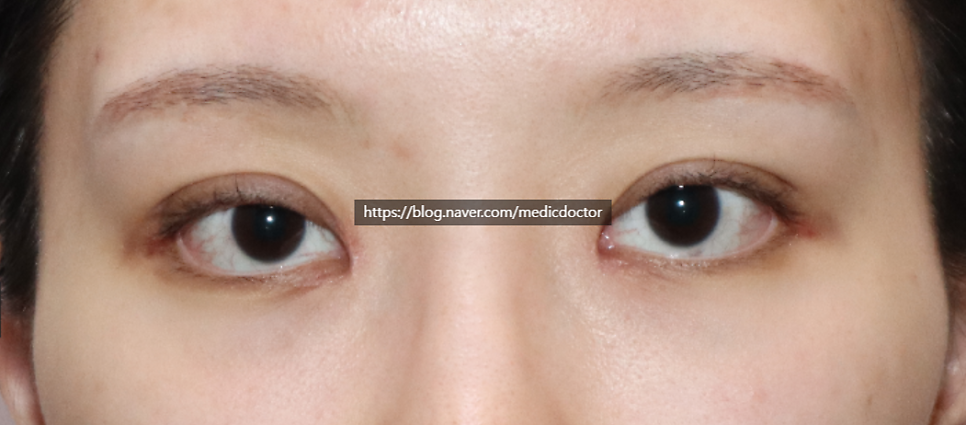
This patient already had a natural crease and had it set higher in surgery, only to find she preferred her original look.
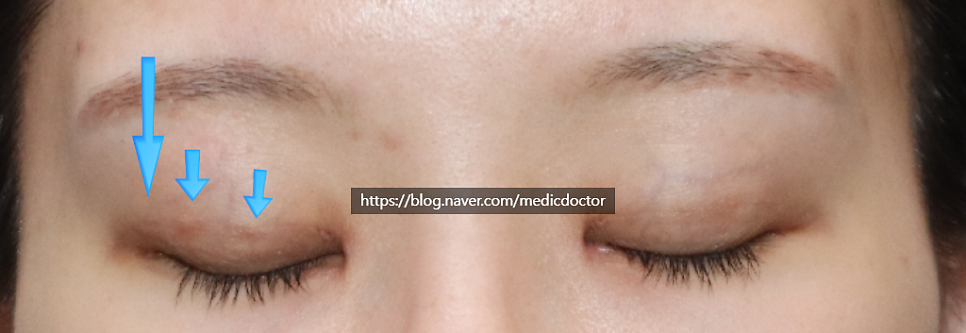
Closed-eye view shows the original pinhole marks.
At our clinic, we extract buried sutures through the original pinholes — no incision required.
Opening the lid through an incision would make removal much easier, but the whole point of choosing the buried-suture method is to avoid an incision in the first place. If we cut the lid open at this stage, we may as well convert to the incisional method outright.
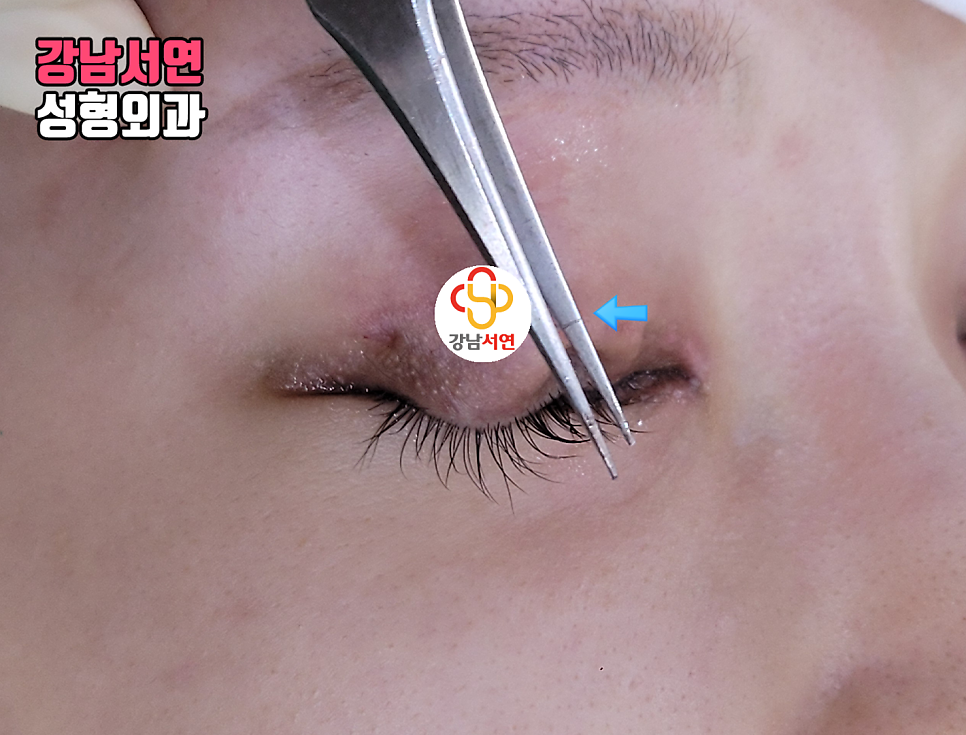
Pinhole removal takes considerable technique. Extracting the suture without damaging surrounding tissue isn't trivial.
One side took a single pinhole; the other took two.
Minimal swelling, and the crease already sits lower than its pre-op state right after the procedure.