
The big advantage of the buried-suture technique is the faster recovery compared to the incisional method. But it only gives a good result in the right patient.
These are the patients in whom buried-suture surgery tends to fail.
1. Significant skin laxity.
Older patients especially, or anyone with notably loose lid skin.
2. Coexisting ptosis.
Non-incisional ptosis correction has real limits when the eyes are sleepy.
3. Thick skin.
The crease tends to release quickly, and what stays often looks unnatural.
4. Heavy lid fat.
The crease releases quickly and the lid still feels bulky.
While I am on the subject, here is a patient who had her surgery elsewhere.
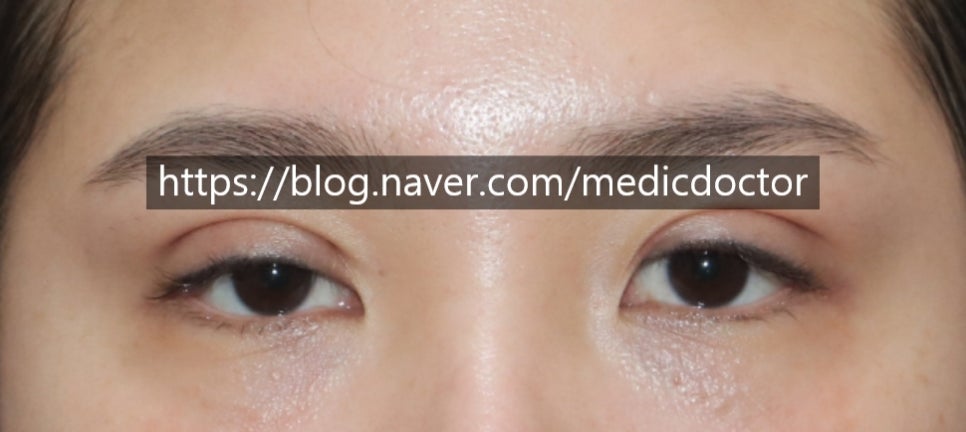
She told me her right eye had always been a bit smaller. Forcing a high crease on a patient with skin laxity ends up looking unnatural.
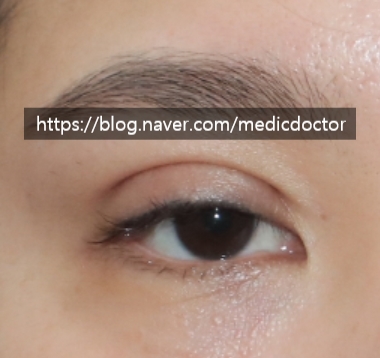
She felt her eye opened less from the very first day after surgery.
The plan was to remove the sutures and re-do a buried-suture procedure at an appropriate height. (I had recommended converting to incisional, but she chose to wait on that.)
We located the sutures cleanly.
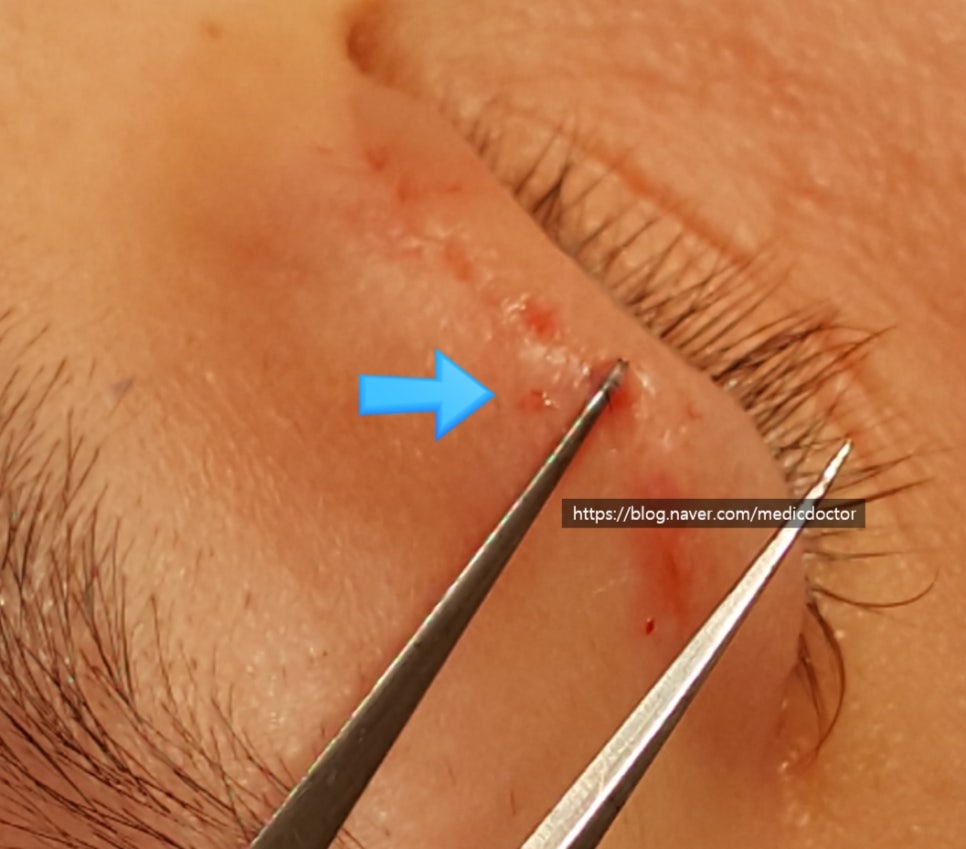
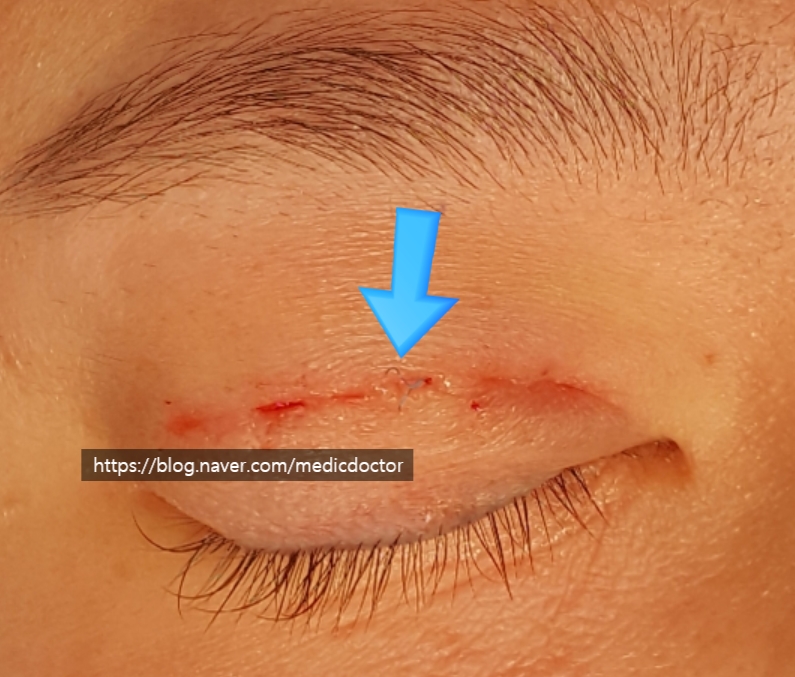
Just before suture removal.
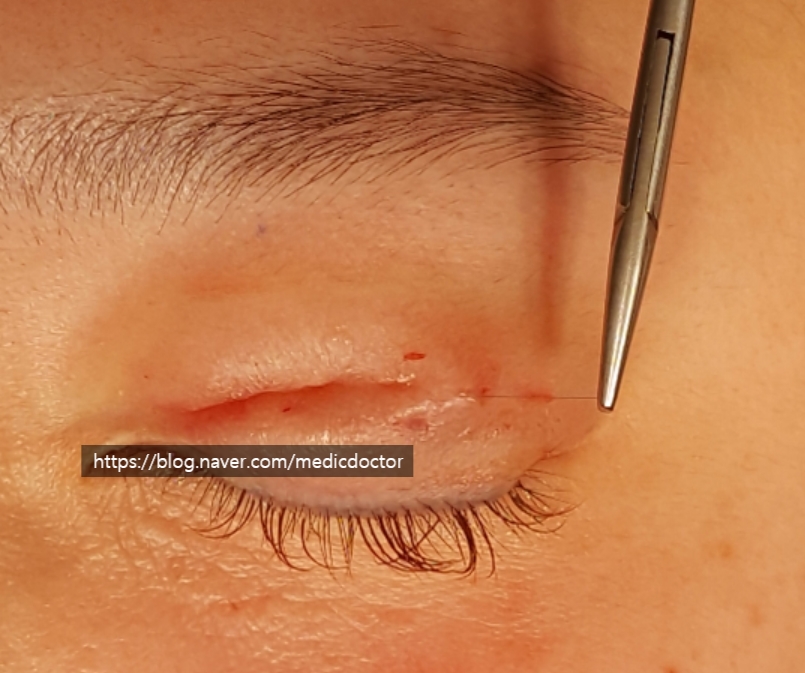
The contralateral side, removing those sutures.
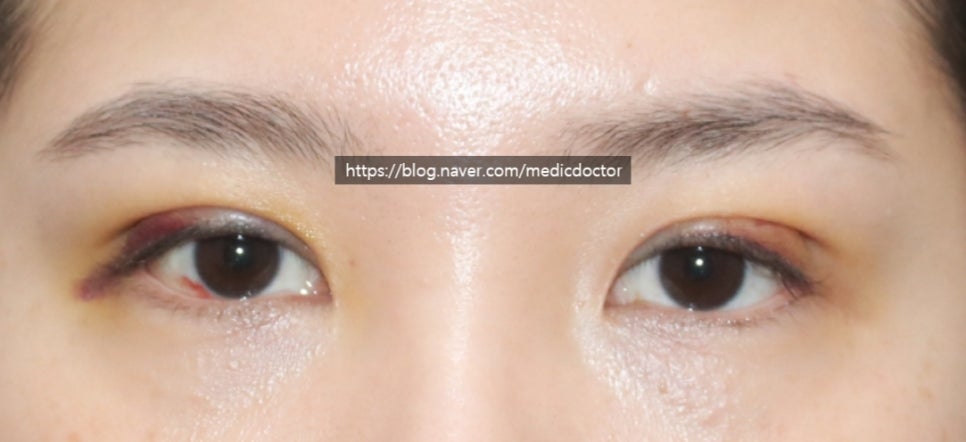
Four days after suture removal and a fresh buried-suture procedure.
Already much more natural than before. As the swelling settles, the shape will improve further.
Finding buried sutures takes real experience — without it, it really is a needle in a haystack.
The technique I use is also limited to a single-knot continuous method.