
I have been performing ptosis correction in men without a pre-existing crease (monolid) frequently since around 2015.
I had done the occasional case before then, but the volume picked up over the past three years. That experience let me present at academic meetings, and it eventually became the basis for a paper.
After enough lectures and publications, neighboring clinics started referring difficult cases to me when they ran into trouble.
There are two key points I want to make about ptosis correction in male monolid patients.
First: "removing the crease" does not mean cutting away large amounts of skin. That is a critical mistake.
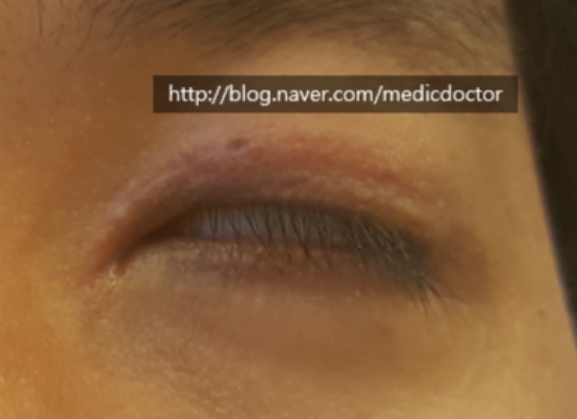
If the eye cannot close, where do you go from there?
Second: do not over-trust the non-incisional approach for these cases.
Everyone wants the buried-suture method and a fast recovery, naturally. But in male patients, the recurrence rate is higher, and the corrective range of the non-incisional technique is limited. Pushing the suture tension hard on Müller's muscle to try to compensate causes significant patient discomfort.
When patients come back regretting the non-incisional approach and asking for an open revision, I genuinely feel for them.
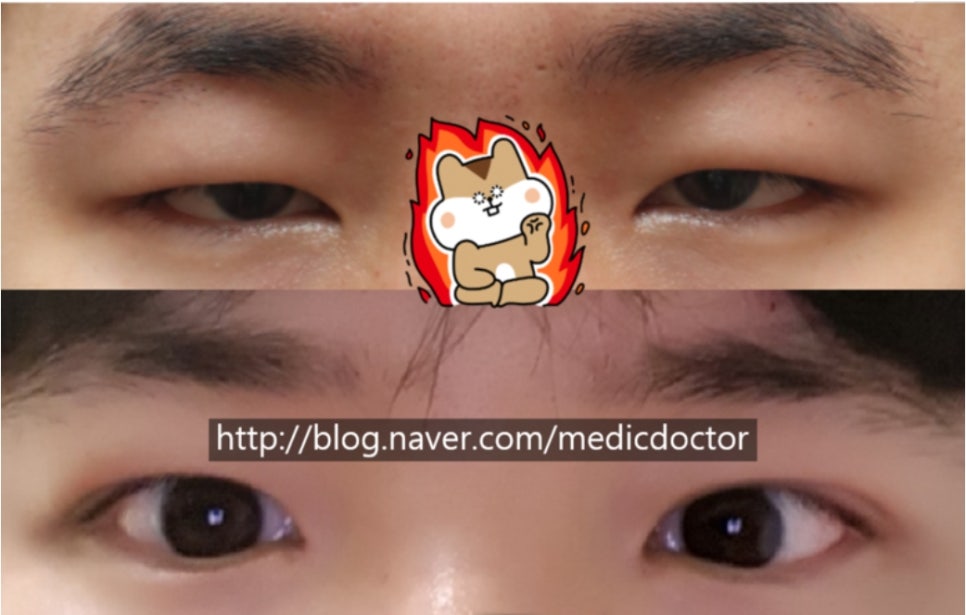
This patient had a heavy upper lid and limited corneal exposure to start with.
We addressed it by removing fat, the orbicularis oculi, the post-orbicularis fat, and a portion of the septum, all in measured amounts.
A case like this is simply not feasible non-incisionally.