
The Real Reason Men Have the Double Eyelid Crease Removed
"Why do my eyes look so heavy and overdone?"
Have you caught yourself thinking this every time you look in the mirror?
If your features haven't changed but you keep hearing that your look is a bit much, or that your eyes look heavy and closed-off, the cause may be something unexpected — your double eyelid crease.
For women, the crease is generally designed so that it shows clearly; for men it is exactly the opposite. Going in the direction of removing or hiding the line is what produces a far more masculine, open look.
Today I've put together why crease removal and monolid ptosis correction are in such demand in male eyelid surgery, and how they are actually performed.
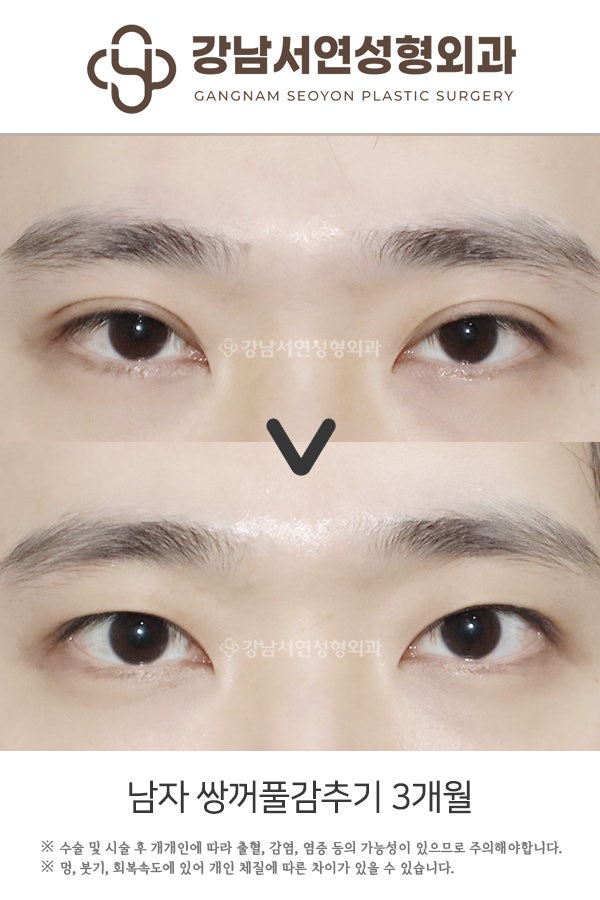
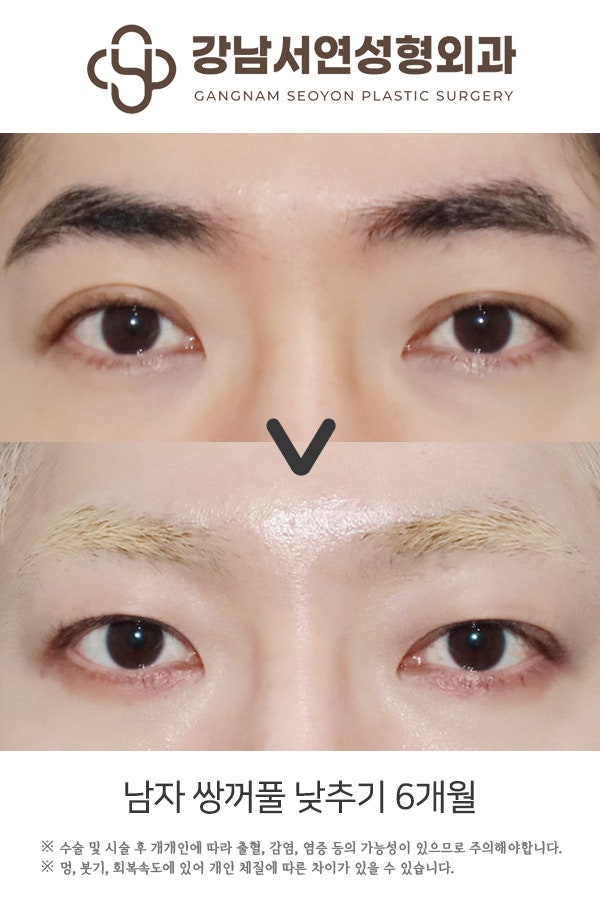
■ If any of this sounds like you, you've probably thought about it at least once
- You want a masculine, open-looking eye, but your crease is so deep that it feels like too much
- You're often told you look sleepy or heavy-eyed
- Your expression comes across as harsh and severe, and you'd like to improve it
- You recruit your brow or forehead to open your eyes
- You had double eyelid surgery in the past, and now the crease looks too thick or unnatural
That last situation in particular — already operated on, but unhappy with the crease — is more common than you'd think. Either the natural crease was high to begin with, or the crease drifted upward and started to look unnatural as time passed after surgery. This is when we perform crease removal (reduction).
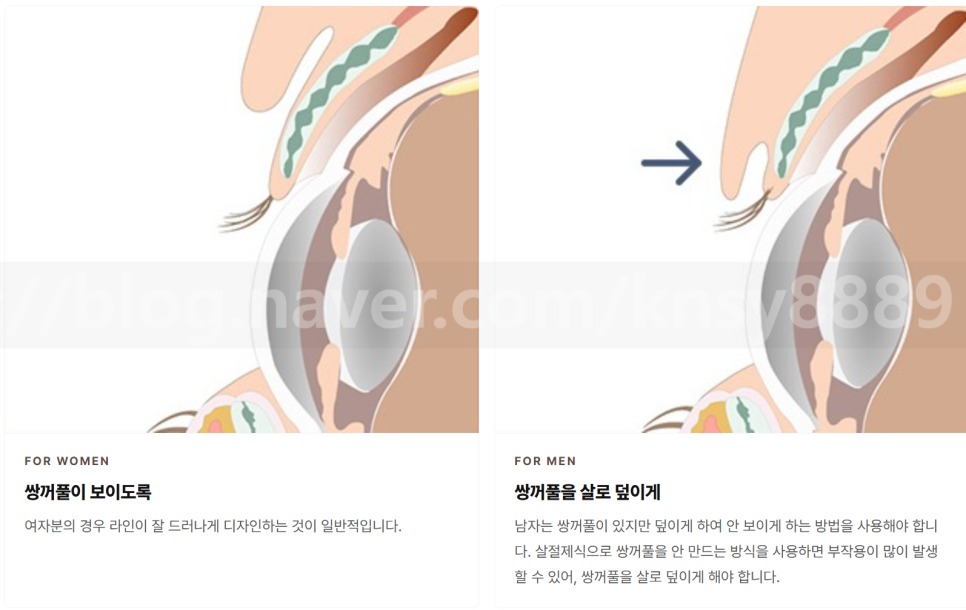
■ Why men should be going in the direction of hiding the crease
If the essence of double eyelid design in women is making the line visible, in men the essence is making the crease sit covered by tissue so it doesn't show, even though it's there.
Excising tissue to eliminate the line outright carries a high risk of complications. So instead of removing tissue, we adjust the tension of the eye-opening muscle so that the crease is naturally covered — a monolid or hidden-crease approach that gives a safe and natural result.
If a surgeon doesn't understand this principle and approaches the case the same way as female eyelid surgery, the crease easily ends up too deep or the result looks out of place on the face. That is why in male eyelid surgery the surgeon's experience with monolid ptosis correction matters so much.
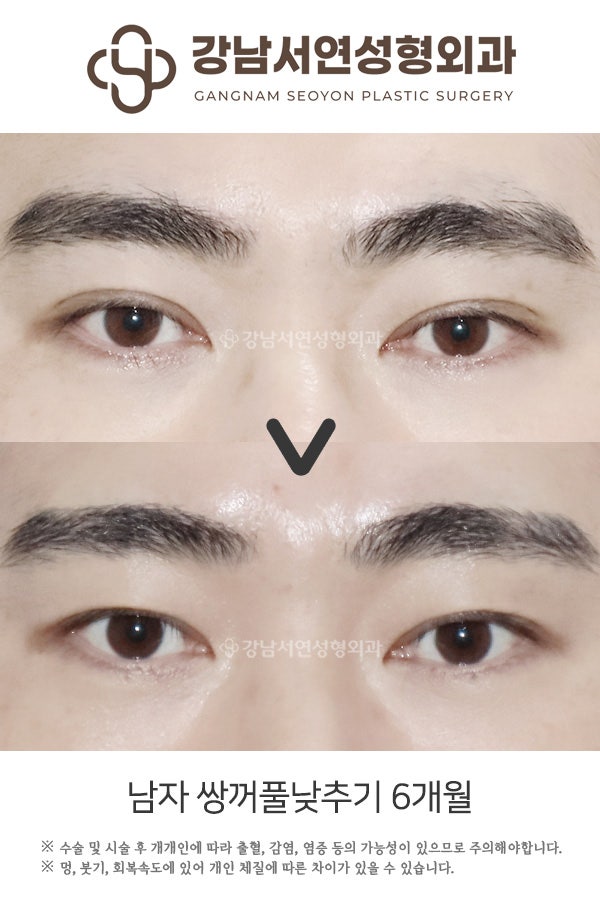
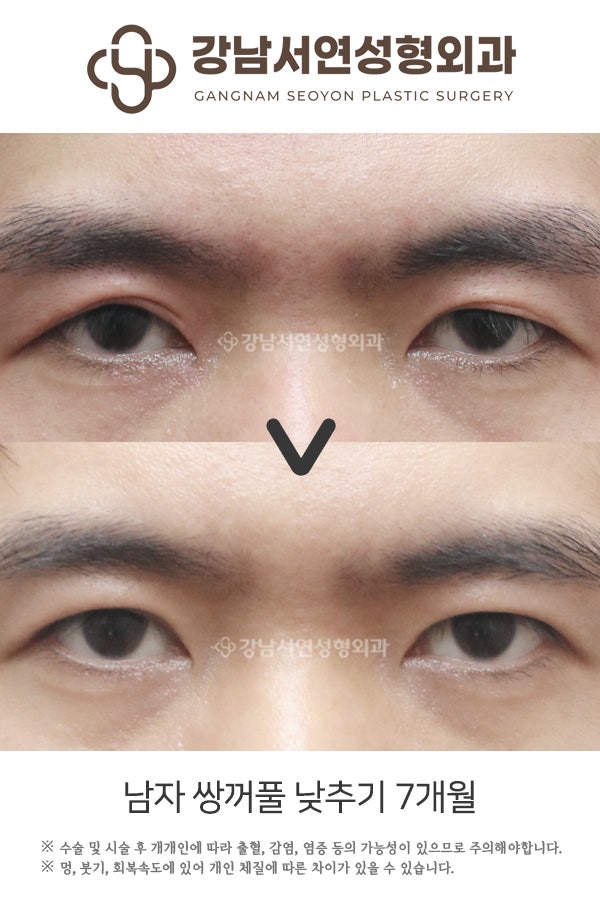
■ How monolid ptosis correction is performed
There are incisional and non-incisional methods, and in practice the incisional method is used far more often. Men frequently have thick skin, and with the non-incisional method we often see the correction come undone. Roughly 80–90% are done incisionally, and only about 10–20% non-incisionally, after carefully weighing the indications.

Incisional monolid ptosis correction is performed with a dynamic fixation technique that preserves the orbicularis oculi (the muscle around the eye) while precisely adjusting muscle tension. The sequence is to clear away unnecessary muscle and fat, set the muscle tension, and then close.

When we go non-incisional, we work through the conjunctiva (the inner surface of the eyelid) to place sutures on the eye-opening muscle, refining the overall look with minimal scarring. That said, it is a method to be applied carefully, only when the indications are right.
■ Is crease removal (reduction) a different operation?
If monolid ptosis correction is the surgery that creates an open, crease-free eye from the start, crease removal (reduction) is closer to the idea of tidying up a crease that is already there so that it looks natural.
- The natural crease was too high to begin with
- The crease has come to look unnatural after previous surgery
- The crease leaves you with an overdone, heavy look that bothers you
We perform it in cases like these, designing to keep the eye open and well-defined while changing only the overall impression, and doing so naturally.
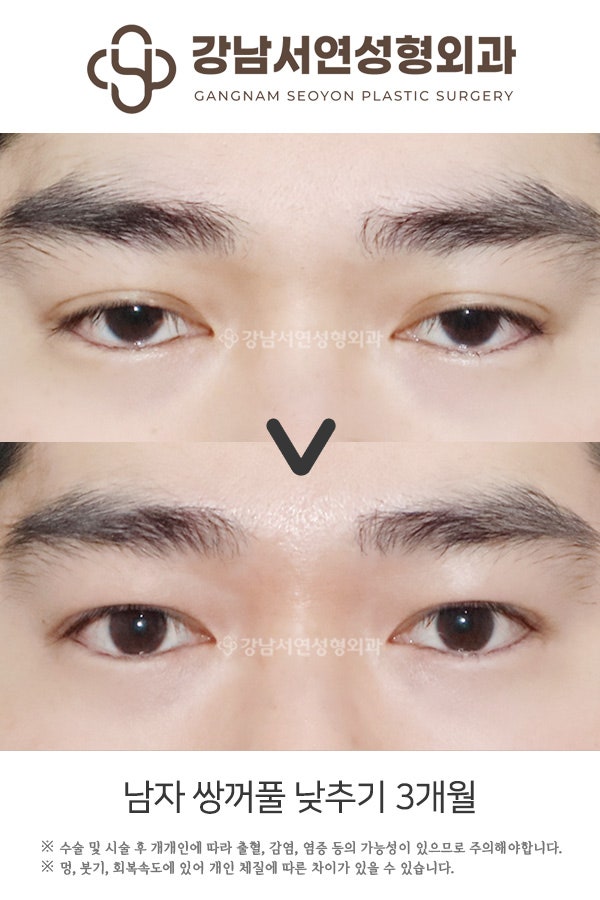
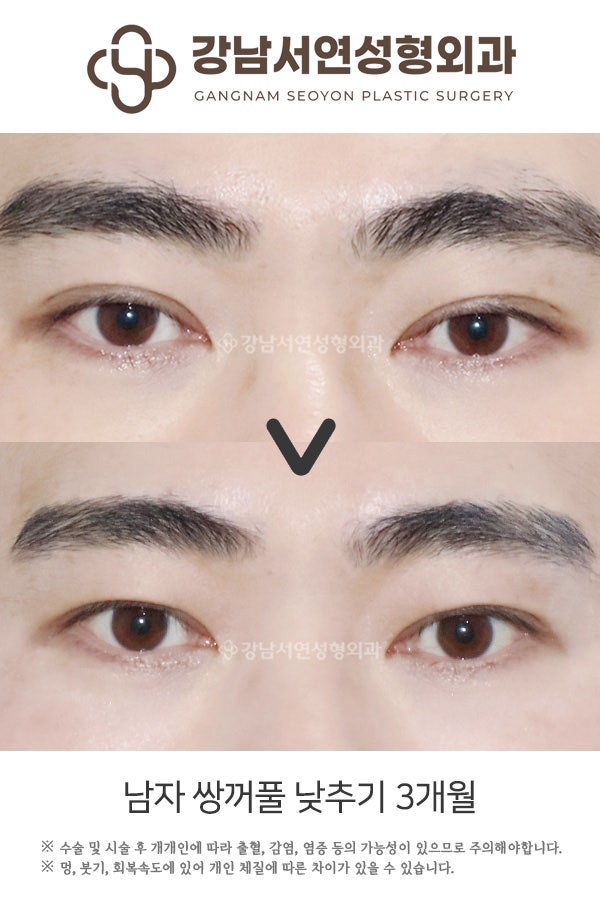

■ How long is recovery?
The surgery itself isn't long — about 30 to 60 minutes. Major swelling usually settles in about a week, and you can expect to reach a natural appearance in about 2 to 4 weeks. Sutures come out between day 4 and day 12, and most patients can return to daily activities from 3 to 7 days after surgery.
■ The questions patients really want answered, briefly
Q. Can it be done so it doesn't look operated on?
A monolid or hidden-crease design keeps the line itself from showing while still creating a well-defined look, so it suits patients who want a natural change that doesn't read as surgery.
Q. Are there cases where ptosis surgery is needed as well?
If your eye-opening strength is weak, you look sleepy and tend to develop forehead wrinkles. In these cases, ptosis correction often needs to be performed at the same time.
Q. Can an existing double eyelid crease be removed?
Yes. With the crease removal (reduction) method described above, a natural line that sits too high or a surgical line that has become unnatural can be tidied up naturally.
Q. Is it very noticeable during the recovery period?
Major swelling resolves in about a week, and a natural appearance is largely reached in 2 to 4 weeks.
.
■ In closing
Male eyelid surgery isn't female eyelid surgery scaled down — it starts from an entirely different design philosophy. That's why it has to be approached as refining the overall look rather than creating a line.

In 2018 Gangnam Seoyon Plastic Surgery published the world's first SCI-indexed paper on male monolid ptosis correction in the journal of the American society for aesthetic plastic surgery (Aesthetic Plastic Surgery), and Chief Director Choi Dong-il has given numerous lectures on monolid ptosis correction in Korea — so we bring a deep understanding of male eye design.
If your crease feels like too much, or you were disappointed with the result of a previous surgery, I'd encourage you to come in for a consultation first so we can map out the direction that suits the condition of your own eyes.

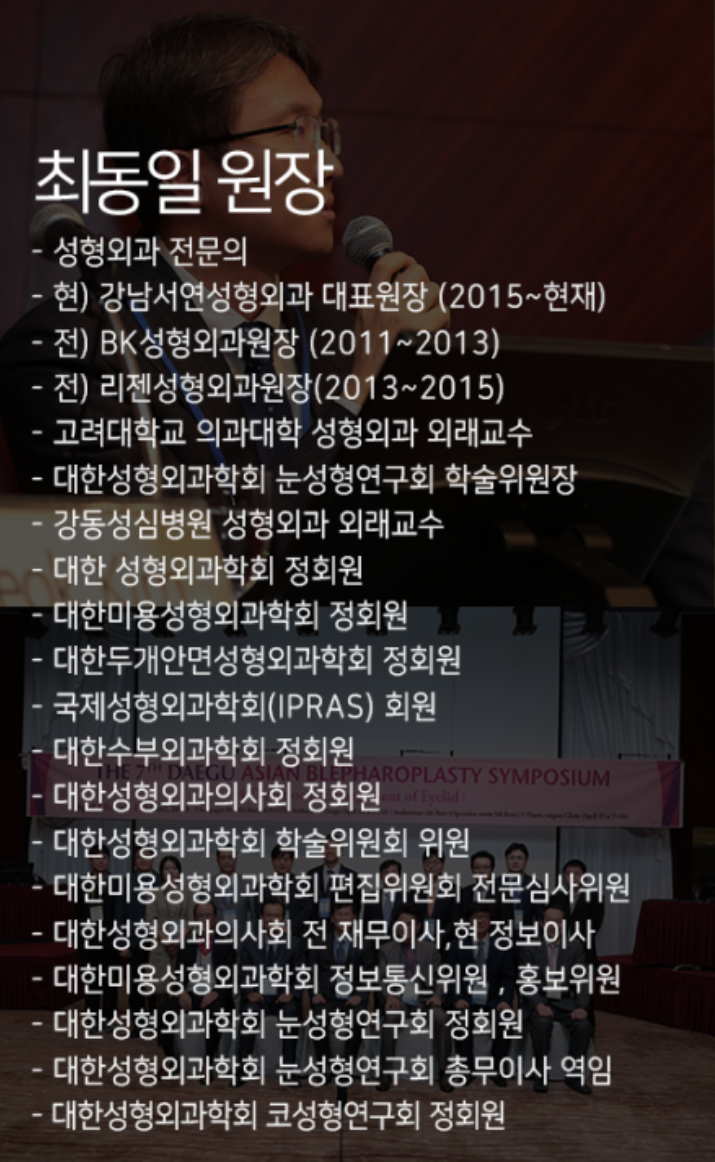
The photographs in this post were taken under identical conditions with the patient's prior consent.
In addition, side effects such as bleeding, infection, and inflammation may occur after plastic surgery or procedures depending on the individual, so caution is required.